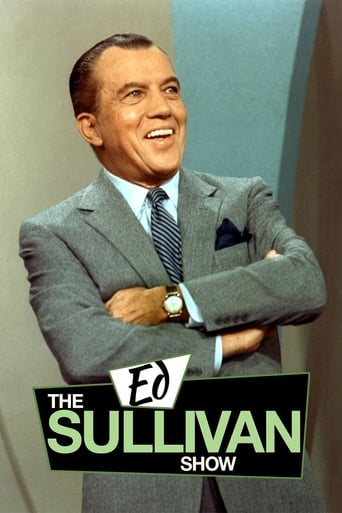
The Ed Sullivan Show (1948)
รายการวาไรตี้ซีรี่ย์ 1948ตลกทอล์กโชว์
- ประเทศ
- สหรัฐอเมริกา
- ออกอากาศครั้งแรก
- 20 มิถุนายน 2491
- จำนวนตอน
- 1068 ตอน (24 ซีซัน)
- ความยาวต่อตอน
- ประมาณ 60 นาที
- สถานะ
- จบแล้ว
- ตอนล่าสุด
- EP26/26 (30 พฤษภาคม 2514)
- ช่อง/แพลตฟอร์มต้นทาง
- CBS
- เรตผู้ชม
- NR
- คะแนน TMDB
- 6.8/10 (23 โหวต)
เรื่องย่อ The Ed Sullivan Show
The Ed Sullivan Show เป็นรายการวาไรตี้ ปี 1948 มีทั้งหมด 1068 ตอน สถานะจบแล้ว
ยังไม่มีเรื่องย่อภาษาไทย แสดงเรื่องย่อต้นฉบับภาษาอังกฤษ
The Ed Sullivan Show is an American TV variety show that originally ran on CBS from Sunday June 20, 1948 to Sunday June 6, 1971, and was hosted by New York entertainment columnist Ed Sullivan. It was replaced in September 1971 by the CBS Sunday Night Movie, which ran only one season and was eventually replaced by other shows.
In 2002, The Ed Sullivan Show was ranked #15 on TV Guide's 50 Greatest TV Shows of All Time.
The Ed Sullivan Show ดูได้ที่ไหน (ถูกลิขสิทธิ์)
ยังไม่พบข้อมูลผู้ให้บริการที่มีลิขสิทธิ์เรื่องนี้ในประเทศไทย ต้นทางออกอากาศทาง CBS เราจะอัปเดตทันทีเมื่อมีแพลตฟอร์มนำเข้ามาฉาย
นักแสดง The Ed Sullivan Show
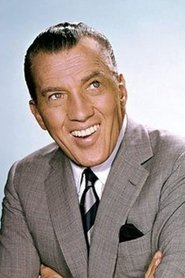 เอ็ด ซัลลิแวนรับบท Self - Host
- Roberta Petersรับบท Self
 Victor Borgeรับบท Self
 Frank Shusterรับบท Self
 Alan Kingรับบท Self
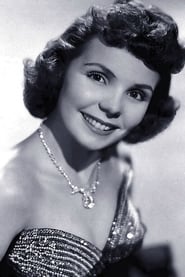 Teresa Brewerรับบท Self
- Sam Levensonรับบท Self
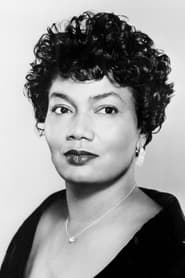 Pearl Baileyรับบท Self
- Rickie Layneรับบท Self
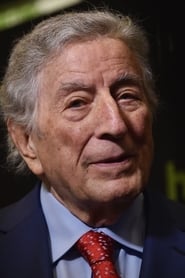 โทนี เบนเนตรับบท Self
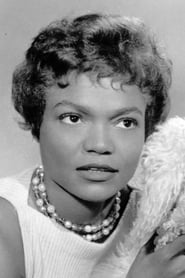 Eartha Kittรับบท Self
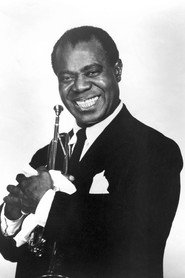 หลุยส์ อาร์มสตรองรับบท Self
ซีซันและรายชื่อตอน
- The Ed Sullivan Show Season 112 ตอน · 20 มิถุนายน 2491
- The Ed Sullivan Show Season 253 ตอน · 12 กันยายน 2491
- The Ed Sullivan Show Season 352 ตอน · 18 กันยายน 2492
- The Ed Sullivan Show Season 451 ตอน · 17 กันยายน 2493
- The Ed Sullivan Show Season 553 ตอน · 9 กันยายน 2494
- The Ed Sullivan Show Season 652 ตอน · 14 กันยายน 2495
- The Ed Sullivan Show Season 751 ตอน · 13 กันยายน 2496
- The Ed Sullivan Show Season 854 ตอน · 12 กันยายน 2497
- The Ed Sullivan Show Season 952 ตอน · 25 กันยายน 2498
- The Ed Sullivan Show Season 1051 ตอน · 23 กันยายน 2499
- The Ed Sullivan Show Season 1150 ตอน · 22 กันยายน 2500
- The Ed Sullivan Show Season 1252 ตอน · 14 กันยายน 2501
- The Ed Sullivan Show Season 1349 ตอน · 20 กันยายน 2502
- The Ed Sullivan Show Season 1440 ตอน · 25 กันยายน 2503
- The Ed Sullivan Show Season 1546 ตอน · 17 กันยายน 2504
- The Ed Sullivan Show Season 1642 ตอน · 30 กันยายน 2505
- The Ed Sullivan Show Season 1742 ตอน · 29 กันยายน 2506
- The Ed Sullivan Show Season 1840 ตอน · 27 กันยายน 2507
- The Ed Sullivan Show Season 1943 ตอน · 12 กันยายน 2508
- The Ed Sullivan Show Season 2042 ตอน · 11 กันยายน 2509
- The Ed Sullivan Show Season 2139 ตอน · 10 กันยายน 2510
- The Ed Sullivan Show Season 2240 ตอน · 29 กันยายน 2511
- The Ed Sullivan Show Season 2336 ตอน · 28 กันยายน 2512
- The Ed Sullivan Show Season 2426 ตอน · 20 กันยายน 2513
รีวิว The Ed Sullivan Show จากทีมงาน
เจาะลึก The Ed Sullivan Show: เนื้อเรื่อง การสร้าง และเสียงวิจารณ์
The Ed Sullivan Show is an American television variety show that ran on CBS from June 20, 1948, to March 28, 1971, and was hosted by New York entertainment columnist Ed Sullivan. It was replaced in September 1971 by the CBS Sunday Night Movie.
In 2002, The Ed Sullivan Show was ranked No. 15 on TV Guide's 50 Greatest TV Shows of All Time. In 2013, the series finished No. 31 in TV Guide Magazine's 60 Best Series of All Time.
History
From 1948 until its cancellation in 1971, the show ran on CBS every Sunday night from 8–9 p.m. Eastern Time, and it is one of the few entertainment shows to have run in the same weekly time slot on the same network for more than two decades (during its first season, it ran from 9 to 10 p.m. ET). Virtually every type of entertainment appeared on the show; classical musicians, opera singers, popular recording artists, songwriters, comedians, ballet dancers, dramatic actors performing monologues from plays, and circus acts were regularly featured. The format was essentially the same as vaudeville and, although vaudeville had undergone a slow demise for a generation, Sullivan presented many ex-vaudevillians on his show.
Originally co-created and produced by Marlo Lewis, the show was first titled Toast of the Town, but was widely referred to as The Ed Sullivan Show for years before September 25, 1955, when that became its official name. In the show's June 20, 1948, debut, Dean Martin and Jerry Lewis performed along with singer Monica Lewis and Broadway composers Richard Rodgers and Oscar Hammerstein II previewing the score to their then-new show South Pacific, which opened on Broadway in 1949.
From 1948 through 1962, the program's primary sponsor was the Lincoln-Mercury Division of the Ford Motor Company; Sullivan read many commercials for Mercury vehicles live on the air during this period.
The Ed Sullivan Show was originally broadcast via live television from CBS-TV Studio 51, the Maxine Elliott Theatre, at Broadway and 39th Street, before moving to its permanent home at CBS-TV Studio 50 in New York City (1697 Broadway, at 53rd Street), which was renamed the Ed Sullivan Theater on the occasion of the program's 20th anniversary in June 1968. The last original Sullivan show telecast (#1068) was on March 28, 1971, with guests Melanie, Joanna Simon, Danny Davis and the Nashville Brass, and Sandler and Young. It was one of many older shows with followings in undesirable key demographics that were purged from the network lineups that summer. The purge led into the Prime Time Access Rule taking effect that fall. Repeats were scheduled through June 6, 1971.
Background
Along with the new talent Sullivan booked each week, he also had recurring characters appear many times a season, such as his "Little Italian Mouse" puppet sidekick Topo Gigio, who debuted December 9, 1962, and ventriloquist Señor Wences debuted December 31, 1950. While most of the episodes aired live from New York City, the show also aired live on occasion from other nations, such as the United Kingdom, Australia, and Japan. For many years, Ed Sullivan was a national event each Sunday evening and was the first exposure for foreign performers to the American public.
On the occasion of the show's tenth anniversary telecast, Sullivan commented on how the show had changed during a June 1958 interview syndicated by the Newspaper Enterprise Association (NEA):
The chief difference is mostly one of pace. In those days, we had maybe six acts. Now we have 11 or 12. Then, each of our acts would do a leisurely ten minutes or so. Now they do two or three minutes. And in those early days I talked too much. Watching these kines I cringe. I look up at me talking away and I say "You fool! Keep quiet!" But I just keep on talking. I've learned how to keep my mouth shut.
The show enjoyed phenomenal popularity in the 1950s and early 1960s. As it had occurred with the annual telecasts of The Wizard of Oz in the 1960s and the 1970s, the family ritual of gathering around the television set to watch Ed Sullivan became almost a U.S. cultural universal. He was regarded as a kingmaker, and performers considered an appearance on his program as a guarantee of stardom, although this sometimes did not turn out to be the case. The show's status at the turn of the decade is illustrated by its use as the backdrop of the 1960 musical Bye Bye Birdie. The musical's plot revolves around an ordinary teen girl's chance to kiss a rock star live on the Sullivan show, and in the song "Hymn for a Sunday Evening," her family expresses their regard for the program in worshipful tones. Sullivan appeared as himself in the musical's 1963 film adaptation.
In September 1965, CBS started televising the program in compatible color, as all three major networks began to switch to 100 percent color prime time schedules. CBS had once backed its own color system, developed by Peter Goldmark, and resisted using RCA's compatible process until 1954. At that time, it built its first New York City color TV studio, Studio 72, in a former RKO movie theater at 2248 Broadway (81st Street). One Ed Sullivan Show was broadcast on August 22, 1954, from the new studio, but it was mostly used for one-time-only specials such as Rodgers and Hammerstein's March 31, 1957 Cinderella. (The facility was later acquired by TeleTape Productions and became the first studio where the PBS children's program Sesame Street was produced.) CBS Studio 72 was demolished in 1986 and replaced by an apartment house. CBS Studio 50 was finally modernized for color broadcasts in 1965. The 1965–66 season premiere starred the Beatles in an episode airing on September 12, which was the last episode to air in black and white. This occurred because the episode was taped at the Beatles' convenience on August 14, the eve of their Shea Stadium performance and a two-week tour of North America, slightly before the program was ready for color transmission.
In the late 1960s, Sullivan remarked that his program was waning as the decade went on. He realized that to keep viewers, the best and brightest in entertainment had to be seen, or else the viewers were going to keep on changing the channel. Along with declining viewership, Ed Sullivan attracted a higher median age for the average viewer (which most sponsors found undesirable) as the seasons went on. Younger viewers were growing to actively dislike the program; in 1970, Sullivan's compilation special Ed Sullivan's Swinging Sixties drew widely negative reviews. These factors were the reason the show was cancelled by CBS on March 16, 1971, as part of a mass cancellation of advertiser-averse programming. While Sullivan's landmark program ended without a proper finale, Sullivan produced one-off specials for CBS until his death in 1974, including an Ed Sullivan Show 25th-anniversary special in 1973.
In 1990, television documentary producer Andrew Solt formed SOFA Entertainment, Inc. and purchased the exclusive rights to the complete library of The Ed Sullivan Show from Ed Sullivan's daughter Elizabeth and her husband Bob Precht. The collection consists of 1,087 hours of kinescopes and videotapes broadcast by CBS on Sunday nights from 1948 to 1971.
Since acquiring the rights to The Ed Sullivan Show library, SOFA Entertainment has catalogued, organized and cleared performance rights for the original shows. Starting in 1991, SOFA Entertainment has re-introduced The Ed Sullivan Show to the American public by producing numerous network specials, syndicating a half-hour series (that also aired on TV Land, PBS, VH1 and Decades) and home video compilations. Some of these compilations include The 4 Complete Ed Sullivan Shows Starring The Beatles, All 6 Ed Sullivan Shows Starring The Rolling Stones, Elvis: The Ed Sullivan Shows, Motown Gold from the Ed Sullivan Show, Ed Sullivan's Rock 'n Roll Classics, and 115 half-hour The Best of The Ed Sullivan Show specials, among others. Performances of this show are also available as video and audio downloads and as an app on iTunes." In 2021, MeTV began airing on Sunday nights half hour packages of performances from the show.
The Ed Sullivan Show Orchestra
In the early years of television, both CBS and NBC networks had their own symphony orchestras. NBC's was conducted by Arturo Toscanini and CBS's by Alfredo Antonini. The Ed Sullivan Show (originally presented as: The Toast of the Town) was basically a musical variety show, and thus members of the CBS orchestra were folded into the Ed Sullivan Show Orchestra, conducted by Ray Bloch. During the early days of television, the demands on studio musicians were many-tiered. They needed to be proficient in all genres of music, from classical, to jazz and to rock and roll. The Ed Sullivan Show would regularly feature singers from the Metropolitan Opera and the staff orchestra would accompany divas such as Eileen Farrell, Maria Callas or Joan Sutherland. The musicians needed to be prepared to switch gears for Ella Fitzgerald, Diahann Carroll or Sammy Davis Jr. and then onto The Jackson Five, Stevie Wonder or Tom Jones. They also needed to perform with some of the greatest dancers and ballerinas at the time, from Gregory Hines, Juliet Prowse, Maria Tallchief or Margo Fonteyn to the Peter Gennaro dancers.
In the process, the musicians collaborated with several internationally recognized ballet troupes including: Ruth Page's Chicago Opera Ballet, the London Festival Ballet, Roland Petit's Ballets de Paris and Russia's Igor Moiseyev Ballet. Few musicians are capable of crossing over from one genre to another. However, each member of the Ed Sullivan Show Orchestra was a specialist and more than capable of covering the complete spectrum of music.
The lead trumpet player is the "concert master" of a studio orchestra. Chris Griffin (formerly with the trumpet section of Harry James, Ziggy Elman and the Benny Goodman Band) was Ray Bloch's lead trumpet player for the many radio and television shows that he conducted, including the Ed Sullivan Show and The Jackie Gleason Show. Chris remained the lead trumpet player with The Ed Sullivan show from the first show in 1948 to the last show in 1971.
Band configuration
Trumpets: Chris Griffin, Bernie Privin, Jimmy Nottingham, and Thad Jones; Chris's son, Paul Griffin was a regular substitute trumpeter.
Trombones: Roland Dupont, Joe Bennet, Morton Bullman, Frank Rehak, and Cliff Heather
Saxophones: Toots Mondello, Bernie Kaufman, Artie Drellinger, Hymie Schertzer, Ed Zuhlke, et al
Piano: Hank Jones
Drums: Specs Powell/Howard Smith
Percussion: Milton Schlesinger
Unlike NBC's The Tonight Show (Steve Allen, Jack Paar, Johnny Carson), which celebrated the notoriety of their musicians in Skitch Henderson's or Doc Severinsen's "Tonight Show Band", the CBS producers of The Ed Sullivan Show decided to hide their famed musicians behind a curtain. Occasionally, CBS would broadcast specials and call upon the orchestra to perform. When Robert F. Kennedy was assassinated, music was hastily composed for the orchestra in a special tribute that also featured jazz pianist Bill Evans, who had recently composed an elegy to his father.
Notable performances and guests
The Ed Sullivan Show is especially known to the World War II and baby boomer generations for introducing acts and airing breakthrough performances by popular 1950s and 1960s musicians such as Elvis Presley, the Beatles, the Rolling Stones, the Doors, the Supremes, the Dave Clark Five, the Animals, Creedence Clearwater Revival, Dusty Springfield, the Beach Boys, the Jackson 5, Stevie Wonder, Buddy Holly, Janis Joplin, the Mamas and the Papas, the Lovin' Spoonful, Herman's Hermits, Dionne Warwick, Barbra Streisand, Petula Clark, Vanilla Fudge, the Band, and Gene Vincent and his Blue Caps.
The Canadian comedy duo Wayne and Shuster appeared on the program 67 times, a record for any performer. Bill Haley & His Comets performed their hit "Rock Around the Clock" in early August 1955, later recognized as the first rock and roll song broadcast on a national television program.
Itzhak Perlman
The American public's first exposure to Itzhak Perlman was on the show in 1958, when he was 13. This performance was a breakthrough not only for classical music, but also for Perlman, who rode the waves of admiration to new heights of fame lasting a generation.
Initial appearance
On September 9, 1956, Presley made his first appearance on The Ed Sullivan Show (after appearances on shows hosted by the Dorsey Brothers, Milton Berle, and Steve Allen), even though Sullivan had vowed never to allow Presley on the show. According to Sullivan biographer Michael David Harris, "Sullivan signed Presley when the host was having an intense Sunday-night rivalry with Steve Allen. Allen had the singer on his July 1 program, and beat Sullivan in the ratings. When asked to comment, [Sullivan] said that he wouldn't consider presenting Presley before a family audience. Less than two weeks later he changed his mind and signed a contract."
Just prior to the first Sullivan show, Presley was in Hollywood filming Love Me Tender, so Sullivan's producer, Marlo Lewis, flew to California to supervise the telecast that night from CBS Television City in Los Angeles. Sullivan, however, was not able to host his portion of the show from New York because he was recovering from an automobile accident. Charles Laughton guest-hosted in Sullivan's place, and opened the show. Music critic Greil Marcus wrote that Laughton's first reading poetry and then introducing four other acts first was intended to "make the moment invisible: to act as if nobody was actually waiting for anything" that evening.
For his first set, Elvis delivered "Don't Be Cruel" and "Love Me Tender". According to writer Elaine Dundy, Presley sang "Love Me Tender" "straight, subdued and tender ...—a very different Elvis from the one on The Steve Allen Show three months before". Elvis's second set consisted of "Ready Teddy" and a shortened version of "Hound Dog". A popular myth claims Sullivan "censored" Presley by having the cameras shoot him from the waist up, but in fact, this only happened in Elvis' third and final appearance.
Although Laughton was the celebrity guest host, and there were seven other acts on the show, Elvis was on camera for more than a quarter of the time allotted to all acts. The broadcast garnered a 43.7 rating, and was viewed by a record 60.71 million people, which at the time represented an 82.6% share of the television audience, the largest single audience in television history. This share remains to date the largest in the history of American television.
Second and third appearances
Presley's second appearance fell on Sunday, October 28, 1956. In his first segment, Elvis performed "Don't Be Cruel" and "Love Me Tender". For the second segment, Elvis sang a new cut from his just-released second LP, "Love Me". Rounding out this visit Elvis delivered a full version of his #1 hit, "Hound Dog" and then reminded the audience about "Love Me Tender" being released on Thanksgiving Day and his return to the show in January. He closed by saying "May God bless you as he has blessed me."
For the third and final appearance on January 6, 1957, Presley finally opened the show. Apparently, a last-minute decision was also made to shoot the singer from the waist up at all times. It didn't seem to hinder the performance that followed. Elvis first ran down a medley of three #1 hits ("Hound Dog", "Love Me Tender", and "Heartbreak Hotel") then delivered a full version of "Don't Be Cruel", which he introduced as "my very biggest record last year." Later, his second appearance featured the new RCA single "Too Much" and a thank you for the "best Christmas we ever had." Then Elvis fell into another track from his second album, "When My Blue Moon Turns to Gold Again".
For his closing appearance, Sullivan introduced Elvis, touting an upcoming film project for Paramount and a benefit show in Los Angeles for Hungarian relief. Elvis followed with the gospel song "Peace in the Valley". Sullivan put his arm around the singer after he finished the song and praised him, saying "this is a real decent, fine boy."
The second and third appearances drew 57 million and 54.6 million viewers, respectively.
The Beatles
In late 1963, Sullivan and his entourage happened also to be passing through Heathrow and witnessed how the Beatles' fans greeted the group on their return from Stockholm, where they had performed a television show as warmup band to local stars Suzie and Lill Babs. Sullivan was intrigued, telling his entourage it was the same thing as Elvis all over again. He initially offered Beatles manager Brian Epstein top dollar for a single show but the Beatles manager had a better idea—he wanted exposure for his clients: the Beatles would instead appear three times on the show, for only a minimal fee, but receive top billing and two spots (opening and closing) on each show.
The Beatles appeared on three consecutive Sundays in February 1964 to great anticipation and fanfare as "I Want to Hold Your Hand" had swiftly risen to No. 1 in the charts. Their first appearance on February 9 is considered a milestone in American pop culture, and furthermore the beginning of the British Invasion in music. The broadcast drew an estimated 73 million viewers, a record for U.S. television at the time (broken three years later by the series finale of The Fugitive). The Beatles followed Sullivan's show-opening intro, performing "All My Loving"; "Till There Was You", which featured the names of the group members superimposed on closeup shots, including the famous "SORRY GIRLS, HE'S MARRIED" caption on John Lennon; and "She Loves You". The act that followed the Beatles in the broadcast, magician Fred Kaps, was pre-recorded in order to allow time for an elaborate set change. The group returned later in the program to perform "I Saw Her Standing There" and "I Want to Hold Your Hand".
The following week's show was broadcast from Miami Beach where Cassius Clay (later known as Muhammad Ali) was in training for his first title bout with Sonny Liston. The occasion was used by both camps for publicity. On the evening of the television show (February 16) a crush of people nearly prevented the band from making it onstage. A wedge of policemen were needed and the band began playing "She Loves You" only seconds after reaching their instruments. They continued with "This Boy" and "All My Loving", then returned later to close the show with "I Saw Her Standing There", "From Me to You", and "I Want to Hold Your Hand".
They were shown on tape February 23 (this appearance had been taped earlier in the day on February 9 before their first live appearance). They followed Sullivan's intro with "Twist and Shout" and "Please Please Me" and closed the show once again with "I Want to Hold Your Hand".
The Beatles appeared live for the final time on August 14, 1965. The show was broadcast September 12, 1965, and earned Sullivan a 60-percent share of the nighttime audience for one of the appearances. This time they followed three acts before coming out to perform "I Feel Fine", "I'm Down", and "Act Naturally" and then closed the show with "Ticket to Ride", "Yesterday", and "Help!" Although this was their final live appearance on the show, the group provided filmed promotional clips of songs to air exclusively on Sullivan's program over the next few years, including videos of both "Paperback Writer" and "Rain" from 1966 and three clips from 1967, including "Penny Lane", "Strawberry Fields Forever", and "Hello, Goodbye". In late 1967, the group also sent a telegram to Sullivan in addition to their promotional clips, a note which the host read live on air. The group's last appearance on Sullivan's program was via prerecorded promotional clips of their songs "Two of Us" and "Let It Be", broadcast on the show on the first day of March in 1970. Although both videos were recorded in late January 1969, the delay was due to the band's dissatisfaction with the tedious Let It Be album sessions and the group's impending break-up. In all probability, the scheduling of the March 1970 broadcast was to promote the release of the band's upcoming film Let It Be that May.
The Doors
In September 1967, The Doors appeared on The Ed Sullivan Show, where they were scheduled to perform "People Are Strange" and "Light My Fire". Before their performance of "Light My Fire", the show's producers told the band's frontman, Jim Morrison, that he had to censor the lyric "girl, we couldn't get much higher," as network executives believed it was a reference to drug use. Morrison agreed backstage, but when the performance began, he sang the original lyric without hesitation. The moment was broadcast live to millions of viewers.
After the show, Ed Sullivan refused to shake the band's hands, and a producer informed them they would never be invited back. Morrison reportedly replied, "Hey man, we just did The Ed Sullivan Show" making it clear he didn't care about the ban. This act of defiance became one of rock music's most famous moments, cementing Morrison's rebellious reputation and The Doors' image as a band unwilling to compromise their art for television.
The Supremes
The Supremes were a special act for The Ed Sullivan Show. In addition to 14 appearances, they were a personal favorite of Sullivan, who affectionately called them "The Girls". Over the five years they performed on the program, the Supremes performed 15 of their hit singles, and numerous Broadway showtunes and other non-Motown songs. The group featuring the most popular lineup of Diana Ross, Mary Wilson, and Florence Ballard appeared 7 times from December 1964 through May 1967.
The group reappeared on the series in October 1967 as the newly rebilled "Diana Ross & the Supremes", with Ballard replacement Cindy Birdsong and Ross more prominently featured. The Supremes' final appearance on the show, shortly before it ended, served as the platform to introduce America to Ross's replacement, Jean Terrell, in March 1970.
เนื้อหาส่วนนี้มาจากบทความ "The Ed Sullivan Show" ในวิกิพีเดีย (en.wikipedia.org) เผยแพร่ภายใต้สัญญาอนุญาตครีเอทีฟคอมมอนส์ แสดงที่มา-อนุญาตแบบเดียวกัน 4.0 (creativecommons.org/licenses/by-sa/4.0) มีการตัดส่วนอ้างอิงและจัดรูปแบบใหม่
คำถามที่พบบ่อยเกี่ยวกับ The Ed Sullivan Show
The Ed Sullivan Show มีกี่ตอน?
The Ed Sullivan Show มีทั้งหมด 1068 ตอน รวม 24 ซีซัน สถานะปัจจุบัน: จบแล้ว
The Ed Sullivan Show ฉายวันไหน?
The Ed Sullivan Show เริ่มออกอากาศครั้งแรกวันที่ 20 มิถุนายน 2491
The Ed Sullivan Show ดูได้ที่ไหน?
ขณะนี้ยังไม่พบแพลตฟอร์มที่มีลิขสิทธิ์ The Ed Sullivan Show ในประเทศไทย
หมวดแนะนำ: ซีรี่ย์สนุกๆ · เรื่องถัดไป: The Princes of Malibu
ซีรี่ย์ที่คล้ายกับ The Ed Sullivan Show
 ★ 6.5
★ 6.5Comedy Bang! Bang! (2012)
 ★ 7.2
★ 7.2Penn & Teller: Fool Us (2011)
 จบแล้ว 4252 ตอน★ 6.5
Late Show with David Letterman (1993)
 จบแล้ว 1816 ตอน★ 6.1
The Late Show with Stephen Colbert (2015)
 ★ 7.1
★ 7.1The Amanda Show (1999)
 EP25/45★ 6.9
Good Mythical Morning (2012)
 ★ 6.8
★ 6.8The Dick Cavett Show (1968)
 จบแล้ว 6 ตอน★ 7.8
The Mitchell and Webb Situation (2001)
 จบแล้ว 3777 ตอน★ 7.6
The Tonight Show Starring Johnny Carson (1962)
 ★ 7.7
★ 7.7The Carol Burnett Show (1967)
 EP16/16★ 7.9
QI (2003)
 จบแล้ว 140 ตอน★ 6.8