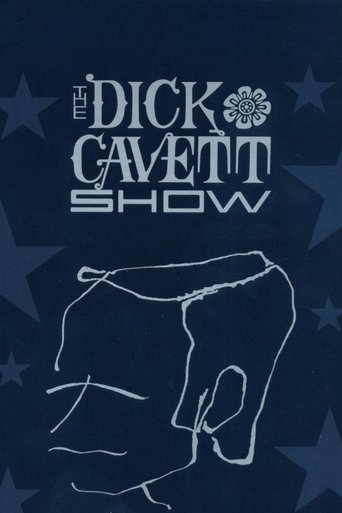
The Dick Cavett Show (1968)
รายการวาไรตี้ซีรี่ย์ 1968ทอล์กโชว์
- ประเทศ
- สหรัฐอเมริกา
- ออกอากาศครั้งแรก
- 6 มิถุนายน 2511
- จำนวนตอน
- 470 ตอน (11 ซีซัน)
- ความยาวต่อตอน
- ประมาณ 90 นาที
- สถานะ
- จบแล้ว
- ตอนล่าสุด
- EP100/5 (22 เมษายน 2538)
- ช่อง/แพลตฟอร์มต้นทาง
- ABC, PBS, USA Network, CNBC
- คะแนน TMDB
- 6.8/10 (22 โหวต)
เรื่องย่อ The Dick Cavett Show
The Dick Cavett Show เป็นรายการวาไรตี้ ปี 1968 มีทั้งหมด 470 ตอน สถานะจบแล้ว
ยังไม่มีเรื่องย่อภาษาไทย แสดงเรื่องย่อต้นฉบับภาษาอังกฤษ
The Dick Cavett Show has been the title of several talk shows hosted by Dick Cavett on various television networks.
The Dick Cavett Show ดูได้ที่ไหน (ถูกลิขสิทธิ์)
ยังไม่พบข้อมูลผู้ให้บริการที่มีลิขสิทธิ์เรื่องนี้ในประเทศไทย ต้นทางออกอากาศทาง ABC, PBS, USA Network, CNBC เราจะอัปเดตทันทีเมื่อมีแพลตฟอร์มนำเข้ามาฉาย
นักแสดง The Dick Cavett Show
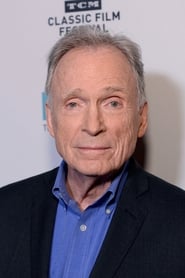 Dick Cavettรับบท Self - Host
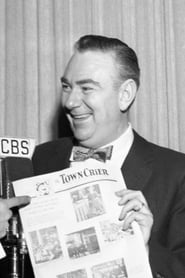 Ray Gouldingรับบท Self - Guest
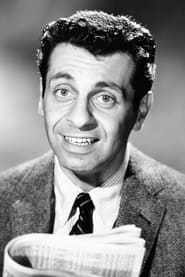 Mort Sahlรับบท Self - Guest
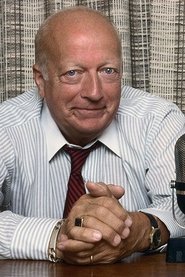 Bob Elliottรับบท Self - Guest
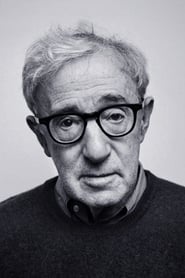 วูดดี อัลเลนรับบท Self - Guest
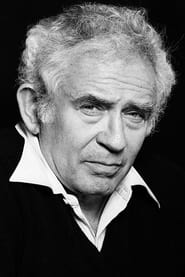 Norman Mailerรับบท Self - Guest
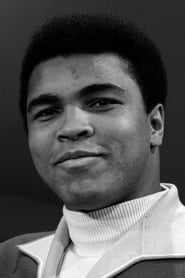 มูฮัมหมัด อาลีรับบท Self - Guest
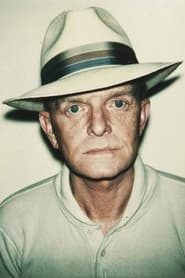 Truman Capoteรับบท Self - Guest
 Groucho Marxรับบท Self - Guest
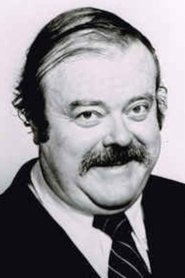 Pat McCormickรับบท Self - Guest
 Anthony Burgessรับบท Self - Guest
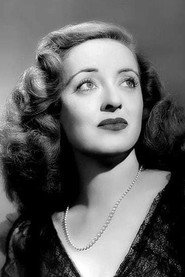 Bette Davisรับบท Self - Guest
ซีซันและรายชื่อตอน
- The Dick Cavett Show Season 139 ตอน · 6 มิถุนายน 2511
- The Dick Cavett Show Season 323 ตอน · 16 พฤษภาคม 2512
- The Dick Cavett Show Season 4357 ตอน · 29 ธันวาคม 2512
- The Dick Cavett Show Season 57 ตอน · 21 กันยายน 2513
- The Dick Cavett Show Season 616 ตอน · 21 กันยายน 2514
- The Dick Cavett Show Season 74 ตอน · 12 มิถุนายน 2516
- The Dick Cavett Show Season 82 ตอน
- The Dick Cavett Show Season 93 ตอน · 5 กันยายน 2517
- The Dick Cavett Show Season 108 ตอน · 10 กันยายน 2528
- The Dick Cavett Show Season 116 ตอน · 24 กันยายน 2529
- The Dick Cavett Show Season 125 ตอน · 17 เมษายน 2532
รีวิว The Dick Cavett Show จากทีมงาน
เจาะลึก The Dick Cavett Show: เนื้อเรื่อง การสร้าง และเสียงวิจารณ์
The Dick Cavett Show is the title of several American television talk shows hosted by Dick Cavett between 1968 and 1996. The programs aired in daytime, prime time and late night on ABC, CBS, PBS, USA Network and CNBC.
The best-known version aired late nights on ABC from December 29, 1969, to January 1, 1975, opposite NBC's The Tonight Show Starring Johnny Carson. The program featured extended interviews and conversations with actors, musicians, writers, politicians and other public figures. Guests included Groucho Marx, Katharine Hepburn, Orson Welles, Muhammad Ali, John Lennon and Yoko Ono, Jimi Hendrix, Janis Joplin, David Bowie, Gore Vidal and Norman Mailer.
Show history
The Dick Cavett Show began as a series of television programs hosted by comedian, comedy writer and author Dick Cavett. Although Cavett later hosted versions for CBS, PBS, USA Network and CNBC, the title is most closely associated with the programs he hosted for ABC between 1968 and 1975.
Daytime series
Cavett's first ABC series premiered on March 4, 1968, as a 90-minute weekday morning program originally titled This Morning. The title was subsequently changed to The Dick Cavett Show, and the series continued until January 24, 1969. The first daytime show featured Gore Vidal, Muhammad Ali and Angela Lansbury. ABC pressured Cavett to get prominent celebrities on the show, although subsequent shows without them got higher ratings and more critical acclaim.
Although normally based in New York, Cavett also took the daytime show to Hollywood. Groucho Marx, who had appeared on the program in April 1968, appeared again when Cavett broadcast from Hollywood on June 19.
Prime-time series
After the daytime series ended, Cavett returned to ABC with a summer replacement prime-time series that aired three times per week from May 26 to September 19, 1969. The series was sufficiently well received for ABC to give Cavett a regular late-night program later that year.
Late-night series
The late-night Dick Cavett Show premiered on December 29, 1969, and ran until January 1, 1975, opposite NBC's The Tonight Show Starring Johnny Carson. Cavett took over the ABC late-night time slot from The Joey Bishop Show. Bobby Rosengarden served as the show's bandleader and musical director, while Fred Foy, best known as the announcer and narrator of The Lone Ranger, was the announcer.
In addition to his usual monologue, Cavett opened each show by reading selected questions submitted by audience members and responding with jokes or improvised remarks. One question, "What makes New York so crummy these days?", prompted the response "Tourists."
While Cavett and Carson shared many of the same guests, Cavett was receptive to rock and roll artists to a degree unusual at the time, as well as to authors, politicians and other personalities outside the entertainment field. The wide variety of guests, combined with Cavett's literate and intelligent approach to comedy, appealed to a significant enough number of viewers to keep the show running for several years despite the competition from Carson's show. Carson's move to southern California in the early 1970s to focus on Hollywood celebrities also helped to minimize guest overlap.
The late-night show's 45-minute midpoint was signaled by "Glitter and Be Gay" from Leonard Bernstein's Candide. The piece became associated with Cavett and was subsequently used as the introduction to his PBS series and played by house bands during his later talk-show appearances.
Typically each show had several guests, but occasionally Cavett devoted an entire program to a single guest. Among those receiving such treatment, some more than once, were Groucho Marx, Laurence Olivier, Judy Garland, Katharine Hepburn (without an audience), Bette Davis, Orson Welles, Noël Coward (who appeared on the same show with Alfred Lunt, Lynn Fontanne, Tammy Grimes and Brian Bedford), John Lennon and Yoko Ono, Janis Joplin, Ray Charles, Alfred Hitchcock, Fred Astaire, Woody Allen, Gloria Swanson, Jerry Lewis, Lucille Ball, Zero Mostel ("on some shows I've had just one guest, but tonight I have Zero"), Bob Hope and David Bowie. These shows helped showcase Cavett's skills as a host who could attract guests who otherwise might not give television interviews, at the expense of some of the unpredictability of the multiple-guest format.
Wide World of Entertainment
In January 1973, despite a vociferous letter campaign, ratings forced the show to be cut back to occasional status, airing one week a month as part of ABC's Wide World of Entertainment. Jack Paar, whom ABC had tried to recruit as Cavett's successor, insisted that both he and Cavett be given at least one week per month as a sign of respect for Cavett. The rotating schedule made it difficult for either show to retain an audience. Jack Paar Tonite ran from January until November 1973. By the end of 1974, Cavett's program was airing only twice per month. The ABC run ended on January 1, 1975.
CBS, 1975
Cavett returned to network television later in 1975 with a short-lived Saturday-night series on CBS. It aired from August 16 to September 6 and differed from his earlier programs by incorporating more elements of a traditional variety show.
PBS, 1977–1982
In 1977, two years after the end of his original ABC run, Cavett returned to television with a new version produced by New York public television station WNET/Thirteen. The PBS series featured single guests in a half-hour format and was produced by Christopher Porterfield, a former roommate of Cavett's at Yale University who had coauthored the book Cavett, published in August 1974.
The shorter format emphasized extended conversation with a single guest rather than the multiple-guest format used by many of the ABC programs. The PBS version received several Emmy Award nominations, including nominations in 1978, 1979 and 1982. The show remained on the PBS lineup until affiliates voted it off the schedule in 1982.
USA Network and return to ABC, 1985–1986
Cavett revived the program on USA Network in 1985. The prime-time series ran from September 30, 1985, until September 23, 1986.
While the USA series was still nearing the end of its run, Cavett returned to ABC late night. That version aired on Tuesday and Wednesday nights from September 22 to December 30, 1986. It marked Cavett's first regular ABC series since the end of his original network run in 1975.
CNBC, 1989–1996
Another version of The Dick Cavett Show premiered on CNBC in 1989 and continued until January 1996. The CNBC series returned Cavett to the interview format with which his earlier programs had become associated.
Production
On all three of the early ABC shows, the bandleader was Bobby Rosengarden and the announcer was Fred Foy, known for his work on The Lone Ranger. The morning show was produced by Woody Fraser. Tony Converse was the producer of the 1969 ABC prime-time show and the original producer of the ABC late-night show, succeeded by John Gilroy. Cavett's writer was Dave Lloyd.
The programs were principally associated with New York, although individual editions were also recorded elsewhere. Cavett took the daytime series to Hollywood in June 1968, and later programs originated from other locations when the subject or guests warranted it.
Legacy
The Dick Cavett Show became known for extended, often unscripted conversations with guests drawn from entertainment, politics, literature and the arts. Cavett's willingness to interview writers, political figures and counterculture musicians alongside traditional Hollywood celebrities distinguished the program from many contemporary talk shows. During the original ABC late-night run, the program developed a reputation as a more cerebral alternative to The Tonight Show Starring Johnny Carson, with Cavett particularly associated with interviews of contemporary political and cultural figures.
Cavett's interviewing style emphasized sustained conversation rather than a succession of short promotional appearances. Episodes were sometimes devoted to a single guest, allowing discussions to continue for substantially longer than became common on later network talk shows. A 1972 profile in The New Yorker described Cavett's approach as deliberately avoiding formulas and clichés and noted the program's popularity with younger viewers.
The surviving programs have also become an archive of American political and cultural life from the late 1960s through the early 1980s. Interviews and broadcasts from the series have been reused in documentaries about subjects including the Watergate scandal and Muhammad Ali. The PBS documentary Dick Cavett's Watergate was constructed largely from Cavett's interviews with figures involved in the scandal, while the HBO documentary Ali & Cavett: The Tale of the Tapes drew on Ali's numerous appearances on the program.
The show's interviews have continued to circulate through home-video releases, television reruns and online archives, introducing later audiences to appearances by figures including Jimi Hendrix, Janis Joplin, Katharine Hepburn, Groucho Marx, John Lennon and Yoko Ono. Cavett's PBS series, launched by WNET in 1977, also became one of the station's notable programs of that period.
March 4, 1968: The premiere of This Morning
In the first broadcast of his 90-minute morning show, Cavett had as his first guest engineer, designer and futurist Buckminster Fuller. The two discussed how politicians would eventually become obsolete through technological advances, and the wide-ranging discussion included a comment from Fuller that a woman is a baby factory and that a man's role is to simply press the right button. Later on in the program, Cavett chatted with actress Patricia Neal, who discussed her long rehabilitation from a near-fatal stroke in 1965.
March 27, 1968: Christine Jorgensen walks off the show
During an interview with Christine Jorgensen, the first widely known trans woman to have sex reassignment surgery (in this case a complete male-to-female vaginoplasty), Jorgensen walked off the show when she felt offended after Cavett asked her about the status of her romantic life with her wife; because Jorgensen was the only scheduled guest, Cavett spent the rest of that show talking about how he had not meant to offend her.
June 6, 1968: Robert F. Kennedy assassination
As a result of continuing coverage of the Robert F. Kennedy assassination that took place earlier that morning, Cavett's show did not begin until 11 am, and was interrupted at 11:20 for 30 minutes of further updates on the unfolding tragedy. At 11:50, Cavett's show returned for its final 10 minutes. The assassination was the only topic discussed during the 30 minutes of the show. On the following two mornings, the show began at its regular time of 10:30 am, and was once again devoted exclusively to assassination coverage, and presented without commercial interruption.
June 13, 1969: Groucho Marx's one-man show
Because of conflicting network broadcasts, Cavett pre-taped a one-man, 60-minute episode with Groucho Marx.
July 7, 1969: Jimi Hendrix
In the July 7, 1969, interview, rock star Jimi Hendrix modestly downplayed his abilities and displayed his sense of humor. Perhaps most importantly, he revealed some of his aesthetic ideals and the purpose of his music when he discussed his concept of the "Electric Church":
[Music] is getting to be more spiritual than anything now. Pretty soon I believe that they are going to have to rely on music to get some kind of peace of mind or satisfaction—direction, actually—more so than politics, because politics is really on an ego scene…[Politics] is the art of words, which means nothing. So, therefore you have to rely on more of an earthier substance like music or the arts, theater, acting, painting, whatever…[The Electric Church] is a belief that I have. We do use electric guitars. Everything is electrified nowadays. So, therefore the belief comes through electricity to people. That's why we play so loud. Because it doesn't actually hit through the eardrums like most groups do nowadays. They say 'Well, we're going to play loud too, because they're playing loud.' And they've got this real shrill sound that's really hard. We plan for our sound to go inside the soul of the person…and see if they can awaken some sort of thing in their minds, because there are so many sleeping people.
Hendrix then performed "Hear My Train A Comin'" with the house band and played the guitar with his teeth at the end of the song.
August 19, 1969: The Woodstock Show
On Tuesday, August 19, 1969, Jefferson Airplane, Joni Mitchell, David Crosby and Stephen Stills (of Crosby, Stills, Nash & Young) all appeared on the show. The episode is now often referred to as "The Woodstock Show", as many of the performers, and Cavett's audience, came directly from the concert for the taping the afternoon before the show aired. Stills pointed out the mud from the concert venue still on his pants. Jefferson Airplane's performance of "We Can Be Together" marked the first time the word "fuck" was uttered on television in the US (the actual line is "In order to survive we steal, cheat, lie, forge, fuck, hide and deal". Another line with the forbidden word was "Up against the wall, Up against the wall, motherfucker".). Mitchell sang "Chelsea Morning", "Willy" and "For Free". Grace Slick purposefully called Cavett "Jim" and briefly talked about her school days at Finch College. Stephen Stills performed "4 + 20". Joni Mitchell sang "The Fiddle and the Drum" a cappella. Jefferson Airplane (with Crosby) then launched into "Somebody to Love". The credits rolled as the musicians, without Mitchell, engaged in an instrumental jam as the audience danced.
Jimi Hendrix was scheduled to join the others, but was unable to appear at the afternoon taping that occurred only a few hours after he had performed at the late-running festival. Mitchell's manager, apparently fearing a similar situation that may have prevented her from appearing on the show, did not allow her to perform at Woodstock. He considered the Dick Cavett Show too important for her career for her to risk missing the taping.
Mitchell wrote the song "Woodstock" based on descriptions by Graham Nash and from the images she saw on television, as she could not be there in person. The most famous version of the song is by Crosby, Stills, Nash & Young, who recorded it for their Déjà Vu album (1970). It appears in the film Woodstock during the closing credits. Mitchell recorded it for Ladies of the Canyon (1970).
September 5, 1969: Groucho Marx
Groucho Marx remarked about the Musical theatre musical Hair, which had just opened and was notorious for its ground-breaking use of explicit nudity: "I was going to go, but I saw myself in the mirror one morning, and I figured, why waste five and a half dollars?" The September 5 program was an expanded version of Marx's June 13 appearance.
September 9, 1969: Jimi Hendrix
In an interview with Jimi Hendrix, Cavett spoke about Hendrix's performance of the "Star Spangled Banner" at Woodstock, and called the style "unorthodox". Jimi commented that the song was "not unorthodox" and that what he played was beautiful. The audience clapped, and Dick blushed.
Hendrix performed "Izabella" & "Machine Gun" with his band, Billy Cox, Mitch Mitchell and Juma Sultan.
February 4, 1970: Judy Collins
During an interview with singer Judy Collins in which Cavett and Collins discussed her experiences as a defense witness at the Chicago Seven trial, several of Collins' comments were censored at the direction of the ABC legal department. Collins wrote a protest letter to the Federal Communications Commission (FCC), claiming a violation of her free-speech rights and the network license granted to ABC by the FCC. Her protest was denied, with the FCC ruling that a television network could, at its discretion, delete or edit remarks on its programs. Elton Rule, president of ABC Television, noted that in the network's judgment, "her remarks ... were not within the bounds of fair comment."
February 5, 1970: Eric Clapton
Blues guitarist Eric Clapton appeared on the show with a new group called Delaney & Bonnie & Friends, which was Clapton's first attempt to break from his lead role and operate as an anonymous sideman. This was also possibly the first time Clapton had appeared on American television with a Fender Stratocaster; up to that time, he was famous for only playing Gibson guitars. Cavett briefly interviewed the band but the shy Clapton did not have much to say.
February 19, 1970: Noël Coward, Alfred Lunt, Lynn Fontanne, Tammy Grimes and Brian Bedford
To honor Noël Coward on the occasion of his knighthood, Cavett interviewed Coward and his close friends, the Lunts. Tammy Grimes and Brian Bedford, who were appearing on Broadway in a revival of Coward's classic play Private Lives, performed a medley of Coward's most popular songs. At one point during the interview, Cavett asked Coward, "What is the word for when one has terrific, prolific qualities?" to which Coward answered in a deadpan manner, "Talent", drawing a great amount of laughter.
April 6, 1970: Mark Frechette and Daria Halprin
Actors Mark Frechette and Daria Halprin appeared together with movie producer Mel Brooks and movie critic Rex Reed. The interview went poorly from the outset, with Frechette giving abrupt, non-conversational answers and Halprin staying silent. Cavett apparently believed that they lived in a commune, when they in fact were followers of guru Mel Lyman. When Cavett asked about the "commune" where they lived, Frechette denied that it was a commune and said that "The community is for one purpose, and that's to serve Mel Lyman, who's the leader and founder of that community." At that point, Halprin finally tried to speak, but Cavett went to commercial. When the show returned, the next guest, Dr. Aaron Stern, a Beverly Hills psychiatrist and director of the MPAA's code and rating administration, was brought out, and Frechette and Halprin were not interviewed further.
July 27, 1970: Orson Welles
Around halfway through Cavett's Orson Welles interview, Welles reversed the roles and began asking Cavett questions about his life and career. This impromptu interview was well received by the audience and, among other things, humorously acknowledged Cavett's talk-show competitors such as Johnny Carson and Merv Griffin.
September 18, 1970: John Cassavetes, Peter Falk and Ben Gazzara
Director John Cassavetes and actors Peter Falk and Ben Gazzara appeared on the show to promote the movie Husbands. All three guests were highly intoxicated, and "for thirty-five minutes they smoked, flopped around on the floor, and generally tormented Cavett, whose questions they'd planned to ignore." Dick Cavett pronounced it "one of the most interesting evenings of my life."
December 18, 1970: Lester Maddox walks off the show
Retiring Georgia governor Lester Maddox, appearing in a panel discussion with author Truman Capote and football great Jim Brown, walked off the show in the middle of a conversation about segregation. Cavett had made a reference to the "bigots" who had elected Maddox. Following an exchange about how insulting the remark might have been and Maddox's demand for an apology, Cavett finally apologized to those Georgians who had supported Maddox that might not be bigots. Not satisfied, Maddox left the studio. During the hastily called commercial break, Cavett tried to coax Maddox back to no avail. Cavett suspected that the behavior was mere showmanship and a calculated publicity stunt. The incident was reported on the news before it aired that night, increasing viewership. In Greenwood, Mississippi, the hometown of Cavett's wife Carrie Nye, the guests at a country club dance abandoned the dance floor to watch the show on the TV in the lounge. In Atlanta, then-ABC affiliate WQXI-TV (now WXIA) led with the story on its 11 p.m. newscast, but as it was a Friday night, when the station normally aired movies and delayed Cavett's Friday show to Sunday, Atlanta viewers had to wait until Sunday night to see the incident.
Capote, after watching Maddox walk offstage, paused and quipped, "I've been to his restaurant and his chicken isn't that finger lickin' good." Years later, Cavett said he got more comments about the show (including some 6,000 pieces of hate mail) than any other he had done.
Maddox later returned for another appearance, and this time Cavett walked off as a joke. Left alone on stage, Maddox cued the band and began singing "I Don't Know Why I Love You Like I Do" as Cavett reappeared in the wings to join in.
The walk-off incident is mentioned at the beginning of the Randy Newman song "Rednecks".
February 11, 1971: Salvador Dalí, Lillian Gish and Satchel Paige
Surrealist artist Salvador Dalí appeared on the show with silent-screen star Lillian Gish and baseball legend Satchel Paige. Dalí brought an anteater on a leash with him when he came on stage, and he tossed it in Gish's lap, much to her consternation.
Cavett asked Dalí why he had once arrived to give a lecture at the Sorbonne in an open limousine filled with heads of cauliflower. Dalí responded with a barely coherent discourse regarding the similarity of the cauliflower head to the "mathematical problem discovered by Michelangelo in the rhinoceros' horn."
Cavett interrupted him by waving his hands in Dalí's face, exclaiming "Boogie boogie!" (imitating Groucho Marx in the film A Night at the Opera). The audience broke up, and Dalí appeared at a loss.
April 29, 1971: Robert Mitchum interview
Actor Robert Mitchum, known for avoiding public appearances, gave a rare interview as the sole guest. Mitchum talked about his childhood, Hollywood, his disdain for politics and politicians and his 1948 arrest. The show featured film clips from Ryan's Daughter (1970) and The Night of the Hunter (1955).
June 7, 1971: J. I. Rodale's on-stage death
On June 7, 1971, publisher J. I. Rodale, founder of Rodale, Inc., a health and wellness publishing conglomerate headquartered in Emmaus, Pennsylvania, died of a heart attack during the taping of a segment for the show. Cavett was speaking with journalist Pete Hamill when Rodale began to make a snoring noise. Cavett's immediate reaction has been the subject of conflicting accounts. A 2019 Vanity Fair article reported that authors Jeff Abraham and Burt Kearns reviewed the original recording and the oft-repeated claim that Cavett asked, "Are we boring you, Mr. Rodale?" did not occur. However, in a 2026 interview on the Freakonomics Radio podcast, Cavett stated that he did make the remark before realizing Rodale was in medical distress.
The audience did not realize anything was seriously wrong until Cavett asked if there were any medical doctors present.
The program was never aired and a rerun was shown in its place. On the following night's program, Cavett discussed the previous night's event in depth. He has said that he is often approached by people wanting to discuss the incident, mistakenly convinced that they saw it on television. He would usually ask if the person was in the studio audience, which was the only way to witness it since the episode was never broadcast.
June 1971: Vietnam War debate with John Kerry
During a debate about the Vietnam War, Cavett had two veterans debating on the show. The anti-war side was led by John Kerry and the pro-war side by John E. O'Neill, later the founder of Swift Boat Veterans for Truth. It was later revealed through then-President Richard Nixon's secret White House tapes that Nixon wanted to "get rid" of Cavett because of this debate.
August 2, 1971: Ingmar Bergman
Director Ingmar Bergman appeared for the first time on a US talk show, one of the few television interviews he ever granted.
November 24, 1971: Danny Kaye
Actor/singer Danny Kaye appeared for the entire show with film clips, performing and promoting UNICEF.
เนื้อหาส่วนนี้มาจากบทความ "The Dick Cavett Show" ในวิกิพีเดีย (en.wikipedia.org) เผยแพร่ภายใต้สัญญาอนุญาตครีเอทีฟคอมมอนส์ แสดงที่มา-อนุญาตแบบเดียวกัน 4.0 (creativecommons.org/licenses/by-sa/4.0) มีการตัดส่วนอ้างอิงและจัดรูปแบบใหม่
คำถามที่พบบ่อยเกี่ยวกับ The Dick Cavett Show
The Dick Cavett Show มีกี่ตอน?
The Dick Cavett Show มีทั้งหมด 470 ตอน รวม 11 ซีซัน สถานะปัจจุบัน: จบแล้ว
The Dick Cavett Show ฉายวันไหน?
The Dick Cavett Show เริ่มออกอากาศครั้งแรกวันที่ 6 มิถุนายน 2511
The Dick Cavett Show ดูได้ที่ไหน?
ขณะนี้ยังไม่พบแพลตฟอร์มที่มีลิขสิทธิ์ The Dick Cavett Show ในประเทศไทย
หมวดแนะนำ: อนิเมะ · เรื่องถัดไป: Eddie Eats America