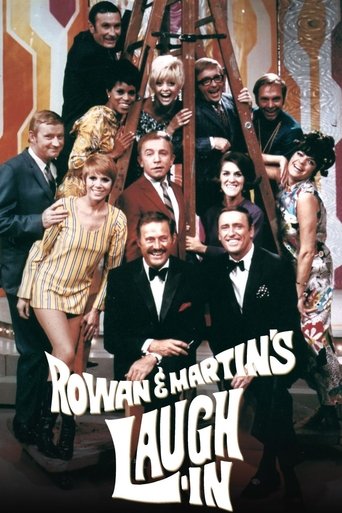
Rowan & Martin's Laugh-In (1968)
- ประเทศ
- สหรัฐอเมริกา
- ออกอากาศครั้งแรก
- 22 มกราคม 2511
- จำนวนตอน
- 140 ตอน (6 ซีซัน)
- ความยาวต่อตอน
- ประมาณ 60 นาที
- สถานะ
- จบแล้ว
- ตอนล่าสุด
- EP24/24 (12 มีนาคม 2516)
- ช่อง/แพลตฟอร์มต้นทาง
- NBC
- ผู้สร้าง
- George Schlatter, Ed Friendly
- เรตผู้ชม
- TV-PG
- คะแนน TMDB
- 6.8/10 (36 โหวต)
เรื่องย่อ Rowan & Martin's Laugh-In
Rowan & Martin's Laugh-In เป็นซีรี่ย์ฝรั่ง ปี 1968 มีทั้งหมด 140 ตอน สถานะจบแล้ว
ยังไม่มีเรื่องย่อภาษาไทย แสดงเรื่องย่อต้นฉบับภาษาอังกฤษ
An American sketch comedy television program hosted by comedians Dan Rowan and Dick Martin.
Rowan & Martin's Laugh-In ดูได้ที่ไหน (ถูกลิขสิทธิ์)
ดูฟรีมีโฆษณา
 Plex
Plex
เปิดแอปหรือเว็บไซต์ของผู้ให้บริการแล้วค้นหาชื่อเรื่องนี้ได้เลย ข้อมูลผู้ให้บริการในประเทศไทยจาก JustWatch อาจเปลี่ยนแปลงตามสัญญาลิขสิทธิ์ของแต่ละแพลตฟอร์ม
นักแสดง Rowan & Martin's Laugh-In
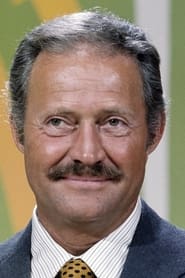 Dan Rowanรับบท Self - Host
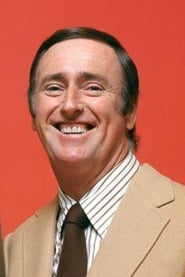 Dick Martinรับบท Self - Host
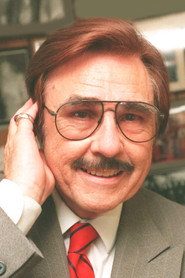 Gary Owensรับบท Regular Performer - Announcer
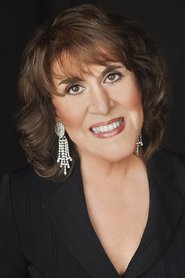 Ruth Buzziรับบท Regular Performer
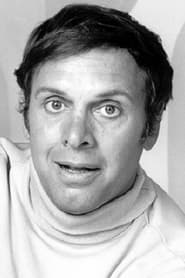 Alan Suesรับบท Regular Performer
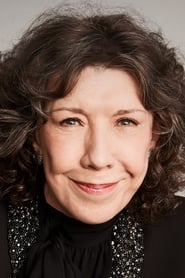 Lily Tomlinรับบท Regular Performer
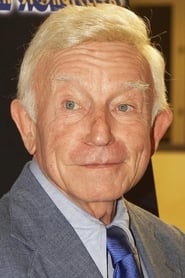 Henry Gibsonรับบท Regular Performer
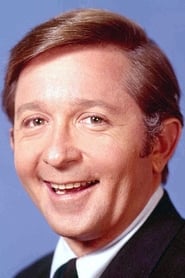 Arte Johnsonรับบท Self
- Johnny Brownรับบท Regular Performer
- Dennis Allenรับบท Regular Performer
 Jo Anne Worleyรับบท Self
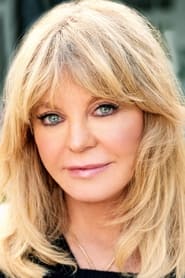 โกลดี ฮอว์นรับบท Self
ซีซันและรายชื่อตอน
- Rowan & Martin's Laugh-In Season 114 ตอน · 22 มกราคม 2511
- Rowan & Martin's Laugh-In Season 226 ตอน · 16 กันยายน 2511
- Rowan & Martin's Laugh-In Season 326 ตอน · 15 กันยายน 2512
- Rowan & Martin's Laugh-In Season 426 ตอน · 14 กันยายน 2513
- Rowan & Martin's Laugh-In Season 524 ตอน · 13 กันยายน 2514
- Rowan & Martin's Laugh-In Season 624 ตอน · 11 กันยายน 2515
รีวิว Rowan & Martin's Laugh-In จากทีมงาน
เจาะลึก Rowan & Martin's Laugh-In: เนื้อเรื่อง การสร้าง และเสียงวิจารณ์
Rowan & Martin's Laugh-In (often simply referred to as Laugh-In) is an American sketch comedy television program that ran for six seasons from January 22, 1968, to July 23, 1973, on the NBC television network. The show, hosted by comedians Dan Rowan and Dick Martin, originally aired as a one-time special on September 9, 1967, and was such a success that it was brought back as a series, replacing The Man from U.N.C.L.E. on Mondays at 8 pm (ET). It quickly became the most popular television show in the United States.
The title of the show was a play on 1960s Hippie culture "love-ins" or counterculture "be-ins", terms derived from the "sit-ins" common in protests associated with civil rights and antiwar demonstrations of the time. In the pilot episode, Dan Rowan explained the show's approach: "Good evening, ladies and gentlemen, and welcome to television's first Laugh-In. Now for the past few years, we have all been hearing an awful lot about the various 'ins'. There have been be-ins, love-ins, and sleep-ins. This is a laugh-in and a laugh-in is a frame of mind. For the next hour, we would just like you to sit back and laugh and forget about the other ins."
Laugh-In had its roots in the humor of vaudeville and burlesque, but its most direct influences were Olsen and Johnson's comedies (such as the free-form Broadway revue Hellzapoppin'), the innovative television works of Ernie Kovacs (George Schlatter's wife Jolene Brand appeared in Kovacs' shows), and the topical TV satire That Was the Week That Was. The show was characterized by a rapid-fire series of gags and sketches, many of which were politically charged or contained sexual innuendo. The co-hosts continued the exasperated straight-man (Rowan) and dumb-guy (Martin) double act that they had established as nightclub comics.
The show featured Gary Owens as the on-screen radio continuity announcer and an ensemble cast. Ruth Buzzi appeared throughout the show's six-year run, while others appeared in at least three seasons, including Judy Carne, Henry Gibson, Goldie Hawn, Arte Johnson, Jo Anne Worley, Alan Sues, Lily Tomlin, Dennis Allen, and Richard Dawson.
In 2002, Rowan & Martin's Laugh-In was ranked number 42 on TV Guide's 50 Greatest TV Shows of All Time.
Episodes
Laugh-In was designed to be lightly structured and consisted mainly of short comedic sketches. Some of these would reappear multiple times throughout an episode with variations on a theme, while others involved recurring characters created by the cast. In others, cast members and guest stars would simply appear as themselves, delivering jokes or reacting to a previous sketch. In addition to the announced guest star or stars of the evening, some recurring guest stars would appear unannounced multiple times through a season (which was easy to accomplish given the show's non-linear taping sessions). A trademark of the series was its (even shorter) blackout sketches, often involving rapid-fire cuts between two or more scenes or camera angles, set to a six-note musical sting (or at times, an elongated 16-note version). These were used as transitions into and out of commercials, among other uses.
Each show started with a batch of sketches leading into Gary Owens' introduction, in which the cast and announced guest star(s) would appear behind open doors of the show's iconic, psychedelically-painted "Joke Wall". Owens would also insert offbeat lines in his monotone, deadpan style, in the introductions and occasionally throughout the episode, generally facing a microphone to his side with one hand cupped to his ear. (Owens' character loosened up and became hipper in later seasons.)
After more short sketches leading into and out of the first commercial break, Rowan and Martin would walk in front of the show's homebase set to introduce the show and have a dialogue that generally consisted of Martin frustrating Rowan by derailing his attempt to do a proper introduction via misunderstandings or digressions.
Eventually, Rowan would end the introduction and invite the audience to the "Cocktail Party". This live to tape segment consisted of all cast members and occasional surprise celebrities dancing before a 1960s "mod" party backdrop, delivering one- and two-line jokes interspersed with a few bars of dance music. (This was similar in format to the "Word Dance" segments of A Thurber Carnival, and would later be imitated on The Muppet Show.)
Another weekly segment was "Laugh-In Looks at the News", which began with the female cast members singing the segment's opening theme in a differently costumed set piece each week, often with the help of the guest star. The news varied in presentation over the years, but in the earlier seasons started with Martin reading the "News of the Present", with Rowan providing "News of the Future" and sketches depicting the "News of the Past". Alan Sues, in his "Big Al" character, would provide a typically clueless sports report.
"Mod, Mod World" was a group of sketches introduced by Rowan and Martin that fit into an announced theme. This segment is notable for being interspersed with film clips of some of the female cast members (most frequently Carne and Hawn) performing go-go dancing in bikinis to the segment's burlesque-inspired theme, with the camera periodically zooming into jokes or images that had been painted onto their bodies. The segment also usually included an additional musical number based on the topic, performed by cast members at the beginning and end of the segment, as well as in short bridges between sketches.
At the end of every show, after a final dialogue, Rowan would turn to his co-host and say, "Say good night, Dick", to which Martin replied, "Good night, Dick!", leading into the final Joke Wall segment. The cast would pop out of their doors and either tell jokes to the camera, to each other, or to Rowan and Martin, who stood in front, or just yell out, "Good night, Dick!" This would lead into and continue under the closing credits. There would be one final batch of skits, including a closing appearance from Owens. Up until the finale of Season 4, the last gag would be Arte Johnson's character, Wolfgang, the German soldier. He would slowly rise up from among some plants, look into the camera and say with a thick German accent, "Veeeeery eeenterestingk!" This would bring the episode to a conclusion - almost. The very last thing the television audience would hear is brief applause from several people, then one person continuing to clap several seconds after all the credits had rolled. This was the conclusion to almost every show up to the Season 5 finale. For Season 6, the television audience would hear a woman laughing (Ruth Buzzi) very strangely long after the credits had rolled.
1967 special
September 9, 1967 was a one shot special, sponsored by Timex, with guest stars: Pamela Austin, Ken Berry, Judy Carne, Barbara Feldon, and featuring Ruth Buzzi, Henry Gibson, Larry Hovis, Arte Johnson, Monte Landis, Jo Anne Worley, and Paul Weston and His Orchestra.
Seasons 1–3
Season 1 ran from January to April 1968 with 14 episodes. Gary Owens joined the cast in the first episode along with series regulars Pamela Austin, Eileen Brennan, Judy Carne, Ruth Buzzi, Henry Gibson, Larry Hovis, Arte Johnson, and Jo Anne Worley. Goldie Hawn joined the cast in the third episode. She had been under contract to Good Morning World at the time of the pilot. Eileen Brennan, Barbara Feldon, and Jack Riley made frequent appearances in both season 1 and 2. Riley usually did skits as President Lyndon Johnson.
Ian Bernard (1930–2020) was the musical director for all 6 seasons. He composed the show's theme song along with numerous other pieces.
Billy Barnes composed special comic and topical songs for the show's cast and guest stars. He was regularly seen playing a golden grand piano to accompany solos by cast members such as Ruth Buzzi, Alan Sues, and Jo Anne Worley and guest stars such as Dinah Shore and Lena Horne.
Cast departures: all but Hovis continued on into Season 2.
Season 2 (1968–1969): New regulars included Chelsea Brown, Dave Madden, and Alan Sues.
Arte Johnson now insisted on star billing, apart from the rest of the cast. The producer mollified him by having on-screen radio continuity announcer Gary Owens read Johnson's credit as a separate sentence: "Starring Dan Rowan and Dick Martin! And Arte Johnson! With Ruth Buzzi..." This maneuver gave Johnson the star billing he wanted, but it also implied that he was still part of the ensemble cast.
Cast departures: Chelsea Brown and Dave Madden left at the end of season 2. Judy Carne officially left the show after episode 11 but did return for a few appearances in season 3.
Season 3 (1969–1970): New regulars included Johnny Brown, Byron Gilliam, Teresa Graves, Jeremy Lloyd, Pamela Rodgers, and Lily Tomlin. Gilliam was a dancer in seasons 1 to 2 and promoted to cast member this season. Both Brown and Tomlin joined late in this season.
Cast departures and changes: After the season finale, Gilliam returned to being a regular dancer in The Cocktail Party scene and in occasional skits. He remained until the end of the series. Graves, Hawn, Lloyd, and Worley left after the season 3 finale. Tomlin remained until the series ended in 1973.
Seasons 4–6
Season 4 (1970–1971): There were major changes to the set and new additions to the cast. The overall psychedelic look was replaced with a more avant-garde ambience. The Cocktail Party set now consisted of oversized cutouts of celebrity and historical figures. The show began to depart from both its hippie-esque "vibe" and humor and its leanings toward the counterculture of the 1960s. There were now significantly fewer jokes, less commentary about race relations, and less anti-Vietnam War sentiment.
New cast members: Nancie Phillips, Dennis Allen, writer-actress Ann Elder, and tap dancer Barbara Sharma.
Cast departures: Gibson left after episode 10, and Johnson left after the season 4 finale.
Notable visits for season 4: Goldie Hawn made a guest appearance in episode 3. After she left Laugh-In she made two movies, There's a Girl In My Soup and Cactus Flower, for which she won an Academy Award. Teresa Graves made two consecutive appearances toward the end of season 4.
Season 5 (1971–1972): Another new set design was introduced; it combined abstract art with avant-garde sensibilities. The Cocktail Party set now consisted of a main wall covered in mirrored tiles. The jokes, commentary, and overall humor became even more mainstream in Season 5, and there were more schtick and vaudeville-styled musical numbers. The few political jokes were mostly aimed at the Nixon administration. Around mid-season, the show began to air brief anti-drug messages at the end of each episode. In keeping with Laugh-In's groundbreaking nature, these messages strongly resembled 21st century GIFs.
New cast members: Hogan's Heroes alumni Richard Dawson and Larry Hovis; both had been part of season 1. Child actor Moosie Drier was also added, doing solo cameo jokes.
Cast departures after the season 5 finale: Brown, Elder, Hovis, Sharma, and Sues. Dawson remained until the series ended.
During season 5 the show also celebrated its 100th episode. Former cast regulars Carne, Gibson, Graves, Johnson, and Worley returned for the festivities. Frequent guest stars Tiny Tim and John Wayne were also on hand to celebrate. This was Wayne's first guest appearance since 1968.
Season 6 (1972–1973): This was Laugh-In's final season. Rowan and Martin assumed the executive producer roles from George Schlatter and Ed Friendly. A new set was designed that mixed abstract art with muted psychedelic colors. There was once again a visible studio audience. Ian Bernard, the show's musical director, and five other musicians became participants in the Cocktail Party scenes as the house band known as "Ian Bernard and His Band at Large". Owens would often incorrectly introduce them as "Ian Bernard and His Band of Irvine Quickies", " ...His Band of Lard" or "...His Band of Lies". Also new for the first few episodes was a group of six women dancers called "The Downtown Beauties", referring to the show's running joke of "beautiful downtown Burbank". The members of this group were in the Cocktail Party scenes and the group was featured for many of the musical numbers. The known names of these dancers are Janice Pennington, Mary Rowan (Dan's daughter), and Adele Yoshioko.
Cast (returning veterans): Allen, Buzzi, Dawson, Owens, and Tomlin. (New members): child actor Moosie Drier (promoted to cast member and teamed with child actor Tod Bass}, character comedian Brian Bressler (up to episode 10), comedienne Patti Deutsch, German model Lisa Farringer (episodes 13–24), Sarah Kennedy, folksy singer-comedian Jud Strunk, ventriloquist act Willie Tyler and Lester, and Donna Jean Young. Former regular Jo Anne Worley returned for two guest appearances, including the series finale.
Cast tenures
*Indicates an extended guest performer and not a regular cast member
All Seasons: Dan Rowan, Dick Martin, Gary Owens, and Ruth Buzzi
Special (1967): Pamela Austin, Ken Berry, Judy Carne, Barbara Feldon, Henry Gibson, Larry Hovis, Arte Johnson, Monte Landis, Jo Anne Worley, and Paul Weston and His Orchestra
Season 1 (1968): Eileen Brennan, Judy Carne, Henry Gibson, Goldie Hawn (episode 3 on), Larry Hovis, Arte Johnson, Roddy Maude-Roxby, Jo Anne Worley
Season 2 (1968–69): Chelsea Brown, Judy Carne, Arte Johnson, Henry Gibson, Goldie Hawn, Jo Anne Worley, Dave Madden, Alan Sues, "Sweet Brother" Dick Whittington* (through episode 14), Charlie Brill and Mitzi McCall – "The Fun Couple"* (through episode 11), Pigmeat Markham* (through episode 14), Jack Riley* (episodes 4, 7, 12, 13, 16), J. J. Barry (episodes 15–19)*, Byron Gilliam* (dancer), Barbi Benton* (dancer)
Season 3 (1969–70): Johnny Brown (episodes 22 and 24, originally introduced as "John Brown"), Judy Carne (through episode 12), Henry Gibson, Byron Gilliam (through episode 13, but continued as a dancer and in occasional cameos), Stu Gilliam* (episodes 14, 16, 19, 20, 26), Goldie Hawn, Teresa Graves, Jeremy Lloyd, Arte Johnson, Pamela Rodgers, Alan Sues, Lily Tomlin (from episode 15), Jo Anne Worley
Season 4 (1970–71): Dennis Allen, Johnny Brown, Ann Elder, Henry Gibson (through episode 10), Arte Johnson, Nancie Phillips (through episode 17), Alan Sues, Barbara Sharma, Lily Tomlin, Byron Gilliam* (dancer). In possible support of "AIM" – The American Indian Movement that began in 1968 – the producers hired Betty Ann Carr, of Cherokee heritage, Sandra Ego, of Mescalero Apache heritage, and Linda Redfearn, of Cherokee and Anglo ancestry, as dancers in the weekly Cocktail Party scene.
Season 5 (1971–72): Dennis Allen, Johnny Brown, Richard Dawson, Ann Elder, Larry Hovis, Barbara Sharma, Alan Sues, Lily Tomlin, Moosie Drier* (child), Mona Tera* (child, 6 episodes), Byron Gilliam* (dancer). Apparently, as an economic measure, producers Rowan and Martin gave performers the occasional week off, so not all cast members appear in every episode this season or the next. Apart from Dan and Dick, only Ruth Buzzi, Alan Sues, Lily Tomlin, and Gary Owens appeared in every episode.
Season 6 (1972–73): Dennis Allen, Moosie Drier (teamed with child actor Tod Bass through episode 10), Brian Bressler, Richard Dawson, Patti Deutsch, Lisa Farringer (episodes 13–24), Sarah Kennedy, Jud Strunk, Lily Tomlin, Willie Tyler and Lester, Donna Jean Young. Like the previous season, not all cast members appear in every episode. Only Ruth Buzzi and Gary Owens were considered essential to the program and thus appeared in every episode.
Dancers – All 6 Seasons (this list is incomplete): Terri Alexander, Jeanine Barrat, Barbi Benton, Sandahl Bergman, Betty Ann Carr, Pat Doty, Sandra Ego, Byron Gilliam, Jayne Kennedy, Millie Knight, Connie Kreski, Lisa Moore, Janice Pennington, Dolly Read (Dolly Martin), Linda Redfearn, Beverly Reed, Mary Rowan, Carol Richards, Adele Yoshioko.
Regular guest performers
Jack Benny (seasons 2–4, 6)
Johnny Carson (seasons 1–6)
Carol Channing (seasons 3–5)
Tony Curtis (seasons 2–3, 5)
Sammy Davis Jr. (seasons 1–4, 6)
Phyllis Diller (seasons 2–4, 6)
Barbara Feldon (seasons 1–2)
Zsa Zsa Gabor (seasons 2–3)
Bob Hope (seasons 1–2, 4)
Peter Lawford (seasons 1–4; Lawford became Dan Rowan's son-in-law in 1971)
Rich Little (seasons 2, 4, 6)
Jill St. John (seasons 1, 3, 5–6)
Tiny Tim (seasons 1–3, 5)
John Wayne (seasons 1–2, 5–6)
Flip Wilson (seasons 1–4)
Henny Youngman (seasons 2, 5–6)
The writers for Laugh-In were: George Schlatter, Paul W. Keyes (head writer), Larry Hovis (pilot only), Digby Wolfe, Hugh Wedlock Jr. and Allan Manings, Chris Bearde (credited as Chris Beard), Phil Hahn and Jack Hanrahan, Coslough Johnson (Arte Johnson's twin brother), Marc London and David Panich, Dave Cox, Jim Carlson, Jack Mendelsohn and Jim Mulligan, Lorne Michaels (before he became the producer of Saturday Night Live) and Hart Pomerantz, Jack Douglas, Jeremy Lloyd, John Carsey, Dennis Gren, Gene Farmer, John Rappaport and Stephen Spears, Jim Abell and Chet Dowling, Barry Took, E. Jack Kaplan, Larry Siegel, Jack S. Margolis, Don Reo and Allan Katz, Richard Goren (also credited as Rowby Greeber and Rowby Goren), Winston Moss, Gene Perret and Bill Richmond, Jack Wohl, Bob Howard and Bob DeVinney. Script supervisors for Laugh-In included Digby Wolfe (comedy consultant, season 1), Phil Hahn and Jack Hanrahan (season 2), Allan Manings (season 3), Marc London and David Panich (seasons 3–6), and Jim Mulligan (season 6).
Musical direction, production numbers and post-production
The musical director for Laugh-In was Ian Bernard. He wrote the opening theme music, "Inquisitive Tango" (used in Season 1 and again permanently from season 4), plus the infamous "What's the news across the nation" number. He wrote all the musical "play-ons" that introduced comedy sketches such as Lily Tomlin's character, Edith Ann, the little girl who sat in a giant rocking chair, and Arte Johnson's old man character, Tyrone, who always got hit with a purse. He also appeared in many of the Cocktail Party scenes, primarily Season 6, where he directed his band as they stopped and started between jokes. Composer-lyricist Billy Barnes wrote all of the original musical production numbers in the show, and often appeared on-camera, accompanying Johnson, Buzzi, Worley, or Sues, on a golden grand piano. Barnes was the creator of the Billy Barnes Revue of 1959 and 1960. For the entire 141-episode series of Laugh-In, including the pilot, the show's musical coordinator was West Coast bebop jazz pianist and composer Russ Freeman.
The show was recorded at NBC's Burbank facility using two-inch quadruplex videotape. As computer-controlled online editing had not been invented at the time, post-production video editing of the montage was achieved by the error-prone method of visualizing the recorded track with ferrofluid and cutting it with a razor blade or guillotine cutter and splicing with adhesive tape, in a manner similar to film editing. This had the incidental benefit of ensuring the preservation of the master tape, as a spliced tape could not be recycled for further use. Laugh-In editor Arthur Schneider won an Emmy Award in 1968 for his pioneering use of the "jump cut" – the unique editing style in which a sudden cut from one shot to another was made without a fade-out.
เนื้อหาส่วนนี้มาจากบทความ "Rowan & Martin's Laugh-In" ในวิกิพีเดีย (en.wikipedia.org) เผยแพร่ภายใต้สัญญาอนุญาตครีเอทีฟคอมมอนส์ แสดงที่มา-อนุญาตแบบเดียวกัน 4.0 (creativecommons.org/licenses/by-sa/4.0) มีการตัดส่วนอ้างอิงและจัดรูปแบบใหม่
คำถามที่พบบ่อยเกี่ยวกับ Rowan & Martin's Laugh-In
Rowan & Martin's Laugh-In มีกี่ตอน?
Rowan & Martin's Laugh-In มีทั้งหมด 140 ตอน รวม 6 ซีซัน สถานะปัจจุบัน: จบแล้ว
Rowan & Martin's Laugh-In ฉายวันไหน?
Rowan & Martin's Laugh-In เริ่มออกอากาศครั้งแรกวันที่ 22 มกราคม 2511
Rowan & Martin's Laugh-In ดูได้ที่ไหน?
ในประเทศไทยรับชม Rowan & Martin's Laugh-In แบบถูกลิขสิทธิ์ได้ที่ Plex
หมวดแนะนำ: ซีรี่ย์ netflix น่าดู · เรื่องถัดไป: State Plate
ซีรี่ย์ที่คล้ายกับ Rowan & Martin's Laugh-In
 ★ 7.7
★ 7.7Key & Peele (2012)
 EP30/30★ 8.0
Nick Cannon Presents: Wild 'N Out (2005)
 ★ 7.7
★ 7.7The Fast Show (1994)
 ★ 7.8
★ 7.8Second City Television (1976)
 ★ 7.2
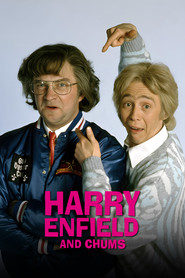
★ 7.2Harry Enfield and Chums (1994)
 ★ 6.7
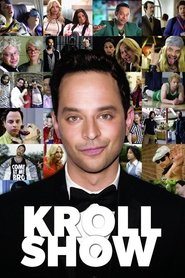
★ 6.7Kroll Show (2013)
 จบแล้ว 18 ตอน★ 6.8
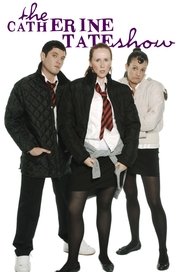
The Catherine Tate Show (2004)
 ★ 7.9
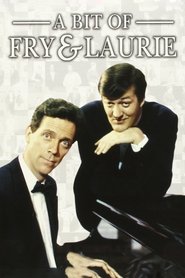
★ 7.9A Bit of Fry & Laurie (1989)
 ★ 7.4
★ 7.4French & Saunders (1987)
 ★ 6.6
★ 6.6Shifting Gears (2025)
 EP25/45★ 6.9
Good Mythical Morning (2012)
 ★ 7.1
★ 7.1