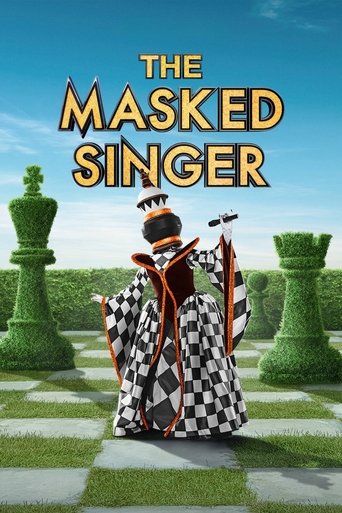
The Masked Singer (2019)
รายการวาไรตี้ซีรี่ย์ 2019เรียลลิตี้
- ชื่อภาษาอังกฤษ
- The Masked Singer
- ประเทศ
- สหรัฐอเมริกา
- ออกอากาศครั้งแรก
- 2 มกราคม 2562
- จำนวนตอน
- 185 ตอน (14 ซีซัน)
- ความยาวต่อตอน
- ประมาณ 43 นาที
- สถานะ
- ยังฉายอยู่
- ตอนล่าสุด
- EP12/12 (1 เมษายน 2569)
- ช่อง/แพลตฟอร์มต้นทาง
- FOX
- ผู้สร้าง
- Craig Plestis
- เรตผู้ชม
- TV-PG
- คะแนน TMDB
- 7.5/10 (125 โหวต)
เรื่องย่อ The Masked Singer
The Masked Singer เป็นรายการวาไรตี้ ปี 2019 มีทั้งหมด 185 ตอน สถานะยังฉายอยู่
ยังไม่มีเรื่องย่อภาษาไทย แสดงเรื่องย่อต้นฉบับภาษาอังกฤษ
Celebrities compete in a singing competition with one major twist: each singer is shrouded from head to toe in an elaborate costume, complete with full face mask to conceal his or her identity. One singer will be eliminated each week, ultimately revealing his or her true identity.
The Masked Singer ดูได้ที่ไหน (ถูกลิขสิทธิ์)
ยังไม่พบข้อมูลผู้ให้บริการที่มีลิขสิทธิ์เรื่องนี้ในประเทศไทย ต้นทางออกอากาศทาง FOX เราจะอัปเดตทันทีเมื่อมีแพลตฟอร์มนำเข้ามาฉาย
นักแสดง The Masked Singer
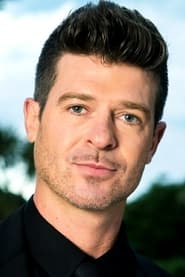 Robin Thickeรับบท Self - Panelist
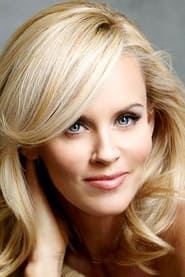 Jenny McCarthyรับบท Self - Panelist
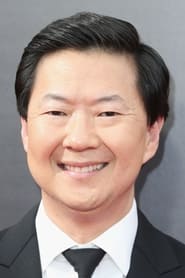 Ken Jeongรับบท Self - Panelist
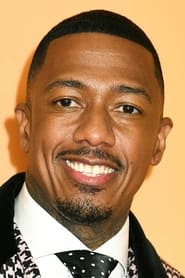 นิก แคนนอนรับบท Self - Host
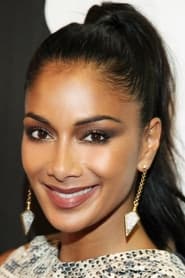 Nicole Scherzingerรับบท Self - Panelist
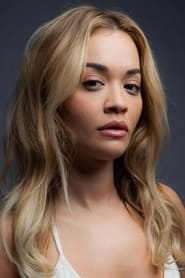 Rita Oraรับบท Self - Panelist
 Joel McHaleรับบท Self - Guest Panelist
 ที-เพนรับบท Self - Video Message
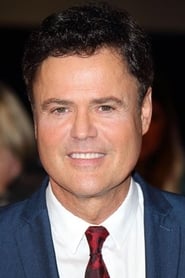 Donny Osmondรับบท Peacock
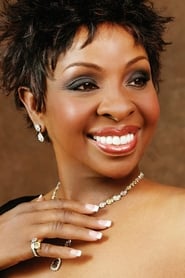 Gladys Knightรับบท Self - Video Message
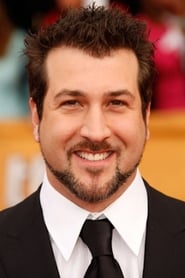 Joey Fatoneรับบท Rabbit (archive footage)
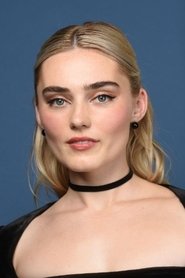 Meg Donnellyรับบท Self - Coral
ซีซันและรายชื่อตอน
- The Masked Singer Season 110 ตอน · 2 มกราคม 2562
- The Masked Singer Season 213 ตอน · 25 กันยายน 2562
- The Masked Singer Season 322 ตอน · 2 กุมภาพันธ์ 2563
- The Masked Singer Season 413 ตอน · 23 กันยายน 2563
- The Masked Singer Season 512 ตอน · 10 มีนาคม 2564
- The Masked Singer Season 615 ตอน · 22 กันยายน 2564
- The Masked Singer Season 711 ตอน · 9 มีนาคม 2565
- The Masked Singer Season 812 ตอน · 21 กันยายน 2565
- The Masked Singer Season 914 ตอน · 15 กุมภาพันธ์ 2566
- The Masked Singer Season 1013 ตอน · 10 กันยายน 2566
- The Masked Singer Season 1113 ตอน · 6 มีนาคม 2567
- The Masked Singer Season 1212 ตอน · 25 กันยายน 2567
- The Masked Singer Season 1313 ตอน · 12 กุมภาพันธ์ 2568
- The Masked Singer Season 1412 ตอน · 6 มกราคม 2569
รีวิว The Masked Singer จากทีมงาน
เจาะลึก The Masked Singer: เนื้อเรื่อง การสร้าง และเสียงวิจารณ์
The Masked Singer (abbreviated as TMS) is an American reality singing competition television series that premiered on Fox on January 2, 2019. It is part of the Masked Singer franchise that originated from the South Korean version of the show King of Mask Singer, which features celebrities singing songs while wearing head-to-toe costumes and face masks concealing their identities. Hosted by Nick Cannon, the program employs panelists who guess the celebrities' identities by interpreting clues provided to them throughout each season. Ken Jeong, Jenny McCarthy Wahlberg, Rita Ora, Robin Thicke, and previously Nicole Scherzinger appear in each episode and vote alongside an audience for their favorite singer after all performances have concluded. The first least popular is eliminated, taking off their mask to reveal their identity.
To prevent their identities from being revealed before each pre-recorded episode is broadcast, the program makes extensive use of code names, disguises, non-disclosure agreements, and a team of security guards. While television critics have had mixed reviews for the series and particularly negative opinions of its panelists, the costumes have attracted praise. Inspired by haute couture, they were designed in the first six seasons by Marina Toybina, who won a Costume Designers Guild Award and two Creative Arts Emmy Awards. Other production staff won or received nominations for various labor union awards, and the show has won or been nominated for awards presented by the Academy of Television Arts & Sciences, Critics Choice Association, and Hollywood Critics Association.
The first five seasons received the highest Nielsen ratings for a non-sports program in the key demographic of adults 18–49. Two spin-offs—an aftershow and a dance version, The Masked Dancer—followed as a result. The growth of the Masked Singer franchise has been credited to the show's success, as has an interest in adapting similar South Korean reality television series and other television formats centered on costumes. Media and merchandise associated with the series includes a podcast, clothing, accessories, NFTs, and a stage show.
The show's fourteenth season aired January–April 2026. In May 2026, the show was renewed for a fifteenth season.
Format
Each season of The Masked Singer features a group of celebrity contestants. In a typical episode, four to six contestants anonymously in costume each sing a 90-second cover for panelists and an audience. Hints to their identities—known as the "clue package"—are given before and occasionally after each performs. The perennial format is a taped interview with a celebrity's electronically masked voice narrating a video showing cryptic allusions to what they are known for. During screenings of the clue packages, after performances, and before an elimination, the panelists are given time to speculate on each singer's identity out loud and write comments in note binders. They may ask questions and the host may offer additional clues. After performances conclude, the audience and panelists vote for their favorite singer using an electronic device. The show uses a weighted voting system; panelists' and audience members' votes are worth 50 percent each and combined to form a score. The least popular contestant then takes off their mask to reveal their identity. This process of elimination continues for a set number of episodes until three contestants remain in the season finale, and one is declared the winner after they perform again. The "Golden Mask" trophy is awarded as a prize.
Voting does not occur for certain performances; contestants in an episode might occasionally sing as a group, and each episode concludes with the eliminated celebrity singing an encore unmasked. Occasionally, the eliminated celebrity sings their signature song unmasked. To continue attracting viewers, producers often modify the format each season. Except in the first, fifth and sixth seasons, a "smackdown" round is featured in select episodes in which the two least popular competitors from their first performances sing one after another on the same stage, and a second, eliminating vote occurs. Since the second season, the contestants are initially divided and only compete in a designated subgroup. A "Golden Ear" trophy awarded to the panelist with the most correct first impression guesses at the end of a season was introduced for the fourth, and until the sixth, as was a reduction of performances and the audience viewing and voting remotely. These elements continued in the fifth seasons, and "wildcard" contestants who perform at the end of certain episodes competed for the first time.
Panelists and host
The permanent panel consists of actor and comedian Ken Jeong, television personality Jenny McCarthy Wahlberg, recording artist Nicole Scherzinger until season 10, and singer-songwriter Robin Thicke. A guest occasionally appears as a fifth panelist during an episode; Joel McHale has served as a guest panelist in almost every season, and previous seasons' winners have appeared. Nick Cannon hosts the show; his role was considered unclear in July 2020 after making anti-Semitic statements Fox said "inadvertently promoted hate". The network accepted Cannon's apology, and he pledged to donate his first paycheck from the fourth season to the Simon Wiesenthal Center after visiting with its officials. Niecy Nash acted as guest host for the first five episodes of the fifth season after Cannon tested positive for COVID-19. Recording artist Rita Ora, a panelist on the British version of the show, has substituted for Scherzinger since the eleventh season while Scherzinger appeared in the West End and Broadway revivals of Sunset Boulevard.
Conception and development
The Masked Singer is based on the 2015 South Korean television series King of Mask Singer, which is the originator of the Masked Singer franchise. Executive producer Craig Plestis noticed the format in October 2017 at a Thai restaurant in Los Angeles. While waiting for dinner, he observed the other patrons staring at a television playing an episode of the Thai version of the show. Intrigued, Plestis researched the series online and contacted an executive of MBC America, a subsidiary of the producer and broadcaster of the South Korean program, Munhwa Broadcasting Corporation (MBC). With the help of his agent, Steve Wohl of Paradigm Talent Agency, Plestis secured the rights to produce an American adaptation from the company. Following the creation of a showreel, he pitched the series to several outlets, all of whom rejected the idea. Plestis then met with Fox executive Rob Wade who said he "responded ... right away" to the concept and considered its uniqueness among celebrity singing competitions a strength. After successfully pitching the program under the condition A-list celebrities participate, Plestis began developing it in November.
In January 2018, executive producer and showrunner Izzie Pick Ibarra became involved to help cast celebrities and Americanize the format. While The Masked Singer retains elements of the South Korean version, the structure and style are different. Rather than follow a tournament process in which singers perform against each other in multiple rounds, with the winner of the final round facing the previous episode's champion in an attempt to become the new "Mask King", Pick Ibarra opted to produce one elimination per episode, emphasize the clue package and guessing components, and have the celebrities wear more extravagant costumes. Plestis agreed, wanting to create a story arc throughout the episodes and—unlike the South Korean show—reuse the costumes. During performances, the production value is emphasized rather than panelists guessing which celebrity is singing.
On August 2, 2018, Fox ordered the series and released a trailer. Endemol Shine North America produced the first season due to Plestis' relationship with the studio. Following it, production transitioned to a new in-house studio, Fox Alternative Entertainment, which is more financially favorable for the network. Since the second and third seasons, respectively, Rosie Seitchik and Cannon have served as executive producers alongside Plestis. Pick Ibarra exited the series following the third and James Breen assumed her roles in subsequent seasons. Numerous production and format changes were implemented due to the COVID-19 pandemic, and testing and safety requirements increased the show's budget.
In May 2026, it was reported that Fox would be subcontracting production to Fremantle-owned Eureka Productions beginning with season 15. It was also reported that Eureka intended to relocate production from Los Angeles to New Jersey to take advantage of local tax credits for television production, and also enhance its ability to book New York City-based talent to appear on the show. It was later revealed that filming would relocate to the Meadowlands Arena in East Rutherford, New Jersey.
Casting
Since signing a deal with him in 2018, Fox offered Cannon multiple opportunities to host or produce other television programs, though none interested him. After being fascinated by the Masked Singer concept when presented with it, Cannon joined the show, believing it was "either going to be a huge failure or a huge hit". Pick Ibarra cited him as her number one choice for the role because of his personality and experience. Regarding the panelists, she said the production team was less concerned with selecting those with an ability to critique participants' singing abilities than creating a comedic tone for the series as one of their goals was to reassure celebrities they would not be ridiculed for appearing. Jeong was the first panelist to be signed on due to his humour and pre-existing knowledge of the South Korean version, followed by McCarthy Wahlberg and Thicke because of their enthusiasm regarding the concept, and Scherzinger for her positivity and experience as a singer. According to Plestis, he "only wanted [to cast] people who loved the program, not people who wanted to work on [it]". Unsure whether it would last more than one season, Jeong originally considered The Masked Singer a temporary job while he looked for a permanent role following the cancellation of his sitcom Dr. Ken. Thicke later questioned whether he would have taken the role "if [he had] still been No. 1 on the radio" and Scherzinger said she signed on to the show the day before filming began. In March 2019, Sharon Osbourne stated she was supposed to be signed on as a panelist, claiming those plans fell through when she was being contractually obligated to appear as a judge on The X Factor.
The show's producers reach out to celebrities via agents or vice versa. Wade said producers' goal is to cast celebrities of varying ages, genders, and backgrounds to appeal to as broad an audience as possible. In addition to "super big names", they prefer lesser-known celebrities because it is harder to guess them. To surprise viewers with an unknown talent when unmasked, those who are not professional singers are desired, though some must send producers recordings of them singing as a quasi-audition. All are given questionnaires before competing and asked if they have claustrophobia. Due to her strategy of sending potential participants sketches of costumes that might be featured, Pick Ibarra said casting for the first season "was not nearly as hard as [she] anticipated", though several celebrities were reluctant to compete. Following its success, an increased number were interested in participating in the second. By the third, Plestis said casting became "a lot easier".
Security
Before each participant is unmasked, the show's staff undertake significant security precautions to prevent the release of their identities. According to Plestis, the series has two bibles: one related to the format and a second, larger one for security measures. Everyone involved signs a non-disclosure agreement which prevents them from releasing information about the show until its broadcast. After a celebrity is confirmed to appear, they are allowed to inform a few others who also sign one. Outside of those, approximately 25 people know the contestants' real names during a season, though they never refer to them as such. Most are from Fox and the show's legal department; Cannon, the director, and the majority of the program's 150-person crew do not know who the celebrities are until they are unmasked. To prevent identities from being revealed in the event of a leak or hack, all documents except the contract only list participants' costume names. Although the contracts do give their real names, the series' name is unlisted. If a leak occurs, the network does not recognize it.
Before arriving on the show's set, celebrities and their family, friends, and agents are disguised and typically driven from a neutral location. If driven from their houses, chauffeurs are instructed to "take long, circuitous routes ... to throw off any would-be tails". The manager of Joey Fatone, "Rabbit" in the first season, said he was picked up at a 7-Eleven near Television City, given a disguise, and driven inside the gate. "Flamingo" in the second season, Adrienne Bailon-Houghton, stated she was taken to the set inside of an unmarked black car and only discussed her involvement on the show with producers in a "secret warehouse". When contestants arrive on the studio lot, personnel at the gate are not given their names. Each participant is escorted to and from their trailers outside of the set by security guards while disguised with a mask, visor, gloves, pants, and a hoodie to prevent their skin from showing. According to Scherzinger, they also escort panelists directly to their dressing rooms after arriving.
Due to the show's security, celebrities said they never encountered another masked participant on set, or if they did, could not speak to them. They are only allowed to communicate with those who wear a special cloth on the back of their clothing which is changed each season to prevent replication or those who wear a shirt with the words "Talk to Me". To do so, they use a portable voice changer or write on a whiteboard. Before performing, they are trained to use different body language and mannerisms than their own. The production crew is discouraged from using their phones during filming and the studio audience walks through a metal detector and has their phones placed in a Yondr magnetic pouch before entering the set. The panelists also forfeit their phones during tapings, and their note binders are placed "in a vault" after each to keep them private.
Costumes
The series' costumes are designed by Marina Toybina. In addition to her ideas, she considers celebrities' and producers' requests to formulate initial concepts. Each is designed to be dissimilar from those featured in previous seasons and other versions of the Masked Singer franchise by using different sewing and fabrication techniques. After researching "fur and skin textures, historical wardrobe, [and] anything that might be relevant to each character", Toybina sketches each concept with a pencil and works with an illustrator to create a digital version with a 3D effect. Producers review each design and note adjustments to be made. As a result, Toybina may sketch multiple versions before they collectively decide which will be featured during a season. Based on their background and what might suit them well, participants are presented with several to select from. Their reason for choosing a costume can differ; some have an emotional connection while others want to move around freely during performances.
After handpicking which fabrics and materials to use based on celebrities' mobility and performing abilities, Toybina collaborates with manufacturers and a team of about 15 people to custom-make each costume. They are created concurrently over two to three months, taking about two to four weeks per mask, and two to four weeks per costume. Beginning as a wire, foam is gradually added around each mask to create an easy-to-wear helmet shape for the performers and a chinstrap often accompanies each to prevent movement. As production time is limited, the team has no opportunity to experiment with different materials—"all garments are ... cut right away on the original fabric". Since "the draping and the handwork [are] all done the old school way", she cited couturiers such as Alexander McQueen, Thierry Mugler, and Hussein Chalayan as inspirations. 3D printing was used for the first time in the fourth season, and the first two-person costume, the first with animatronics, and the first puppet costume were featured. Although adjustments may be made to customize them to celebrities' likings, most costumes turn out identical to her sketches.
A maximum of two fittings are conducted with each celebrity at either the costume shop or Toybina's studio in which a "limited number of people" are present. Before filming occurs, Toybina conducts creative meetings with "every single department" of the show to discuss how to perfect the costumes' looks on camera. Contestants are in costume for no more than 30 minutes at once. During this time, they may wear cooling vests to limit heat exposure and hoods to absorb sweat. Hidden screens inside each mask help them breathe and sing clearly. For those who wear a mask detached from their costume's body, a face stocking, paint, or makeup is used to disguise their skin color. Costumes are sanitized between tapings and repaired if needed as no backups exist.
Toybina left her role following the sixth season, with Tim Chappel, who served as the costume designer for the Australian version of the show, taking her spot beginning in the seventh season.
Set
According to its designer James Pearse Connelly, the set is based on the Thai version of the show and is inspired by the stage designs of electronic dance music festivals. The front is X-shaped and features an LED interior (allowing for video to be played) enclosed with smoked, tinted glass, while the back is made of shiny black laminate and contains space for trap doors and special effects underneath. The performance floor is flat to prevent tripping hazards and is bordered upstage by two 25-foot-tall (7.6 m) polygon faces with wide mouths as entrances and exits. A curved LED screen spans the space between the faces and a large logo of the show is hung above it.
The stage is surrounded by seats for about 300 audience members and the panelists are seated behind them on a raised platform at a mask-shaped desk. The panelists' placement away from the stage allows them to move around during performances, helping the director tell a story. Rather than sitting and speaking into a microphone attached to the desk which would limit their mobility, the panelists wear miniature headsets made by Shure. Many on-stage set pieces were replaced with virtual reality elements and the panelists' desk was lengthened due to social distancing requirements during filming in the COVID-19 pandemic. Backstage, a Batcave-inspired area contains costumes displayed like mannequins in a museum.
Song selection and rehearsals
Pick Ibarra said selecting which songs they sing is a collaborative process; both the performers and producers submit "ideas [which] merge as [the songs] go through the clearance process". While music publishers were reluctant to grant licenses for use in the first season as they were not told who would be performing their songs, this process became easier by the second. Producers gravitate towards songs "that help tell the overall story" of one's costume and ask those who are famous singers to select songs of a genre they are not known for so viewers will be surprised when they are revealed. Tyler "Ninja" Blevins, "Ice Cream" in the second season, stated he "definitely got to pick the songs", but producers wanted them to be mainstream so viewers would connect to them. Other contestants remarked they sometimes disagreed with producers' song choices. Multiple songs are chosen and practiced at the same time; some will not be performed if a contestant is eliminated.
Before the competition, vocal coaches and choreographers work with the celebrities for multiple days to determine their strengths and help improve their technique. Tori Spelling, "Unicorn" in the first season, said contestants are given three weeks to practice before their first performance, although only a couple of rehearsals are conducted before then, and the amount of practice time becomes shorter as the season progresses. According to director Alex Rudzinski, contestants generally practice in the week leading up to their performances. Their first rehearsals on stage occur for about half an hour the day before a taping, and a 10–15 minute "camera dress rehearsal sequence" is conducted several hours before filming. Celebrities may train on their own time to better compete and do cardio exercises to prepare for performances.
Clue packages
Each celebrity attends one or two voice-over sessions to record audio for their respective clue packages. Due to the length and varying filming locations of the video component, stand-ins are used to give them additional performance practice time. In describing their creation, Wade said "you have to plan stuff and at least drive people down avenues". They may reveal a contestant is an athlete, but not the sport they compete in. McCartney said contestants are interviewed every week of the competition and have their answers fact-checked by producers. Producers listen to podcasts and read contestants' books; if a fact is on Wikipedia, they try to avoid mentioning it. No physical filming occurred in the fourth season due to the COVID-19 pandemic; producers worked with Fox-owned Bento Box Entertainment to create animated videos.
เนื้อหาส่วนนี้มาจากบทความ "The Masked Singer (American TV series)" ในวิกิพีเดีย (en.wikipedia.org) เผยแพร่ภายใต้สัญญาอนุญาตครีเอทีฟคอมมอนส์ แสดงที่มา-อนุญาตแบบเดียวกัน 4.0 (creativecommons.org/licenses/by-sa/4.0) มีการตัดส่วนอ้างอิงและจัดรูปแบบใหม่
คำถามที่พบบ่อยเกี่ยวกับ The Masked Singer
The Masked Singer มีกี่ตอน?
The Masked Singer มีทั้งหมด 185 ตอน รวม 14 ซีซัน สถานะปัจจุบัน: ยังฉายอยู่
The Masked Singer ฉายวันไหน?
The Masked Singer เริ่มออกอากาศครั้งแรกวันที่ 2 มกราคม 2562
The Masked Singer ดูได้ที่ไหน?
ขณะนี้ยังไม่พบแพลตฟอร์มที่มีลิขสิทธิ์ The Masked Singer ในประเทศไทย
หมวดแนะนำ: ซีรี่ย์วาย · เรื่องถัดไป: House Hunters International
ซีรี่ย์ที่คล้ายกับ The Masked Singer
 EP6/9★ 5.9
The Voice (2011)
 EP16/16★ 6.7
American Idol (2018)
 EP5/12★ 6.2
Dancing with the Stars (2005)
 EP9/9★ 6.5
Squid Game: The Challenge สควิดเกม เดอะ ชาเลนจ์ (2023)
 EP7/7★ 7.7
Celebrity Family Feud (2015)
 EP11/14★ 7.2
The Challenge (1998)
 ★ 6.1
★ 6.1Celebrity Big Brother (2018)
 EP15/15★ 6.5
Pointless (2009)
 ★ 7.0
★ 7.0The Glee Project (2011)
 EP10/10★ 7.4
Beast Games บีสต์เกมส์ (2024)
 EP15/21★ 6.3
The Price Is Right (1972)
 EP4/10★ 8.3