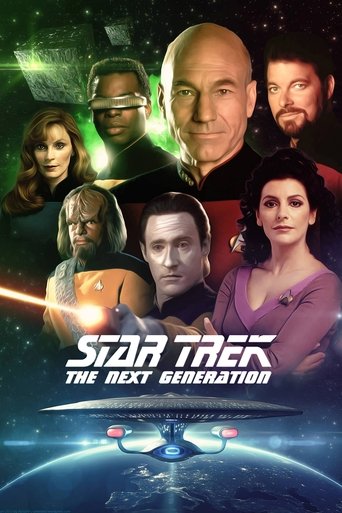
Star Trek: The Next Generation สตาร์ เทรค: เดอะ เน็กซ์ เจเนอเรชัน (1987)
ซีรี่ย์ฝรั่งซีรี่ย์ 1987ไซไฟแฟนตาซีแอ็กชันผจญภัยดราม่าลึกลับ
- ชื่อไทย
- สตาร์ เทรค: เดอะ เน็กซ์ เจเนอเรชัน
- ชื่อต้นฉบับ
- Star Trek: The Next Generation
- ประเทศ
- สหรัฐอเมริกา
- ออกอากาศครั้งแรก
- 28 กันยายน 2530
- จำนวนตอน
- 176 ตอน (7 ซีซัน)
- ความยาวต่อตอน
- ประมาณ 45 นาที
- สถานะ
- จบแล้ว
- ตอนล่าสุด
- EP25/25 (23 พฤษภาคม 2537)
- ช่อง/แพลตฟอร์มต้นทาง
- Syndication
- ผู้สร้าง
- Gene Roddenberry
- เรตผู้ชม
- TV-PG
- คะแนน TMDB
- 8.4/10 (1,872 โหวต)
เรื่องย่อ Star Trek: The Next Generation สตาร์ เทรค: เดอะ เน็กซ์ เจเนอเรชัน
Star Trek: The Next Generation สตาร์ เทรค: เดอะ เน็กซ์ เจเนอเรชัน เป็นซีรี่ย์ฝรั่ง ปี 1987 มีทั้งหมด 176 ตอน สถานะจบแล้ว
สิบปีหลังจากการผจญภัยของยานเอนเทอร์ไพรซ์เดิม กัปตัน ฌอง ลุค พิคาร์ด เป็นผู้นำแห่งยานเอนเทอร์ไพรซ์ลำใหม่สู่ภารกิจสำรวจโลกที่ยังไม่รู้จัก
Star Trek: The Next Generation สตาร์ เทรค: เดอะ เน็กซ์ เจเนอเรชัน ดูได้ที่ไหน (ถูกลิขสิทธิ์)
ยังไม่พบข้อมูลผู้ให้บริการที่มีลิขสิทธิ์เรื่องนี้ในประเทศไทย ต้นทางออกอากาศทาง Syndication เราจะอัปเดตทันทีเมื่อมีแพลตฟอร์มนำเข้ามาฉาย
นักแสดง Star Trek: The Next Generation สตาร์ เทรค: เดอะ เน็กซ์ เจเนอเรชัน
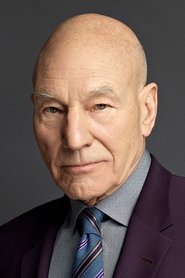 แพทริก สจวร์ตรับบท Jean-Luc Picard
 Jonathan Frakesรับบท William T. Riker
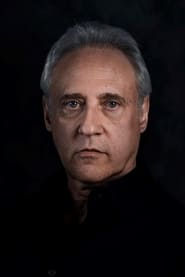 Brent Spinerรับบท Data
 LeVar Burtonรับบท Geordi La Forge
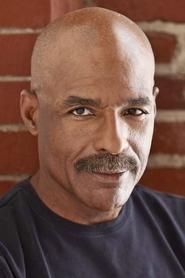 Michael Dornรับบท Worf
 Marina Sirtisรับบท Deanna Troi
 Gates McFaddenรับบท Beverly Crusher
 Wil Wheatonรับบท Wesley Crusher
 Tracee Coccoรับบท Jae (uncredited)
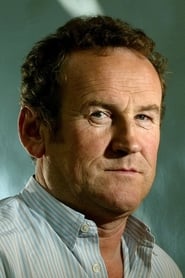 Colm Meaneyรับบท Miles O'Brien
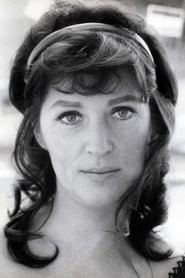 Majel Barrettรับบท Narrator (voice) (uncredited)
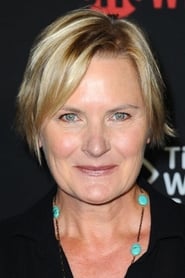 Denise Crosbyรับบท Tasha Yar
ซีซันและรายชื่อตอน
- Star Trek: The Next Generation สตาร์ เทรค: เดอะ เน็กซ์ เจเนอเรชัน ซีซั่น 125 ตอน · 28 กันยายน 2530
- Star Trek: The Next Generation สตาร์ เทรค: เดอะ เน็กซ์ เจเนอเรชัน ซีซั่น 222 ตอน · 21 พฤศจิกายน 2531
- Star Trek: The Next Generation สตาร์ เทรค: เดอะ เน็กซ์ เจเนอเรชัน ซีซั่น 326 ตอน · 25 กันยายน 2532
- Star Trek: The Next Generation สตาร์ เทรค: เดอะ เน็กซ์ เจเนอเรชัน ซีซั่น 426 ตอน · 24 กันยายน 2533
- Star Trek: The Next Generation สตาร์ เทรค: เดอะ เน็กซ์ เจเนอเรชัน ซีซั่น 526 ตอน · 23 กันยายน 2534
- Star Trek: The Next Generation สตาร์ เทรค: เดอะ เน็กซ์ เจเนอเรชัน ซีซั่น 626 ตอน · 21 กันยายน 2535
- Star Trek: The Next Generation สตาร์ เทรค: เดอะ เน็กซ์ เจเนอเรชัน ซีซั่น 725 ตอน · 20 กันยายน 2536
รีวิว Star Trek: The Next Generation สตาร์ เทรค: เดอะ เน็กซ์ เจเนอเรชัน จากทีมงาน
เจาะลึก Star Trek: The Next Generation สตาร์ เทรค: เดอะ เน็กซ์ เจเนอเรชัน: เนื้อเรื่อง การสร้าง และเสียงวิจารณ์
Star Trek: The Next Generation (TNG) is an American science fiction television series created by Gene Roddenberry. It originally aired from September 28, 1987, to May 23, 1994, in syndication, spanning 178 episodes over seven seasons. The third series in the Star Trek franchise, it was inspired by Star Trek: The Original Series. Set in the latter third of the 24th century, when Earth is part of the United Federation of Planets, it follows the adventures of a Starfleet starship, the USS Enterprise (NCC-1701-D), in its exploration of the Alpha quadrant and Beta quadrant in the Milky Way galaxy.
In the 1980s, Roddenberry—who was responsible for the original Star Trek, Star Trek: The Animated Series (1973–1974), and the first of a series of films—was tasked by Paramount Pictures with creating a new series in the franchise. He decided to set it one century after the events of his original series. The Next Generation featured a new crew: Patrick Stewart as Captain Jean-Luc Picard, Jonathan Frakes as William Riker, Brent Spiner as Data, Michael Dorn as Worf, LeVar Burton as Geordi La Forge, Marina Sirtis as Deanna Troi, Gates McFadden as Dr. Beverly Crusher, Denise Crosby as Tasha Yar, Wil Wheaton as Wesley Crusher, and a new Enterprise.
Roddenberry, Maurice Hurley, Rick Berman, Michael Piller, and Jeri Taylor served as executive producers at various times throughout its production. The series was broadcast in first-run syndication with dates and times varying among individual television stations. Stewart's voice-over introduction during each episode's opening credits stated the starship's purpose:
Space: The final frontier. These are the voyages of the Starship Enterprise. Its continuing mission: to explore strange new worlds, to seek out new life and new civilizations, to boldly go where no one has gone before.
The show reached almost 12 million viewers in its fifth season, with the series finale in 1994 watched by over 30 million viewers. Due to its success, Paramount commissioned Rick Berman and Michael Piller to create a fourth series in the franchise, Star Trek: Deep Space Nine, which launched in 1993. The characters from The Next Generation returned in four films: Star Trek Generations (1994), Star Trek: First Contact (1996), Star Trek: Insurrection (1998), and Star Trek: Nemesis (2002), and in the television series Star Trek: Picard (2020–2023). The series is also the setting of numerous novels, comic books, and video games. It received many accolades, including 19 Emmy Awards, two Hugo Awards, one Peabody Award, and six Saturn Awards, including a Lifetime Achievement Award for the entire cast in 2024.
In 2013, the Writers Guild of America ranked Star Trek: The Next Generation #79 on their list of the 101 Best Written TV Series, tying it with Upstairs, Downstairs, Monty Python's Flying Circus and Alfred Hitchcock Presents.
Background
Due to the popularity of the original series in syndication, Paramount Pictures began to consider making a Star Trek film as early as 1972. However, with 1977's release of Star Wars, Paramount decided not to compete in the science fiction movie category and shifted their efforts to a new Star Trek television series. The Original Series actors were approached to reprise their roles; sketches, models, sets and props were created for Star Trek: Phase II until Paramount changed its mind again and decided to create feature films starring the Original Series cast.
By 1986, 20 years after the original Star Trek's debut on NBC, the franchise's longevity amazed Paramount Pictures executives. Chairman Frank Mancuso Sr. observed that "The shelf life in this business is usually three days. To flourish for 20 years..." He and others described Trek as the studio's "crown jewel", a "priceless asset" that "must not be squandered". The series was the most popular syndicated television program 17 years after cancellation, and the Harve Bennett-produced, Original Series-era Star Trek films did well at the box office. William Shatner and Leonard Nimoy's salary demands for the film Star Trek IV: The Voyage Home (1986) caused the studio to plan for a new Star Trek television series. Paramount executives worried that a new series could hurt the demand for the films, but decided that it would increase their appeal on videocassette and cable, and that a series with unknown actors would be more profitable than paying the films' actors' large salaries. Roddenberry initially declined to be involved, but came on board as creator after being unhappy with early conceptual work. Star Trek: The Next Generation was announced on October 10, 1986, and its cast in May 1987.
Paramount executive Rick Berman was assigned to the series at Roddenberry's request. Roddenberry hired a number of Star Trek veterans, including Bob Justman, D. C. Fontana, Eddie Milkis and David Gerrold. Early proposals for the series included one in which some of the original series cast might appear as "elder statesmen", and Roddenberry speculated as late as October 1986 that the new series might not even use a spaceship, as "people might travel by some [other] means" 100 years after the USS Enterprise. A more lasting change was his new belief that workplace interpersonal conflict would no longer exist in the future; thus, the new series did not have parallels to the frequent "crusty banter" between Kirk, Spock, and Leonard McCoy. According to series actor Patrick Stewart, Berman was more receptive than Roddenberry to the series addressing political issues.
The series' music theme combined the fanfare from the original series theme by Alexander Courage with Jerry Goldsmith's theme for Star Trek: The Motion Picture (1979). Some early episodes' plots derived from outlines created for Star Trek: Phase II. Additionally, some sets used in the Original Series-era films were redressed for The Next Generation, and in turn used for subsequent Original Series films. Part of the transporter room set in TNG was used in the original Star Trek's transporter set.
Syndication and profitability
Despite Star Trek's proven success, NBC and ABC only offered to consider pilot scripts for the new series, and CBS offered to air a miniseries that could become a series if it did well. Paramount executives were offended that the Big Three television networks treated their most appealing and valuable property like any other series. Fox wanted the show to help launch the new network, but wanted it by March 1987, and would only commit to 13 episodes instead of a full season. The unsuccessful negotiations convinced the studio that it could only protect Star Trek with full control.
Paramount increased and accelerated the show's profitability by choosing to instead broadcast it in first-run syndication on independent stations (whose numbers had more than tripled since 1980) and Big Three network affiliates. The studio offered the show to local stations for free as barter syndication. The stations sold five minutes of commercial time to local advertisers and Paramount sold the remaining seven minutes to national advertisers. Stations had to commit to purchasing reruns in the future, and only those that aired the new show could purchase the popular reruns of the Original Series.
The studio's strategy succeeded. Most of the 150 stations airing reruns of the original Star Trek wanted to prevent a competitor from airing the new show; ultimately, 210 stations covering 90% of the United States became part of Paramount's informal nationwide network for TNG. In early October 1987, more than 50 network affiliates pre-empted their own shows for the series pilot, "Encounter at Farpoint". One station predicted that "Star Trek promises to be one of the most successful programs of the season, network or syndicated". Special effects were by Industrial Light and Magic, a Division of Lucasfilm. The new show indeed performed well; the pilot's ratings were higher than those of many network programs, and ratings remained comparable to network shows by the end of the first season, despite the handicap of each station airing the show on a different day and time, often outside prime time. By the end of the first season, Paramount reportedly received $1 million for advertising per episode, more than the roughly $800,000 fee that networks typically paid for a one-hour show; by 1992, when the budget for each episode had risen to almost $2 million, the studio earned $90 million from advertising annually from first-run episodes, with each 30-second commercial selling for $115,000 to $150,000. The show had a 40% return on investment for Paramount, with $30 to $60 million in annual upfront net profit for first-run episodes and another $70 million for stripping rights for each of the about 100 episodes then available, so they did not need overseas sales to be successful.
Seasons
Star Trek: The Next Generation ran for 178 episodes, over seven seasons, from the fall of 1987 annually to the spring of 1994. At the end of that season, the cast switched over to production of the Star Trek film Generations which was released before the end of 1994.
Season 1 (1987–1988)
The Next Generation was shot on 35 mm film before being converted to analog tape for post-production, and the budget for each episode was $1.3 million, among the highest for a one-hour television drama. While the staff enjoyed the creative freedom gained by independence from a broadcast network's Standards and Practices department, the first season was marked by a "revolving door" of writers, with Gerrold, Fontana and others quitting after disputes with Roddenberry. Roddenberry "virtually rewrote" the first 15 episodes because of his "dogmatic" intention to depict human interaction "without drawing on the baser motives of greed, lust, and power". Writers found the show's "bible" constricting and ridiculous and could not deal with Roddenberry's ego and treatment of them. It stated, for example, that "regular characters all share a feeling of being part of a band of brothers and sisters. As in the original Star Trek, we invite the audience to share the same feeling of affection for our characters." David Gerrold claimed that at one point, Roddenberry's lawyer came aboard and started taking apart six months of work, including the removal of a gay couple that Roddenberry had promised would be included in the series, which made Gerrold decide to leave the show.
Mark Bourne of The DVD Journal wrote of season one: "A typical episode relied on trite plot points, clumsy allegories, dry and stilted dialogue, or characterization that was taking too long to feel relaxed and natural." Other targets of criticism included poor special effects and plots being resolved by the deus ex machina of Wesley Crusher saving the ship. Patrick Stewart's acting won praise, and critics noted that characters were given greater potential for development than those of the original series. Actors and producers were unsure whether Trekkies loyal to the original show would accept the new one but one critic stated as early as October 1987 that The Next Generation, not the movies or the original show, "is the real Star Trek now".
While the events of most episodes of season one were self-contained, many developments important to the show occurred during the season. The recurring nemesis Q was introduced in the pilot, the alien Ferengi had their seminal appearance in "The Last Outpost", the holodeck was introduced and the romantic backstory between William Riker and Deanna Troi was investigated. "The Naked Now", one of the few episodes that depicted Roddenberry's fascination (as seen in the show's bible) with sex in the future, became a cast favorite.
Later episodes in the season set the stage for serial plots. The episode "Datalore" introduced Data's evil twin brother Lore, who made several more appearances throughout the series. "Coming of Age" deals with Wesley Crusher's efforts to get into Starfleet Academy while also hinting at the threat to Starfleet later faced in "Conspiracy". "Heart of Glory" explored Worf's character, Klingon culture and the uneasy truce between the Federation and the Klingon Empire, three themes that played major roles in later episodes. Tasha Yar left the show in "Skin of Evil", becoming the first regular Star Trek character to die permanently (although the character was seen again in two later episodes) in either series or film. The season finale, "The Neutral Zone", established the presence of two of TNG's most enduring villains: the Romulans, making their first appearance since the Original Series, and through foreshadowing, the Borg.
The premiere became the first television episode to be nominated for a Hugo Award since 1972. Six of the season's episodes were each nominated for an Emmy Award. "11001001" won for Outstanding Sound Editing for a Series, "The Big Goodbye" won for Outstanding Costume Design for a Series, and "Conspiracy" won for Outstanding Achievement in Makeup for a Series. "The Big Goodbye" also won a Peabody Award, the first syndicated program and only Star Trek episode to do so.
The top two episodes for Nielsen ratings were "Encounter at Farpoint" with 15.7, and "Justice" with 12.7. The season ran from 1987 to 1988.
Season 2 (1988–1989)
The series underwent significant changes during its second season. Beverly Crusher was replaced as Chief Medical Officer by Katherine Pulaski, played by Diana Muldaur, who had been a guest star in "Return to Tomorrow" and "Is There in Truth No Beauty?", two episodes from the original Star Trek series. The ship's recreational area, Ten-Forward, and its mysterious bartender/advisor, Guinan, played by Whoopi Goldberg, appeared for the first time. Owing to the 1988 Writers Guild of America strike, the number of episodes produced was cut from 26 to 22, and the start of the season was delayed. Because of the strike, the opening episode, "The Child", was based on a script originally written for Star Trek: Phase II, while the season finale, "Shades of Gray", was a clip show.
Nevertheless, season two as a whole was widely regarded as significantly better than season one. Benefiting from Paramount's commitment to a multiyear run and free from network interference due to syndication, Roddenberry found writers who could work within his guidelines and create drama from the cast's interaction with the rest of the universe. The plots became more sophisticated and began to mix drama with comic relief. Its focus on character development received special praise. Co-executive producer Maurice Hurley has stated that his primary goal for the season was to plan and execute season-long story arcs and character arcs. Hurley wrote the acclaimed episode "Q Who", which featured the first on-screen appearance of the Borg. Season two focused on developing the character Data, and two episodes from the season, "Elementary, Dear Data" and "The Measure of a Man", featured him prominently. Miles O'Brien also became a more prominent character during the second season, while Geordi La Forge took the position of Chief Engineer. Klingon issues continued to be explored in episodes such as "A Matter of Honor" and "The Emissary", which introduced Worf's former lover K'Ehleyr. Five second-season episodes were nominated for six Emmy Awards, and "Q Who" won for Outstanding Sound Editing for a Series and Outstanding Sound Mixing for a Drama Series. The season ran from 1988 to 1989.
Season 2 marked the addition of the "Ten Forward" set at Paramount, located at Stage 8 at the studios. The set was designed by Herman Zimmerman, and in the show was a place for the crew to relax, hang out together, and eat or have drinks. Inside, it featured a bar looking out on large windows, and outside it featured a star field, or with use of green-screen special effects, other scenes.
Season 3 (1989–1990)
Before the production of the third season in the summer of 1989, some personnel changes were made. Head writer Maurice Hurley was let go and Michael Piller took over for the rest of the series. Creator and executive producer Gene Roddenberry took less of an active role due to his declining health. Roddenberry gave Piller and Berman the executive producer jobs, and they remained in that position for the rest of the series' run, with Berman overseeing the production as a whole and Piller being in charge of the creative direction of the show and the writing room. McFadden returned to the cast as Doctor Crusher, replacing Muldaur, who had remained a guest star throughout the second season. An additional change was the inclusion of the fanfare that was added to the opening credits of the second season, to the end of the closing credits. Ronald D. Moore joined the show after submitting a spec script that became "The Bonding". He became the franchise's "Klingon guru", meaning that he wrote most TNG episodes dealing with the Klingon Empire (though he wrote some Romulan stories, as well, such as "The Defector"). Ira Steven Behr also joined the show in its third season. Though his tenure with TNG lasted only one year, he later went on to be a writer and showrunner of spin-off series Star Trek: Deep Space Nine. Six third-season episodes were nominated for eight Emmys. "Yesterday's Enterprise" won for Outstanding Sound Editing for a Series and "Sins of the Father" won for Best Art Direction for a Series. After a chiropractor warned that the cast members risked permanent skeletal injury, new two-piece wool uniforms replaced the first two seasons' extremely tight spandex uniforms. The season finale, the critically acclaimed episode "The Best of Both Worlds", was the first season-ending cliffhanger, a tradition that continued throughout the remainder of the series. The season ran from 1989 to 1990.
The Season 3 finale and bridge to Season 4, "The Best of Both Worlds" went on to be one of the most acclaimed Star Trek episodes noted by TV Guide's "100 Most Memorable Moments in TV History", ranking 70th out of 100 in March 2001. It has routinely been ranked among the top of all Star Trek franchise episodes.
Season 4 (1990–1991)
Brannon Braga and Jeri Taylor joined the show in its fourth season. During the fourth season, the series surpassed the Original Series in series length, with the production of TNG's 80th episode, "Legacy". A new alien race, the Cardassians, made their first appearance in "The Wounded". They later were heavily featured in Star Trek: Deep Space Nine. The episode "Final Mission" marked the last regular series appearance of Wil Wheaton, who played Wesley Crusher. The season finale, "Redemption", was the 100th episode, and the cast and crew (including creator Gene Roddenberry) celebrated the historic milestone on the bridge set. Footage of this was seen in the Star Trek 25th-anniversary special hosted by William Shatner and Leonard Nimoy, which aired later in the year. Seven fourth-season episodes were nominated for eight Emmys. "The Best of Both Worlds, Part II" won for both Outstanding Sound Editing in a Series and Outstanding Sound Mixing for a Series. "Family" is the only TNG episode where Data does not appear on-screen. The season ran from 1990 to 1991.
Season 5 (1991–1992)
The fifth season's seventh episode, "Unification", opened with a dedication to Star Trek creator Gene Roddenberry (though the prior episode, "The Game", aired four days after his death). Roddenberry, though he had recently died, continued to be credited as executive producer for the rest of the season. The cast and crew learned of his death during the production of "Hero Worship", a later season-five episode. Seven fifth-season episodes were nominated for eight Emmys. "Cost of Living" won for Outstanding Individual Achievement in Costume Design for a Series and Outstanding Individual Achievement in Makeup for a Series, and "A Matter of Time" and "Conundrum" tied for Outstanding Individual Achievement in Special Visual Effects. In addition, "The Inner Light" became the first television episode since the 1968 original series Star Trek episode "The City on the Edge of Forever" to win a Hugo Award for Best Dramatic Presentation. Season five had the introduction of a jacket for Picard, worn periodically throughout the rest of the show's run. The observation lounge set was altered with the removal of the gold model starships across the interior wall and the addition of lighting beneath the windows. Recurring character Ensign Ro Laren was introduced in the fifth season. The season ran from 1991 to 1992.
Season 6 (1992–1993)
With the creation of Star Trek: Deep Space Nine, Rick Berman and Michael Piller's time were split between The Next Generation and the new show. Three sixth-season episodes were nominated for Emmys. "Time's Arrow, Part II" won for both Outstanding Individual Achievement in Costume Design for a Series and Outstanding Individual Achievement in Hairstyling for a Series, and "A Fistful of Datas" won for Outstanding Individual Achievement in Sound Mixing for a Drama Series. The highest Nielsen-rated episode of Season 6 was "Relics", with a rating of 13.9. The episode featured Original Series character Scotty played by James Doohan. Additionally, NASA astronaut Mae Jemison played Lt. Palmer in "Second Chances". The season 6 finale cliffhanger includes a cameo by Stephen Hawking (Part I of "Descent"). The season ran from 1992 to 1993.
Season 7 (1993–1994)
The seventh season was The Next Generation's last, running from 1993 to 1994. The penultimate episode, "Preemptive Strike", concluded the plot line for the recurring character Ensign (now Lieutenant) Ro Laren and introduced themes that continued in Star Trek: Deep Space Nine and Star Trek: Voyager. The Next Generation series finale, "All Good Things...", was a double-length episode (separated into two parts for reruns) that aired the week of May 19, 1994, revisiting the events of the pilot and providing a bookend to the series. Toronto's SkyDome played host to a massive event for the series finale. Thousands of people packed the stadium to watch the final episode on the stadium's JumboTron. Five seventh-season episodes were nominated for nine Emmys, and the series as a whole was the first syndicated television series nominated for Outstanding Drama Series. To this day, The Next Generation is the only syndicated drama to be nominated in this category. "All Good Things..." won for Outstanding Individual Achievement in Special Visual Effects, and "Genesis" won for Outstanding Individual Achievement in Sound Mixing for a Drama Series. "All Good Things..." also won the second of the series' two Hugo Awards. "All Good Things..." also achieved the highest Nielsen rating for all of Season 7, with a rating of 17.4.
Legacy
Although the cast members were contracted for eight seasons, Paramount ended The Next Generation after seven, which disappointed and puzzled some of the actors, and was an unusual decision for a successful television show. Paramount then made films using the cast, which it believed would be less successful if the show were still on television. An eighth season also would likely have reduced the show's profitability due to higher cast salaries and a lower price per episode when sold as strip programming.
The show's strong ratings continued to the end; the 1994 series finale was ranked number two among all shows that week, between hits Home Improvement and Seinfeld, and was watched by over 30 million viewers. TNG was the most-watched Star Trek show, with a peak audience of 11.5 million during its fifth season prior to the launch of DS9. Between 1988 and 1992 it picked up half a million to a million additional viewers per year.
Adjusted Nielsen ratings for Star Trek TV shows:
Science fiction authors noted how Star Trek: The Next Generation influenced their careers.
เนื้อหาส่วนนี้มาจากบทความ "Star Trek: The Next Generation" ในวิกิพีเดีย (en.wikipedia.org) เผยแพร่ภายใต้สัญญาอนุญาตครีเอทีฟคอมมอนส์ แสดงที่มา-อนุญาตแบบเดียวกัน 4.0 (creativecommons.org/licenses/by-sa/4.0) มีการตัดส่วนอ้างอิงและจัดรูปแบบใหม่
คำถามที่พบบ่อยเกี่ยวกับ Star Trek: The Next Generation สตาร์ เทรค: เดอะ เน็กซ์ เจเนอเรชัน
Star Trek: The Next Generation สตาร์ เทรค: เดอะ เน็กซ์ เจเนอเรชัน มีกี่ตอน?
Star Trek: The Next Generation สตาร์ เทรค: เดอะ เน็กซ์ เจเนอเรชัน มีทั้งหมด 176 ตอน รวม 7 ซีซัน สถานะปัจจุบัน: จบแล้ว
Star Trek: The Next Generation สตาร์ เทรค: เดอะ เน็กซ์ เจเนอเรชัน ฉายวันไหน?
Star Trek: The Next Generation สตาร์ เทรค: เดอะ เน็กซ์ เจเนอเรชัน เริ่มออกอากาศครั้งแรกวันที่ 28 กันยายน 2530
Star Trek: The Next Generation สตาร์ เทรค: เดอะ เน็กซ์ เจเนอเรชัน ดูได้ที่ไหน?
ขณะนี้ยังไม่พบแพลตฟอร์มที่มีลิขสิทธิ์ Star Trek: The Next Generation สตาร์ เทรค: เดอะ เน็กซ์ เจเนอเรชัน ในประเทศไทย
หมวดแนะนำ: ซีรี่ย์ฝรั่งแนะนำ · เรื่องถัดไป: Love, American Style
ซีรี่ย์ที่คล้ายกับ Star Trek: The Next Generation สตาร์ เทรค: เดอะ เน็กซ์ เจเนอเรชัน
 จบแล้ว 79 ตอน★ 8.0
Star Trek สตาร์ เทรค เดอะ ซีรี่ย์ (1966)
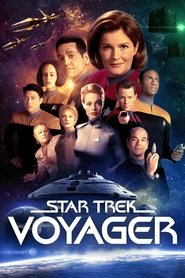 จบแล้ว 169 ตอน★ 7.8
Star Trek: Voyager สตาร์ เทรค: โวเยเจอร์ (1995)
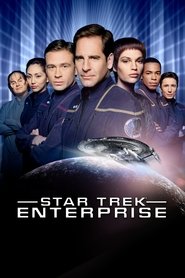 ★ 7.5
★ 7.5Star Trek: Enterprise สตาร์ เทรค: เอนเทอร์ไพรซ์ (2001)
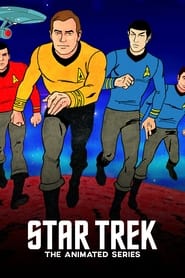 จบแล้ว 22 ตอน★ 6.8
Star Trek สตาร์ เทรค: ซีรี่ส์ อนิเมชั่น (1973)
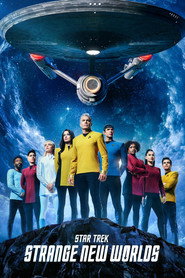 EP10/10★ 7.9
Star Trek: Strange New Worlds (2022)
 จบแล้ว 69 ตอน★ 7.7
Star Wars Rebels สตาร์ วอร์ส รีเบลส์ (2014)
 จบแล้ว 133 ตอน★ 8.5
Star Wars: The Clone Wars สตาร์ วอร์ส: เดอะ โคลน วอร์ส (2008)
 ★ 6.3
★ 6.3Star Trek: Short Treks (2018)
 จบแล้ว 38 ตอน★ 6.2
Star Wars Resistance (2018)
 จบแล้ว 7 ตอน★ 6.2
LEGO Star Wars: The Yoda Chronicles เลโก้ สตาร์ วอร์ส: ประวัติการณ์โยดา (2013)
 จบแล้ว 21 ตอน★ 7.1
Battlestar Galactica (1978)
 ★ 7.4
★ 7.4