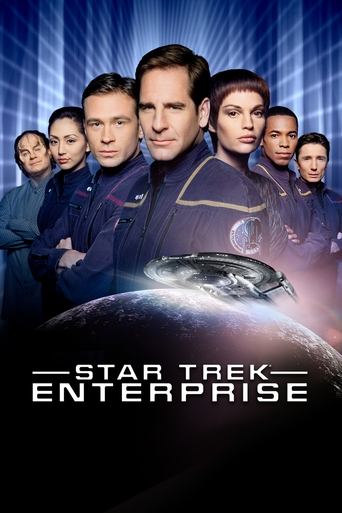
Star Trek: Enterprise สตาร์ เทรค: เอนเทอร์ไพรซ์ (2001)
ซีรี่ย์ฝรั่งซีรี่ย์ 2001ไซไฟแฟนตาซีแอ็กชันผจญภัยดราม่า
- ชื่อไทย
- สตาร์ เทรค: เอนเทอร์ไพรซ์
- ชื่อภาษาอังกฤษ
- Star Trek: Enterprise
- ประเทศ
- สหรัฐอเมริกา
- ออกอากาศครั้งแรก
- 26 กันยายน 2544
- จำนวนตอน
- 97 ตอน (4 ซีซัน)
- ความยาวต่อตอน
- ประมาณ 44 นาที
- สถานะ
- ยกเลิกการสร้าง
- ตอนล่าสุด
- EP22/22 (13 พฤษภาคม 2548)
- ช่อง/แพลตฟอร์มต้นทาง
- UPN
- ผู้สร้าง
- Brannon Braga, Rick Berman
- เรตผู้ชม
- TV-PG
- คะแนน TMDB
- 7.5/10 (994 โหวต)
เรื่องย่อ Star Trek: Enterprise สตาร์ เทรค: เอนเทอร์ไพรซ์
Star Trek: Enterprise สตาร์ เทรค: เอนเทอร์ไพรซ์ เป็นซีรี่ย์ฝรั่ง ปี 2001 มีทั้งหมด 97 ตอน สถานะยกเลิกการสร้าง
กัปตันอาร์เชอร์และลูกทีมของเขาสำรวจอวกาศและค้นพบเทคโนโลยีต่อยอดนวัตกรรมมนุษย์เมื่อพวกเขาพบกับสายพันธ์ุเอเลี่ยนสายพันธุ์ใหม่ๆ ในซีรีส์นำเรื่องของ "สตาร์เทรค" ชุดนี้
Star Trek: Enterprise สตาร์ เทรค: เอนเทอร์ไพรซ์ ดูได้ที่ไหน (ถูกลิขสิทธิ์)
ยังไม่พบข้อมูลผู้ให้บริการที่มีลิขสิทธิ์เรื่องนี้ในประเทศไทย ต้นทางออกอากาศทาง UPN เราจะอัปเดตทันทีเมื่อมีแพลตฟอร์มนำเข้ามาฉาย
นักแสดง Star Trek: Enterprise สตาร์ เทรค: เอนเทอร์ไพรซ์
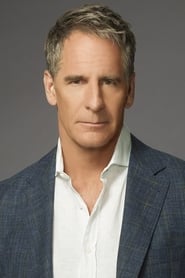 Scott Bakulaรับบท Jonathan Archer
 Jolene Blalockรับบท T'Pol
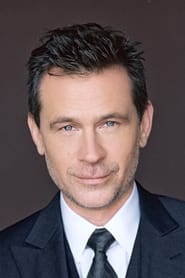 Connor Trinneerรับบท Charles 'Trip' Tucker III
 John Billingsleyรับบท Phlox
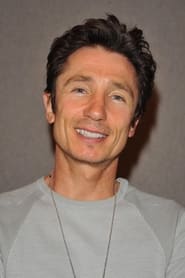 Dominic Keatingรับบท Malcolm Reed
 Linda Parkรับบท Hoshi Sato
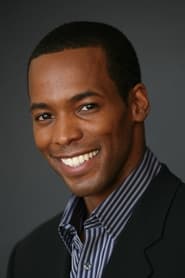 Anthony Montgomeryรับบท Travis Mayweather
- Bobby Pappasรับบท Engineer (uncredited)
 Vaughn Armstrongรับบท Kreetassan Captain
 Louis Ortizรับบท Xindi-Arboreal Technician (uncredited)
 Gary Grahamรับบท Crewman Soval
 Randy Oglesbyรับบท Trena'L
ซีซันและรายชื่อตอน
- Star Trek: Enterprise สตาร์ เทรค: เอนเทอร์ไพรซ์ ซีซั่น 125 ตอน · 26 กันยายน 2544
- Star Trek: Enterprise สตาร์ เทรค: เอนเทอร์ไพรซ์ ซีซั่น 226 ตอน · 8 กันยายน 2545
- Star Trek: Enterprise สตาร์ เทรค: เอนเทอร์ไพรซ์ ซีซั่น 324 ตอน · 10 กันยายน 2546
- Star Trek: Enterprise สตาร์ เทรค: เอนเทอร์ไพรซ์ ซีซั่น 422 ตอน · 8 ตุลาคม 2547
รีวิว Star Trek: Enterprise สตาร์ เทรค: เอนเทอร์ไพรซ์ จากทีมงาน
เจาะลึก Star Trek: Enterprise สตาร์ เทรค: เอนเทอร์ไพรซ์: เนื้อเรื่อง การสร้าง และเสียงวิจารณ์
Star Trek: Enterprise, originally titled simply Enterprise for its first two seasons, is an American science fiction television series created by Rick Berman and Brannon Braga. It originally aired from September 26, 2001 to May 13, 2005 on UPN. The sixth series in the Star Trek franchise, it is a prequel to Star Trek: The Original Series. Set in the 22nd century, a hundred years before the events of The Original Series, it follows the adventures of the Enterprise, Earth's first starship capable of traveling at warp five, as it explores the galaxy and encounters various alien species.
Following the culmination of Star Trek: Deep Space Nine and with Star Trek: Voyager scheduled to end, Paramount asked Braga and Berman to create a new series to continue the franchise. Rather than setting it in the 24th century alongside Deep Space Nine and Voyager, they decided to set it in an earlier period, allowing them to explore new parts of the Star Trek fictional universe. Wanting a more basic, relatable, character-driven series, Berman and Braga concentrated on a core trio: Captain Jonathan Archer (played by Scott Bakula), Commander Trip Tucker (Connor Trinneer), and Sub-commander T'Pol (Jolene Blalock).
The show broke with Star Trek convention in several ways. In addition to dropping the Star Trek prefix, Enterprise used the pop-influenced song "Faith of the Heart" (performed by Russell Watson) as its theme. It was filmed on the Paramount lot in Los Angeles, California, on the same stages that housed the Star Trek series and films since the abandoned Star Trek: Phase II in the late 1970s.
The first two seasons were characterized by stand-alone episodes that explored topics like humanity's early relations with the Vulcans, and first encounters with the Klingons and Andorians, aliens already familiar to franchise viewers. Seeking to attract a wider audience, UPN called for changes for Enterprise's third season. It was renamed Star Trek: Enterprise, and was changed to focus on action-driven plots and a single, serialized storyline: the crew's mission to prevent the Earth being destroyed by a newly introduced alien species, the Xindi. In 2005, UPN cancelled the series after its fourth season, despite a fan-led campaign to continue it. It was the first time in 18 years that no new Star Trek television series episodes would be produced, the beginning of a hiatus that lasted until the launch of Star Trek: Discovery in 2017, another prequel to Star Trek: The Original Series and chronological sequel to Enterprise.
General
Star Trek: Enterprise follows the adventures of the crew of the first starship Enterprise, designation NX-01. They are the first deep space explorers in Starfleet, using the first warp five capable vessel. The Vulcans have withheld advanced technology from humanity since their first contact, concerned that humans were not ready for it. This has delayed human space exploration and caused resentment in Starfleet test pilot Jonathan Archer, whose father developed the Warp 5 engine but did not live to see it used.
The Enterprise was equipped with less-advanced technologies than those seen in previous series (which occurred later on the Star Trek timeline). It had no tractor beam, but used grappler cables; and used missiles instead of particle weapons (see Weapons in Star Trek); in Season 1, phase cannons were added, similar to those on the Enterprise in The Original Series. It had only limited means of synthesizing foods and other consumable items. Communications Officer Linguist Hoshi Sato's expertise in linguistics helps compensate for the lack of the advanced universal translator.
The series also showed the crew making first contacts with a number of races previously seen in the franchise. The Klingons, who appear in the pilot "Broken Bow," have the ridged makeup seen in the movie franchise and from Star Trek: The Next Generation onwards (excluding Star Trek: Discovery), rather than the smooth-headed versions seen in Star Trek: The Original Series. Berman and Braga attributed this change to advancements in makeup, and felt that such contradictions in continuity were unavoidable. The change in the Klingons' appearance was eventually justified by attributing it to a plague caused by genetic experimentation in the two part arc of "Affliction" and "Divergence." Electronics in Enterprise were also more compact than those of previous (future) series, as advances in real-world technology made devices seen in The Original Series and Voyager seem anachronistically oversized.
The series's first season emphasized a core trio of characters: Jonathan Archer, T'Pol, and Trip Tucker. Other main characters had primary roles in particular episodes, such as "Dear Doctor" and "Fight or Flight." The second season saw deepening relationships between characters—for example, the friendship between Tucker and Reed, seen in episodes such as "Two Days and Two Nights"; and the relationship between Tucker and T'Pol, which begins contentiously but leads to romance in later seasons.
Temporal Cold War
The addition of a futuristic Temporal Cold War element was seen as a "nod to mystery" by Rick Berman, who sought to add an element of The X-Files to the series. Berman decided that the full story of the war would be revealed over the course of several years. At the start of the second season, Braga said that the Temporal Cold War storyline would continue to be included if viewers were still interested, but later described it as "strangulating." Initially featured in the pilot episode, "Broken Bow," it featured the Cabal, an organization composed of members of the alien race known as the Suliban, being manipulated by an unknown humanoid figure from the future, nicknamed "Future Guy" by viewers—a moniker later adopted by the series's writers. At the start of the series, Braga said that they did not have a plan for who the character would turn out to be. Ten years after the end of the series, Braga stated that Future Guy was Archer manipulating his own timeline; he and Berman had previously stated that the character was intended to be a Romulan.
Crewman Daniels (Matt Winston), introduced in the episode "Cold Front," was revealed as an operative from 900 years in the future who was fighting against the forces which included the Suliban. Archer found that he was being manipulated by those forces, as Enterprise was blamed for the destruction of a mining colony in "Shockwave."
In the third season, an escalation of the Temporal Cold War introduced the Xindi and dealt with the repercussions of their attack on Earth. Daniels explained Archer's importance in history during a trip to the future in "Azati Prime" to witness the final battle against the Sphere Builders—aliens who were also manipulating the Xindi into attacking Earth during Archer's time period. In the closing phase of the Temporal Cold War, Daniels sent the Enterprise back to the 1940s, following a temporal incursion by aliens who had altered the outcome of World War II, permitting Nazi Germany to invade the United States. Once Vosk, the leader of the aliens, was killed, the timeline corrected itself. Vosk's actions had turned the Cold War into an actual war raging through time, but the Enterprise killed Vosk before he could initiate the wars and all of the damage done throughout history was undone. Afterwards, Daniels believed that the Temporal Cold War was finally coming to an end as a result.
In Star Trek: Discovery Season 3, it is mentioned that after the Temporal Wars all time travel was outlawed and all existing time travel devices were destroyed. The Guardian of Forever states in "Terra Firma" that the various factions used him to alter his own history and to kill people, so he moved to another planet and went into hiding.
The Xindi
Braga and Berman created the season-long Xindi story arc, which began with the second-season finale, "The Expanse," and ran throughout the third season until it was resolved in the episode "Zero Hour." It opens with an attack on Earth by a mysterious space probe that kills seven million people in a destructive swath stretching through Florida to Venezuela. As a result, the Enterprise is redirected to unexplored regions of space to find the Xindi and stop a further attack that will destroy Earth. Although certain elements were preplanned, including the success of the mission against the Xindi, others, such as the details of the actual enemy race, were not. At the time of the initial development, Berman and Braga were uncertain if the storyline would last for a whole season or for just half a season.
The Xindi themselves were developed from on-set discussions with the writers and the actors who portrayed them. Six species that make up the Xindi were created in this manner. One was originally called "humanoid Xindi," but after further discussions they were renamed "primate Xindi." The first part of the third season saw the crew searching the Delphic Expanse, attempting to find clues that would lead them to the Xindi. In order to complete this mission, they took on additional crew members in the form of Military Assault Command Operations (abbreviated as MACO) soldiers, due to the increased military nature of the task.
Founding of the Federation
The birth of the Federation was first hinted at during part two of "Shockwave," which opened the second season. When Manny Coto was made showrunner for the fourth season, he decided that the focus of the series should be to link to that event. With this in mind, his intention was for this season to move towards that goal. Judith and Garfield Reeves-Stevens were hired as writers on Enterprise because they wrote the non-canon novel Federation and after it was suggested by producer Mike Sussman. The episodes for the fourth season were intended to lay the framework for the later creation of the Federation. This was something that the cast said that they would have liked to see more of, with Scott Bakula later saying "I would have loved to have been able to explore that journey to the Federation and their creation of it ... to a greater extent. And I think that would have been, um, just more fun for the audience ... just better, longer storytelling."
In "United," the founding races of the Federation - the humans, the Vulcans, the Andorians and the Tellarites - worked together for the first time to defeat a Romulan plot. In "Demons," the xenophobic Terra Prime movement is introduced, which Coto felt was the final element of human nature that must be defeated before the Federation could be formed. The foundation of the Federation was shown on screen in the final episode of the series, "These Are the Voyages...," which was set several years after the rest of the season.
Cast and characters
Jonathan Archer, played by Scott Bakula, is Captain of Earth's first Warp 5 starship, Enterprise. His father, Henry, designed its engine, giving Archer a personal connection to his ship. He was envisaged as being a cross between Chuck Yeager and Han Solo by executive producer Rick Berman, while Brannon Braga said that he was more "laidback and relatable". The character was initially openly prejudiced against the Vulcans, but this softens over time.
T'Pol, played by Jolene Blalock, is Science Officer of Enterprise, originally attached to Enterprise by the Vulcan High Command to keep the humans out of trouble. She becomes loyal to Archer, leaving her position in the High Command to accompany him to find the Xindi, and later joins Starfleet. In later seasons, she forms a romantic relationship with Tucker.
Charles "Trip" Tucker III, played by Connor Trinneer, is Chief Engineer of Enterprise and a longtime friend of Captain Archer. He starts the series as a relatively modest personality, but becomes more seasoned and outspoken as the series runs. In later seasons, he forms a romantic relationship with T'Pol.
Malcolm Reed, played by Dominic Keating, is Tactical Officer of Enterprise, also in charge of ship security. Reed comes from a long line of Royal Navy men, but joined Starfleet because of his fear of drowning. An extremely taciturn man, his own family, when asked, could not name his favorite food (pineapple).
Hoshi Sato, played by Linda Park, is Communications Officer of Enterprise and linguistic genius. Capable of learning alien languages extremely quickly, Hoshi serves as the interpreter between the crew of Enterprise and new alien species, even after the universal translator is on-line. She suffered anxiety about her place on board originally, but exposure to frequent danger helped her realize her value to the ship. Her confidence increases to the point Archer leaves her in command of Enterprise and she faces down the President of United Earth in "These Are The Voyages ..."
Travis Mayweather, played by Anthony Montgomery, is the Helmsman of Enterprise. A "space boomer," Travis is unique on Enterprise, having been born in space. Son of a freighter captain, Travis knows many of the alien species as well as locations that Earth traders frequent. As Enterprise moves farther and farther from Earth, his value in this area lessens, but his skill at the helm is constantly appreciated, making him the pilot of choice for many missions.
Phlox, played by John Billingsley, is Ship's Physician (not Chief Medical Officer, as he is not in Starfleet) of Enterprise. A Denobulan member of the Inter-Species Medical Exchange, he is brought aboard Enterprise to care for the Klingon passenger during the ship's first mission. He then volunteers to stay on, delighting in the experience of humanity taking its first steps onto the galactic stage. An exceedingly cheerful alien, Dr. Phlox uses many animals and naturalistic cures in his practice, in addition to the usual technological methods.
Conception
Prior to the end of Star Trek: Voyager and following the end of Star Trek: Deep Space Nine in June 1999, Paramount approached Rick Berman and Brannon Braga about the production of a fifth Star Trek series, either to overlap with the final season of Voyager or to immediately follow. Berman had previously created Star Trek: Deep Space Nine along with Michael Piller, Voyager with Piller and Jeri Taylor, and had been wanting to work with Braga on a series concept. While the fans online were suggesting that it could either be based on Starfleet Academy or the adventures of Hikaru Sulu, the producers took care that no information was leaked to reveal what the concept was going to be. They later revealed that the Academy idea was never properly considered.
Instead, they opted to create a prequel to The Original Series set after the events in the film Star Trek: First Contact, as Braga and Berman felt it was a period in the Star Trek universe which was unexplored. The idea was for the series to portray the first deep space explorers in the Star Trek universe, with Braga explaining that everything would be new to the crew and that since the setting was closer in the timeframe to the modern day, their reactions to situations would be more contemporary. As part of this, they sought feedback from members of the submarine service of the United States Navy, which was reflected in certain design work on the series such as the Star Trek uniforms. The network executives needed to be convinced of the viability of a prequel series, as they had assumed that the series would take the franchise further into the future. The initial idea was for the first season to be almost entirely set on Earth as the Enterprise was rushed to completion to respond to first contact with the Klingon, and the crew being put together. This idea was rejected by the studio executives, and these story elements were instead restricted to the pilot, "Broken Bow."
They sought to make Enterprise more character-driven than the previous series in the Star Trek franchise, and hoped that this would gain viewers who had watched The Next Generation but had lost interest with Deep Space Nine and Voyager. It was intended to link the series directly into The Original Series by having T'Pau, who had previously appeared in the episode "Amok Time," as a main character. Instead, this character was developed into an original Vulcan character, T'Pol. Berman explained his vision for the series at launch, saying, "We'll be seeing humanity when they truly are going where no man has gone before. We are seeing people who don't take meeting aliens as just another part of the job. It's not routine. Nothing is routine. Also, by bringing it back 200 years from Voyager, we're making the characters closer to the present, and by doing that they can be a little bit more accessible and a little bit more flawed and a little bit more familiar to you and me."
He said that this setting would combine elements of The Original Series while having "a lot of fresh and new elements in it." It was initially considered whether or not to have Enterprise overlap with the final season of Voyager, but it was decided that there would be a gap in broadcasting between the two series, as Berman was concerned with the "oversaturation" of the franchise. But he hoped that the "dramatic change" in Enterprise would mean that new viewers were drawn in to watch it. As part of this change, the decision was made to drop "Star Trek" from the title, but Berman explained that "if there's any one word that says Star Trek without actually saying Star Trek, that word is Enterprise." This title lasted until the third episode of season three, "Extinction," when the series was renamed Star Trek: Enterprise as demanded by Paramount Television executives in an effort to reconnect the series with the fans of the franchise.
Crew
In addition to the executive producers, a number of former Star Trek crew members joined the new series. Herman F. Zimmerman was recruited as Production Designer/Illustrator, having worked on Trek projects throughout The Next Generation, Deep Space Nine and the feature films. Marvin V. Rush resumed his role as Director of Photography, having been involved with Trek since the third season of The Next Generation. Working with him were Douglas Knapp and William Peets as Camera Operator and Chief Lighting Technician respectively. Both had previously worked on Voyager. Another alumna from the previous series was Louise Dorton, who started in the first season of that show as Set Designer, but joined Enterprise as Art Director. Andre Bormanis, a science consultant and writer on The Next Generation, Deep Space Nine and Voyager, was brought on as a staff writer.
John Eaves, who worked on Star Trek: First Contact, became Senior Illustrator for the show, and Doug Drexler worked under him as Junior Illustrator. Michael Westmore was once again the Head of Make-up for the series, and was joined by his daughter-in-law Suzanne Westmore, who was previously credited on Voyager as Suzanne Diaz. Ronald B. Moore, who worked on Trek productions since The Next Generation as well as the feature film Star Trek Generations, returned as Visual Effectors Supervisor. Carol Kuntz was the Costume Supervisor, a position she had held since the production of The Next Generation. Charlotte A. Parker was Enterprise's Hair Stylist, previously credited as Charlotte A. Gravenor on Voyager. Michael Okuda continued as Scenic Arts Supervisor, and as technical consultant to the writing staff.
A number of directors of episodes in other Star Trek series returned to work on Enterprise. These included former Star Trek alumni, such as LeVar Burton, who played Geordi La Forge from The Next Generation; and Robert Duncan McNeill, who played Tom Paris on Voyager. Roxann Dawson was also announced to direct at the start of the series, having previously played B'Elanna Torres, also on Voyager. She went on to direct ten episodes of the series. After the first season, most of the series's writers were fired by Braga, except Chris Black who was promoted to co-executive producer for the second season. Former The X-Files and The Lone Gunmen writer John Shiban joined the writing team and was also named co-executive producer. Berman called the recruitment of Shiban a "coup" for the series. Shiban stayed for the second season, while Black left after the third.
The fourth season of Enterprise saw a change to the crew's leadership, with Manny Coto taking over as executive producer and showrunner from Braga and Berman. He had joined the writing staff in the third season, and wrote the well-received episode "Similitude." He was a fan of The Original Series and sought to link Enterprise more closely to it. He brought writers Judith and Garfield Reeves-Stevens onto Enterprise, who previously wrote books on the franchise's production, and worked with William Shatner on his Shatnerverse series of Star Trek novels. Braga and Berman remained on staff, with Coto describing the situation as having "three showrunners." Coto set the direction for the final season, while the other two gave notes and feedback.
เนื้อหาส่วนนี้มาจากบทความ "Star Trek: Enterprise" ในวิกิพีเดีย (en.wikipedia.org) เผยแพร่ภายใต้สัญญาอนุญาตครีเอทีฟคอมมอนส์ แสดงที่มา-อนุญาตแบบเดียวกัน 4.0 (creativecommons.org/licenses/by-sa/4.0) มีการตัดส่วนอ้างอิงและจัดรูปแบบใหม่
คำถามที่พบบ่อยเกี่ยวกับ Star Trek: Enterprise สตาร์ เทรค: เอนเทอร์ไพรซ์
Star Trek: Enterprise สตาร์ เทรค: เอนเทอร์ไพรซ์ มีกี่ตอน?
Star Trek: Enterprise สตาร์ เทรค: เอนเทอร์ไพรซ์ มีทั้งหมด 97 ตอน รวม 4 ซีซัน สถานะปัจจุบัน: ยกเลิกการสร้าง
Star Trek: Enterprise สตาร์ เทรค: เอนเทอร์ไพรซ์ ฉายวันไหน?
Star Trek: Enterprise สตาร์ เทรค: เอนเทอร์ไพรซ์ เริ่มออกอากาศครั้งแรกวันที่ 26 กันยายน 2544
Star Trek: Enterprise สตาร์ เทรค: เอนเทอร์ไพรซ์ ดูได้ที่ไหน?
ขณะนี้ยังไม่พบแพลตฟอร์มที่มีลิขสิทธิ์ Star Trek: Enterprise สตาร์ เทรค: เอนเทอร์ไพรซ์ ในประเทศไทย
หมวดแนะนำ: ซีรี่ย์ใหม่ netflix · เรื่องถัดไป: Oh Jerome, No
ซีรี่ย์ที่คล้ายกับ Star Trek: Enterprise สตาร์ เทรค: เอนเทอร์ไพรซ์
 EP10/10★ 7.9
Star Trek: Strange New Worlds (2022)
 จบแล้ว 79 ตอน★ 8.0
Star Trek สตาร์ เทรค เดอะ ซีรี่ย์ (1966)
 จบแล้ว 173 ตอน★ 7.9
Star Trek: Deep Space Nine สตาร์ เทรค: ดีพ สเปซ ไนน์ (1993)
 จบแล้ว 110 ตอน★ 7.1
Andromeda (2000)
 จบแล้ว 176 ตอน★ 8.4
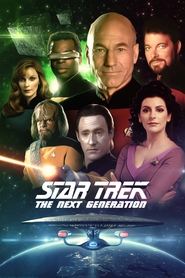
Star Trek: The Next Generation สตาร์ เทรค: เดอะ เน็กซ์ เจเนอเรชัน (1987)
 จบแล้ว 22 ตอน★ 6.8
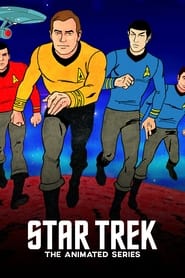
Star Trek สตาร์ เทรค: ซีรี่ส์ อนิเมชั่น (1973)
 จบแล้ว 169 ตอน★ 7.8
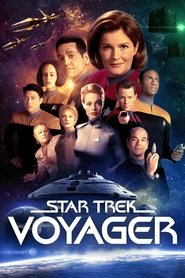
Star Trek: Voyager สตาร์ เทรค: โวเยเจอร์ (1995)
 จบแล้ว 88 ตอน★ 7.9
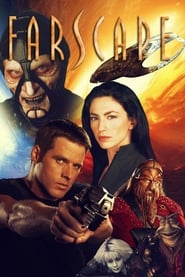
Farscape (1999)
 ★ 8.3
★ 8.3Firefly (2002)
 จบแล้ว 24 ตอน★ 8.3
Andor สตาร์ วอร์ส: เอนดอร์ (2022)
 จบแล้ว 37 ตอน★ 7.1
Buck Rogers in the 25th Century (1979)
 ★ 6.4
★ 6.4