Jeopardy! (1984)
รายการวาไรตี้ซีรี่ย์ 1984เรียลลิตี้ครอบครัว
- ประเทศ
- สหรัฐอเมริกา
- ออกอากาศครั้งแรก
- 10 กันยายน 2527
- จำนวนตอน
- 9413 ตอน (43 ซีซัน)
- ความยาวต่อตอน
- ประมาณ 22 นาที
- สถานะ
- ยังฉายอยู่
- ตอนล่าสุด
- EP20/20 (9 ตุลาคม 2569)
- ช่อง/แพลตฟอร์มต้นทาง
- Syndication
- ผู้สร้าง
- Merv Griffin
- เรตผู้ชม
- TV-G
- คะแนน TMDB
- 6.9/10 (167 โหวต)
เรื่องย่อ Jeopardy!
Jeopardy! เป็นรายการวาไรตี้ ปี 1984 มีทั้งหมด 9413 ตอน สถานะยังฉายอยู่
ยังไม่มีเรื่องย่อภาษาไทย แสดงเรื่องย่อต้นฉบับภาษาอังกฤษ
America's favorite quiz show where contestants are presented with general knowledge clues in the form of answers, and must phrase their responses in question form.
Jeopardy! ดูได้ที่ไหน (ถูกลิขสิทธิ์)
ยังไม่พบข้อมูลผู้ให้บริการที่มีลิขสิทธิ์เรื่องนี้ในประเทศไทย ต้นทางออกอากาศทาง Syndication เราจะอัปเดตทันทีเมื่อมีแพลตฟอร์มนำเข้ามาฉาย
นักแสดง Jeopardy!
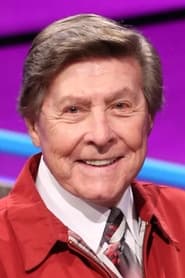 Johnny Gilbertรับบท Self - Announcer (voice)
 Alex Trebekรับบท Self - Host
 Ken Jenningsรับบท Self
 Mayim Bialikรับบท Self - Host
 Brad Rutterรับบท Self
- Mike Richardsรับบท Self - Host
 Mehmet Ozรับบท Self - Host
 Aaron Rodgersรับบท Self - Host
 Anderson Cooperรับบท Self - Host
 Katie Couricรับบท Self - Host
 Bill Whitakerรับบท Self - Host
 Savannah Guthrieรับบท Self - Host
ซีซันและรายชื่อตอน
- Jeopardy! Season 1162 ตอน · 10 กันยายน 2527
- Jeopardy! Season 2194 ตอน · 9 กันยายน 2528
- Jeopardy! Season 3231 ตอน · 8 กันยายน 2529
- Jeopardy! Season 4220 ตอน · 7 กันยายน 2530
- Jeopardy! Season 5215 ตอน · 5 กันยายน 2531
- Jeopardy! Season 6201 ตอน · 4 กันยายน 2532
- Jeopardy! Season 7212 ตอน · 3 กันยายน 2533
- Jeopardy! Season 8194 ตอน · 2 กันยายน 2534
- Jeopardy! Season 9229 ตอน · 7 กันยายน 2535
- Jeopardy! Season 10230 ตอน · 6 กันยายน 2536
- Jeopardy! Season 11213 ตอน · 5 กันยายน 2537
- Jeopardy! Season 12229 ตอน · 4 กันยายน 2538
- Jeopardy! Season 13218 ตอน · 2 กันยายน 2539
- Jeopardy! Season 14230 ตอน · 1 กันยายน 2540
- Jeopardy! Season 15230 ตอน · 7 กันยายน 2541
- Jeopardy! Season 16230 ตอน · 6 กันยายน 2542
- Jeopardy! Season 17230 ตอน · 4 กันยายน 2543
- Jeopardy! Season 18229 ตอน · 3 กันยายน 2544
- Jeopardy! Season 19230 ตอน · 2 กันยายน 2545
- Jeopardy! Season 20230 ตอน · 8 กันยายน 2546
- Jeopardy! Season 21230 ตอน · 6 กันยายน 2547
- Jeopardy! Season 22230 ตอน · 12 กันยายน 2548
- Jeopardy! Season 23230 ตอน · 11 กันยายน 2549
- Jeopardy! Season 24230 ตอน · 10 กันยายน 2550
- Jeopardy! Season 25230 ตอน · 8 กันยายน 2551
- Jeopardy! Season 26230 ตอน · 14 กันยายน 2552
- Jeopardy! Season 27230 ตอน · 13 กันยายน 2553
- Jeopardy! Season 28230 ตอน · 19 กันยายน 2554
- Jeopardy! Season 29230 ตอน · 17 กันยายน 2555
- Jeopardy! Season 30230 ตอน · 16 กันยายน 2556
- Jeopardy! Season 31230 ตอน · 15 กันยายน 2557
- Jeopardy! Season 32230 ตอน · 14 กันยายน 2558
- Jeopardy! Season 33230 ตอน · 12 กันยายน 2559
- Jeopardy! Season 34230 ตอน · 11 กันยายน 2560
- Jeopardy! Season 35230 ตอน · 10 กันยายน 2561
- Jeopardy! Season 36190 ตอน · 9 กันยายน 2562
- Jeopardy! Season 37230 ตอน · 14 กันยายน 2563
- Jeopardy! Season 38240 ตอน · 13 กันยายน 2564
- Jeopardy! Season 39230 ตอน · 12 กันยายน 2565
- Jeopardy! Season 40236 ตอน · 11 กันยายน 2566
- Jeopardy! Season 41230 ตอน · 9 กันยายน 2567
- Jeopardy! Season 42230 ตอน · 8 กันยายน 2568
- Jeopardy! Season 4320 ตอน · 14 กันยายน 2569
รีวิว Jeopardy! จากทีมงาน
เจาะลึก Jeopardy!: เนื้อเรื่อง การสร้าง และเสียงวิจารณ์
Jeopardy! is an American television game show created by Merv Griffin. The show is a quiz competition that reverses the traditional question-and-answer format of many quiz shows. Rather than being given questions, contestants are instead given general knowledge clues in the form of answers and they must identify the person, place, thing, or idea that the clue describes, phrasing each response in the form of a question.
The original daytime version debuted on NBC on March 30, 1964, and aired until January 3, 1975. A nighttime syndicated edition aired weekly from September 1974 to September 1975, and a revival, The All-New Jeopardy!, ran on NBC from October 1978 to March 1979 on weekdays. The syndicated show familiar to modern viewers and aired daily (currently by Sony Pictures Television) premiered on September 10, 1984.
Art Fleming served as host for all versions of the show between 1964 and 1979. Don Pardo served as announcer until 1975, and John Harlan announced for the 1978–1979 season. The daily syndicated version premiered in 1984 with Alex Trebek as host and Johnny Gilbert as announcer. Trebek hosted until his death in November 2020, with his last episode airing January 8, 2021, after over 36 years in the role. Following his death, a variety of guest hosts completed the season, beginning with former contestant Ken Jennings, each hosting for a few weeks before passing the role on to someone else. Mike Richards, then the executive producer, initially assumed the position of permanent host in September 2021, but relinquished the role within a week. Mayim Bialik and Jennings served as permanent rotating hosts of the syndicated series until December 2023, when Jennings became the sole syndicated host. While Bialik was originally arranged to host additional specials in prime time on ABC, and spin-offs, the announcement of Jeopardy! Masters in 2023 meant these duties were shared as well. Following Bialik's withdrawal in part of supporting writers and actors due to the 2023 Hollywood labor disputes, Jennings assumed hosting duties for all forms of media.
Having started its 43rd season in 2026, Jeopardy! is one of the longest-running game shows of all time. The show has consistently enjoyed a wide viewership and received many accolades from professional television critics. With over 9,000 episodes aired, the daily syndicated version of Jeopardy! has won a record 45 Emmy Awards as well as a Peabody Award. In 2013, the program was ranked No. 45 on TV Guide's list of the 60 greatest shows in American television history. Jeopardy! has also gained a worldwide following with regional adaptations in many other countries.
Gameplay
Each game of Jeopardy! features three contestants competing in three rounds: Jeopardy!, Double Jeopardy!, and Final Jeopardy! In each round, contestants are presented trivia clues phrased as answers, to which they must respond in the form of a question that correctly identifies whatever the clue is describing. For example, instead of asking, "Who is the only U.S. President to marry in the White House?" and the answer being "Grover Cleveland", the clue is "He is the only U.S. president to marry in the White House" and the contestant would respond by asking "Who is Grover Cleveland?"
The Jeopardy! and Double Jeopardy! rounds each feature game boards consisting of six categories with five clues each. The clues are valued by dollar amounts from lowest to highest, ostensibly by difficulty. The values of the clues increased over time, with those in the Double Jeopardy! round always being double the range of the Jeopardy! round. On the original Jeopardy! series, clue values in the first round ranged from $10 to $50 in the Jeopardy! round and $20 to $100 in Double Jeopardy! Beginning in 1978 on The All-New Jeopardy!, they ranged from $25 to $125 and $50 to $250. The 1984 series' clue values originally ranged from $100 to $500 in Jeopardy! and $200 to $1,000 in Double Jeopardy! These ranges were increased to $200–$1,000 and $400–$2,000, respectively, on November 26, 2001.
Gameplay begins when the returning champion selects a clue by indicating its category and dollar value. The two (or if there is no returning champion, three) challengers participate in a random draw prior to taping to determine contestant order, and if there is no returning champion, the contestant who drew the first lectern starts. The underlying clue is revealed and read aloud by the host, after which any contestant may ring in using a lock-out device. The first contestant to successfully ring in is prompted to respond to the clue by stating a question containing the correct answer to the clue. Any grammatically coherent question with the correct answer within it counts as a correct response. If the contestant responds correctly, its dollar value is added to the contestant's score, and they may select a new clue from the board. An incorrect response or failure to respond within five seconds deducts the clue's value from the contestant's score (the "jeopardy") and allows the other contestants the opportunity to ring in and respond. If the response is not technically incorrect but otherwise judged too vague, the contestant is given additional time to provide a more specific response. Whenever none of the contestants ring in and respond correctly, the host gives the correct response, and the player who selected the previous clue chooses the next clue. Gameplay continues until the board is cleared or the round's time length expires, which is typically indicated by a beeping sound.
The contestant who has the lowest score selects the first clue to start the Double Jeopardy! round. Since 2021, if there is a tie for the contestant with the lowest score, the contestant with the last correct question among the tied players selects first.
A "Daily Double" clue is hidden behind one clue in the Jeopardy! round, and two in Double Jeopardy! The name and inspiration were taken from a horse-racing term. Daily Double clues with a sound or video component are known as "Audio Daily Doubles" or "Video Daily Doubles", respectively. Before the clue is revealed, the contestant who has selected the Daily Double must declare a wager, from a minimum of $5 to a maximum of their entire score (known as a "true Daily Double") or the highest clue value available in the round, whichever is greater. A correct response adds the value of the wager to the contestant's score while an incorrect response or failure to provide a response deducts the same value. Whether the contestant responds correctly or not, they choose the next clue.
During the Jeopardy! round, contestants are not penalized for forgetting to phrase their response in the form of a question, although the host will remind them to watch their phrasing in future responses. In the Double Jeopardy! round and in the Daily Double in the Jeopardy! round, the phrasing rule is followed more strictly, with a response only able to be ruled as correct if it is phrased properly in question form. A contestant who initially does not phrase a response in the form of a question must re-phrase it before the host rules against them.
Contestants are encouraged to select the clues in order from lowest to highest value, as the clues are sometimes written in each category to flow from one to the next. Deviating from this is known as the "Forrest Bounce", a strategy in which contestants randomly pick clues to confuse opponents that was first used in 1985 by Chuck Forrest, who won over $70,000 in his initial run as champion. Trebek expressed that this strategy not only annoyed him but also the staff, since it disrupts the rhythm that develops when revealing the clues and increases the potential for error. Another strategy used by some contestants is to play all of the higher-valued clues first and build up a substantial lead, starting at the bottom of the board. This strategy was regularly used by James Holzhauer during his winning streak between April and June 2019.
From the premiere of the original Jeopardy! until the end of the 1984–85 syndicated season, contestants were allowed to ring in as soon as the clue was revealed. Since September 1985, contestants are required to wait until the clue is read before ringing in. To accommodate the rule change, lights were added to the game board (unseen by home viewers) to signify when it is permissible for contestants to signal. Attempting to signal before the light goes on locks the contestant out for a quarter of a second. The change was made to allow the home audience to play along more easily and to keep an extremely fast contestant from potentially dominating the game. In pre-1985 episodes, a sound accompanied a contestant ringing in. According to Trebek, the sound was eliminated because it was "distracting to the viewers" and presented a problem when contestants rang in while Trebek was still reading the clue. Contestants who are visually impaired or blind are given a card with the category names printed in Braille before each round begins.
To ensure fairness in competition and accuracy in scores, the judges double-check their own rulings throughout each episode. If it is determined at any point that a previous response was wrongly ruled correct or incorrect during the taping of an episode, the scores are adjusted at the first available opportunity, typically either at the start of the next round/segment or immediately after a Daily Double is found, with the host providing any necessary explanation regarding the changes. If an error that may have affected the result is not discovered until after taping of an episode is completed, the affected contestants are invited back to compete on a future show, complying with federal quiz show regulations.
Contestants who finish Double Jeopardy! with zero dollars or a negative score are automatically eliminated from the game at that point and awarded a consolation prize. On at least one episode hosted by Art Fleming, all three contestants finished Double Jeopardy! with zero dollars or less, and as a result, no Final Jeopardy! round was played. This rule is still in place for the syndicated version, although staff has suggested that it is not set in stone and they may decide to display the clue for home viewers' play if such a situation were ever to occur.
Final Jeopardy!
The Final Jeopardy! round features a single clue that, according to Answers in the Form of Questions, typically requires a two-step thought process to answer. At the end of the Double Jeopardy! round, the host announces the Final Jeopardy! category and a commercial break follows. Contestants who finish Double Jeopardy! with less than $1 do not participate in this round. During the break, partitions are placed between the contestant lecterns, and each contestant makes a final wager; they may wager any amount of their earnings, but may not wager certain numbers with connotations that are deemed inappropriate. Contestants write their wagers using a light pen on an electronic display on their lectern within a time limit of five minutes, during which they also phrase the question, which is pre-written during the wager. After the break, the Final Jeopardy! clue is revealed and read by the host. The contestants have 30 seconds to write their responses on the electronic display, while the show's "Think!" music plays. If either the display or the pen malfunctions, contestants can manually write their responses and wagers using an index card and marker, although the index card has the required phrasing pre-printed on each side ("Who/What"). Visually impaired or blind contestants typically type their responses and wagers with a computer keyboard.
Contestants' responses are revealed in order of their pre-Final Jeopardy! scores from lowest to highest. Once a correct response is revealed the host confirms it. Otherwise, the host reveals the correct response if all contestants responded incorrectly. A correct response adds the amount of the contestant's wager to their score. A miss, failure to respond, insufficiently specific response, misspelling that affects the pronunciation of the answer, or failure to phrase the response as a question (even if correct) deducts it.
The contestant with the highest score at the end of the round is that day's winner. If there is a tie for second place, consolation prizes are awarded based on the scores going into the Final Jeopardy! round. If all three contestants finish with zero dollars, no one returns as champion for the next show, and based on scores going into the Final Jeopardy! round, the two contestants who were first and second receive the second-place prize, and the contestant in third receives the third-place prize. In tournament play, if the game requires a winner, the standard tiebreaker will be used.
Various researchers have studied Final Jeopardy! wagering strategies. If the leader's score is more than twice the second place contestant's score (a situation known as a "runaway game"), the leader can guarantee victory by making a sufficiently small wager. Otherwise, according to Jeopardy! College Champion Keith Williams, the leader usually wagers an amount that would be a dollar greater than twice the second place contestant's score, guaranteeing a win with a correct response. Writing about Jeopardy! wagering in the 1990s, mathematicians George Gilbert and Rhonda Hatcher said that "most players wager aggressively".
Tie after Final Jeopardy!
In rare instances, contestants tie for first place after the Final Jeopardy! round; the rules related to ties have changed over time. Since November 2014, ties for first place following Final Jeopardy! are broken with a tiebreaker clue, ensuring that only one champion is named, keeping their winnings, and returning to compete in the next show. The tied contestants are given the category and read/listen to the single clue, and the first contestant to buzz-in must give the correct question. A contestant cannot win by default if the opponent gives an incorrect question or forgets to phrase the response as a question (even if correct). The contestant must give a correct question to win the game. If neither player gives the correct question, another clue is given. Previously, if two or all three contestants tied for first place, they were declared "co-champions", and each retained his or her winnings and (unless one was a five-time champion who retired prior to 2003) returned on the following episode. A three-way (non-zero) tie for first place has only occurred once, taking place on the syndicated version hosted by Trebek on March 16, 2007, when Scott Weiss, Jamey Kirby, and Anders Martinson all ended the game with $16,000, were declared co-champions, and returned for the next game. Ultimately, Kirby won the following game and became a two-day champion.
A tie occurred on the January 29, 2014, episode when Arthur Chu, leading at the end of Double Jeopardy!, wagered to tie challenger Carolyn Collins rather than winning. Chu followed Jeopardy! College Champion Keith Williams's advice to wager for the tie to increase the leader's chances of winning. This is the only known occasion where a contestant intentionally wagered for a tie, rather than for the win.
A few more co-champion ties occurred following Chu and Collins's episode, with the last occurring on October 30, 2014, after which a tie did not occur on a regular game of Jeopardy! until March 1, 2018, over three years later, when champion Laura McLean and newcomer Sarah Norris both gave an incorrect response to their Final Jeopardy! answer and both dropped to $6,799, resulting in a tiebreaker clue being given. Ultimately, McLean gave the correct response, and returned for the next game, becoming a two-day champion. This marked the first time a tiebreaker answer was given on a regular game of Jeopardy!; in addition, this is also the only time that a tiebreaker has occurred after both contestants gave an incorrect question and lost winnings (as of May 2026).
Winnings
The top scorer in each game is paid their winnings in cash and returns to play in the next match. Non-winners receive consolation prizes instead of their winnings in the game. Since May 16, 2002, consolation prizes have been awarded in cash— originally $2,000 for second-place contestants and $1,000 for third-place contestants. Since travel and lodging are generally not provided for contestants, cash consolation prizes offset these costs. Production covers the cost of travel for returning champions and players invited back because of errors who must make multiple trips to Los Angeles. Production also covers the cost of travel if a tournament travels (does not stay in Los Angeles) on the second week. Starting in Season 40, according to the official podcast in August 2023, as a result of inflation, consolation prizes were raised $1,000 each to $3,000 for second and $2,000 for third.
During Art Fleming's hosting run, all three contestants received their winnings in cash where applicable. This was changed at the start of Trebek's hosting run to avoid the problem of contestants who stopped participating in the game, or avoided wagering in Final Jeopardy!, rather than risk losing the money they had already won. This also allowed the increase to clue values since only one contestant's score is paid instead of three. From 1984 to 2002, non-winning contestants on the Trebek version received vacation packages and merchandise, which were donated by manufacturers as promotional consideration. Since 2004, a presenting sponsor has provided cash prizes to the losing contestants.
Returning champions
The winner of each episode returns to compete against two new contestants on the next episode. Originally, a contestant who won five consecutive days retired undefeated and was guaranteed a spot in the Tournament of Champions. The five-day limit was eliminated on September 8, 2003. The record for most days with a new returning champion is 13, set in 2002 and tied in 2025.
If no contestant finishes Final Jeopardy! with a positive total, there is no winner and three new contestants compete on the next episode. This has happened on several episodes, including the second episode hosted by Trebek. A winner unable to return as champion because of a change in personal circumstances – for example, illness or a job offer – may be allowed to appear as a co-champion (now a rare occurrence since the co-champion rule was disestablished in early Season 31) in a later episode. If a light pen failure occurs or, as seen in at least one 1986 episode, a contestant faints during the Final Jeopardy! round, extra time is given, and the round could have an effect on the outcome of the game; officials have the right to declare co-champions with both affected players being paid their scores. No tiebreaker will be played, and the game will be ruled a technical tie game.
Variations for tournament play
Throughout each season, Jeopardy! features various special tournaments for particular groups (as named in "Tournaments and other events" below). Each year at the Tournament of Champions, the players who had won the most games and money in the previous season come back to compete against each other for a large cash prize. Tournaments generally feature 15 contestants and run for 10 consecutive episodes. They generally take place across three rounds: the quarterfinal round (five games), the semifinal round (three games), and the final round (two games).
The first five episodes, the quarterfinals, feature three new contestants each day. Other than in the Tournament of Champions, the quarterfinals are unseeded and contestants participate in a random draw to determine playing order and lectern positions over the course of the five games. The Tournament of Champions is seeded based on total winnings in regular games to determine playing order and lectern positions, with the top five players occupying the champion's lectern for the quarterfinal games. Since the removal of the five-game limit in 2003, in the unlikely case of a tie in total winnings between two Tournament of Champions players, the player who won the most games receives the higher seed. If still tied, seeding is determined by comparing the tied players' previous aggregate scores.
The winners of the five quarterfinal games and the four highest-scoring non-winners ("wild cards") advance to the semifinals, which run for three days. The semifinals are seeded with the quarterfinal winners being seeded 1–5 based on their quarterfinal scores, and the wild cards being seeded 6–9. The winners of the quarterfinal games with the three highest scores occupy the champion's lectern for the semifinals. The winners of the three semifinal games advance to play in a two-game final match, in which the scores from both games are combined to determine the overall standings. This format has been used since the first Tournament of Champions in 1985 and was devised by Trebek himself.
To prevent later contestants from playing to beat the earlier wild card scores instead of playing to win, contestants are "completely isolated from the studio until it is their time to compete".
If none of the contestants in a standard 15-player tournament format quarterfinal end with a positive score, no contestant automatically qualifies from that game, and an additional wild card contestant advances instead. This occurred in the quarterfinals of the 1991 Seniors Tournament and the semifinals of the 2013 Teen Tournament, where the rule was in effect during the semifinals, but after that tournament the rule has changed for semifinals and finals.
As the players are not isolated during the semifinals the way they are during the quarterfinals, show officials discovered a flaw after the 2013 Teen Tournament, because the triple zero loss happened in the second semifinal that allowed the third semifinal of the 2013 Teen Tournament to be played differently from the first (which was played before the triple zero loss). Starting with the 2013 Tournament of Champions, semifinal games, like the two-game finals, must have a winner. Players who participate in Final Jeopardy! will participate in the standard tie-breaker, regardless of the score being zero or a positive score. Similarly, if all three players have a zero score at the end of a two-game match, a normal tournament finals format will proceed to a tie-breaker. In a tournament format where a player must win multiple games to win the tournament, such as the 2020 Greatest of All Time or 2022 Tournament of Champions, or in the quarterfinals of tournaments without wild cards where a player must win the game to advance (21 or 27 players), the tie-breaker will be used regardless of the score being zero or positive for players to win the game and either advance to the next round or receive the point towards winning the tournament. This was confirmed by Ken Jennings in a post-match interview posted on the show's website during the Season 40 Champions Wildcard Tournament.
In the standard tournament finals format, contestants who finish Double Jeopardy! with a zero dollars or negative score on either day do not play Final Jeopardy! that day. Their score for that leg is recorded as zero dollars.
เนื้อหาส่วนนี้มาจากบทความ "Jeopardy!" ในวิกิพีเดีย (en.wikipedia.org) เผยแพร่ภายใต้สัญญาอนุญาตครีเอทีฟคอมมอนส์ แสดงที่มา-อนุญาตแบบเดียวกัน 4.0 (creativecommons.org/licenses/by-sa/4.0) มีการตัดส่วนอ้างอิงและจัดรูปแบบใหม่
คำถามที่พบบ่อยเกี่ยวกับ Jeopardy!
Jeopardy! มีกี่ตอน?
Jeopardy! มีทั้งหมด 9413 ตอน รวม 43 ซีซัน สถานะปัจจุบัน: ยังฉายอยู่
Jeopardy! ฉายวันไหน?
Jeopardy! เริ่มออกอากาศครั้งแรกวันที่ 10 กันยายน 2527
Jeopardy! ดูได้ที่ไหน?
ขณะนี้ยังไม่พบแพลตฟอร์มที่มีลิขสิทธิ์ Jeopardy! ในประเทศไทย
หมวดแนะนำ: ซีรี่ย์สนุกๆ · เรื่องถัดไป: Tom Kerridge Cooks...
ซีรี่ย์ที่คล้ายกับ Jeopardy!
 ★ 6.9
★ 6.9Wheel of Fortune (1983)
 ★ 6.5
★ 6.5Pointless (2009)
 ★ 7.4
★ 7.4Beast Games บีสต์เกมส์ (2024)
 EP9/9★ 6.5
Squid Game: The Challenge สควิดเกม เดอะ ชาเลนจ์ (2023)
 จบแล้ว 4 ตอน★ 7.3
Harry Potter: Hogwarts Tournament of Houses (2021)
 ★ 7.7
★ 7.7Celebrity Family Feud (2015)
 EP15/21★ 6.3
The Price Is Right (1972)
 ★ 7.2
★ 7.2The Challenge (1998)
 จบแล้ว 140 ตอน★ 7.3
Cash Cab (2005)
 ★ 5.8
★ 5.8Guy's Grocery Games (2013)
 จบแล้ว 69 ตอน★ 6.1
Total Wipeout (2009)
 ★ 6.2
★ 6.2