
Who Wants to Be a Millionaire? (1999)
รายการวาไรตี้ซีรี่ย์ 1999ทอล์กโชว์
- ประเทศ
- สหรัฐอเมริกา
- ออกอากาศครั้งแรก
- 16 สิงหาคม 2542
- จำนวนตอน
- 1062 ตอน (10 ซีซัน)
- ความยาวต่อตอน
- ประมาณ 60 นาที
- สถานะ
- จบแล้ว
- ตอนล่าสุด
- EP12/12 (7 กันยายน 2552)
- ช่อง/แพลตฟอร์มต้นทาง
- ABC
- ผู้สร้าง
- สตีเวน ไนท์
- เรตผู้ชม
- TV-G
- คะแนน TMDB
- 6.3/10 (43 โหวต)
เรื่องย่อ Who Wants to Be a Millionaire?
Who Wants to Be a Millionaire? เป็นรายการวาไรตี้ ปี 1999 มีทั้งหมด 1062 ตอน สถานะจบแล้ว
ยังไม่มีเรื่องย่อภาษาไทย แสดงเรื่องย่อต้นฉบับภาษาอังกฤษ
American version of the tense gameshow where contestants tackle a series of multiple-choice questions to win large cash prizes.
Who Wants to Be a Millionaire? ดูได้ที่ไหน (ถูกลิขสิทธิ์)
ยังไม่พบข้อมูลผู้ให้บริการที่มีลิขสิทธิ์เรื่องนี้ในประเทศไทย ต้นทางออกอากาศทาง ABC เราจะอัปเดตทันทีเมื่อมีแพลตฟอร์มนำเข้ามาฉาย
นักแสดง Who Wants to Be a Millionaire?
 Meredith Vieiraรับบท Self - Host
 Regis Philbinรับบท Self - Host
 Bill Nyeรับบท Self
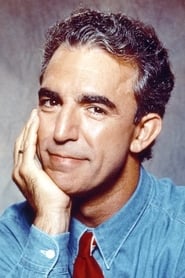 Jay Thomas
ซีซันและรายชื่อตอน
- Who Wants to Be a Millionaire? Season 1102 ตอน · 16 สิงหาคม 2542
- Who Wants to Be a Millionaire? Season 225 ตอน · 11 พฤษภาคม 2544
- Who Wants to Be a Millionaire? Season 3195 ตอน · 16 กันยายน 2545
- Who Wants to Be a Millionaire? Season 412 ตอน · 10 กันยายน 2544
- Who Wants to Be a Millionaire? Season 5201 ตอน · 16 พฤษภาคม 2547
- Who Wants to Be a Millionaire? Season 6204 ตอน · 13 กันยายน 2547
- Who Wants to Be a Millionaire? Season 7221 ตอน · 12 กันยายน 2548
- Who Wants to Be a Millionaire? Season 860 ตอน · 10 กันยายน 2550
- Who Wants to Be a Millionaire? Season 930 ตอน · 8 กันยายน 2551
- Who Wants to Be a Millionaire? Season 1012 ตอน · 9 สิงหาคม 2552
รีวิว Who Wants to Be a Millionaire? จากทีมงาน
เจาะลึก Who Wants to Be a Millionaire?: เนื้อเรื่อง การสร้าง และเสียงวิจารณ์
Who Wants to Be a Millionaire (colloquially referred to as simply Millionaire) is an American television game show based on the format of the same-titled British program created by David Briggs, Steven Knight and Mike Whitehill and developed in the United States by Michael Davies. The show features a quiz competition with contestants attempting to win a top prize of $1,000,000 by answering a series of multiple-choice questions, usually of increasing difficulty. The program has endured as one of the longest-running and most successful international variants in the Who Wants to Be a Millionaire? franchise.
The show has had numerous format and gameplay changes over its runtime and, since its debut, twelve contestants and four separate teams of two contestants (twenty people combined, seven of which were celebrities) have answered all the questions correctly and won the top prize (two other contestants also won one million dollars in special editions of the show). As the first American network game show to offer a million-dollar top prize, the show made television history by becoming one of the highest-rated game shows in the history of American television. The American Millionaire won seven Daytime Emmy Awards, and TV Guide ranked it No. 6 in its 2013 list of the 60 greatest game shows of all time.
Core rules
At its core, the game is a quiz competition in which the goal is to correctly answer a series of 15 (14 from 2010–2019) consecutive multiple-choice questions. The questions are of increasing difficulty, except in the 2010–15 format overhaul, where the contestants were faced with a round of 10 questions of random difficulty, followed by a round of four questions of increasing difficulty. Each question is worth a specific amount of money; the amounts are not cumulative. Many questions from number 6 onward often prompt the host to ask if the answer they gave is their "final answer" – if it is, then it is locked in and cannot be changed. If at any time the contestant gives a wrong answer, the game is over and the contestant's winnings are reduced to $0 for tier-one questions, $1,000 for tier-two questions, and $32,000 for tier-three questions. However, the contestant may choose to walk away after being presented with a question, allowing them to keep all the money they have won to that point; afterwards (in most cases) the host will usually ask them to state what answer they would have gone for if they had continued, and reveal if it would have been correct or incorrect. With the exception of the shuffle format, upon correctly answering questions five and ten, contestants are guaranteed at least the amount of prize money associated with that level.
Contestants giving an incorrect answer see their winnings drop down to the last milestone achieved. From the show's launch in 1999–2010 and again from 2015–2017, a contestant would leave with nothing if they answered a question incorrectly before reaching the first milestone. In the shuffle format, which from 2010–2015, contestants who incorrectly answered a question had their winnings reduced to $1,000 in round one and $25,000 in round two, regardless of how far they had progressed into the game. Beginning in 2017, contestants answering a question incorrectly before reaching the first milestone question would leave with $1,000, even if the incorrect question is worth a lower amount. For celebrities playing in the syndicated version, the minimum guarantee for their nominated charities is $10,000. Beginning in 2020, all contestants are guaranteed $32,000 either for themselves or for their chosen charities, even if the incorrect question is worth a lower amount (from 2020 to 2021, the show featured a hybrid of celebrity and non-celebrity contestants, though the show became celebrity-exclusive when it returned in July 2024).
Original format (1999–2008; 2020–present)
From 1999–2002, 10 contestants played a round of Fastest Finger to determine who played next. The participants were presented with one question and four answers and attempted to put the four answers in a certain order (ascending, chronological, etc.) in the fastest time. The contestant who did so correctly in the fastest time played. If no contestant got the correct order, the round was played again, and when a tie occurred, the tied participants answered a second Fastest Finger question. This round was removed when the syndicated version began in 2002, though it returned in 2004 for Super Millionaire. The format remained unchanged, except for changes to the money staircase and the addition of a new lifeline, until 2008. When the show returned to ABC in 2020, the original format used from 1999–2004 was used, albeit with slightly different lifelines and the Fastest Finger round once again being removed.
The guaranteed amounts for correctly answering questions five and ten were $1,000 and $32,000, respectively, for the entirety of the network run and the syndicated version from 2002 to 2004. The Super Millionaire specials in 2004 had guarantees of $5,000 and $100,000, respectively. Beginning in 2004 on the syndicated version, the upper guarantee was decreased to $25,000 at the same time a fourth lifeline was added; the 10th Anniversary specials also followed suit.
Clock format (2008–2010)
In 2008, the format was altered to include a time limit on each question. The amount of time for each question was as follows:
Questions 1–5: 15 seconds
Questions 6–10: 30 seconds
Questions 11–14: 45 seconds
Question 15: 45 seconds, plus the total of all unused time from the previous 14 questions
Unlike past formats, the four answer options would be revealed simultaneously, and the timer would begin to run immediately afterward (while the host was still reading the answers). The contestant had to give a final answer before the timer reached 0. The timer temporarily paused if the contestant used a lifeline and restarted once the lifeline ended. If time ran out, the game ended and the contestant left with whatever money they had won up to that point, in the same manner as walking away. However, because contestants cannot walk away while using the Double Dip lifeline, running out of time during Double Dip would instead be treated as a wrong answer and the contestant's winnings would be reduced to the last safety net. (Using the Double Dip lifeline during the clock format would stop the clock during the first answer and resume it during the second answer.)
While the clock format was in use, the contestant was also shown the categories of all 15 questions in the order they were to be asked.
For the first season of the clock format, the guarantees for answering questions five and ten were $1,000 and $25,000. For the final season, the lower guarantee was increased to $5,000, commensurate with a change in the money tree. In August 2009, Fastest Finger returned for the 10th Anniversary primetime special. Fastest Finger has not been used on the American version of Millionaire since then.
Shuffle format (2010–2015)
The format was overhauled in September 2010, splitting the game into two rounds. The first round consisted of 10 questions, each in a different category and worth a different amount from $100 to $25,000. Both the category order and the amounts were randomized at the start of the game, with the latter hidden from the contestant's view (from 2014, the categories to the questions were no longer presented to the contestant). The difficulty level and value of each question were not tied to one another. The value of each question was revealed only after the contestant answered it correctly or chose to jump (skip) it; a correct answer added the money to the contestant's bank, while a jump put the value out of play. The maximum bank from this round was $68,600. If the contestant missed a question in the first round, they left with $1,000, even if their bank was lower than this total. Choosing to walk away allowed the contestant to keep half their bank.
The second round presented four questions of increasing difficulty in the traditional format, each of which augmented the contestant's total winnings to a set value. A miss in this round reduced their winnings to $25,000, while choosing to walk away allowed the contestant to keep all winnings accumulated thus far. Categories for these questions were not given ahead of time.
From 2011–2014, some weeks were "Double Your Money" weeks, in which one first-round question was randomly designated as being worth double its value. The maximum potential bank from this round thus became $93,600.
Beginning in this format (in 2010) and lasting until 2019 was the audience contestant round. If a regular contestant left the game close to the end of a half-hour episode and there was not enough time to introduce a new contestant, a randomly selected audience member would be invited to answer one question with no lifelines. A correct answer would display "Thousandaire" on-screen and the audience contestant would win a $1,000 prize.
Classic Resurgence format (2015–2019)
With the hiring of new host Chris Harrison, the format was changed once again to resemble that of the original Millionaire format. Each contestant faces 14 general-knowledge questions of increasing difficulty, with no time limit or information about the categories.
The guaranteed amounts for correctly answering questions five and ten were $5,000 and $50,000 respectively. Originally, contestants who failed to clear the first five questions won nothing. However, beginning in 2017, a contestant who missed any of the first five questions left with $1,000, even if the missed question was of a lower value.
Payout structure
Five different ladders have been used over the course of the series (bold values indicate guarantees):
The $500,000 and $1,000,000 prizes were initially lump-sum payments, but were changed to annuities in September 2002 when the series moved to syndication. Contestants winning either of these prizes receive $250,000 thirty days after their show broadcasts and the remainder paid in equal annual payments. Winners of $500,000 also receive $25,000 per year for 10 years, while $1,000,000 prize winners also receive $37,500 per year for 20 years; all prizes are subject to taxes.
From 2017 to 2019, contestants who answered one of the first five questions incorrectly received a $1,000 consolation prize. On the original primetime version and in earlier seasons of the syndicated version prior to 2010 (and again from 2015 to 2017), contestants who missed one of the first five questions left with nothing.
Lifelines
Forms of assistance known as "lifelines" are available for a contestant to use if a question proves difficult. Multiple lifelines may be used on a single question, but each one can only be used once per game (unless otherwise noted below). Three lifelines are available from the start of the game. Depending on the format of the show, additional lifelines may become available after the contestant correctly answers the fifth or tenth question. In the clock format, usage of lifelines temporarily pauses the clock while the lifelines are played.
+1 (2014–2019): The contestant may invite a friend onstage from the audience to assist with the current question. After the question result, the friend must return to the audience.
50:50 (1999–2008, 2015–2019, 2020–present): Two incorrect answers are eliminated, leaving the contestant with a choice between the correct answer and one remaining incorrect answer.
Ask the Audience (1999–2019, 2024–present): The audience members individually use four-button keypads to register the answer they believe is correct, and the percentage of votes for each answer is then shown to the host, contestant, and home viewer. Beginning in 2004 and ending in 2006, AIM users who added the screen name MillionaireIM to their buddy list and were online were able to receive and register answers they believed to be correct to Ask the Audience questions in real-time; these results were then shown as a separate chart to the contestant. Ask the Audience was removed in April 2020 due to the COVID-19 pandemic but returned in July 2024.
Ask the Expert (2008–2010): Based on Three Wise Men, the lifeline was earned after answering five questions correctly until 2010, when it was given to the contestant immediately following the removal of Phone a Friend. The contestant was connected to an expert via a video call, using Skype, and the two could discuss the question with no time limit.
Ask the Host (2020–present): Introduced during the 2020 season, this lifeline allows the contestant to ask for the host's advice on the current question and give the best possible answer. If used and the contestant answers, both the contestant and host do not see the correct answer until the computer reveals it.
Double Dip (2004, 2008–2010): First used during Super Millionaire, this lifeline allowed a contestant to make a second guess at the answer if his/her first one was wrong. The contestant had to invoke the lifeline before making the first guess, and it was removed from play regardless of which guess was correct. In addition, the contestant could not walk away from the question after invoking the lifeline. It was used in the main series from 2008 to 2010, replacing 50:50.
Jump the Question (2010–2015): This lifeline allowed the contestant to skip the current question, but the money associated with it was removed from play. It could be used twice per game from 2010 to 2014, but only once from 2014 to 2015. It could not be used on the million dollar question (where it would have been pointless).
Phone a Friend (1999–2010, 2020–present): The contestant calls a pre-arranged friend and is given 30 seconds to discuss the question with that person. Until mid-2003 (and during the 2009 primetime special), the lifeline was sponsored by AT&T. In 2010, this lifeline was dropped due to an increasing use of search engines by the friends to look up answers. The lifeline returned in 2020.
Switch/Cut the Question (2004–2008): Earned after answering 10 questions, this lifeline allowed a contestant to discard the current question and replace it with one of the same value. The contestant was shown the correct answer to the original question before the switch and any lifelines used on the original question were not reinstated. It was occasionally used from 2014 to 2019 during 'Whiz Kids' week and was available from the outset.
Three Wise Men (2004): Used during Super Millionaire, this lifeline allowed the contestant 30 seconds of advice from a panel of three experts, who were sequestered backstage and saw the question only when their help was requested. At least one expert was female, and at least one was a former million-dollar or $500,000 winner on Millionaire.
The 2020 season features a lifeline similar to +1, replacing Ask the Audience. This lifeline is offered to the contestant after the tenth question and allows them to consult with their accompanying supporter one time during the final five questions. However, in order to obtain this lifeline, the contestant must exchange one of his or her other remaining lifelines. The contestant has unlimited access to their supporter for the first ten questions. This feature was eliminated in 2024, due to two celebrities now playing together as a team.
One lifeline has also appeared only during special weeks:
Crystal Ball (2012–2013): Used for certain weeks (such as Halloween Week) during the "shuffle" format as a special fourth lifeline. This lifeline allowed the contestant to see the randomized money value of the current question before making a decision to answer, jump it (if Jump the Question was available), or walk away. It could not be used on the 10th – 14th questions, whose money values would already be known.
Top prize winners
Over the course of the program's history, there have been sixteen instances out of eighteen overall where contestants have answered all fifteen questions correctly and walked away with the top prize (the winners include twelve individual contestants and four separate teams of two players; twenty out of twenty-two contestants combined):
John Carpenter – Won on November 19, 1999. Carpenter was the first contestant worldwide to win the top prize, and also became the first and (to date) only American contestant to win the top prize with lifelines to spare, having only used the Phone-a-Friend lifeline on the million-dollar question, in which he "faked" his usage by calling his dad to tell him that he's going to win the million. He later returned in Champions Edition, in which he won $250,000.
Dan Blonsky – Won on January 18, 2000. Blonsky later returned in Champions Edition, in which he won $1,000.
Joe Trela – Won on March 23, 2000. Trela later returned in Champions Edition, in which he won $1,000.
Bob House – Won on June 13, 2000.
Kim Hunt – Won on July 6, 2000.
David Goodman – Won on July 11, 2000.
Kevin Olmstead – Won on April 10, 2001. Because the jackpot was set to increase by $10,000 each episode, Olmstead won $2,180,000 – making him the biggest winner in television history at the time.
Bernie Cullen – Won on April 15, 2001.
Ed Toutant – Won on September 7, 2001. Toutant originally appeared on January 31, 2001, when the jackpot was at $1,860,000 when he was ruled out after answering his $16,000 question wrong, leaving him with $1,000 after having initially won $8,000, thus losing $7,000 with the wrong answer. However, it was determined that there was an error in the question, so he was invited back and began with a new $16,000 question. Toutant went on to win the jackpot as it was at the time of his first appearance. He was the last contestant to win the top prize during Regis Philbin's tenure as host, and the last in the original primetime version of Millionaire.
Kevin Smith – Won on February 18, 2003, as the first top prize winner on the syndicated version of Millionaire, and the first during Meredith Vieira's tenure as host.
Nancy Christy – Won on May 8, 2003, as the second top prize winner on the syndicated version. Christy became the first woman in Millionaire history to win the top prize, and proved to be the only female winner for more than two decades; a record she held until Kate Flannery won in September 2025.
David Chang – Won on November 29, 2020. Chang became the first contestant in 17 years to win $1 million by correctly answering all questions and the first contestant in 11 years to win $1 million (following Sam Murray's win on the Million Dollar Tournament of Ten in November 2009). Chang is also the first top prize winner on the primetime revival and the first celebrity in the history of Millionaire to win the top prize during Jimmy Kimmel's tenure as host, winning $1,000,000 for his charity, Southern Smoke Foundation, with the help of Mina Kimes via the Phone-a-Friend lifeline on the million-dollar question and Alan Yang as his supporter. An extended version of Chang's run was released on Hulu on May 28, 2021.
Ike and Alan Barinholtz – Won on August 14, 2024. The Barinholtzes became the second top prize winners on the primetime revival and the second celebrities to win the top prize, splitting $500,000 each for their same charity, the ASL Program at Los Encinos School. Their win would mark the first time in the history of the US version of Millionaire that a team of two contestants win the top prize. Ike also previously won $125,000 for his charity, Uplift Family Services, on April 22, 2020.
Ken Jennings and Matt Damon – Won on July 30, 2025. Jennings and Damon became the third top prize winners on the primetime revival and the third celebrities to win the top prize, splitting $500,000 each for their same charity, Water.org. Although it was initially believed that Jennings and Damon did not use their Phone-a-Friend lifeline on the show (meaning that it would've been the second time in the American version of Millionaire that the top prize was won with lifelines to spare), it was later revealed that they did use the lifeline in the same fashion that John Carpenter did on the million-dollar question, in which they "faked" their usage by calling Brad Rutter to tell him that they're going to win the million, however this was cut due to time constraints, but it was later revealed in the extended version of their run that he "helped" them. Jennings also previously won $100,000 on November 17, 2014. An extended version of Jennings and Damon's run was aired on September 23, 2026.
Oscar Nuñez and Kate Flannery – Won on September 25, 2025. Nuñez and Flannery became the fourth top prize winners on the primetime revival and the fourth celebrity contestants to win the top prize, splitting $500,000 each for their respective charities, Planned Parenthood and Philabundance. In addition, Flannery became the second woman to win the top prize (after Nancy Christy's win in May 2003).
Jamie Ding and Ben Affleck - Won on July 29, 2026. Ding and Affleck became the fifth top prize winners on the primetime revival and the fifth celebrity contestants to win the top prize, splitting $500,000 each for their same charity, Eastern Congo Initiative. An extended version of Ding and Affleck's run was aired on September 23, 2026.
In addition, the following two individual contestants won at least $1 million, though not by answering fifteen questions correctly:
Robert Essig – Won on February 23, 2004. Essig answered twelve of a possible fifteen questions correctly and left with $1,000,000 out of a possible $10,000,000 during Super Millionaire.
Sam Murray – Won on November 20, 2009. Two weeks prior, Murray appeared as a contestant on the standard show and won $50,000, which earned him the #8 position during the Million Dollar Tournament of Ten. Coincidentally, Murray was the last contestant to play for a spot in the Million Dollar Tournament of Ten, with his standard episode airing on November 6, 2009. While Murray had correctly answered his million-dollar question on November 11, 2009, giving him the tournament lead, he officially won the prize money nine days later, when the remaining contestants chose to walk away with their winnings (see below for more information). Murray was the third and final contestant to win the top prize on the syndicated edition of Millionaire.
เนื้อหาส่วนนี้มาจากบทความ "Who Wants to Be a Millionaire (American game show)" ในวิกิพีเดีย (en.wikipedia.org) เผยแพร่ภายใต้สัญญาอนุญาตครีเอทีฟคอมมอนส์ แสดงที่มา-อนุญาตแบบเดียวกัน 4.0 (creativecommons.org/licenses/by-sa/4.0) มีการตัดส่วนอ้างอิงและจัดรูปแบบใหม่
คำถามที่พบบ่อยเกี่ยวกับ Who Wants to Be a Millionaire?
Who Wants to Be a Millionaire? มีกี่ตอน?
Who Wants to Be a Millionaire? มีทั้งหมด 1062 ตอน รวม 10 ซีซัน สถานะปัจจุบัน: จบแล้ว
Who Wants to Be a Millionaire? ฉายวันไหน?
Who Wants to Be a Millionaire? เริ่มออกอากาศครั้งแรกวันที่ 16 สิงหาคม 2542
Who Wants to Be a Millionaire? ดูได้ที่ไหน?
ขณะนี้ยังไม่พบแพลตฟอร์มที่มีลิขสิทธิ์ Who Wants to Be a Millionaire? ในประเทศไทย
หมวดแนะนำ: ซีรี่ย์ netflix น่าดู · เรื่องถัดไป: Meenoi's Yorizori
ซีรี่ย์ที่คล้ายกับ Who Wants to Be a Millionaire?
 จบแล้ว 239 ตอน★ 7.2
8 Out of 10 Cats (2005)
 จบแล้ว 947 ตอน★ 6.2
The Kelly Clarkson Show (2019)
 จบแล้ว 3777 ตอน★ 7.6
The Tonight Show Starring Johnny Carson (1962)
 EP1/1★ 8.8
Kids' Choice Awards (1987)
 จบแล้ว 470 ตอน★ 6.8
The Dick Cavett Show (1968)
 จบแล้ว 76 ตอน★ 6.7
StarTalk with Neil deGrasse Tyson สตาร์ ทอร์ค กับ นีล เดอกราส ไทสัน (2015)
 ★ 7.8
★ 7.8MTV Video Music Awards (1984)
 จบแล้ว 2 ตอน★ 8.1
Crisis Aftermath (2019)
 จบแล้ว 3 ตอน★ 8.9