Top of the Pops (1964)
รายการวาไรตี้ซีรี่ย์ 1964เรียลลิตี้
- ประเทศ
- สหราชอาณาจักร
- ออกอากาศครั้งแรก
- 1 มกราคม 2507
- จำนวนตอน
- 2207 ตอน (43 ซีซัน)
- ความยาวต่อตอน
- ประมาณ 40 นาที
- สถานะ
- จบแล้ว
- ตอนล่าสุด
- EP31/31 (25 ธันวาคม 2549)
- ช่อง/แพลตฟอร์มต้นทาง
- BBC One
- ผู้สร้าง
- Johnnie Stewart
- คะแนน TMDB
- 6.6/10 (44 โหวต)
เรื่องย่อ Top of the Pops
Top of the Pops เป็นรายการวาไรตี้ ปี 1964 มีทั้งหมด 2207 ตอน สถานะจบแล้ว
ยังไม่มีเรื่องย่อภาษาไทย แสดงเรื่องย่อต้นฉบับภาษาอังกฤษ
The biggest stars, the most iconic performances, the most outrageous outfits – it’s Britain’s number one pop show.
Top of the Pops ดูได้ที่ไหน (ถูกลิขสิทธิ์)
ยังไม่พบข้อมูลผู้ให้บริการที่มีลิขสิทธิ์เรื่องนี้ในประเทศไทย ต้นทางออกอากาศทาง BBC One เราจะอัปเดตทันทีเมื่อมีแพลตฟอร์มนำเข้ามาฉาย
นักแสดง Top of the Pops
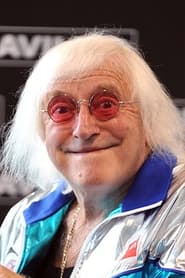 Jimmy Savileรับบท Self
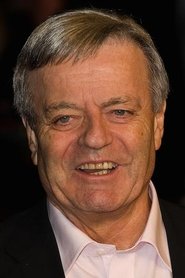 Tony Blackburnรับบท Self - Host
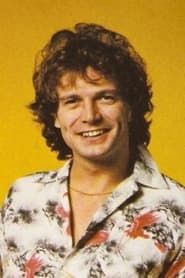 Peter Powellรับบท Self - Presenter
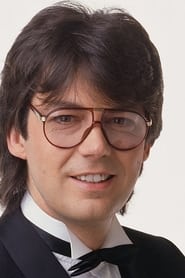 Mike Readรับบท Self - Host
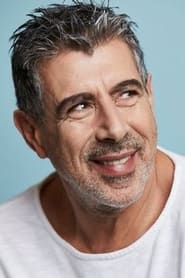 Gary Daviesรับบท Self- Host
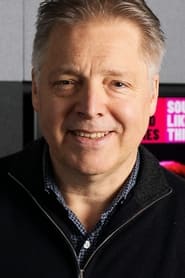 Mark Goodierรับบท Self (voice)
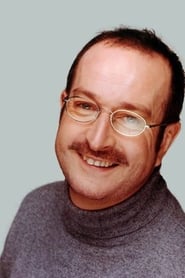 Steve Wrightรับบท Self - Presenter
 Simon Batesรับบท Self - Host
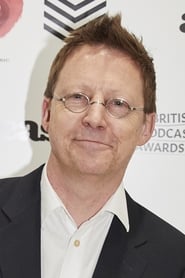 Simon Mayoรับบท Self - Host
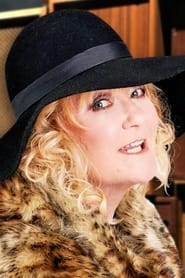 Janice Longรับบท Self
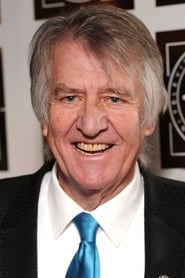 Ed Stewartรับบท Self- Host
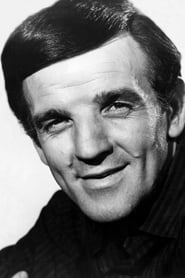 Alan Freemanรับบท Self - Presenter
ซีซันและรายชื่อตอน
- Top of the Pops Season 153 ตอน · 1 มกราคม 2507
- Top of the Pops Season 252 ตอน · 7 มกราคม 2508
- Top of the Pops Season 352 ตอน · 6 มกราคม 2509
- Top of the Pops Season 454 ตอน · 5 มกราคม 2510
- Top of the Pops Season 553 ตอน · 4 มกราคม 2511
- Top of the Pops Season 653 ตอน · 2 มกราคม 2512
- Top of the Pops Season 753 ตอน · 1 มกราคม 2513
- Top of the Pops Season 853 ตอน · 7 มกราคม 2514
- Top of the Pops Season 953 ตอน · 6 มกราคม 2515
- Top of the Pops Season 1051 ตอน · 4 มกราคม 2516
- Top of the Pops Season 1145 ตอน · 3 มกราคม 2517
- Top of the Pops Season 1253 ตอน · 2 มกราคม 2518
- Top of the Pops Season 1354 ตอน · 1 มกราคม 2519
- Top of the Pops Season 1453 ตอน · 6 มกราคม 2520
- Top of the Pops Season 1550 ตอน · 5 มกราคม 2521
- Top of the Pops Season 1652 ตอน · 4 มกราคม 2522
- Top of the Pops Season 1743 ตอน · 3 มกราคม 2523
- Top of the Pops Season 1853 ตอน · 1 มกราคม 2524
- Top of the Pops Season 1953 ตอน · 7 มกราคม 2525
- Top of the Pops Season 2053 ตอน · 6 มกราคม 2526
- Top of the Pops Season 2153 ตอน · 5 มกราคม 2527
- Top of the Pops Season 2251 ตอน · 3 มกราคม 2528
- Top of the Pops Season 2352 ตอน · 2 มกราคม 2529
- Top of the Pops Season 2453 ตอน · 1 มกราคม 2530
- Top of the Pops Season 2552 ตอน · 7 มกราคม 2531
- Top of the Pops Season 2652 ตอน · 5 มกราคม 2532
- Top of the Pops Season 2752 ตอน · 4 มกราคม 2533
- Top of the Pops Season 2852 ตอน · 3 มกราคม 2534
- Top of the Pops Season 2951 ตอน · 2 มกราคม 2535
- Top of the Pops Season 3052 ตอน · 7 มกราคม 2536
- Top of the Pops Season 3152 ตอน · 6 มกราคม 2537
- Top of the Pops Season 3251 ตอน · 5 มกราคม 2538
- Top of the Pops Season 3352 ตอน · 4 มกราคม 2539
- Top of the Pops Season 3451 ตอน · 10 มกราคม 2540
- Top of the Pops Season 3551 ตอน · 9 มกราคม 2541
- Top of the Pops Season 3651 ตอน · 8 มกราคม 2542
- Top of the Pops Season 3755 ตอน · 7 มกราคม 2543
- Top of the Pops Season 3851 ตอน · 12 มกราคม 2544
- Top of the Pops Season 3951 ตอน · 11 มกราคม 2545
- Top of the Pops Season 4051 ตอน · 10 มกราคม 2546
- Top of the Pops Season 4151 ตอน · 9 มกราคม 2547
- Top of the Pops Season 4253 ตอน · 7 มกราคม 2548
- Top of the Pops Season 4331 ตอน · 8 มกราคม 2549
รีวิว Top of the Pops จากทีมงาน
เจาะลึก Top of the Pops: เนื้อเรื่อง การสร้าง และเสียงวิจารณ์
Top of the Pops (TOTP) is a British record chart television programme, made by the BBC and broadcast weekly between 1 January 1964 and 30 July 2006. The programme was the world's longest-running weekly music show. For most of its history, it was broadcast on Thursday evenings on BBC One. Each show consisted of performances of some of the week's best-selling popular music records, usually excluding any tracks moving down the chart, including a rundown of that week's singles chart. This was originally the Top 20, though this varied throughout the show's history. The Top 30 was used from 1969 and the Top 40 from 1984.
Dusty Springfield's "I Only Want to Be with You" was the first song featured on TOTP, while the Rolling Stones were the first band to perform with "I Wanna Be Your Man". Snow Patrol were the last act to play live on the weekly show when they performed their single "Chasing Cars". Status Quo made more appearances than any other artist, with a total of 106 (the first was with "Pictures of Matchstick Men" in 1968 and last with "The Party Ain't Over Yet" in 2005).
Special editions were broadcast on Christmas Day (and usually, until 1984, a second edition a few days after Christmas), featuring some of the best-selling singles of the year and the Christmas number one. Although the weekly show was cancelled in 2006, the Christmas special continued annually. End-of-year round-up editions have also been broadcast on BBC1 on or around New Year's Eve, albeit largely featuring the same acts and tracks as the Christmas Day shows. In a change of format, the festive specials have not returned since 2022 and were replaced by an end-of-year review show on BBC Two. It also survives as Top of the Pops 2, which began in 1994 and features vintage performances from the Top of the Pops archives. Though TOTP2 ceased producing new episodes from 2017, repeats of older episodes are still shown.
The Official Charts Company states that "performing on the show was considered an honour, and it pulled in just about every major player". The show has seen seminal performances over its history. The March 1971 appearance of T. Rex frontman Marc Bolan wearing glitter and satins as he performed "Hot Love" is often seen as the inception of glam rock, and David Bowie's performance of "Starman" inspired future musicians. In the 1990s, the show's format was sold to several foreign broadcasters in the form of a franchise package, and at one point various versions of the show were shown in more than 120 countries. Editions of the programme from 1976 onwards started being repeated on BBC Four in 2011 and are aired on most Friday evenings – as of 2026, the repeat run has reached 2000. Episodes featuring disgraced presenters and artists such as Jimmy Savile, Dave Lee Travis, Scott Mills, Ian Watkins, Jonathan King, Rolf Harris, Gary Glitter, R. Kelly and Sean "Diddy" Combs are no longer repeated.
History
Bill Cotton devised the name Top of the Pops. Cotton, Johnnie Stewart and Stanley Dorfman devised the rules which governed how the show would operate: the programme would always end with the number one record, which was the only record that could appear in consecutive weeks. The show would include the highest new entry, and (if not featured in the previous week) the highest climber on the charts, and omit any song going down in the chart. Tracks could be featured in consecutive weeks in different formats. For example, if a song was played over the chart countdown or the closing credits, then it was acceptable for the act to appear in the studio the following week.
These rules were sometimes interpreted flexibly. It was originally based on the Top 20. By the 1970s, the Top 30 was being used and the show was extended from thirty to forty-five minutes duration and songs that were featured outside the charts were chosen according to Dorfman and his fellow producer's Melvyn Cornish's personal taste and judgement. The rules were more formally relaxed from 1997 when records descending the charts were featured more regularly, possibly as a response to the changing nature of the Top 40; in the late 1990s and early 2000s climbers in the charts were a rarity, with almost all singles peaking at their debut position.
When the programme's format changed in November 2003, it concentrated increasingly on the top 10. Later, during the BBC Two era, the top 20 was regarded as the main cut-off point, with the exception made for up and coming bands below the top 20. Singles from below the top 40 (within the top 75) were shown if the band were up and coming or had a strong selling album. If a single being performed was below the top 40, just the words "New Entry" were shown and not the chart position.
The show was originally intended to run for only a few programmes but lasted over 42 years, reaching landmark episodes of 500, 1,000, 1,500 and 2,000 in the years 1973, 1983, 1992 and 2002 respectively.
First edition
The first edition of Top of the Pops was broadcast on Wednesday, 1 January 1964 at 6:35 pm. It was produced in Studio A at Dickenson Road Studios in Rusholme, Manchester.
The first show was presented by Jimmy Savile, with a brief link to Alan Freeman in London to preview the following week's programme. The producer Johnnie Stewart based the show's format on Savile's Teen and Twenty Disc Club on Radio Luxembourg. The first show featured (in order) Dusty Springfield with "I Only Want to Be with You", the Rolling Stones with "I Wanna Be Your Man", the Dave Clark Five with "Glad All Over", the Hollies with "Stay", the Swinging Blue Jeans with "Hippy Hippy Shake" and the Beatles with "I Want to Hold Your Hand", that week's number one. Throughout its history, the programme proper always (with very few exceptions) finished with the best-selling single of the week, although there often was a separate play-out track over the end credits.
1960s and 1970s
In September 1964, the broadcast time was moved to one hour later, at 7:35 pm, and the show moved from Wednesdays to what became its regular Thursday slot. Additionally its length was extended by 5 minutes to 30 minutes.
For the first three years Alan Freeman, David Jacobs, Pete Murray and Jimmy Savile rotated presenting duties, with the following week's presenter also appearing at the end of each show, although this practice ceased from October 1964 onwards.
The show was taped 52 weeks a year with no breaks. The chart came out on Tuesday mornings and the show aired live on Thursday evenings. This led to a process of difficult weekly planning, rescheduling, booking, and rebooking, as well as pre-recording of acts, particularly of American artists who might be advancing up the chart the following weeks, to ensure that each weeks top 20 would be able to appear on the show. At the BBC in the 1960s and early 1970s, producers and directors did both jobs simultaneously. From 1964 to 1969, Stewart and Dorfman took it in turns to produce and direct, but each spent five days a week getting the show together. At the end of 1969, Stewart left, and was replaced in early 1970 by Melvyn Cornish, Stewart returned as an executive producer in 1971 until 1973. Dorfman directed and produced the series from 1964 until 1971, then continued for five years thereafter as an executive producer.
In the first few editions, Denise Sampey was the "disc girl", who would be seen to put the record on a turntable before the next act played their track. However, a Mancunian model, Samantha Juste, became the regular disc girl after a few episodes, a role she performed until 1967.
Initially acts performing on the show would mime (lip-sync) to the commercially released record, but in 1966 after discussions with the Musicians' Union, miming was banned. After a few weeks during which some bands' attempts to play as well as on their records were somewhat lacking, a compromise was reached whereby a specially recorded backing track was permitted, as long as all the musicians on the track were present in the studio. As a result, Stewart hired Johnny Pearson to conduct an in-studio orchestra to provide musical backing on select performances, beginning with the 4 August 1966 edition. Later, vocal group The Ladybirds began providing vocal backing with the orchestra.
With the birth of BBC Radio 1 in 1967, new Radio 1 DJs were added to the roster – Stuart Henry, Emperor Rosko, Simon Dee and Kenny Everett.
Local photographer Harry Goodwin was hired to provide shots of non-appearing artists, and also to provide backdrops for the chart run-down. He continued in the role until about 1973.
After two years at the Manchester Dickenson Road Studios, the show moved to London (considered to be better located for bands to appear), initially for six months at BBC Television Centre Studio 2 and then to the larger Studio G at BBC Lime Grove Studios in mid-1966 to provide space for the Top of the Pops Orchestra, which was introduced at this time to provide live instrumentation on some performances (previously, acts had generally mimed to the records). In November 1969, with the introduction of colour, the show moved to BBC Television Centre, where it stayed until 1991, when it moved to Elstree Studios Studio C.
For a while in the early 1970s, non-chart songs were played on a more regular basis. To reflect the perceived growing importance of album sales, there was an album slot featuring three songs from a new LP, as well as a New Release spot and a feature of a new act, dubbed Tip for the Top. These features were dropped after a while, although the programme continued to feature new releases on a regular basis for the rest of the decade.
During its heyday, it attracted 15 million viewers each week. The peak TV audience of 19 million was recorded in 1979, during the ITV strike, with only BBC1 and BBC2 on air.
Christmas Top of the Pops
A year-end Christmas show which used a "The Year in Review" format, was inaugurated on 24 December 1964 and has continued every year since. From 1965 until 2021, the special edition was broadcast on Christmas Day (although not in 1966) and from the same year, a second edition was broadcast in the days after Christmas, varying depending on the schedule, but initially regularly on 26 December. The first was shown on 26 December 1965. From 1967, the Christmas Day edition was broadcast earlier in the afternoon (typically around 2:15pm). In 2022, the Christmas show was moved to BBC Two and broadcast on 24 December, with no usual studio-based live performances included in the broadcast. In 1973, there was just one show, airing on Christmas Day. In place of the traditional second show, Jimmy Savile hosted a look back at the first 10 years of TOTP, broadcast on 27 December. In 1975, the first of the two shows was broadcast prior to Christmas Day, airing on 23 December, followed by the traditional Christmas Day show two days later.
The 1978 Christmas Day show was disrupted due to industrial action at the BBC, requiring a change in format to the broadcast. The first show, due to be screened on 21 December, was not shown at all because BBC1 was off the air. For Christmas Day, Noel Edmonds (presenting his last ever edition of TOTP) hosted the show from the 'TOTP Production Office' with clips taken from various editions of the show broadcast during the year and new studio footage performed without an audience. The format was slightly tweaked for the Christmas Day edition in 1981, with the Radio 1 DJs choosing their favourite tracks of the year and the following edition on 31 December featuring the year's number 1 hits. The second programme was discontinued after 1984.
1980s
The year 1980 marked major production changes to Top of the Pops and a hiatus forced by industrial action. Steve Wright made his presenting debut on 7 February 1980. Towards the end of February 1980, facing a £40 million budget deficit, the BBC laid off five orchestras as part of £130 million in cuts. The budget cuts led to a Musicians' Union strike that suspended operations of all 11 BBC orchestras and performances of live music on the BBC; Top of the Pops went out of production between 29 May and 7 August 1980. During the Musicians' Union strike, BBC1 showed repeats of Are You Being Served? in the regular Top of the Pops Thursday night time slot.
Following the strike, Nash was replaced as executive producer by Michael Hurll, who introduced more of a "party" atmosphere to the show, with performances often accompanied by balloons and cheerleaders, and more audible audience noise and cheering. Hurll also laid off the orchestra, as the Musicians' Union was loosening enforcement of the 1966 miming ban.
Guest co-presenters and a music news feature were introduced for a short while, but had ceased by the end of 1980. The chart rundown was split into three sections in the middle of the programme, with the final Top 10 section initially featuring clips of the songs' videos, although this became rarer over the next few years.
An occasional feature showing the American music scene with Jonathan King was introduced in November 1981, and ran every few weeks until February 1985. In January 1985, a Breakers section, featuring short video clips of new tracks in the lower end of the Top 40, was introduced, and this continued for most weeks until March 1994.
Although the programme had been broadcast live in its early editions, it had been recorded on the day before transmission for many years. However, from May 1981, the show was sometimes broadcast live for a few editions each year, and this practice continued on an occasional basis (often in the week of a bank holiday, when the release of the new chart was delayed, and for some special editions) for the rest of the decade.
The programme moved in September 1985 to a new regular half-hour timeslot of 7 pm on Thursdays, following wider reforms to BBC TV scheduling by then-controller Michael Grade. With the exception of special editions, this saw the end of its longer episodes, which had ranged between 35 and 45 minutes in previous years. Coupled with an emphasis on video clips via features such as the aforementioned Breakers section, fewer studio acts could appear due to this, leading to renewed general criticism from both viewers and performers, and occasionally putting the show at a slight disadvantage to other music television programmes (alongside later dedicated channels for music videos) such as The Tube and the revived Whistle Test (though both would end in 1987).
The end of 1988 was marked by a special 70-minute edition of the show broadcast on 31 December 1988, to celebrate the 25th anniversary of the first show. The pre-recorded programme featured the return of the original four presenters (Savile, Freeman, Murray and Jacobs) as well as numerous presenters from the show's history, anchored by Paul Gambaccini and Mike Read. Numerous clips from the history of the show were included in between acts performing in the studio, which included Cliff Richard, Engelbert Humperdinck, Lulu, the Four Tops, David Essex, Mud, Status Quo, Shakin' Stevens, the Tremeloes and from the very first edition, the Swinging Blue Jeans. Sandie Shaw, the Pet Shop Boys and Wet Wet Wet were billed in the Radio Times to appear, but none featured in the show other than Shaw in compilation clips.
Paul Ciani took over as producer in 1988. The following year, in an attempt to fit more songs in the allocated half-hour again, he restricted the duration of studio performances to three minutes, and videos to two minutes, a practice which was largely continued until May 1997. In July 1990, he introduced a rundown of the Top 5 albums, which continued on a monthly basis until May 1991. Ciani had to step down due to illness in 1991, when Hurll returned as producer to cover for two months (and again for a brief time as holiday cover in 1992).
1991: 'Year Zero' revamp
From 1967, the show had become closely associated with the BBC radio station Radio 1, usually being presented by DJs from the station, and between 1988 and 1991 the programme was simulcast on the radio station in FM stereo (that is, until BBC's launch of NICAM stereo for TV made such simulcasts redundant). However, during the last few years of the 1980s the association became less close, and was severed completely (although not permanently) in a radical shake-up known as the 'Year Zero' revamp.
Following a fall in viewing figures and a general perception that the show had become 'uncool' (acts like the Clash had refused to appear in the show in previous years), incoming executive producer Stanley Appel (who had worked on the programme since 1966 as cameraman, production assistant, director and stand-in producer) introduced a radical new format on 3 October 1991, in which the Radio 1 DJs were replaced by a team of relative unknowns, such as Claudia Simon and Tony Dortie who had previously worked for Children's BBC, 17-year-old local radio DJ Mark Franklin, Steve Anderson, Adrian Rose and Elayne Smith, who was replaced by Femi Oke in 1992. A brand new theme tune ("Now Get Out of That"), title sequence and logo were introduced, and the entire programme moved from BBC Television Centre in London to BBC Elstree Centre in Borehamwood.
The new presenting team would take turns hosting (initially usually in pairs but sometimes solo), and would often introduce acts in an out-of-vision voiceover over the song's instrumental introduction. Short informal interviews were also conducted on stage with the performers, and initially the Top 10 countdown was run without any voiceover. Rules relating to performance were altered, meaning acts had to forcibly sing live as opposed to the backing tracks for instruments and mimed vocals for which the show was known. To incorporate a shift towards USA artists, more use was made of out-of-studio performances, with acts in America able to transmit their song to the Top of the Pops audience "via satellite". These changes were widely unpopular and much of the presenting team were axed within a year, leaving the show hosted solely by Dortie and Franklin (apart from the Christmas Day editions, when both presenters appeared) from October 1992, on a week-by-week rotation.
1994–1997
By 1994, much of the 'Year Zero' revamp was quickly undone and the arrival of Ric Blaxill as producer in February 1994 signalled a return to presentation from established Radio 1 DJs Simon Mayo, Mark Goodier, Nicky Campbell and Bruno Brookes. Blaxill expanded the use of "via satellite" performances, taking the acts out of studios and concert halls and setting them against landmark backdrops. As a consequence, Bon Jovi performed Always from Niagara Falls and Celine Dion beamed in Think Twice from Miami Beach.
Blaxill also increasingly experimented with handing presenting duties to celebrities, commonly contemporary comedians and pop stars who were not in the charts at that time. In an attempt to keep the links between acts as fresh as the performances themselves, the so-called "golden mic" was used by, amongst others, Kylie Minogue, Meat Loaf, Chris Eubank, Fred Dibnah, Damon Albarn, Harry Hill, Jack Dee, Lulu, Björk, Jarvis Cocker, Stewart Lee and Richard Herring. Radio 1 DJs still presented occasionally, including Lisa I'Anson, Steve Lamacq, Jo Whiley and on one show only Chris Evans. The last remnants of the Year Zero revamp were replaced on 2 February 1995, when a new set, title sequence, logo and theme tune were introduced (the logo having first appeared on the new programme Top of the Pops 2, which had debuted five months previously in mid-September 1994).
TOTP was traditionally shown on a Thursday night, but was moved to a Friday starting on 14 June 1996, originally at 7 pm, but then shifted to 7.30 pm, a change which placed the programme up against the soap opera Coronation Street on ITV. This began a major decline in audience figures as fans were forced to choose between Top of the Pops and an episode of the soap. 26 July 1996 saw the first episode of TOTP to air on BBC2, due to the Olympics airing on BBC1.
1997–2003
In 1997, incoming producer Chris Cowey phased out the use of celebrities and established a rotating team of former presenters from youth music magazine The O-Zone including Jayne Middlemiss and Jamie Theakston, as well as existing Radio 1 DJs Jo Whiley and Zoe Ball. The team was later augmented by Kate Thornton and Gail Porter.
Cowey additionally instigated a wider set of 'back to basics' changes when he took over the show. On 1 May 1998, a remixed version of the classic "Whole Lotta Love" theme tune previously used in the 1970s was introduced, accompanied by a new 1960s-inspired logo and title sequence. Cowey also began to export the brand overseas with localised versions of the show on air in Germany, France, the Netherlands, Belgium and Italy by 2003. Finally, the programme returned to its previous home of BBC Television Centre in 2001, where it remained until its cancellation in 2006.
2003: All New Top of the Pops
On 28 November 2003 (three months after the appointment of Andi Peters as executive producer), the show saw one of its most radical overhauls since the ill-fated 1991 'Year Zero' revamp in what was widely reported as a make-or-break attempt to revitalise the long-running series. In a break with the previous format, the show played more up-and-coming tracks ahead of any chart success, and also featured interviews with artists and a music news feature called "24/7". Most editions of the show were now broadcast live, for the first time since 1991 (apart from a couple of editions in 1994).
Although the first edition premièred to improved ratings, the All New format, hosted by MTV presenter Tim Kash, quickly returned to low ratings and brought about scathing reviews. Kash continued to host the show, but Radio 1 DJs Reggie Yates and Fearne Cotton (who had each presented a few shows in 2003, before the revamp) were brought back to co-host alongside him, before Kash was completely dropped by the BBC, later taking up a new contract at MTV. The show continued to be hosted by Reggie Yates and Fearne Cotton (usually together, but occasionally solo) on Friday evenings until 8 July 2005.
On 30 July 2004, the show took place outside a studio environment for the first time by broadcasting outside in Gateshead. Girls Aloud, Busted, Will Young and Jamelia were among the performers that night.
2005
Figures had plummeted to below three million, prompting an announcement by the BBC that the show was going to move, again, to Sunday evenings on BBC Two, thus losing the prime-time slot on BBC One that it had maintained for more than forty years. The show had aired on BBC Two occasionally from 1996, usually if it was Comic Relief or Children in Need on BBC One.
This move was widely reported as a final "sidelining" of the show, and perhaps signalled its likely cancellation. At the time, it was insisted that this was so the show would air immediately after the official announcement of the new top 40 chart on Radio 1, as it was thought that by the following Friday, the chart seemed out of date. The final Top of the Pops to be shown on BBC One (barring Christmas and New Year specials) was broadcast on Monday 11 July 2005, which was edition number 2,166.
The first regular edition on BBC Two was broadcast on 17 July 2005 at 7.00 pm with presenter Fearne Cotton. Following the move to Sundays, Cotton continued to host with a different guest presenter each week, such as Rufus Hound or Richard Bacon. On a number of occasions, however, Reggie Yates would step in, joined by female guest presenters such as Lulu, Cyndi Lauper and Anastacia. Viewing figures during this period averaged around 11⁄2 million. Shortly after the move to BBC Two, Peters resigned as executive producer. He was replaced by the BBC's Creative Head of Music Entertainment Mark Cooper, while producer Sally Wood remained to oversee the show on a weekly basis.
เนื้อหาส่วนนี้มาจากบทความ "Top of the Pops" ในวิกิพีเดีย (en.wikipedia.org) เผยแพร่ภายใต้สัญญาอนุญาตครีเอทีฟคอมมอนส์ แสดงที่มา-อนุญาตแบบเดียวกัน 4.0 (creativecommons.org/licenses/by-sa/4.0) มีการตัดส่วนอ้างอิงและจัดรูปแบบใหม่
คำถามที่พบบ่อยเกี่ยวกับ Top of the Pops
Top of the Pops มีกี่ตอน?
Top of the Pops มีทั้งหมด 2207 ตอน รวม 43 ซีซัน สถานะปัจจุบัน: จบแล้ว
Top of the Pops ฉายวันไหน?
Top of the Pops เริ่มออกอากาศครั้งแรกวันที่ 1 มกราคม 2507
Top of the Pops ดูได้ที่ไหน?
ขณะนี้ยังไม่พบแพลตฟอร์มที่มีลิขสิทธิ์ Top of the Pops ในประเทศไทย
หมวดแนะนำ: ซีรีย์ญี่ปุ่นน่าดู · เรื่องถัดไป: Olivia Attwood's Bad Boyfriends
ซีรี่ย์ที่คล้ายกับ Top of the Pops
 EP11/11★ 6.5
Beat Bobby Flay (2013)
 EP7/8★ 6.1
The Voice UK (2012)
 EP14/14★ 5.8
Guy's Grocery Games (2013)
 จบแล้ว 79 ตอน★ 7.8
Rob Dyrdek's Fantasy Factory (2009)
 EP9/10★ 6.1
House Hunters International (2006)
 ★ 7.0
★ 7.0The Circle (2018)
 ★ 7.2
★ 7.2The Challenge (1998)
 จบแล้ว 130 ตอน★ 6.4
Wipeout (2008)
 ★ 6.6
★ 6.6The Ultimate Fighter (2005)
 EP15/16★ 6.6
Cops (1989)
 ★ 6.9
★ 6.9Bling Empire (2021)
 EP8/8★ 6.8