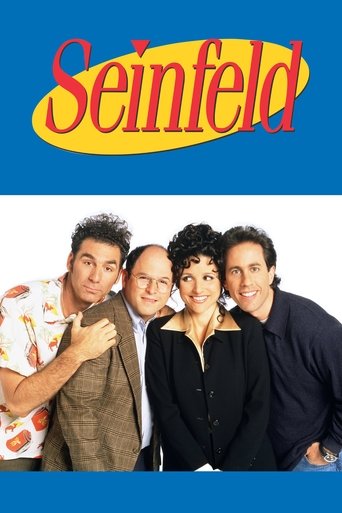
Seinfeld ไซน์เฟลด์ (1989)
- ชื่อไทย
- ไซน์เฟลด์
- ชื่อต้นฉบับ
- Seinfeld
- ประเทศ
- สหรัฐอเมริกา
- ออกอากาศครั้งแรก
- 5 กรกฎาคม 2532
- จำนวนตอน
- 180 ตอน (9 ซีซัน)
- ความยาวต่อตอน
- ประมาณ 28 นาที
- สถานะ
- จบแล้ว
- ตอนล่าสุด
- EP24/24 (14 พฤษภาคม 2541)
- ช่อง/แพลตฟอร์มต้นทาง
- NBC
- ผู้สร้าง
- เจอร์รี่ ไซน์เฟลด์, Larry David
- เรตผู้ชม
- น 13+
- คะแนน TMDB
- 8.3/10 (2,474 โหวต)
เรื่องย่อ Seinfeld ไซน์เฟลด์
Seinfeld ไซน์เฟลด์ เป็นซีรี่ย์ฝรั่ง ปี 1989 มีทั้งหมด 180 ตอน สถานะจบแล้ว
"ซีรีส์ที่ไม่มีประเด็นอะไรเลย" กลายมาเป็นพล็อตซิตคอมแห่งยุค โดยมีดาราตลกอย่างเจอร์รี่พร้อมเพื่อนฝีปากจัดจ้านสามคนที่มาร่วมกันสร้างเสียงหัวเราะจากเรื่องจำเจและน่าขัน
Seinfeld ไซน์เฟลด์ ดูได้ที่ไหน (ถูกลิขสิทธิ์)
สตรีมมิ่ง (สมาชิก)
 Netflix
เปิดแอปหรือเว็บไซต์ของผู้ให้บริการแล้วค้นหาชื่อเรื่องนี้ได้เลย ข้อมูลผู้ให้บริการในประเทศไทยจาก JustWatch อาจเปลี่ยนแปลงตามสัญญาลิขสิทธิ์ของแต่ละแพลตฟอร์ม
นักแสดง Seinfeld ไซน์เฟลด์
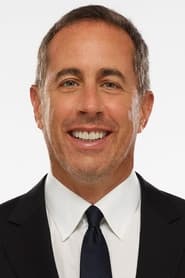 เจอร์รี่ ไซน์เฟลด์รับบท Jerry Seinfeld
 Jason Alexanderรับบท George Costanza
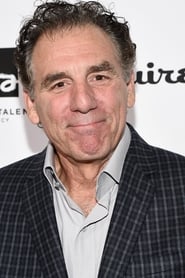 Michael Richardsรับบท Cosmo Kramer
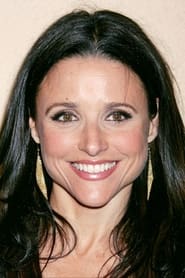 จูเลีย หลุยส์-ไดรฟัสรับบท Elaine Benes
- Ruth Cohenรับบท Ruthie Cohen (uncredited)
 Wayne Knightรับบท Newman
 Larry Davidรับบท Man At Softball Game (voice)
 Heidi Swedbergรับบท Susan Ross
 Estelle Harrisรับบท Estelle Costanza
 Jerry Stillerรับบท Frank Costanza
 Norman Brennerรับบท Ian
 Liz Sheridanรับบท Helen Seinfeld
ซีซันและรายชื่อตอน
- Seinfeld ไซน์เฟลด์ ซีซั่น 15 ตอน · 5 กรกฎาคม 2532
- Seinfeld ไซน์เฟลด์ ซีซั่น 212 ตอน · 23 มกราคม 2534
- Seinfeld ไซน์เฟลด์ ซีซั่น 323 ตอน · 18 กันยายน 2534
- Seinfeld ไซน์เฟลด์ ซีซั่น 424 ตอน · 12 สิงหาคม 2535
- Seinfeld ไซน์เฟลด์ ซีซั่น 522 ตอน · 16 กันยายน 2536
- Seinfeld ไซน์เฟลด์ ซีซั่น 624 ตอน · 22 กันยายน 2537
- Seinfeld ไซน์เฟลด์ ซีซั่น 724 ตอน · 21 กันยายน 2538
- Seinfeld ไซน์เฟลด์ ซีซั่น 822 ตอน · 19 กันยายน 2539
- Seinfeld ไซน์เฟลด์ ซีซั่น 924 ตอน · 25 กันยายน 2540
รีวิว Seinfeld ไซน์เฟลด์ จากทีมงาน
เจาะลึก Seinfeld ไซน์เฟลด์: เนื้อเรื่อง การสร้าง และเสียงวิจารณ์
Seinfeld ( SYNE-feld) is an American television sitcom created by Larry David and Jerry Seinfeld. It originally aired on NBC from July 5, 1989, to May 14, 1998, with a total of nine seasons consisting of 180 episodes. Its ensemble cast stars Seinfeld as a fictionalized version of himself and focuses on his personal life with his three friends: best friend George Costanza (Jason Alexander), ex-girlfriend Elaine Benes (Julia Louis-Dreyfus), and eccentric apartment neighbor Cosmo Kramer (Michael Richards).
Seinfeld is set mostly in and around the titular character's apartment in Manhattan's Upper West Side in New York City. It has been described as "a show about nothing", often focusing on the minutiae of daily life. Interspersed in all episodes of the first seven seasons are moments of stand-up comedy from the fictional Jerry Seinfeld, frequently related to the episode's events.
As a rising comedian in the late 1980s, Jerry Seinfeld was presented with an opportunity to create a show with NBC. He asked Larry David, a fellow comedian and friend, to help create a premise for a sitcom. The series was produced by West/Shapiro Productions and Castle Rock Entertainment and is distributed in syndication by Sony Pictures Television. It was largely written by David and Seinfeld along with scriptwriters. A favorite among critics, the series led the Nielsen ratings in Seasons 6 and 9 and finished among the top two (along with ER of the same network) every year from 1994 to 1998. Only two other shows—I Love Lucy and The Andy Griffith Show—finished their runs at the top of the ratings.
Seinfeld is universally regarded as one of the greatest and most influential American shows of all time. Its most renowned episodes include "The Chinese Restaurant", "The Soup Nazi", "The Parking Garage", "The Marine Biologist", "The Contest", and "The Strike", which introduced the December 23rd holiday of Festivus. E! named the series the "Number 1 reason [why] the '90s ruled". Quotes from numerous episodes have become catchphrases in popular culture.
Conception
Seinfeld began as a 23-minute pilot titled "The Seinfeld Chronicles". Created by Jerry Seinfeld and Larry David, developed by NBC executive Rick Ludwin, and produced by Castle Rock Entertainment, it was a mix of Seinfeld's stand-up comedy routines and idiosyncratic, conversational scenes focusing on mundane aspects of everyday life like laundry, the buttoning of the top button on one's shirt, and the effort by men to interpret the intent of women spending the night in Seinfeld's apartment.
The pilot was filmed at Stage 8 of Desilu Cahuenga studios, the same studio where The Dick Van Dyke Show was filmed (seen by the crew as a good omen), and was recorded at Ren-Mar Studios in Hollywood. The pilot was first screened to a group of two dozen NBC executives in Burbank, California, in early 1989. This one, however, did not yield the explosion of laughter garnered by the pilots for the decade's previous NBC successes like The Cosby Show and The Golden Girls. Brandon Tartikoff was not convinced the show would work. A Jewish man from New York himself, Tartikoff characterized it as "Too New York, too Jewish". Test audiences were even harsher. NBC's practice at the time was to recruit 400 households by phone to ask them to evaluate pilots it aired on an unused channel on its cable system. An NBC research department memo summarized the pilot's performance among the respondents as "weak", which Warren Littlefield, then second-in-command in NBC's entertainment division, called "a dagger to the heart". Comments included, "You can't get too excited about two guys going to the laundromat", "Jerry's loser friend George isn't a forceful character", "Jerry needs a stronger supporting cast", and "Why are they interrupting the stand-up for these stupid stories?" Seinfeld and David did not see the memo for several years, but after they became aware of it, they hung it in a bathroom on the set. Seinfeld comments, "We thought, if someone goes in to use this bathroom, this is something they should see. It fits that moment."
Around the time the show's pilot was filmed, Castle Rock Entertainment had also produced another pilot for NBC that featured Ann Jillian in her almost-similarly eponymous TV series. When The Seinfeld Chronicles tested poorly with audiences, Castle Rock focused on Jillian's series, which tested better with audiences and received a full-season order. Ann Jillian lasted only a single season of 13 episodes and was off the air by the end of 1990.
First seasons
When NBC announced its 1989–90 (primetime) schedule in May 1989, The Seinfeld Chronicles was not included, but the show's supporters did not give up. The pilot first aired on July 5, 1989, and finished second in its time slot against the CBS police drama Jake and the Fatman, receiving a Nielsen rating of 10.9/19. The ratings did not exhibit the regional skew Tartikoff predicted, much to the encouragement of the show's supporters. Ludwin canceled one of the Bob Hope specials budgeted for that season so the entertainment division had the money to order four more episodes of The Seinfeld Chronicles, which formed the rest of the show's first season (the series was by then retitled to Seinfeld)—a move without which Chicago Tribune columnist Phil Rosenthal later said there "would be no Seinfeld". Although this was a very low order number for a new series—and the smallest sitcom order in TV history—Castle Rock failed to find any other buyers when it shopped the show to other networks, and accepted the order. Seinfeld did not return to the airwaves until May 30, 1990, and it was another three years before it became a Top 5-rated show. Preston Beckman, in charge of NBC's research department at the time, reminisced, "The show was different. Nobody had seen anything like it. It wasn't unusual for poor-testing shows to get on the air, but it was very rare that they became hits."
When the program was first repeated on July 5, 1990, it received a rating of 13.9/26. These ratings were high enough to secure a second season. NBC research showed that the show was popular with young male adults, a demographic sought after by advertisers. This gave NBC an incentive to keep broadcasting the show. One DVD reviewer, Britt Gillette, wrote that "this initial episode exhibits the flashes of brilliance that made Seinfeld a cultural phenomenon."
Filming
The show was written by David and Seinfeld, along with writers who included Larry Charles, Peter Mehlman, Gregg Kavet, Carol Leifer, David Mandel, Jeff Schaffer, Steve Koren, Jennifer Crittenden, Tom Gammill, Max Pross, Dan O'Keefe, Charlie Rubin, Marjorie Gross, Alec Berg, Elaine Pope, and Spike Feresten.
Other than the pilot, the series was filmed at CBS Studio Center in Studio City, Los Angeles. The first three seasons were filmed on Soundstage 19; it then moved to the larger Stage 9 for the remainder of its production. Despite numerous establishing shots taken in New York City, all scenes of the actors walking in New York were also filmed at CBS Studio Center, on their New York Street backlot. Street scenes and park scenes were filmed in the CBS Studio Centre's New York Street and Central Park backlots, respectively.
A source of problems for the cast was the small sets, especially that of Jerry's apartment; Alexander noted, "If you knew you were doing a series for nine years, you would never build that set." Adding to the problem was that the scripts contained only minimal physical direction, leaving the actors needing help to come up with actions to perform while speaking. Eventually, they got into a routine of directing each other on how to make their movements look natural. Alexander said this helped them build chemistry with each other.
Filming usually went long, as the cast and Larry David were perfectionists. If a joke did not elicit the desired reaction, they rewrote it and performed it again. In at least one case, "The Marine Biologist", this led to David writing an entirely new scene requiring Alexander to memorize a monologue in only a matter of minutes. Laugh tracks were used only for matching shots, not for artificially adding laughter.
Various locations used for establishing shots included Tom's Restaurant at 112th Street and Broadway (Monk's Cafe), Midtown West's Roosevelt Hospital (recurring exterior emergency room scene and indoor scenes in 'The Junior Mint' and 'The Bris'), Cornell Medical Centre at 525 East 68th Street, 22-39 37th Street, Queens (The Costanzas' house), the Taconic State Parkway exit to the Hopewell Junction, Dutchess County, New York (driving scene in 'The Bubble Boy'), and the Amagansett farmers market, Long Island ('The Hamptons'). The exterior shot used for Jerry's New York apartment building was actually located at 757 S New Hampshire Avenue, Los Angeles. The real-life exterior of Pendant Publishing, Elaine's workplace, is located at 1325 Ave of the Americas, New York. The live stand-up comedy performed by Seinfeld at the beginning of most episodes was truly filmed at The Improv, a comedy club at 358 West 44th Street, Manhattan; though it closed in 1993, another comedy club operates at the site today. The Yankee Stadium exterior seen in the show has now been demolished. Most office building establishing shots are real businesses and locations. Various real street locations can be gleaned from the car windows during driving scenes. By the final season, each episode of the series cost $3 million to $3.5 million.
More than 120 episodes make reference to the Superman franchise. Teri Hatcher, who played Lois Lane on Lois & Clark: The New Adventures of Superman, plays Jerry's girlfriend Sidra. Paula Marshall, who played Christina Riley on the Superboy TV series, portrays the journalist Sharon, who Jerry says reminds him of Lois Lane. Sherman Howard, who played Lex Luthor on Superboy, portrays Roy. Superman logos and figurines frequently appear in Jerry's apartment. Seinfeld and Superman later appeared in an American Express commercial.
Plotlines
Many Seinfeld episodes are based on the writers' real-life experiences, with the experiences reinterpreted for the characters' storylines. For example, George's storyline in "The Revenge" is based on Larry David's experience at Saturday Night Live. "The Contest" is also based on David's experiences. "The Smelly Car" storyline is based on Peter Mehlman's lawyer friend, who could not get a bad smell out of his car. "The Strike" is based on Dan O'Keefe's dad, who made up his own holiday: Festivus. Other stories take a variety of turns. "The Chinese Restaurant" consists of George, Jerry, and Elaine waiting for a table throughout the entire episode. "The Boyfriend", revolving around Keith Hernandez, extends through two episodes. "The Betrayal" is famous for using reverse chronology and was inspired by a similar plot device in a Harold Pinter play, Betrayal. Some stories were inspired by headlines and rumors, as explained in the DVD features "Notes About Nothing", "Inside Look" and "Audio Commentary". In "The Maestro", Kramer's lawsuit is roughly similar to the McDonald's coffee case. "The Outing" is based primarily on rumors that Larry Charles heard about Jerry Seinfeld's sexuality.
Themes
The series was often described as "a show about nothing". However, in 2014, Seinfeld stated: "The pitch for the show, the real pitch, when Larry and I went to NBC in 1988, was [that] we want to show how a comedian gets his material. The show "about nothing" was just a joke in an episode many years later, and Larry and I to this day are surprised that it caught on as a way that people describe the show because, to us, it's the opposite of that." David similarly commented: "I like taking the worst qualities that a person has and trying to make something funny out of it. Doesn't everybody do terrible things and have terrible thoughts? Just by trying to be as funny, you're going to deal with a lot of things that are real, so the show's really about something. The whole thing about the show being about nothing is ridiculous."
Much of the show's humor is based upon repeated use of irony, incongruity, and (oftentimes unfortunate) coincidences. Additionally, guest characters are frequently introduced with little to no context, with a humorous focus on the atypical names of these characters, which often contain alliteration. In keeping with Seinfeld's reputation as a clean comedian, though the show frequently contains dialogue around sexual themes, the show notably avoids using almost all explicit sexual terminology. Notably, in the popular episode "The Contest", whose plot line concerns a contest amongst the main characters to see which one can go the longest without masturbating, the word 'masturbation' is never mentioned. Seinfeld broke several conventions of mainstream television. David is credited with refusing to follow a predictable sitcom formula that would have a romantic relationship develop between Jerry and Elaine.
The show offers no growth or reconciliation to its characters and eschews sentimentality. An episode is typically driven by humor interspersed with the superficial conflicts of characters with peculiar dispositions. Many episodes revolve around the characters' involvement in the lives of others, with typically disastrous results. On the set, the notion that the characters should not develop or improve throughout the series was expressed as the "no hugging, no learning" rule. Larry David was adamant from the beginning that he did not want the characters to mature, grow or learn from their past mistakes. The characters are "thirty-something singles with vague identities, no roots, and conscious indifference to morals." Also unlike most sitcoms, there are no moments of pathos; the audience is never made to feel sorry for any of the characters. Even Susan's death in "The Invitations" elicits no genuine emotions from anybody in the show. Seinfeld does not shy away from making light of tough topics, from death to illness to disability.
The show frequently engages in fourth-wall-breaking humor and self-satire. One such example is the story arc where the characters pitch a TV sitcom series named Jerry. The show within a show Jerry echoes many characteristics of Seinfeld: among others, it is described as being "about nothing", and Seinfeld plays himself. The fictional Jerry was launched in the Season 4 finale, but unlike Seinfeld, it was not picked up as a series. Jerry is one of many examples of metafiction in the show. There are no fewer than 22 fictional movies featured, including Rochelle, Rochelle. Because of these several elements, Seinfeld became the first TV series since Monty Python's Flying Circus to be widely described as postmodern.
Seinfeld is an avid Abbott and Costello fan and has cited The Abbott and Costello Show as an influence on Seinfeld: "Everybody on the show knows I'm a fan. We're always joking about how we do stuff from their show. George and I will often get into a riff that has the rhythm from the old Abbott and Costello shows. And sometimes, I'll hit George in the chest the way Abbott would hit Costello". The series includes numerous references to the team. George Costanza's middle name is "Louis", after Costello. "The Old Man" episode features a cantankerous character named "Sid Fields" as a tribute to the landlord on the team's TV show. Kramer's friend is named Mickey Abbott. A copywriter for the J. Peterman catalog is named Eddie Sherman, after the team's longtime agent. In Episode 30, Kramer hears the famous Abbott and Costello line, "His father was a mudder. His mother was a mudder."
Catchphrases
Many terms were coined, popularized, or re-popularized in the series' run and have become part of popular culture, including "Yada, yada, yada", "No soup for you!", "Master of my domain", "That's a shame", and "Not that there's anything wrong with that." The lexicon of Seinfeldian code words and recurring phrases that evolved around particular episodes is referred to as Seinlanguage, which is also the title of Jerry Seinfeld's best-selling book on humor. These terms include "man hands", "shrinkage", "regift", and "double dip".
Consumer products
A recurring feature of Seinfeld was its inclusion of specific products, especially candy, as plot points. These might be a central feature of a plot (e.g., Junior Mints, Twix, Chuckles, Jujyfruits, bite-size Three Musketeers, Snickers, Chunky, Oh Henry!, Drake's Coffee Cake and PEZ), or an association of candy with a guest character (e.g. Oh Henry! bars) or simply a conversational aside (e.g., Chuckles, Clark Bar, Twinkies). A large number of non-candy products were also featured throughout the series.
The show's creators claim that they weren't engaging in a product placement strategy for commercial gain. One motivation for the use of real-world products, entirely unrelated to commercial considerations, is the comedy value of funny-sounding phrases and words. "I knew I wanted Kramer to think of watching the operation like going to see a movie," explained Seinfeld writer/producer Andy Robin in an interview published in The Hollywood Reporter. "At first, I thought maybe a piece of popcorn falls into the patient. I ran that by my brother, and he said, 'No, Junior Mints are just funnier.'"
Many advertisers capitalized on the popularity of Seinfeld. American Express created a webisode where Jerry Seinfeld and an animated Superman (voiced by Patrick Warburton, who played the role of Puddy) starred in its commercial. The makers of the Today Sponge created the "Spongeworthy" game on their website, inspired by "The Sponge". An advertisement featured Jason Alexander in a Chrysler commercial. In this, Alexander acts much like his character George, and his relationship with Lee Iacocca plays on George's relationship with Steinbrenner. Similarly, Michael Richards was the focus of a series of advertisements for Vodafone, which ran in Australia, where he dressed and acted precisely like Kramer, including the trademark bumbling pratfalls. In addition, the show occasionally incorporated fictional products like a Scotch brand called "Hennigan's" (a blend of "Hennessy" and "Brannigans") and a canned meat product called "Beef-a-reeno" (a parody of "Beef-a-roni").
Music
The Seinfeld music was composed by Jonathan Wolff, who had previously composed for sitcoms including Who's the Boss? and Married with Children. The pilot episode had a theme composed by a different composer, but Seinfeld felt it interfered with his standup sequences. Whereas previous sitcoms had been melodic and lyrical, Wolff did not want to create a typical theme and instead wanted to create an instantly recognizable "audio signature". He composed a theme comprising samples of slap bass taken from multiple sources, edited and processed with compression, equalized and other effects. He added percussion with finger snaps and mouth noises to create an organic "percolating energy" and blend with the "quirky" patterns of Seinfeld's speech. When the network asked for a more conventional theme for the second season, David refused. Wolff composed variations on the theme to match the rhythms and dialogue of each episode.
In "The Note", the first episode of Season 3, the bumper music featured scatting female backup singers who sang a phrase that sounded like the tune "Easy to Beat". Jerry Seinfeld and executive producer Larry David both liked Wolff's additions, and three episodes were produced with this new style of music. However, they had neglected to inform NBC and Castle Rock executives of the change, and when the season premiere aired, the executives were surprised and unimpressed and requested that they return to the original style. The subsequent two episodes were redone, leaving this episode as the only one with additional music elements. In the commentary of "The Note", Louis-Dreyfus facetiously suggests it was removed because the perceived lyric related closely to the low ratings at the time. The soundtrack was given a digital release on July 2, 2021.
Main characters
Jerry Seinfeld (himself) – Jerry is a "minor celebrity" stand-up comedian who is often depicted as "the voice of common sense and reason" amid the general insanity generated by the people in his world. However, the in-show character is also overly fixated on minor imperfections, often ending romantic relationships for the tiniest of perceived flaws in a dating partner. He is a mild germophobe and neat freak, as well as a fan of Superman, New York Mets, and breakfast cereal. Jerry's apartment is the center of a world visited by his eccentric friends and a focus of the show.
George Costanza (Jason Alexander) – George has been Jerry's best friend since high school. He is stingy, conniving, pedantic, and envious of others' achievements. He is depicted as a loser who is perpetually lacking confidence about his capabilities. He rants and lies easily about his profession, relationships, and almost everything else, which usually creates trouble for him later. He often uses the alias Art Vandelay when lying or concocting a cover story. Despite these shortcomings, George is usually very reliable to his friends and frequently has success in dating women. After a series of disastrous jobs (the disasters often being of his own making), George eventually secures a steady career as an assistant to the traveling secretary for the New York Yankees. The character of George was based on Larry David himself.
Elaine Benes (Julia Louis-Dreyfus) – Elaine is Jerry's ex-girlfriend and later friend. Generally depicted as smarter than her friends, she is friendly while also being sarcastic, somewhat elitist, and hot-tempered. She is occasionally depicted as vegetarian or pescatarian, without the strength of conviction to keep this up regularly. She sometimes tends to be too honest with people (usually by losing her temper), which often gets her into trouble. She usually gets caught up in her boyfriends' quirks, eccentric employers' unusual behaviors and idiosyncrasies, and the maladjustment of total strangers. She tends to make poor choices in men she dates and is often overly reactive. She works for a time at Pendant Publishing with Mr. Lippman. Later she is hired as a personal assistant for Mr. Pitt. She eventually worked for the J. Peterman catalog as a writer. Elaine is popularly described as an amalgamation of David's and Seinfeld's girlfriends during their early days in New York as struggling comedians.
Cosmo Kramer (Michael Richards) – Kramer is Jerry's slacker neighbor. His trademarks include his humorous upright pompadour hairstyle, vintage clothes, and energetic sliding bursts through Jerry's apartment door. Kramer was heavily based on a neighbor of David's during his amateur comedic years in Manhattan. At times, he appears naïve, uneducated, and impulsive, and at other times, quick-witted, helpful, and empathetic; similarly he is exaggeratedly successful, socially, with his charisma and laid-back personality. This is seen in his success with women and employers. He has been described as a "hipster doofus". Although he never holds a steady job, he is rarely short of money and frequently invents wacky schemes that often work at first but eventually fail. Kramer is friends with Newman, and they work well together despite their differences. He often provides slapstick gags.
เนื้อหาส่วนนี้มาจากบทความ "Seinfeld" ในวิกิพีเดีย (en.wikipedia.org) เผยแพร่ภายใต้สัญญาอนุญาตครีเอทีฟคอมมอนส์ แสดงที่มา-อนุญาตแบบเดียวกัน 4.0 (creativecommons.org/licenses/by-sa/4.0) มีการตัดส่วนอ้างอิงและจัดรูปแบบใหม่
คำถามที่พบบ่อยเกี่ยวกับ Seinfeld ไซน์เฟลด์
Seinfeld ไซน์เฟลด์ มีกี่ตอน?
Seinfeld ไซน์เฟลด์ มีทั้งหมด 180 ตอน รวม 9 ซีซัน สถานะปัจจุบัน: จบแล้ว
Seinfeld ไซน์เฟลด์ ฉายวันไหน?
Seinfeld ไซน์เฟลด์ เริ่มออกอากาศครั้งแรกวันที่ 5 กรกฎาคม 2532
Seinfeld ไซน์เฟลด์ ดูได้ที่ไหน?
ในประเทศไทยรับชม Seinfeld ไซน์เฟลด์ แบบถูกลิขสิทธิ์ได้ที่ Netflix
หมวดแนะนำ: ซีรี่ย์จีน · เรื่องถัดไป: Sacrifice
ซีรี่ย์ที่คล้ายกับ Seinfeld ไซน์เฟลด์
 จบแล้ว 248 ตอน★ 7.3
The Jeffersons (1975)
 จบแล้ว 194 ตอน★ 6.9
Will & Grace (1998)
 จบแล้ว 97 ตอน★ 6.5
Archie Bunker's Place (1979)
 จบแล้ว 152 ตอน★ 8.2
Brooklyn Nine-Nine บรู๊คลิน ไนน์ไนน์ (2013)
 EP30/30★ 8.0
Nick Cannon Presents: Wild 'N Out (2005)
 จบแล้ว 140 ตอน★ 6.8
Rowan & Martin's Laugh-In (1968)
 ★ 6.8
★ 6.8Don't Trust the B---- in Apartment 23 (2012)
 จบแล้ว 129 ตอน★ 7.2
Becker (1998)
 จบแล้ว 193 ตอน★ 7.3
Night Court (1984)
 ★ 7.2
★ 7.22 Broke Girls (2011)
 จบแล้ว 228 ตอน★ 8.4
Friends เฟรนส์ (1994)
 จบแล้ว 39 ตอน★ 7.4