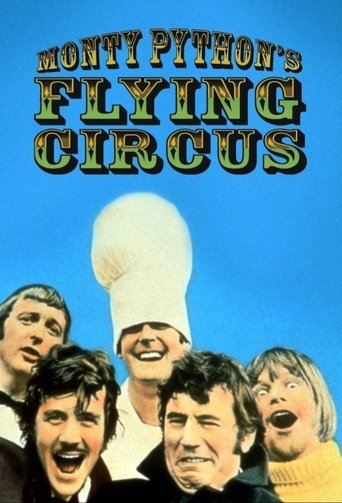
Monty Python's Flying Circus มอนตี้ ไพธอน: ละครสัตว์เหินหาว (1969)
- ชื่อไทย
- มอนตี้ ไพธอน: ละครสัตว์เหินหาว
- ชื่อต้นฉบับ
- Monty Python's Flying Circus
- ประเทศ
- สหราชอาณาจักร
- ออกอากาศครั้งแรก
- 5 ตุลาคม 2512
- จำนวนตอน
- 45 ตอน (4 ซีซัน)
- ความยาวต่อตอน
- ประมาณ 28 นาที
- สถานะ
- จบแล้ว
- ตอนล่าสุด
- EP6/6 (5 ธันวาคม 2517)
- ช่อง/แพลตฟอร์มต้นทาง
- BBC One
- ผู้สร้าง
- Ian MacNaughton, John Howard Davies
- เรตผู้ชม
- TV-14
- คะแนน TMDB
- 8.3/10 (748 โหวต)
เรื่องย่อ Monty Python's Flying Circus มอนตี้ ไพธอน: ละครสัตว์เหินหาว
Monty Python's Flying Circus มอนตี้ ไพธอน: ละครสัตว์เหินหาว เป็นซีรี่ย์อังกฤษ ปี 1969 มีทั้งหมด 45 ตอน สถานะจบแล้ว
เหล่านักแสดงมอนตี้ ไพธอนแจ้งเกิดในโลกมายาจากฝีมือการแสดงอันโดดเด่นซึ่งเป็นการผสมลงตัวระหว่างไหวพริบ การพลิกแพลง จังหวะการส่งมุก ความหลงใหลในการล้อเลียน และแต่งหญิง
Monty Python's Flying Circus มอนตี้ ไพธอน: ละครสัตว์เหินหาว ดูได้ที่ไหน (ถูกลิขสิทธิ์)
ยังไม่พบข้อมูลผู้ให้บริการที่มีลิขสิทธิ์เรื่องนี้ในประเทศไทย ต้นทางออกอากาศทาง BBC One เราจะอัปเดตทันทีเมื่อมีแพลตฟอร์มนำเข้ามาฉาย
นักแสดง Monty Python's Flying Circus มอนตี้ ไพธอน: ละครสัตว์เหินหาว
 Graham Chapmanรับบท Various
 ไมเคิล เพลินรับบท Various / "It's" man
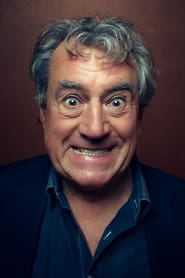 Terry Jonesรับบท Various
 เอริก ไอเดิลรับบท Various
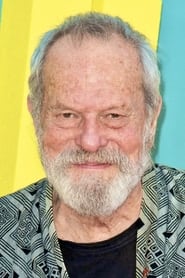 เทรี กิลเลียมรับบท Various
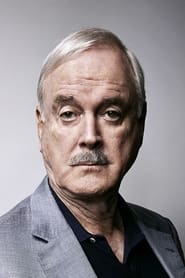 จอห์น คลีสรับบท Various / Announcer
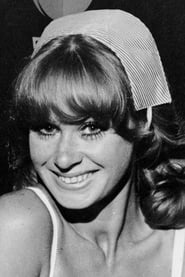 Carol Cleveland
 Lyn Ashley
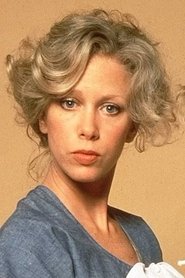 Connie Boothรับบท Second Juror
 Rita Daviesรับบท Distraught Wife
- Peter Brettรับบท Patient - Russian
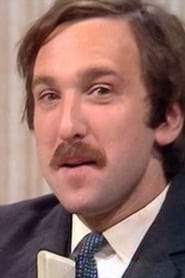 Ian Davidson
ซีซันและรายชื่อตอน
- Monty Python's Flying Circus มอนตี้ ไพธอน: ละครสัตว์เหินหาว ซีรีส์ 113 ตอน · 5 ตุลาคม 2512
- Monty Python's Flying Circus มอนตี้ ไพธอน: ละครสัตว์เหินหาว ซีรีส์ 213 ตอน · 15 กันยายน 2513
- Monty Python's Flying Circus มอนตี้ ไพธอน: ละครสัตว์เหินหาว ซีรีส์ 313 ตอน · 19 ตุลาคม 2515
- Monty Python's Flying Circus มอนตี้ ไพธอน: ละครสัตว์เหินหาว ซีรีส์ 46 ตอน · 31 ตุลาคม 2517
รีวิว Monty Python's Flying Circus มอนตี้ ไพธอน: ละครสัตว์เหินหาว จากทีมงาน
เจาะลึก Monty Python's Flying Circus มอนตี้ ไพธอน: ละครสัตว์เหินหาว: เนื้อเรื่อง การสร้าง และเสียงวิจารณ์
Monty Python's Flying Circus (also known as simply Monty Python) is a British surreal sketch comedy series created by and starring Graham Chapman, John Cleese, Eric Idle, Terry Jones, Michael Palin, and Terry Gilliam, who became known collectively as "Monty Python", or the "Pythons". The first episode was recorded at the BBC on 7 September 1969 and premiered on 5 October on BBC1, with 45 episodes airing over four series from 1969 to 1974, plus two episodes for German TV. A feature film adaptation of several sketches, And Now for Something Completely Different, was released in 1971.
The series stands out for its use of absurd situations, mixed with risqué and innuendo-laden humour, sight gags, and observational sketches without punchlines. Live-action segments were broken up with animations by Gilliam, often merging with the live action to form segues. The overall format used for the series followed and elaborated upon the style used by Spike Milligan in his groundbreaking series Q..., rather than the traditional sketch show format. The Pythons play the majority of the series's characters, along with supporting cast members including Carol Cleveland (referred to by the team as the unofficial "Seventh Python"), Connie Booth (Cleese's first wife), series producer Ian MacNaughton, Ian Davidson, musician Neil Innes, and Fred Tomlinson and the Fred Tomlinson Singers for musical numbers.
The programme came about as the six Pythons, having met each other through university and in various radio and television programmes in the 1960s, sought to make a new sketch comedy show unlike anything else on British television. Much of the humour in the series targeted the idiosyncrasies of British life, especially that of professionals, as well as aspects of politics. Their comedy is often pointedly intellectual, with numerous erudite references to philosophers and literary figures and their works. The team intended their humour to be impossible to categorise, and succeeded so completely that the adjective "Pythonesque" was invented to define it and, later, similar material. Their humour was not always seen as appropriate for television by the BBC, leading to some censorship during the third series. Cleese left the show following that series, and the remaining Pythons completed a final, shortened fourth series before ending the show.
The show became very popular in the United Kingdom, and after initially failing to draw an audience in the United States, gained American popularity after PBS member stations began airing it in 1974. The programme's success on both sides of the Atlantic led to the Pythons going on live tours and creating three additional films, while the individual Pythons flourished in solo careers. Monty Python's Flying Circus has become an influential work on comedy as well as in popular culture. The programming language Python was named by Guido van Rossum after the show, and the word spam, for junk email, took its name from a word used in a Monty Python sketch.
Premise
Monty Python's Flying Circus is a sketch comedy show, though it does not adhere to any regular format. The sketches include live-action skits performed by Graham Chapman, John Cleese, Eric Idle, Terry Jones, Michael Palin, and Terry Gilliam, along with animations created by Gilliam, frequently used as linking devices or interstitial between skits. During the first three series, Cleese would be dressed in a dinner jacket and introduce the show with the phrase "And Now for Something Completely Different". Afterwards, a long-haired man (called the It's man) played by Michael Palin would run all the way to the camera and say "It's.." which would start the show proper. The show's introductory theme, which varied with each series, was also based on Gilliam's animations and was accompanied by a rendition of The Liberty Bell march by John Philip Sousa, as performed by the Band of the Grenadier Guards. The march was first published in 1893; Gilliam chose it as the show's theme because it had fallen into the public domain under the terms of the Berne Convention and United States copyright law, and could thus be used without royalty payments.
Title
The title Monty Python's Flying Circus was partly the result of the group's reputation at the BBC. Michael Mills, the BBC's Head of Comedy, wanted their name to include the word "circus" because the BBC referred to the six members wandering around the building as a circus, in particular, "Baron Von Took's Circus", after Barry Took, who had brought them to the BBC. The group added "flying" to make it sound less like an actual circus and more like something from World War I. The group was coming up with their name at a time when the 1966 The Royal Guardsmen song Snoopy vs. the Red Baron had been at a peak. Freiherr Manfred von Richthofen, the World War I German flying ace known as The Red Baron, commanded the Jagdgeschwader 1 fighter squadron known as "The Flying Circus".
The words "Monty Python" were added because they claimed it sounded like a really bad theatrical agent, the sort of person who would have brought them together, with John Cleese suggesting "Python" as something slimy and slithery, and Eric Idle suggesting "Monty". They later explained that the name Monty "made us laugh because Monty to us means Lord Montgomery, our great general of the Second World War". The BBC had rejected some other names put forward by the group, including Whither Canada?; The Nose Show; Ow! It's Colin Plint!; A Horse, a Spoon and a Basin; The Toad Elevating Moment and Owl Stretching Time. Several of these titles were later used for individual episodes.
Recurring characters
Compared with many other sketch comedy shows, Flying Circus had fewer recurring characters, many of whom were involved only in titles and linking sequences. Continuity for many of these recurring characters was frequently non-existent from sketch to sketch, with sometimes even the most basic information (such as a character's name) being changed from one appearance to the next.
The most frequently returning characters on the show include:
The "It's" Man (Palin), a Robinson Crusoe-type castaway with torn clothes and a long, unkempt beard who would appear at the beginning of the programme. Often he is seen performing a long or dangerous task, such as falling off a tall, jagged cliff or running through a mine field a long distance towards the camera before introducing the show by just saying, "It's..." before being abruptly cut off by the opening titles and Terry Gilliam's animation sprouting the words 'Monty Python's Flying Circus'. It's was an early candidate for the title of the series.
A BBC continuity announcer in a dinner jacket (Cleese), seated at a desk, often in highly incongruous locations, such as a forest or a beach. His line, "And now for something completely different", was used variously as a lead-in to the opening titles and a simple way to link sketches. Though Cleese is best known for it, Idle first introduced the phrase in Episode 2, where he introduced a man with three buttocks. It eventually became the show's catchphrase and served as the title for the troupe's first movie. In Series 3 the line was shortened to simply: "And now..." and was often combined with the "It's" man in introducing the episodes.
The Gumbys, a dim-witted group of identically attired people all wearing gumboots (from which they take their name), high-water trousers, braces, Fair Isle tank tops, white shirts with rolled up sleeves, round wire-rimmed glasses, toothbrush moustaches and knotted handkerchiefs worn on their heads (a stereotype of the English working-class holidaymaker). Gumbys always stand in a hunched, square posture, holding their arms stiffly at their sides with their balled hands curled inwards. They speak slowly in loud, throaty voices punctuated by frequent grunts and groans, display a poor understanding of everything they encounter, and have a fondness for pointless violence. All of them are surnamed Gumby: D.P. Gumby, R.S. Gumby, etc. Even though all Pythons played Gumbys in the show's run, the character is most closely associated with Michael Palin.
The Knight with a Raw Chicken (Gilliam), who would hit characters over the head with the chicken when they said something particularly silly. The knight was a regular during the first series and made another appearance in the third.
A nude organist (played in his first two appearances by Gilliam, later by Jones) who provided a brief fanfare to punctuate certain sketches, most notably on a sketch poking fun at Sale of the Century or as yet another way to introduce the opening titles. This character was addressed as "Onan" by Palin's host character in the ersatz game show sketch "Blackmail". He wore only a tie and a white shirt collar.
The "Pepper Pots" are screeching middle-aged, lower-middle class housewives, played by the Pythons in frocks and frumpy hats, and engage in surreal and inconsequential conversation. "The Pepper Pots" was the in-house name that the Pythons used to identify these characters, who were never identified as such on-screen. On the rare occasion these women were named, it was often for comic effect, featuring such names as Mrs. Scum, Mrs. Non-Gorilla, Mrs. Thing, Mrs. Entity, or the duo Mrs. Premise and Mrs. Conclusion. "Pepper pot" refers to what the Pythons believed was the typical body shape of middle-class, British housewives, as explained by John Cleese in How to Irritate People. Terry Jones is perhaps most closely associated with the Pepper Pots, but all the Pythons were frequent in performing the drag characters.
Brief black-and-white stock footage, lasting only two or three seconds, of middle-aged women sitting in an audience and applauding. The film was taken from a Women's Institute meeting and was sometimes presented with a colour tint.
Other recurring characters include:
"The Colonel" (Chapman), a British Army officer who interrupts sketches that are "too silly" or that contain material he finds offensive. The Colonel also appears when non-BBC broadcast repeats need to be cut off for time constraints in syndication.
Arthur Pewtey (Palin), a socially inept, extremely dull man who appears most notably in the "Marriage Guidance Counsellor" and "Ministry of Silly Walks" sketches. His sketches all take the form of an office appointment with an authority figure (usually played by Cleese), which are used to parody the officious side of the British establishment by having the professional employed in the most bizarre field of expertise. The spelling of Pewtey's surname is changed, sometimes being spelled "Putey".
The Reverend Arthur Belling is the vicar of St Loony-Up-The-Cream-Bun-and-Jam, known for his deranged behaviour. In one sketch (within Series 2, played by Chapman), he makes an appeal to the insane people of the world to drive sane people insane. In another sketch (within Series 3, played by Palin), which is among the pantheon of fan favourites, the vicar politely joins a honeymooning couple at an outdoor café, repeatedly insisting he does not wish to disturb them; he then sits down, opens a suitcase full of props, and calmly proceeds to smash plates on the table, shake a baby doll in their faces, bounce a rubber crab from a ping-pong paddle, and spray shaving cream all over his face, all whilst loudly chanting nonsense syllables. Rev. Belling's odd version of 'not being disturbing' serves to convert the couple to his bizarre sect of Christianity.
A somewhat disreputable shopkeeper, played by Palin, is a staple of many a two-person sketch (notably "Dead Parrot Sketch" and "Cheese Shop"). He often speaks with a strong Cockney accent, and has no consistent name.
Mr. Badger (Idle), a Scotsman whose specialty was interrupting sketches ('I won't ruin your sketch, for a pound'). He was once interviewed, in a sketch opposite Cleese, regarding his interpretation of Magna Carta, which Badger believes was actually a piece of chewing gum on a bedspread in Dorset. He has also been seen as an aeroplane hijacker whose demands grow increasingly strange.
Mr. Eric Praline, a disgruntled man, played by Cleese and who often wears a Pac-a-Mac. His most famous appearance is in the "Dead Parrot sketch". His name is only mentioned once on-screen, during the "Fish Licence" sketch, but his attire (together with Cleese's distinctive, nasal performance) distinguishes him as a recognisable character who makes multiple appearances throughout the first two series. An audio re-recording of "Fish Licence" also reveals that he has multiple pets of wildly differing species, all of them named "Eric".
Arthur Nudge, a well-dressed mustachioed man, referred to in the published scripts as "Mr. Nudge" (Idle), who pointedly annoys uptight characters (usually Jones). He is characterised by his constant nudging gestures and cheeky innuendo. His most famous appearance is in his initial sketch, "Nudge Nudge", though he appears in several later sketches too, including "The Visitors", where he claimed his name was Arthur Name.
Biggles (Chapman, and in one instance Jones), a World War I pilot. Derived from the famous series of fiction stories by W. E. Johns.
Luigi Vercotti (Palin), a mafioso entrepreneur and pimp featured during the first series, accompanied in his first appearance by his brother Dino (Jones). He appears as the manager for Ron Obvious, as the owner of La Gondola restaurant and as a victim of the Piranha Brothers. With his brother, he attempts to talk the Colonel into paying for protection of his Army base.
The Spanish Inquisition would burst into a previously unrelated sketch whenever their name was mentioned. Their catchphrase was 'Nobody expects the Spanish Inquisition!' They consist of Cardinal Ximinez (Palin), Cardinal Fang (Gilliam), and Cardinal Biggles (Jones). They premiered in series two and Ximinez had a cameo in "The Buzz Aldrin Show".
Frenchmen: Cleese and Palin would sometimes dress in stereotypical French garb, e.g. striped shirt, tight pants, beret, and speak in garbled French, with incomprehensible accents. They had one fake moustache between them, and each would stick it onto the other's lip when it was his turn to speak. They appear giving a demonstration of the technical aspects of the flying sheep in episode 2 ("Sex and Violence"), and appear in the Ministry of Silly Walks sketch as the developers of "La Marche Futile". They also make an appearance in Monty Python and the Holy Grail.
The Compère (Palin), a sleazy nightclub emcee in a red jacket. He linked sketches by introducing them as nightclub acts, and was occasionally seen after the sketch, passing comment on it. In one link, he was the victim of the Knight with a Raw Chicken.
Spiny Norman, a Gilliam animation of a giant hedgehog. He is introduced in Episode 1 of Series 2 in "Piranha Brothers" as an hallucination experienced by Dinsdale Piranha when he is depressed. Later, Spiny Norman appears randomly in the background of animated cityscapes, shouting 'Dinsdale!'
Cardinal Richelieu (Palin) is impersonated by someone or is impersonating someone else. He is first seen as a witness in court, but he turns out to be Ron Higgins, a professional Cardinal Richelieu impersonator. He is later seen during the "Historical Impersonations" sketch as himself impersonating Petula Clark.
Ken Shabby (Palin), an unkempt, disgusting man who cleaned public lavatories, appeared in his own sketch in the first series, attempting to get approval from another man (Chapman) to marry his daughter (Booth). In the second series, he appeared in several vox populi segments. He later founded his own religion (as part of the "Crackpot Religions" sketch) and called himself Archbishop Shabby.
Raymond Luxury-Yacht (Chapman) is described as one of Britain's leading skin specialists. He wears an enormous fake nose made of polystyrene. He proudly proclaims that his name "is spelled 'Raymond Luxury-Yach-t', but it is pronounced 'Throat-Wobbler Mangrove'".
A Madman (Chapman) Often appears in vox pops segments. He wears a bowler hat and has a bushy moustache. He will always rant and ramble about his life whenever he appears and will occasionally foam at the mouth and fall over backwards. He appears in "The Naked Ant", "The Buzz Aldrin Show" and "It's a Living".
Other returning characters include a married couple, often mentioned but never seen, Ann Haydon-Jones and her husband Pip. In "Election Night Special", Pip has lost a political seat to Engelbert Humperdinck. Several recurring characters are played by different Pythons. Both Palin and Chapman played the insanely violent Police Constable Pan Am. Both Jones and Palin portrayed police sergeant Harry 'Snapper' Organs of Q division. Various historical figures were played by a different cast member in each appearance, such as Mozart (Cleese, then Palin), or Queen Victoria (Jones, then Palin, then all five Pythons in Series 4).
Some of the Pythons' real-life targets recurred more frequently than others. Reginald Maudling, a contemporary Conservative politician, was singled out for perhaps the most consistent ridicule. Then-Secretary of State for Education and Science, and (well after the programme had ended) Prime Minister Margaret Thatcher, was occasionally mentioned (a reference to Thatcher's brain being in her shin in particular having been well received from the studio audience). Then-US President Richard Nixon was also frequently mocked, as was Conservative party leader Edward Heath, prime minister for much of the series' run. The British police were also a favourite target, often acting bizarrely, stupidly, or abusing their authority, frequently in drag.
Series overview
There were a total of 45 episodes of Monty Python's Flying Circus made across four series.
Monty Python's Fliegender Zirkus
Two episodes were produced in German for WDR (Westdeutscher Rundfunk), both titled Monty Python's Fliegender Zirkus, the literal German translation of the English title. While visiting the UK in the early 1970s, German entertainer and TV producer Alfred Biolek caught notice of the Pythons. Excited by their innovative, absurd sketches, he invited them to Germany in 1971 and 1972 to write and act in two special German episodes.
The first episode, advertised as Monty Python's Fliegender Zirkus: Blödeln für Deutschland ("Monty Python's Flying Circus: Clowning Around for Germany"), was produced in 1971 and performed in German. The second episode, advertised as Monty Python's Fliegender Zirkus: Blödeln auf die feine englische Art ("Monty Python's Flying Circus: Clowning Around in the Distinguished English Way"), produced in 1972, was recorded in English and dubbed into German for its broadcast in Germany. The original English recording was transmitted by the BBC in October 1973.
Development
Prior to the show, the six main cast members had met each other as part of various comedy shows: Jones and Palin were members of The Oxford Revue, while Chapman, Cleese, and Idle were members of Cambridge University's Footlights, and while on tour in the United States, met Gilliam. In various capacities, the six worked on a number of different British radio and television comedy shows from 1964 to 1969 as both writers and on-screen roles. The six began to collaborate on ideas together, blending elements of their previous shows, to devise the premise of a new comedy show which presented a number of skits with minimal common elements, as if it were comedy presented by a stream of consciousness. This was aided through the use of Gilliam's animations to help transition skits from one to the next.
Casting
Although there were few recurring characters, and the six cast members played many diverse roles, each perfected some character traits.
Chapman
Graham Chapman often portrayed straight-laced men, of any age or class, frequently authority figures such as military officers, policemen or doctors. His characters could, at any moment, engage in "Pythonesque" maniacal behaviour and then return to their former sobriety. He was also skilled in abuse, which he brusquely delivered in such sketches as "Argument Clinic" and "Flying Lessons". Conversely, Chapman could easily adopt a dignified "straight man" demeanour as seen in the Python feature films Holy Grail (King Arthur) and Life of Brian (the title character).
Cleese
John Cleese played numerous authority figures, either ridiculous or besieged by insanity. Gilliam claims that Cleese is the funniest of the Pythons in drag, as he barely needs to be dressed up to look hilarious, with his square chin and 6' 5" (196 cm) frame (see the "Mr. and Mrs. Git" sketch). Cleese also played intimidating maniacs, such as an instructor in the "Self-Defence Against Fresh Fruit" sketch. His character Mr. Praline, the put-upon consumer, featured in some of the most popular sketches, most famously in "Dead Parrot". One star turn that proved most memorable among Python fans was "The Ministry of Silly Walks", where he worked for the eponymous government department. The sketch displays the notably tall and loose-limbed Cleese's physicality in a variety of silly walks. Despite its popularity, particularly among American fans, Cleese himself particularly disliked the sketch, feeling that many of the laughs it generated were cheap and that no balance was provided by what could have been the true satirical centrepoint. Another of his trademarks is his over-the-top delivery of abuse, particularly his screaming "You bastard!"
Cleese often played foreigners with ridiculous accents, especially Frenchmen, most of the time with Palin. Sometimes this extended to the use of actual French or German (such as "The Funniest Joke in the World", "Mr. Hilter", or "La Marche Futile" at the end of "The Ministry of Silly Walks"), but still with a very heavy accent (or impossible to understand, as for example Hilter's speech).
เนื้อหาส่วนนี้มาจากบทความ "Monty Python's Flying Circus" ในวิกิพีเดีย (en.wikipedia.org) เผยแพร่ภายใต้สัญญาอนุญาตครีเอทีฟคอมมอนส์ แสดงที่มา-อนุญาตแบบเดียวกัน 4.0 (creativecommons.org/licenses/by-sa/4.0) มีการตัดส่วนอ้างอิงและจัดรูปแบบใหม่
คำถามที่พบบ่อยเกี่ยวกับ Monty Python's Flying Circus มอนตี้ ไพธอน: ละครสัตว์เหินหาว
Monty Python's Flying Circus มอนตี้ ไพธอน: ละครสัตว์เหินหาว มีกี่ตอน?
Monty Python's Flying Circus มอนตี้ ไพธอน: ละครสัตว์เหินหาว มีทั้งหมด 45 ตอน รวม 4 ซีซัน สถานะปัจจุบัน: จบแล้ว
Monty Python's Flying Circus มอนตี้ ไพธอน: ละครสัตว์เหินหาว ฉายวันไหน?
Monty Python's Flying Circus มอนตี้ ไพธอน: ละครสัตว์เหินหาว เริ่มออกอากาศครั้งแรกวันที่ 5 ตุลาคม 2512
Monty Python's Flying Circus มอนตี้ ไพธอน: ละครสัตว์เหินหาว ดูได้ที่ไหน?
ขณะนี้ยังไม่พบแพลตฟอร์มที่มีลิขสิทธิ์ Monty Python's Flying Circus มอนตี้ ไพธอน: ละครสัตว์เหินหาว ในประเทศไทย
หมวดแนะนำ: ดูซีรี่ย์ · เรื่องถัดไป: The Innocents
ซีรี่ย์ที่คล้ายกับ Monty Python's Flying Circus มอนตี้ ไพธอน: ละครสัตว์เหินหาว
 จบแล้ว 18 ตอน★ 7.1
I Think You Should Leave with Tim Robinson (2019)
 จบแล้ว 77 ตอน★ 6.9
Portlandia (2011)
 จบแล้ว 128 ตอน★ 7.6
In Living Color (1990)
 จบแล้ว 30 ตอน★ 7.5
Upright Citizens Brigade (1998)
 ★ 7.1
★ 7.1A Black Lady Sketch Show (2019)
 จบแล้ว 50 ตอน★ 7.2
Tim and Eric Awesome Show, Great Job! (2007)
 จบแล้ว 21 ตอน★ 7.2
Smack the Pony (1999)
 จบแล้ว 5 ตอน★ 6.8
W/ Bob & David (2015)
 จบแล้ว 12 ตอน★ 7.9
The Young Ones (1982)
 จบแล้ว 60 ตอน★ 8.4
The Whitest Kids U' Know (2007)
 จบแล้ว 28 ตอน★ 8.1
Chappelle's Show (2003)
 ★ 7.9
★ 7.9