60 Minutes (1968)
- ประเทศ
- สหรัฐอเมริกา
- ออกอากาศครั้งแรก
- 24 กันยายน 2511
- จำนวนตอน
- 1036 ตอน (59 ซีซัน)
- ความยาวต่อตอน
- ประมาณ 44 นาที
- สถานะ
- ยังฉายอยู่
- ตอนล่าสุด
- EP4/4 (11 ตุลาคม 2569)
- ช่อง/แพลตฟอร์มต้นทาง
- CBS
- ผู้สร้าง
- Don Hewitt
- เรตผู้ชม
- TV-PG
- คะแนน TMDB
- 6.5/10 (85 โหวต)
เรื่องย่อ 60 Minutes
60 Minutes เป็นรายการวาไรตี้ ปี 1968 มีทั้งหมด 1036 ตอน สถานะยังฉายอยู่
ยังไม่มีเรื่องย่อภาษาไทย แสดงเรื่องย่อต้นฉบับภาษาอังกฤษ
America's popular television News magazine in which an ever changing team of CBS News correspondents contribute segments ranging from hard news coverage to politics to lifestyle and pop culture.
60 Minutes ดูได้ที่ไหน (ถูกลิขสิทธิ์)
ยังไม่พบข้อมูลผู้ให้บริการที่มีลิขสิทธิ์เรื่องนี้ในประเทศไทย ต้นทางออกอากาศทาง CBS เราจะอัปเดตทันทีเมื่อมีแพลตฟอร์มนำเข้ามาฉาย
นักแสดง 60 Minutes
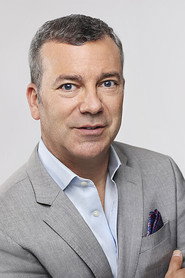 Jon Wertheimรับบท Self - Correspondent
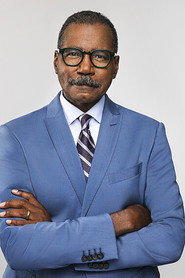 Bill Whitakerรับบท Self
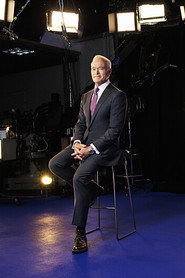 Scott Pelleyรับบท Self - Correspondent
 Lesley Stahlรับบท Self - Correspondent
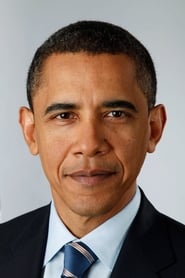 บารัก โอบามารับบท Self
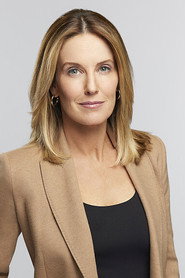 Sharyn Alfonsiรับบท Self - Correspondent
 Anderson Cooperรับบท Self - Correspondent
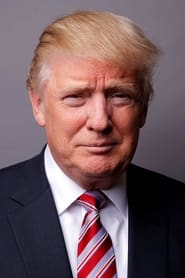 ดอนัลด์ ทรัมป์รับบท Self
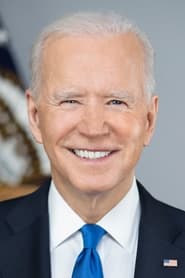 โจ ไบเดินรับบท Self
 Norah O'Donnellรับบท Self - Correspondent
 Carl Levinรับบท Self (archive footage)
 Cecilia Vegaรับบท Self
ซีซันและรายชื่อตอน
- 60 Minutes Season 17 ตอน · 24 กันยายน 2511
- 60 Minutes Season 21 ตอน · 16 กันยายน 2512
- 60 Minutes Season 31 ตอน · 15 กันยายน 2513
- 60 Minutes Season 41 ตอน · 19 กันยายน 2514
- 60 Minutes Season 51 ตอน · 1 ตุลาคม 2515
- 60 Minutes Season 61 ตอน · 6 มกราคม 2517
- 60 Minutes Season 71 ตอน
- 60 Minutes Season 161 ตอน
- 60 Minutes Season 221 ตอน
- 60 Minutes Season 242 ตอน
- 60 Minutes Season 251 ตอน
- 60 Minutes Season 262 ตอน
- 60 Minutes Season 271 ตอน
- 60 Minutes Season 282 ตอน
- 60 Minutes Season 291 ตอน
- 60 Minutes Season 301 ตอน
- 60 Minutes Season 312 ตอน
- 60 Minutes Season 334 ตอน
- 60 Minutes Season 3412 ตอน · 23 กันยายน 2544
- 60 Minutes Season 353 ตอน · 29 กันยายน 2545
- 60 Minutes Season 3610 ตอน · 28 กันยายน 2546
- 60 Minutes Season 377 ตอน · 26 กันยายน 2547
- 60 Minutes Season 386 ตอน · 25 กันยายน 2548
- 60 Minutes Season 393 ตอน · 24 กันยายน 2549
- 60 Minutes Season 4052 ตอน · 23 กันยายน 2550
- 60 Minutes Season 4150 ตอน · 28 กันยายน 2551
- 60 Minutes Season 4246 ตอน · 27 กันยายน 2552
- 60 Minutes Season 4351 ตอน · 26 กันยายน 2553
- 60 Minutes Season 4453 ตอน · 25 กันยายน 2554
- 60 Minutes Season 4548 ตอน · 30 กันยายน 2555
- 60 Minutes Season 4651 ตอน · 29 กันยายน 2556
- 60 Minutes Season 4752 ตอน · 21 กันยายน 2557
- 60 Minutes Season 4855 ตอน · 28 มิถุนายน 2558
- 60 Minutes Season 4923 ตอน · 25 กันยายน 2559
- 60 Minutes Season 5055 ตอน · 24 กันยายน 2560
- 60 Minutes Season 5151 ตอน · 30 กันยายน 2561
- 60 Minutes Season 5250 ตอน · 28 กันยายน 2562
- 60 Minutes Season 5351 ตอน · 20 กันยายน 2563
- 60 Minutes Season 5456 ตอน · 12 กันยายน 2564
- 60 Minutes Season 5554 ตอน · 18 กันยายน 2565
- 60 Minutes Season 5655 ตอน · 17 กันยายน 2566
- 60 Minutes Season 5757 ตอน · 15 กันยายน 2567
- 60 Minutes Season 5850 ตอน · 28 กันยายน 2568
- 60 Minutes Season 594 ตอน · 13 กันยายน 2569
รีวิว 60 Minutes จากทีมงาน
เจาะลึก 60 Minutes: เนื้อเรื่อง การสร้าง และเสียงวิจารณ์
60 Minutes is an American television news magazine broadcast on the CBS television network. Debuting in 1968, the program was created by Don Hewitt and Bill Leonard, who distinguished it from other news programs by using a unique style of reporter-centered investigation. In 2002, 60 Minutes was ranked number six on TV Guide's list of the "50 Greatest TV Shows of All Time", and in 2013, it was ranked number 24 on the magazine's list of the "60 Best Series of All Time". In 2023, Variety ranked 60 Minutes as the twentieth-greatest TV show of all time. The New York Times has called it "one of the most esteemed news magazines on American television".
The program began in 1968 as a bi-weekly television show hosted by Mike Wallace and Harry Reasoner. The two sat on opposite sides of the cream-colored set, though the set's color was later changed to black, the color still in use. The show used a large stopwatch during transition periods and highlighted its topics through chroma key—both techniques are still used. In 1972, the program began airing from 6:00 p.m. to 7:00 p.m. Eastern time, although this time was sometimes disrupted by broadcasting of NFL games on Sundays. Since then, the show has generally kept the Sunday evening format, although the start time has occasionally been shifted. The program generally starts at 7:00 p.m. Eastern. If sports programming is airing that afternoon, 60 Minutes starts at 7:30 p.m. Eastern or at the game's conclusion.
The show is hosted by correspondents who do not share screen time with each other. Full-time hosts include Lesley Stahl, L. Jon Wertheim, Bill Whitaker, Ross Douthat and Norah O'Donnell. Several spinoffs have been made, including international formats of the show.
Early years
The program employed a magazine format similar to that of the Canadian program W5, which had premiered two years earlier. It pioneered many of the most important investigative journalism procedures and techniques, including re-editing interviews, hidden cameras, and "gotcha journalism" visits to the home or office of an investigative subject. Similar programs sprang up in Australia and Canada during the 1970s, as well as on local television news.
Initially, 60 Minutes aired as a bi-weekly show hosted by Mike Wallace and Harry Reasoner debuting on September 24, 1968, and alternating weeks with other CBS News productions on Tuesday evenings at 10:00 p.m. Eastern Time. The first edition, described by Reasoner in the opening as a "kind of a magazine for television," featured the following segments:
A look inside the headquarters suites of presidential candidates Richard Nixon and Hubert Humphrey during their respective parties' national conventions that summer;
Commentary by European writers Malcolm Muggeridge, Peter von Zahn, and Luigi Barzini Jr. on the American electoral system;
A commentary by political humor columnist Art Buchwald;
An interview with then-Attorney General Ramsey Clark about police brutality;
"A Digression," a brief, scripted piece in which two silhouetted men (one of them Andy Rooney) discuss the presidential campaign;
An abbreviated version of an Academy Award-winning short film by Saul Bass, Why Man Creates; and
A meditation by Wallace and Reasoner on the relation between perception and reality. Wallace said that the show aimed to "reflect reality".
The first "magazine-cover" chroma key was a photo of two helmeted policemen (for the Clark interview segment). Wallace and Reasoner sat in chairs on opposite sides of the set, which had a cream-colored backdrop; the more famous black backdrop (which is still used as of 2020) did not appear until the following year. The logo was in Helvetica type with the word "Minutes" spelled in all lower-case letters; the logo most associated with the show (rendered in Eurostile type with "Minutes" spelled in uppercase) did not appear until about 1974. Further, to extend the magazine motif, the producers added a "Vol. xx, No. xx" to the title display on the chroma key; modeled after the volume and issue number identifications featured in print magazines, this was used until about 1971. The trademark stopwatch, however, did not appear on the inaugural broadcast; it would not debut until several episodes later. Alpo dog food was the sole sponsor of the first program.
Don Hewitt, who had been a producer of the CBS Evening News with Walter Cronkite, sought out Wallace as a stylistic contrast to Reasoner. According to one historian of the show, the idea of the format was to make the hosts the reporters, to always feature stories that were of national importance but focused upon individuals involved with, or in conflict with, those issues, and to limit the reports' airtime to around 13 minutes. However, the initial season was troubled by lack of network confidence, as the program did not garner ratings much higher than that of other CBS News documentaries. As a rule, during that era, news programming during prime time lost money; networks mainly scheduled public affairs programs in prime time in order to bolster the prestige of their news departments, and thus boost ratings for the regular evening newscasts, which were seen by far more people than documentaries and the like. 60 Minutes struggled under that stigma during its first three years.
Changes to 60 Minutes came fairly early in the program's history. When Reasoner left CBS to co-anchor ABC's evening newscast (he would return to CBS and 60 Minutes in 1978), Morley Safer joined the team in 1970, and he took over Reasoner's duties of reporting less aggressive stories. However, when Richard Nixon began targeting press access and reporting, even Safer, formerly the CBS News bureau chief in Saigon and London, began to do "hard" investigative reports, and during the 1970–71 season alone, 60 Minutes reported on cluster bombs, the South Vietnamese Army, draft dodgers, Nigeria, the Middle East, and Northern Ireland.
Effects from the Prime Time Access Rule and later years
By 1971, the Federal Communications Commission (FCC) introduced the Prime Time Access Rule, which freed local network affiliates in the top 50 markets (in practice, the entire network) to take a half-hour of prime time from the networks on Mondays through Saturdays and one full hour on Sundays. Because nearly all affiliates found production costs for the FCC's intended goal of increased public affairs programming very high and the ratings (and by association, advertising revenues) low, making it mostly unprofitable, the FCC created an exception for network-authored news and public affairs shows. After a six-month hiatus in late 1971, CBS found a prime place for 60 Minutes in a portion of that displaced time, 6:00 p.m. to 7:00 p.m. Eastern (5:00 p.m. to 6:00 p.m. Central Time) on Sundays in January 1972.
This proved somewhat less than satisfactory, however, because in order to accommodate CBS telecasts of late afternoon National Football League (NFL) games, 60 Minutes went on hiatus during the fall from 1972 to 1975 (and the summer of 1972). This took place because football telecasts were protected contractually from interruptions in the wake of the infamous "Heidi Bowl" incident on NBC in November 1968. Despite the irregular scheduling, the program's hard-hitting reports attracted a steadily growing audience, particularly during the waning days of the Vietnam War and the gripping events of the Watergate scandal; at that time, few if any other major network news shows did in-depth investigative reporting to the degree carried out by 60 Minutes. Eventually, during the summers of 1973 through 1975, CBS did allow the program back onto the prime time schedule proper, on Fridays in 1973 and Sundays the two years thereafter, as a replacement for programs aired during the regular television season.
It was only when the FCC returned an hour to the networks on Sundays (for news or family programming), which had been taken away from them four years earlier, in a 1975 amendment to the Access Rule, that CBS finally found a viable permanent timeslot for 60 Minutes. When the family-oriented drama Three for the Road ended after a 12-week run in the fall, the news magazine took its place at 7:00 p.m. Eastern Time (6:00 p.m. Central) on December 7, 1975, and has been aired at that time since then, making it not only the longest-running prime time program currently in production, but also the television program (excluding daily programs such as evening newscasts or morning news-talk shows) broadcasting for the longest length of time at a single time period each week in US television history.
This move, and the addition of then-White House correspondent Dan Rather to the reporting team, made the program into a strong ratings hit and, eventually, a general cultural phenomenon. This was no less than a stunning reversal of the historically poor ratings performances of documentary programs on network television. By 1976, 60 Minutes became the top-rated program on Sunday nights in the US. By 1979, it had achieved the #1 spot among all television programs in the Nielsen ratings, unheard of before for a news broadcast in prime time. This success translated into great profits for CBS; advertising rates increased from $17,000 per 30-second spot in 1975 to $175,000 in 1982.
The program sometimes does not start until after 7:00 p.m. Eastern, due largely to CBS Sports live sporting events. At the conclusion of an NFL game, 60 Minutes will air in its entirety and delay all subsequent programs. However, in the Pacific time zone, 60 Minutes is always able to start at its scheduled time as live sports coverage ends earlier in the afternoon. The program's success has also led CBS Sports to schedule events (such as the final round of the Masters Tournament and the PGA Championship and the second round and regional final games of the NCAA men's basketball tournament) leading into 60 Minutes and the rest of the network's primetime lineup for the night (as CBS never airs any sports programming on Sundays in primetime except for the AFC Divisional Round, AFC Championship Game, or the Super Bowl).
Starting in the 2012–2013 season, in order to accommodate a new NFL scheduling policy that the second game of a doubleheader start at 4:25 p.m., CBS changed the scheduled start time of 60 Minutes to 7:30 p.m. Eastern time (or game conclusion) for Eastern and Central Time Zone stations which are receiving a game in that window. The start time remains at 7:00 p.m. Eastern/Pacific (or game conclusion if a late single game is airing in the eastern markets) on stations which are not broadcasting a late game in a given week (or for Western time zones even if a doubleheader airs). Since the 2023–2024 season, the show began to have occasional 90-minute episodes.
Radio broadcast and Internet distribution
60 Minutes is also simulcast on several former CBS Radio flagship stations. WBBM in Chicago, KRLD in Dallas, WWJ in Detroit, KNX in Los Angeles, KYW in Philadelphia, KCBS in San Francisco (all owned by Audacy) and
WBZ in Boston (owned by iHeartMedia). Anchorage-based station KFQD airs 60 Minutes as part of its affiliation with local CBS station KAUU. When it airs locally on their sister CBS Television Network affiliate, even in the Central and Eastern time zones, the show is aired at the top of the hour at 7:00 p.m./6:00 p.m. Central (barring local sports play-by-play pre-emptions and breaking news coverage) no matter how long the show is delayed on CBS Television, resulting in radio listeners often hearing the show on those stations ahead of the television broadcast. An audio version of each broadcast without advertising began to be distributed via podcast and the iTunes Store, starting with the broadcast on September 23, 2007. Video from 60 Minutes (including full episodes) is also made available for streaming several hours after the program's initial broadcast on CBSNews.com and Paramount+.
Format
60 Minutes normally has three long-form news stories without superimposed graphics. There is a commercial break between two stories. Each story is introduced from a set featuring a large screen displaying a graphic designed to resemble a magazine story on the topic. The program undertakes its own investigations and follows up on investigations instigated by national newspapers and other sources. Unlike its competitor 20/20, as well as traditional local and national news programs, the 60 Minutes journalists never share the screen with (or speak to) other 60 Minutes journalists on camera at any time. This creates a strong psychological sense of intimacy between the journalist and television viewers.
Reporting tone
60 Minutes blends the journalism of the seminal 1950s CBS series See It Now with Edward R. Murrow (for which Hewitt served as director in its first years) and the personality profiles of another Murrow program, Person to Person. In Hewitt's words, 60 Minutes blends "higher Murrow" and "lower Murrow".
Point/Counterpoint segment
For most of the 1970s, the program included Point/Counterpoint, in which a liberal and conservative commentator debated an issue. This segment originally featured James J. Kilpatrick representing the conservative side and Nicholas von Hoffman for the liberal, with Shana Alexander taking over for von Hoffman after he departed in 1974. The segment was an innovation that caught the public imagination as live versions of competing editorials. In 1979, Alexander asked Hewitt to raise the $350 per week pay; Hewitt declined, and the segment ended.
Point/Counterpoint was lampooned by the NBC comedy series Saturday Night Live, which featured Jane Curtin and Dan Aykroyd as TV news reporters. Their segment featured a debate in comically complete abandonment of rhetorical decorum, with Aykroyd announcing the topic, Curtin making an opening statement, then Aykroyd typically retorting with ad hominem attacks, such as "Jane, you ignorant slut" and Curtin responding "Dan, you pompous ass", in the film Airplane! (1980), in which the faux Kilpatrick argues in favor of the plane crashing, stating "they bought their tickets, they knew what they were getting into", and an earlier sketch comedy film, The Kentucky Fried Movie, where the segment was called Count/Pointercount.
A similar concept was revived briefly in March 2003 featuring Bob Dole and Bill Clinton, former opponents in the 1996 presidential election. The pair agreed to do ten segments (titled Clinton/Dole and Dole/Clinton in alternating weeks), but these did not continue into the 2003–2004 fall season. Reports indicated that the segments were considered too gentlemanly, in the style of the earlier Point/Counterpoint, and lacked the feistiness of Crossfire.
Andy Rooney segment
From 1978 to 2011, the program usually ended with (usually light-hearted and humorous) commentary by Andy Rooney expounding on topics of wildly varying importance, ranging from international politics, to economics, and his personal philosophy on everyday life. One recurring topic was measuring the amount of coffee in coffee cans.
Rooney's pieces, particularly one in which he referred to actor Mel Gibson as a "wacko", on occasion led to complaints from viewers. In 1990, Rooney was suspended without pay for three months by then-CBS News President David Burke, because of the negative publicity around his saying that "too much alcohol, too much food, drugs, homosexual unions, cigarettes [are] all known to lead to premature death." He wrote an explanatory letter to a gay organization after being ordered not to do so. After four weeks without Rooney, 60 Minutes lost 20% of its audience. CBS management concluded that it was in their best interest to have Rooney return immediately.
Rooney published several books documenting his contributions to the program, including Years of Minutes and A Few Minutes with Andy Rooney. Rooney retired from 60 Minutes, delivering his final commentary on October 2, 2011; it was his 1,097th commentary over his 34-year career on the program. He died one month later on November 4, 2011. On November 13, 2011, 60 Minutes featured an hour-long tribute to Rooney and his career and included a rebroadcast of his final commentary segment.
Opening sequence
The opening sequence features a 60 Minutes "magazine cover" with the show's trademark, an Aristo stopwatch, intercut with preview clips of the episode's stories. The sequence ends with each of the correspondents and hosts introducing themselves. The last host who appears then says, "Those stories tonight on 60 Minutes". When Rooney was a prominent fixture, the final line was "Those stories and Andy Rooney, tonight on 60 Minutes". Before that, and whenever Rooney did not appear, the final line was "Those stories and more, tonight on 60 Minutes".
The stopwatch counts off each of the broadcast's 60 minutes, starting from zero at the beginning of each show. It is seen during the opening title sequence, before each commercial break, and at the tail-end of the closing credits, and each time it appears it displays (within reasonable accuracy) the elapsed time of the episode to that point.
On October 29, 2006, the opening sequence changed from a black background, which had been used for over a decade, to white. Also, the gray background for the Aristo stopwatch in the "cover" changed to red, the color for the title text changed to white, and the stopwatch itself changed from the diagonal position it had been oriented in for 31 years to an upright position.
Web content
Videos and transcripts of 60 Minutes editions, as well as clips that were not included in the broadcast are available on the program's website. In September 2010, the program launched a website called "60 Minutes Overtime", in which stories broadcast on-air are discussed in further detail. Previously the show had a partnership with Yahoo! for distribution of extra content.
Correspondents and commentators
Hosts
Lesley Stahl (1991–)
Bill Whitaker (2014–)
L. Jon Wertheim (2017–)
Norah O'Donnell (part-time correspondent, 2015–2026; host, 2026–)
Ross Douthat (2026-)
Part-time correspondents
Jonathan LaPook (medical correspondent; 2013–)
Matt Gutman (2026–)
Sebastian Junger (2026-)
Ariel Levy (2026-)
Trevor Phillips (2026-)
Gianna Toboni (2026-)
Former correspondents and hosts
Former hosts
Harry Reasoner (host, 1968–1970, 1978–1991)
Dan Rather (part-time correspondent, 1968–1975; host, 1975–1981 and 2005–2006)
Mike Wallace (host, 1968–2006; correspondent emeritus 2006–2008)
Morley Safer (part-time correspondent, 1968–1970; host, 1970–2016)
Ed Bradley (part-time correspondent, 1976–1981; host, 1981–2006)
Diane Sawyer (part-time correspondent, 1981–1984; host, 1984–1989) (at ABC News since)
Steve Kroft (host, 1989–2019; co-editor, 2019) (retired)
Christiane Amanpour (part-time correspondent, 1996–2000; host, 2000–2005)
Scott Pelley (host, 2003–2026)
Lara Logan (part-time correspondent, 2005–2012; host, 2012–2018)
Anderson Cooper (host, 2006–2026) (also at CNN)
Sharyn Alfonsi (host, 2015–2026)
Cecilia Vega (host, 2023–2026)
Former part-time correspondents
Eric Sevareid (1968–1969)
Charles Kuralt (1968–1979)
Roger Mudd (1968–1980)
Walter Cronkite (1968–1981)
Bill Plante (1968–1995)
John Hart (1969–1975) (retired)
Bob Schieffer (1973–1996)
Morton Dean (1975–1979) (retired)
Marlene Sanders (1978–1987)
Charles Osgood (1981–1994)
Meredith Vieira (part-time correspondent, 1982–1985 and 1991–1993; host, 1990–1991)
Forrest Sawyer (1985–1987)
Connie Chung (1990–1993) (retired)
Paula Zahn (1990–1999)
John Roberts (1992–2005) (at Fox News Channel since)
Russ Mitchell (1995–1998) (at WKYC in Cleveland since)
Bob Simon (1996–2015)
Carol Marin (1997–2002)
Vicki Mabrey (1999–2005)
Katie Couric (2006–2011)
Charlie Rose (2008–2017)
Byron Pitts (2009–2013) (at ABC News since)
Sanjay Gupta (2011–2014) (at CNN since)
Alison Stewart (2012)
Clarissa Ward (2012–2015) (at CNN since)
Oprah Winfrey (2017–2018)
John Dickerson (2019–2021)
Commentators
Commentators for 60 Minutes have included:
James J. Kilpatrick (conservative debater, 1971–1979)
Nicholas von Hoffman (liberal debater, 1971–1974)
Shana Alexander (liberal debater, 1975–1979)
Andy Rooney (commentator, 1978–2011)
Stanley Crouch (conservative commentator, 1996)
Molly Ivins (liberal commentator, 1996)
P. J. O'Rourke (conservative commentator, 1996)
Jimmy Tingle (humorist/commentator, 1999–2000)
Bill Clinton (liberal debater, 2003)
Bob Dole (conservative debater, 2003)
Producers
Executive producers
Don Hewitt (1968–2004)
Jeff Fager (2004–2018)
Bill Owens (2019–2025)
Tanya Simon (2025–2026)
Nick Bilton (2026–present)
Other producers
Nielsen ratings
Based on viewership ratings, 60 Minutes is the most successful program in American television history since it was moved into its present timeslot in 1975. For five seasons it was the year's top program, a feat matched by the sitcoms All in the Family and The Cosby Show, and surpassed only by the reality competition series American Idol, which had been the #1 show for eight consecutive seasons from the 2003–2004 television season up to the 2010–2011 season. 60 Minutes was a top ten show for 23 seasons in a row (1977–2000), an unsurpassed record, and has made the Top 20 for every season since the 1976–1977 season, except from 2005 to 2008.
60 Minutes first broke into the Nielsen Top 20 during the 1976–77 season. The following season, it was the fourth-most-watched program, and by the 1979–80 season, it was the number one show. During the 21st century, it remained among the top 20 programs in the Nielsen ratings, and the highest-rated news magazine.
On November 16, 2008, the edition featuring an interview with President-elect Barack Obama, earned a total viewership of 25.1 million viewers.
On October 6, 2013, the broadcast (which was delayed by 44 minutes that evening due to a Denver Broncos–Dallas Cowboys NFL game) drew 17.94 million viewers; retaining 63% of the 28.32 million viewers of its lead-in, and making it the most watched 60 Minutes broadcast since December 16, 2012.
On December 1, 2013, the broadcast (delayed 50 minutes due to a Broncos–Kansas City Chiefs game) was watched by 18.09 million viewers, retaining 66% of its NFL lead-in (which earned 28.11 million viewers during the 7:00 p.m. hour).
On March 25, 2018, the edition featuring Stormy Daniels giving details on her alleged affair with President Donald Trump drew 22.1 million viewers, the most since the 2008 Obama interview. The broadcast was delayed due to the NCAA men's basketball regional final on CBS between Kansas and Duke going to overtime.
Emmy Awards
As of June 26, 2017, 60 Minutes had won a total of 138 Emmy Awards, a record for American primetime programs.
Peabody Awards
The program has won 20 Peabody Awards for segments including "All in the Family", an investigation into abuses by government and military contractors; "The CIA's Cocaine", which uncovered CIA involvement in drug smuggling, "Friendly Fire", a report on incidents of friendly fire in the Gulf War; "The Duke Rape Case", an investigation into accusations of rape at an off campus lacrosse team party in 2006; and "The Killings in Haditha", an investigation into the killing of Iraqi civilians by U.S. Marines.
Other awards
The show received an Investigative Reporter and Editor medal for their segment "The Osprey", documenting a Marine cover-up of deadly flaws in the V-22 Osprey aircraft.
Exoneration
In 1983, a report by Morley Safer, "Lenell Geter's in Jail", helped exonerate a Texas man who was wrongly convicted and imprisoned for armed robbery.
Longest-running primetime show
As of 2021, 60 Minutes is the longest continuously running program of any genre scheduled during American network prime time. It has aired at 7:00 p.m. Eastern Time on Sundays since December 7, 1975 (although since 2012, it moves to 7:30 p.m. Eastern Time on Sundays if CBS has a late NFL game).
Meet the Press debuted in 1947 in prime time, but it has been a daytime program since 1965. The Walt Disney anthology television series, which premiered in 1954, and the Hallmark Hall of Fame, which has aired since 1951, have aired longer than 60 Minutes, but none of them has aired in prime time continually.
Controversies
The show has been praised for landmark journalism and received many awards. However, it has also become embroiled in some controversy, including (in order of appearance):
เนื้อหาส่วนนี้มาจากบทความ "60 Minutes" ในวิกิพีเดีย (en.wikipedia.org) เผยแพร่ภายใต้สัญญาอนุญาตครีเอทีฟคอมมอนส์ แสดงที่มา-อนุญาตแบบเดียวกัน 4.0 (creativecommons.org/licenses/by-sa/4.0) มีการตัดส่วนอ้างอิงและจัดรูปแบบใหม่
คำถามที่พบบ่อยเกี่ยวกับ 60 Minutes
60 Minutes มีกี่ตอน?
60 Minutes มีทั้งหมด 1036 ตอน รวม 59 ซีซัน สถานะปัจจุบัน: ยังฉายอยู่
60 Minutes ฉายวันไหน?
60 Minutes เริ่มออกอากาศครั้งแรกวันที่ 24 กันยายน 2511
60 Minutes ดูได้ที่ไหน?
ขณะนี้ยังไม่พบแพลตฟอร์มที่มีลิขสิทธิ์ 60 Minutes ในประเทศไทย
หมวดแนะนำ: ดูซีรี่ย์จีน · เรื่องถัดไป: The Cosmos of Artists