
Steven Universe สตีเว่น ยูนิเวิร์ส (2013)
การ์ตูนแอนิเมชันซีรี่ย์ 2013แอนิเมชันแอ็กชันผจญภัยตลกไซไฟแฟนตาซีครอบครัว
- ชื่อไทย
- สตีเว่น ยูนิเวิร์ส
- ชื่อภาษาอังกฤษ
- Steven Universe
- ประเทศ
- สหรัฐอเมริกา
- ออกอากาศครั้งแรก
- 4 พฤศจิกายน 2556
- จำนวนตอน
- 154 ตอน (5 ซีซัน)
- ความยาวต่อตอน
- ประมาณ 11 นาที
- สถานะ
- จบแล้ว
- ตอนล่าสุด
- EP28/28 (21 มกราคม 2562)
- ช่อง/แพลตฟอร์มต้นทาง
- Cartoon Network
- ผู้สร้าง
- Rebecca Sugar
- เรตผู้ชม
- ท
- คะแนน TMDB
- 8.4/10 (1,397 โหวต)
เรื่องย่อ Steven Universe สตีเว่น ยูนิเวิร์ส
Steven Universe สตีเว่น ยูนิเวิร์ส เป็นการ์ตูนแอนิเมชัน ปี 2013 มีทั้งหมด 154 ตอน สถานะจบแล้ว
สตีเว่นเป็นน้องชายผู้ลือเลื่องของทีมผู้พิทักษ์เวทมนตร์ของมนุษยชาติ คริสตัลเจ็ม
Steven Universe สตีเว่น ยูนิเวิร์ส ดูได้ที่ไหน (ถูกลิขสิทธิ์)
สตรีมมิ่ง (สมาชิก)
 HBO Max
เปิดแอปหรือเว็บไซต์ของผู้ให้บริการแล้วค้นหาชื่อเรื่องนี้ได้เลย ข้อมูลผู้ให้บริการในประเทศไทยจาก JustWatch อาจเปลี่ยนแปลงตามสัญญาลิขสิทธิ์ของแต่ละแพลตฟอร์ม
นักแสดง Steven Universe สตีเว่น ยูนิเวิร์ส
 Zach Callisonรับบท Steven Universe (voice)
 Estelleรับบท Garnet (voice)
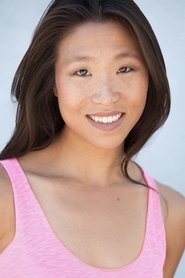 Michaela Dietzรับบท Amethyst (voice)
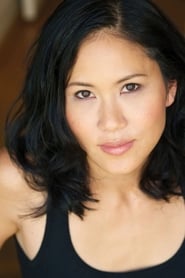 Deedee Magno Hallรับบท Pearl (voice)
 Tom Scharplingรับบท Greg / Call out Guy (voice)
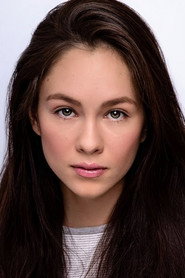 Grace Rolekรับบท Connie (voice)
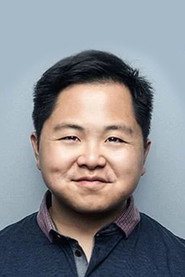 Matthew Moyรับบท Lars / Wolf (voice)
 Shelby Rabaraรับบท Peridot (voice)
 Kate Micucciรับบท Sadie (voice)
 Jennifer Pazรับบท Lapis Lazuli / Malachite (voice)
 ดี แบรดลี่ เบเกอร์รับบท Worm (voice)
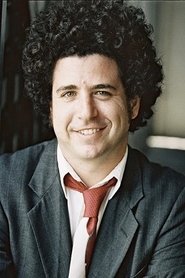 Zachary Steelรับบท Ringo (voice)
ซีซันและรายชื่อตอน
- Steven Universe สตีเว่น ยูนิเวิร์ส Season 149 ตอน · 4 พฤศจิกายน 2556
- Steven Universe สตีเว่น ยูนิเวิร์ส Season 229 ตอน · 13 มีนาคม 2558
- Steven Universe สตีเว่น ยูนิเวิร์ส Season 324 ตอน · 12 พฤษภาคม 2559
- Steven Universe สตีเว่น ยูนิเวิร์ส Season 424 ตอน · 11 สิงหาคม 2559
- Steven Universe สตีเว่น ยูนิเวิร์ส Season 528 ตอน · 29 พฤษภาคม 2560
รีวิว Steven Universe สตีเว่น ยูนิเวิร์ส จากทีมงาน
เจาะลึก Steven Universe สตีเว่น ยูนิเวิร์ส: เนื้อเรื่อง การสร้าง และเสียงวิจารณ์
Steven Universe is an American animated television series created by Rebecca Sugar for Cartoon Network. It tells the coming-of-age story of a young boy, Steven Universe (Zach Callison), who lives with the Crystal Gems—magical, mineral-based aliens named Garnet (Estelle), Amethyst (Michaela Dietz) and Pearl (Deedee Magno Hall)—in the fictional town of Beach City. Steven, who is half-Gem, has adventures with his friends and helps the Gems protect the world from their own kind. The pilot premiered in May 2013, and the series ran for five seasons, from November 2013 to January 2019. The television film Steven Universe: The Movie was released in September 2019, and an epilogue limited series, Steven Universe Future, ran from December 2019 to March 2020. Books, comics, video games and soundtracks based on the series have also been released.
The themes of the series include love, family and the importance of healthy relationships. Sugar based the lead character on her younger brother Steven, who was an artist for the series. She developed Steven Universe while being a writer and storyboard artist on the animated television series Adventure Time, which she left when her show was greenlit for full production. The series adopted a storyboard-driven approach, where storyboard artists drew scenes, wrote dialogue and shaped the narrative. The design of Beach City and the Crystal Gems reflected Sugar's personal inspirations, such as Delaware beaches and childhood experiences, while incorporating influences from anime, video games and art history. Animation was handled by the South Korean studios Sunmin Image Pictures and Rough Draft Korea, while the music of composers Aivi & Surasshu became an integral part of the show's identity.
The series received critical acclaim for its storytelling, character development and visual design. Critics praised its exploration of complex themes such as identity, relationships and mental health, as well as its prominent LGBTQ representation, which included the character Garnet, a fusion embodying a same-sex relationship, whose component characters made history in the first same-sex wedding in children's animation. The voice acting and music were also lauded, with songs like "Stronger Than You" becoming popular and resonating with its audience. Steven Universe earned numerous accolades, including a GLAAD Media Award for Outstanding Kids & Family Program, becoming the first animated series to win the award, and a Peabody Award for Children's & Youth Programming, both respectively in 2019. It has consistently appeared on "best-of" lists for animation, including being ranked number 99 on BBC's 100 Greatest Television Series of the 21st Century list. Additionally, its influence inspired other creators and fostered a broad fanbase.
Synopsis
Steven Universe is set in the fictional town of Beach City, where the Crystal Gems live in an ancient temple and protect humanity from monsters and other threats. The Gems are ageless, genderless alien warriors who project female humanoid forms from magical gemstones at the core of their being. The Crystal Gems include Garnet, Amethyst, Pearl and Steven—a young, half-human, half-Gem boy who inherited his gemstone from his mother, the Crystal Gems' former leader Rose Quartz. As Steven tries to understand his gradually expanding range of powers, he spends his days accompanying the Gems on their missions, as well as interacting with his father Greg, his best friend Connie, his magical pet lion named Lion, and the other residents of Beach City. He explores the abilities inherited from his mother, which include fusion—the ability of Gems to merge their bodies and abilities to form new, more powerful personalities.
As Steven explores his Gem heritage, he gradually learns that the Crystal Gems are fugitives from a vast interstellar empire ruled by the Gem Homeworld. During their missions, they visit ruins that were once important to Gem culture but have been derelict for millennia, and Steven learns that many of the monsters and artifacts they encounter are Gems who were corrupted by a Gem weapon of mass destruction and can no longer maintain rational, humanoid form. The Gem empire originally intended to sterilize the planet Earth to incubate new Gems, but Rose Quartz led her supporters, the Crystal Gems, in a violent and apparently successful rebellion against this genocidal plan. Midway through the first season of the series, the release of Lapis Lazuli, a Gem trapped on Earth for millennia, puts the Crystal Gems at risk from the Gem empire once more, leading to the arrival of hostile envoys Peridot and Jasper.
Peridot joins forces with the Crystal Gems in the second season to neutralize a buried Gem "geo-weapon" that could destroy the planet. In the third season, Lapis decides to reside on Earth with Peridot, Jasper is defeated and captured, and Steven learns that his mother assassinated Pink Diamond, one of the Gem homeworld's leaders. As he wrestles with his conflicted feelings following this revelation, Pink's counterparts Blue and Yellow Diamond begin to turn their attention back to Earth; the fourth season ends with Steven taken to the Gem homeworld to stand trial for his mother's crimes. After escaping, he discovers in the fifth season that his mother actually was Pink Diamond, who faked her death to assume the identity of Rose Quartz full-time. Steven uses this revelation to persuade the other Diamonds to take responsibility for and fix the damage they have caused.
Conception
In 2011, after Cartoon Network Vice President of Comedy Animation Curtis Lelash asked the staff for ideas for a new show, Adventure Time storyboard artist Rebecca Sugar described her initial ideas for what would become Steven Universe, and the project was chosen for development. Sugar continued working on Adventure Time while crafting the series. The series evolved from a short story written by Sugar entitled "Ballad of Margo and Dread", about a sensitive child helping teenagers with problems they cannot verbalize. The title character Steven is loosely based on Steven Sugar, Rebecca's younger brother. During Steven Universe's development, Sugar repeatedly asked her brother whether naming the show after him was a good idea; she stopped asking when it was commissioned. Her brother had no problem with it and trusted Sugar to use his name wisely. In an interview with The New York Times, Sugar discussed developing the background of the show's protagonist, saying she wanted to base the character's viewpoint on her brother growing up "where you're so comfortable in your life because you get all the attention, but you also want to rise up and not be the little brother".
To prepare for the potential greenlighting of the show, Sugar began assembling a production crew. Jackie Buscarino was brought in as a producer in September 2012 and was tasked with hiring people and supervising the show's crew. During this period of development, Sugar and her team were moved to a building behind the main Cartoon Network studio and based on the same floor as the crew of The Powerpuff Girls CGI special. Some artists who had worked on the special, such as colorist Tiffany Ford and art directors Kevin Dart, Ellie Michalka and Jasmin Lai, were later invited to join the Steven Universe team. Cartoon Network also provided Sugar with a list of suggested writers; when she saw Ben Levin and Matt Burnett (former writers for Level Up) on the list she immediately asked them to join her team because she was familiar with their work. Freelance artist Danny Hynes, whom the supervising director Ian Jones-Quartey knew from his own project Lakewood Plaza Turbo, became the show's lead character designer. Steven Sugar was assigned as the background designer after his work on the original pilot, and was assisted by Dart, Michalka, Lai, background painter Amanda Winterston and others.
During the art presentation, Jones-Quartey, Guy, Hynes and Steven Sugar created artwork that differed from their previous work. Jones-Quartey wanted to work with something new, retaining elements of the show's previous project. He worked with Elle Michalka, who later took over his role as background painter for the presentation, to create concept art for an "action-comedy" series. Around this time, Jones-Quartey added stars to the series' logo because he saw them as a versatile symbol. He later said he overused them, and they were criticized for doing so. The art presentation's drawings were by Rebecca Sugar, Jones-Quartey, Hynes, Paul Villeco (a writer and storyboard artist) and Steven Sugar. Michalka did the painting. Cartoon Network executives commissioned the show after the crew's art presentation, and Sugar became the first non-binary person to create a show independently for the network. Prior to coming out as non-binary, she was described as the first woman to do so. Before a production team had been appointed, Sugar tried to alter elements of the show's plot and developed the character's identity so her crew would have the creative freedom to implement their own ideas, like she did when she worked for Adventure Time.
When Sugar's show was commissioned, she resigned from Adventure Time to focus on her own series. Sugar centered the pilot short on the main characters and their personalities to demonstrate the series' humor. The pilot is a slice-of-life episode that does not involve major events because the series' world was still in development. Sugar and her production team focused the plot on interaction between the Crystal Gems and Steven. Sugar strove to make her pilot distinctive in terms of its artistic and aesthetic detail but was hampered by the time limit imposed upon her by Cartoon Network. The problems with the pilot helped Sugar develop the show's concept; she said, "to know that there is so much more that you can't see and the way that knowledge frustrates and excites and confuses and scares you". When the pilot was presented to Cartoon Network executives, they told the crew the series would air in 2013. Cartoon Network released the original pilot in May 2013. Sugar and her team panicked because the series was going to be very different from the pilot episode. The pilot was popular when it was released, engendering forum discussions in which people expressed their hopes of seeing it on the air soon. Those who knew Rebecca Sugar from Adventure Time were also interested. Positive reaction to the show reassured its crew that the series could be much greater.
Design
During the development of the Steven Universe pilot, Sugar focused much attention on the design of the world, adding notes to her drawings. Inspired by the idea of foreign figures (Gems) living human lives, she drew many sketches depicting their world and history. The series' design was also inspired by her and her brother's interest in video games, comics and animation. After the series was commissioned, Sugar decided to redesign everything to make the series "flexible and simple" for future production staff to add ideas of their own. During this time, the art director was Kevin Dart, followed by Jasmin Lai, Elle Michalka, and Ricky Cometa. Dart's artistic style remained a great influence on the show long after his departure. Steven Sugar was inspired by Dart in his college years and praised his work, saying Dart had more ideas for the art than he did.
In the pilot, only two locations appeared: the ancient Temple that is the Gems' home, and the Big Donut, a nearby doughnut shop. The Temple was designed by Jones-Quartey, Steven Sugar, Ben Levin, Matt Burnett, Tom Herpich and Andy Ristaino. The Temple's dual faces were based on Guy Davis' ideas. Steven Sugar designed the rest of Beach City for the series; he was painstaking in his attention to detail, e.g. carefully considering the interior layouts of buildings. Sugar also designed people, houses, cars, buildings and restaurants. Because of Rebecca Sugar's redesigned drawings, the two original locations had to be redrawn.
To find inspiration for the show's backgrounds, the Sugars and Jones-Quartey went to their favorite beaches. The series' setting, Beach City, is loosely based on Delaware beaches Rehoboth Beach, Bethany Beach and Dewey Beach, all of which Rebecca Sugar visited as a child. Steven Sugar drew Beach City with a boardwalk lined with a variety of shops. He wanted it to have a "specific style" so viewers could believe it was based on a real location; he drew the roads and shops consistently oriented with the Temple and a water tower. The concept for the primary setting was inspired by Akira Toriyama's manga Dr. Slump, which features a small environment in which the recurring characters live where they work. Steven Sugar made the boardwalk the focus of Steven Universe's human world.
Characters
During the early stages of production, Rebecca Sugar worked on character appearances and personality development simultaneously; during this process of conception, she was heavily inspired by fantasy television characters she and her brother used to draw when they were younger. Lead character designer Danny Hynes, influenced by the design of Mickey Mouse by Disney artists, wanted the characters to be standardized, simple and recognizable. He proposed 24 human characters to the crew; Rebecca and Steven Sugar drew 22 designs—13 of which were made official. The coloring was done by Jones-Quartey. Rebecca Sugar merged several characters during the pilot's development; supporting characters Lars and Sadie were originally created when she was in college. The family that runs Beach City's pizza shop was based on Jones-Quartey's Ghanaian family, and the character Ronaldo was created by Ben Levin and Matt Burnett. Guy Davis, a childhood friend of the Sugars, designed the early monsters and Gem architecture.
According to Jones-Quartey, making a character "look alive" was always a priority in their design, and a character's emotions should be clearly delineated. The character design team's mission was for the characters to resemble those of older animation, such as 1940s Disney cartoons, Dragon Ball Z or the works of Osamu Tezuka and Harvey Kurtzman. In drawing the characters for each episode, the crew had two weeks to make modifications. Character names and some designs were inspired by types of food, and some characters were redesigned because the pilot revealed discrepancies between appearances and personalities. Sugar planned for the characters' designs to receive visual benchmarks so the show's artists could draw them consistently. Sugar aimed to make the designs for her characters simple, flexible and consistent so the production team members would not become bogged down by overly complex details. This redesigning meant the appearances of the characters in the pilot episode differ substantially from their depiction in the television series.
Sugar wanted the Crystal Gems to resemble humans; she developed them to navigate the complexities of family life with Steven, whom they would treat like a brother. She wanted their gems to reflect their personalities; Pearl's perfect smoothness, Amethyst's coarseness and Garnet's air of mystery. According to Sugar, the Gems were made as "non-binary women" in order to express herself as a non-binary woman through them. Their facial designs were influenced by Wassily Kandinsky, who taught at the Bauhaus and encouraged his students to pair three primary colors—red, yellow and blue—with the three basic shapes—square, triangle and circle. Because of the characters' personalities, Garnet is square, Amethyst is a sphere and Pearl is a cone. Sugar wanted to give the Gems a surrealistic power similar to those of classic cartoon characters such as Bugs Bunny. The Gems' ability to shape-shift is a reference to older cartoons such as Tex Avery's work for MGM, where characters would change size and shape at will. Although the Gems are intended to be serious characters, the writers wanted them to be "funny and weird" as well.
Themes
Sugar wanted Steven Universe to be thematically consistent with her and her brother's shared interests. As a coming-of-age series, the theme of family within the show is important since Sugar based the titular character on her brother. Additionally, the theme of love was inspired by her relationship with Jones-Quartey. The series also expresses the importance of acceptance, and explores relationships, LGBTQ identity, diversity in body shapes and sizes, and "hues of skin in a colorful sci-fi magic display of diversity", as quoted by Sugar. Supervising director Kat Morris stated that the series' central concepts were developed over time in an organic way, rather than being "overly calculated" from the start. Burnett said the series' simple-life theme prevented the inclusion of "cynicism" or "snarkiness", and expressed the writers had no interest in a superhero theme.
The unusually strong female presence in a series with a male lead—all major characters except Steven and Greg are female—was intentional according to Sugar. She aimed to challenge and explore the portrayal of gender in children's cartoons, calling it "absurd" that television shows for boys should be fundamentally different from those for girls. She developed the series' plot towards a distant goal, with everything in between kept flexible, partly because her intentions had "changed since I've started because I've grown up a lot" while working on the show. Sugar described the series as "reverse escapism": the idea that fantasy characters would become interested in real life and would want to participate in it. Steven personifies the "love affair between fantasy and reality". Sugar said Steven Universe was influenced by The Simpsons and anime series Future Boy Conan and Revolutionary Girl Utena.
LGBTQ representation
During a 2016 Comic-Con panel, Sugar said the LGBTQ themes in Steven Universe were largely based on her own experience as a bisexual woman. For her to challenge gender norms as an analogy for the intimidating unknowns that come with a first love, characters like Stevonnie (a they/them fusion between Steven and Connie debuted in episode "Alone Together") and Fluorite (a fusion of six Gems debuted in episode "Off Colors" who represents a polyamorous relationship) were introduced in the series. She stated the LGBTQ themes are not intended to make a point but to help children understand themselves and develop their identities. In her opinion, queer youth deserve to see themselves in stories as much as other children—and, given pervasive heteronormativity, not allowing them to do so can be harmful.
The censorship of LGBTQ themes in the series generated controversy in 2016 when Cartoon Network UK removed an embrace between Rose and Pearl but did not remove a kiss between Rose and Greg from its British broadcast. The network, which said the decision was intended to make the episode "more comfortable for local kids and their parents", was criticized as homophobic by fans and the media. In 2017, the Kenya Film Classification Board banned Steven Universe and other cartoon series from being broadcast for "glorifying homosexual behavior".
Sugar stated she had been determined to make queer relationships integral to the story in ways that are "impossible to censor," and had to fight internally for the representation. Obstacles from Cartoon Network executives included requests to make Ruby a boy, to have the characters never kiss on the mouth, and for there to be no romantic relationship between Ruby and Sapphire. They issued a warning regarding the possibility of cancelation if anyone on the crew, including Sugar, gave confirmation one of the characters were homosexual. Sugar said that when she began to talk publicly about the need of creative control of her show to tell these stories, she garnered support from the fandom and the LGBTQ organization GLAAD.
In June 2021, Sugar said that "[b]eing at the forefront [of LGBTQ representation] meant that there was very little queer content beyond what we were creating". She also said that apart from threats and backlash from homophobic viewers, she feared that her identity and content in the show could lead to its cancelation if she spoke about it openly, noting that support for the show was "often very qualified and hurtful". She also noted that non-binary creators such as herself have additional challenges, going through a world where non-binary people are dehumanized, and hoped that "visible queer content and multiple queer creators means no one has to feel isolated" in the ways that she did. The same month, Sugar told NPR that she wanted "little boys to experience girl show things" and vice versa, and for "nonbinary, gender-expansive kids to have a show".
เนื้อหาส่วนนี้มาจากบทความ "Steven Universe" ในวิกิพีเดีย (en.wikipedia.org) เผยแพร่ภายใต้สัญญาอนุญาตครีเอทีฟคอมมอนส์ แสดงที่มา-อนุญาตแบบเดียวกัน 4.0 (creativecommons.org/licenses/by-sa/4.0) มีการตัดส่วนอ้างอิงและจัดรูปแบบใหม่
คำถามที่พบบ่อยเกี่ยวกับ Steven Universe สตีเว่น ยูนิเวิร์ส
Steven Universe สตีเว่น ยูนิเวิร์ส มีกี่ตอน?
Steven Universe สตีเว่น ยูนิเวิร์ส มีทั้งหมด 154 ตอน รวม 5 ซีซัน สถานะปัจจุบัน: จบแล้ว
Steven Universe สตีเว่น ยูนิเวิร์ส ฉายวันไหน?
Steven Universe สตีเว่น ยูนิเวิร์ส เริ่มออกอากาศครั้งแรกวันที่ 4 พฤศจิกายน 2556
Steven Universe สตีเว่น ยูนิเวิร์ส ดูได้ที่ไหน?
ในประเทศไทยรับชม Steven Universe สตีเว่น ยูนิเวิร์ส แบบถูกลิขสิทธิ์ได้ที่ HBO Max
หมวดแนะนำ: ซีรีย์น่าดู · เรื่องถัดไป: 바나나차차 율동해요
ซีรี่ย์ที่คล้ายกับ Steven Universe สตีเว่น ยูนิเวิร์ส
 EP10/10★ 7.8
Your Friendly Neighborhood Spider-Man (2025)
 ★ 7.2
★ 7.2Spider-Man: The New Animated Series สไปเดอร์-แมน: เดอะนิวแอนิเมเต็ด ซีรีส์ (2003)
 จบแล้ว 65 ตอน★ 7.6
Big Hero 6 The Series (2017)
 จบแล้ว 52 ตอน★ 8.5
She-Ra and the Princesses of Power ชีร่า: เจ้าหญิงพิทักษ์จักรวาล (2018)
 จบแล้ว 4 ตอน★ 8.2
Adventure Time: Distant Lands แอดแวนเจอร์ ไทม์ ดิสแทนซ์แลนด์ (2020)
 EP49/49★ 6.4
PJ Masks พีเจมาสก์ (2015)
 ★ 8.2
★ 8.2Steven Universe Future สตีเว่น ยูนิเวิร์ส ฟิวเจอร์ (2019)
 จบแล้ว 52 ตอน★ 8.2
The Legend of Korra (2012)
 ★ 8.6
★ 8.6The Spectacular Spider-Man เดอะ สเปคทาคูล่า สไปเดอร์-แมน (2008)
 จบแล้ว 140 ตอน★ 8.4
Star vs. the Forces of Evil (2015)
 จบแล้ว 64 ตอน★ 7.6
Batman: The Brave and the Bold แบทแมน: ผู้กล้าและผู้ท้าทาย (2008)
 ★ 8.3
★ 8.3