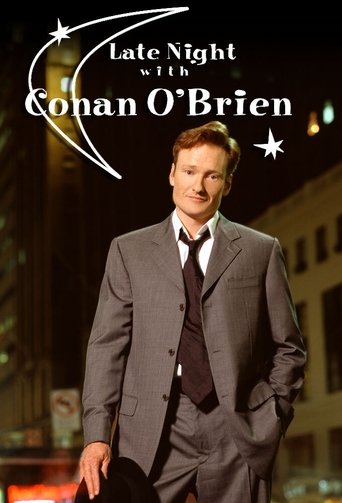
Late Night with Conan O'Brien (1993)
รายการวาไรตี้ซีรี่ย์ 1993ตลกทอล์กโชว์
- ประเทศ
- สหรัฐอเมริกา
- ออกอากาศครั้งแรก
- 13 กันยายน 2536
- จำนวนตอน
- 2724 ตอน (16 ซีซัน)
- สถานะ
- จบแล้ว
- ตอนล่าสุด
- EP98/98 (20 กุมภาพันธ์ 2552)
- ช่อง/แพลตฟอร์มต้นทาง
- NBC
- ผู้สร้าง
- Lorne Michaels, โคแนน โอ'ไบรอัน
- เรตผู้ชม
- TV-14
- คะแนน TMDB
- 7.3/10 (169 โหวต)
เรื่องย่อ Late Night with Conan O'Brien
Late Night with Conan O'Brien เป็นรายการวาไรตี้ ปี 1993 มีทั้งหมด 2724 ตอน สถานะจบแล้ว
ยังไม่มีเรื่องย่อภาษาไทย แสดงเรื่องย่อต้นฉบับภาษาอังกฤษ
Stepping into the late-late slot vacated by David Letterman, Conan O'Brien stars in a show that far outdoes its competition in sheer strangeness. Along with the celebrity interviews and musical numbers typical of late-night talk shows, this program make frequent use of odd walk-on characters and frequent "visits" from celebrity guests.
Late Night with Conan O'Brien ดูได้ที่ไหน (ถูกลิขสิทธิ์)
ยังไม่พบข้อมูลผู้ให้บริการที่มีลิขสิทธิ์เรื่องนี้ในประเทศไทย ต้นทางออกอากาศทาง NBC เราจะอัปเดตทันทีเมื่อมีแพลตฟอร์มนำเข้ามาฉาย
นักแสดง Late Night with Conan O'Brien
 โคแนน โอ'ไบรอันรับบท Self - Host
- Joel Godardรับบท Self - Announcer (voice)
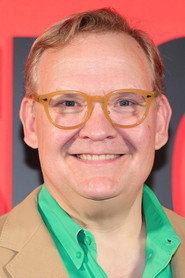 Andy Richterรับบท Self
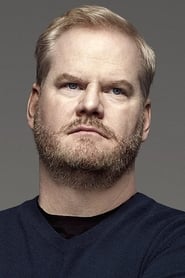 จิม แกฟฟิแกนรับบท Self - Comedy Guest
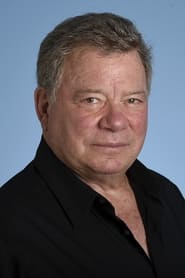 วิลเลียม แชตเนอร์รับบท Self - Musical Guest
 Darrell Hammondรับบท Self - Guest
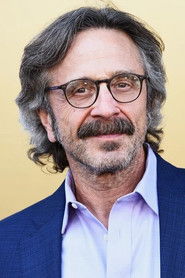 มาร์ค มารอนรับบท Self
 แพตตัน ออสวอลต์รับบท Self - Guest
 Lewis Blackรับบท Self - Guest
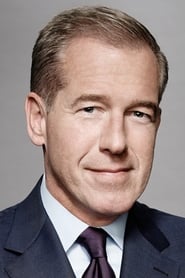 ไบรอัน วิลเลี่ยมรับบท Self - Guest
 John Leguizamoรับบท Self - Guest
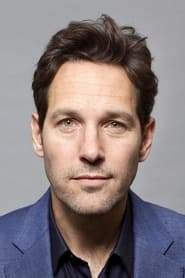 พอล รัดรับบท Self - Guest
ซีซันและรายชื่อตอน
- Late Night with Conan O'Brien Season 1230 ตอน · 13 กันยายน 2536
- Late Night with Conan O'Brien Season 2228 ตอน · 12 กันยายน 2537
- Late Night with Conan O'Brien Season 3195 ตอน · 11 กันยายน 2538
- Late Night with Conan O'Brien Season 4162 ตอน · 17 กันยายน 2539
- Late Night with Conan O'Brien Season 5170 ตอน · 9 กันยายน 2540
- Late Night with Conan O'Brien Season 6160 ตอน · 15 กันยายน 2541
- Late Night with Conan O'Brien Season 7166 ตอน · 7 กันยายน 2542
- Late Night with Conan O'Brien Season 8157 ตอน · 5 กันยายน 2543
- Late Night with Conan O'Brien Season 9160 ตอน · 4 กันยายน 2544
- Late Night with Conan O'Brien Season 10160 ตอน · 3 กันยายน 2545
- Late Night with Conan O'Brien Season 11153 ตอน · 3 กันยายน 2546
- Late Night with Conan O'Brien Season 12166 ตอน · 31 สิงหาคม 2547
- Late Night with Conan O'Brien Season 13162 ตอน · 6 กันยายน 2548
- Late Night with Conan O'Brien Season 14194 ตอน · 5 กันยายน 2549
- Late Night with Conan O'Brien Season 15163 ตอน · 4 กันยายน 2550
- Late Night with Conan O'Brien Season 1698 ตอน · 2 กันยายน 2551
รีวิว Late Night with Conan O'Brien จากทีมงาน
เจาะลึก Late Night with Conan O'Brien: เนื้อเรื่อง การสร้าง และเสียงวิจารณ์
Late Night with Conan O'Brien is an American television talk show broadcast by NBC. The show is the second installment of the Late Night franchise originally established by David Letterman. Hosted by Conan O'Brien, it aired from September 13, 1993, to February 20, 2009, replacing Late Night with David Letterman and was replaced by Late Night with Jimmy Fallon. The show featured varied comedic material, celebrity interviews, and musical and comedy performances. Late Night aired weeknights at 12:37 am Eastern/11:37 pm Central in the United States. From 1993 until 2000, Andy Richter served as O'Brien's sidekick; following his departure, O'Brien was the show's sole featured performer. The show's house musical act was The Max Weinberg 7 and led by E Street Band drummer Max Weinberg.
In 2004, as part of a deal to secure a new contract, NBC announced that O'Brien would leave Late Night in 2009 to succeed Jay Leno as the host of The Tonight Show. Jimmy Fallon began hosting his version of Late Night on March 2, 2009.
Replacing David Letterman
Upon Johnny Carson's May 1991 announcement of his 30-year hosting tenure on The Tonight Show ending in a year, NBC released a statement that Jay Leno (Carson's guest-host since 1987) would become Carson's replacement, not David Letterman. Though revealed two weeks after Carson's retirement announcement, the decision to go with Leno rather than Letterman had reportedly already been made for a long time, primarily by two of the top executives in NBC's Entertainment division: its president Warren Littlefield and his close collaborator John Agoglia. NBC later said that Letterman's high ratings for Late Night were the reason they kept him where he was. Letterman was bitterly disappointed and angry at not having been given The Tonight Show job; and, at Carson's advice, he left NBC after eleven years on Late Night. CBS signed Letterman to host his own show opposite The Tonight Show. Letterman moved his show to CBS virtually unchanged, taking most of the staff, skits, and comedy formats with him. However, NBC owned the rights to the Late Night name, forcing Letterman to rename his show Late Show with David Letterman.
Keeping the Late Night name, NBC set about building a whole new show in the 12:30 a.m. time slot, from which the network had been making some $20 million to $30 million a year towards the end of Letterman's tenure. NBC brought in Saturday Night Live executive producer Lorne Michaels to produce the new show, including selecting its host. After auditioning some lower-profile comedians, such as Jon Stewart, Drew Carey, and Paul Provenza, Michaels and the network started going after more established names like SNL star Dana Carvey and The Larry Sanders Show star Garry Shandling. Both eventually declined, with NBC reportedly making several approaches to Shandling.
Months into the process, Michaels auditioned Conan O'Brien, a then unknown Simpsons writer who had formerly written for Saturday Night Live. Reportedly, Michaels had originally considered hiring O'Brien as a producer for the new show, however, O'Brien then persuaded Michaels to give him a shot at being the host. Despite having "about 40 seconds" of television-performance experience as an occasional extra on Saturday Night Live sketches and briefly appearing in comedy bits on The Wilton North Report, O'Brien auditioned for the show on April 13, 1993. His guests were Jason Alexander and Mimi Rogers; the audition took place on the set of The Tonight Show with Jay Leno. NBC offered the show to O'Brien on April 26, and O'Brien made his first meaningful television appearance later that day when Leno introduced him on Tonight. In 2009, on the final episode of his 16-year run, O'Brien stated that he "owed his career to Lorne Michaels".
Debut
O'Brien's Late Night debuted on September 13, 1993, with Andy Richter chosen as O'Brien's sidekick. The premiere episode featured John Goodman, who received a "First Guest" medal for his appearance, Drew Barrymore, and Tony Randall with cameos from George Wendt and Bob Costas. The episode featured a cold open of O'Brien's walk to the studio with constant reminders that he was expected to live up to Letterman. Tom Brokaw makes a cameo, welcoming O'Brien to NBC but, doing as those on O'Brien's walk had done, warning him that he had "better be as good as Letterman, or else...", before menacingly crushing saltine crackers in front of O'Brien, appearing to be representative of the fate that awaited the new host if he failed to meet expectations. After seeming to be unaffected by the comments, O'Brien arrives at his dressing room and cheerfully prepares to hang himself. However, a warning that the show is about to start causes him to abandon his plans.
The show's first musical guest was English rock band Radiohead, who performed during the second episode. American singer-songwriter Jonathan Richman was the show's second musical guest.
O'Brien's inexperience was apparent, and the show was generally considered mediocre by critics in terms of hosting. The Chicago Sun-Times' Lon Grankhe called O'Brien "nervous, unprepared and generally geeky", and Tom Shales wrote "As for O'Brien, the young man is a living collage of annoying nervous habits. He giggles and titters, jiggles about and fiddles with his cuffs. He has dark, beady little eyes like a rabbit. He's one of the whitest white men ever." (O'Brien wrote for The New York Times a satirical review of the first episode the day it aired titled "O'Brien Flops!", in which he told readers "Frankly, I was not impressed".) The originality and quality of the comedy, however, led by original head writer Robert Smigel, was widely praised. Although O'Brien benefited by comparison from the quick critical and commercial failure of the fellow new late-night The Chevy Chase Show, NBC only offered short-term contracts, 13 weeks at a time and once for six weeks, as widely reported by the press at the time. O'Brien was reportedly almost fired at least once in this period, but NBC had no one to replace him. According to Smigel, "We were basically canceled at Conan, and then they changed their minds in August of '94, gave us a reprieve."
In an unusual form of advertising, Conan O'Brien's credits in The Simpsons "Treehouse of Horror IV" episode, originally aired on October 28, 1993 (and produced before O'Brien left the Simpsons writing staff to host Late Night), reference his new role as host of Late Night, including one credit that lists "Watch My Show" as his "middle" name. (All Simpsons "Treehouse of Horror" episodes credit the voice cast and crew under Halloween-associated nicknames, some being faux middle names in quotation marks.)
According to O'Brien, NBC network executive Warren Littlefield told him, with regard to Andy Richter, he'd "never succeed until I 'got rid of that big fat dildo.' That was the tone of the conversations between us and the network." It was widely expected that the host of Talk Soup, Greg Kinnear would take over the role, but Kinnear turned down the opportunity. (Kinnear would instead become host of Late Night's then-lead-out program, Later, in February 1994, remaining there for two years before deciding to pursue an acting career.) Stars like Tom Hanks agreed to appear on Late Night, which boosted audience awareness.
Even Letterman, who admired O'Brien's comic sensibility, appeared as a guest to register his support. According to O'Brien, Letterman's appearance was the catalyst that turned the show around. At first, the show's staff believed that Letterman's request to appear on the show was a prank, because, as O'Brien put it, Letterman "never goes on anyone else's show". Yet Letterman's show of support led others to start believing in O'Brien and, 22 years later when Letterman retired, O'Brien expressed his gratitude and stated that he owed his own late night career to Letterman.
In its first six months on the air, the show averaged 1.7 million viewers (1.8 rating) followed by slight improvements through the spring of 1994. By July and August of 1994, bumped by its college student core demographic being home on vacation, the average viewership stabilized at almost 1.9 million (2.0 rating). Also in August, NBC announced its decision to renew O'Brien's Late Night without specifying a time commitment for the renewal, only highlighting the network's "commitment to the success of the show as long as it demonstrated ratings improvement and creative growth".
One NBC affiliate, KPRC-TV in Houston, dropped Late Night with Conan O'Brien in September 1994 due to low ratings and replaced it with the syndicated Jenny Jones Show. KPRC reinstated O'Brien's Late Night in the fall of 1996, but scheduled it to air as late as 2:40 a.m.; over the next eight years, the station, in addition to The Jenny Jones Show, had aired various other first-run syndicated programs (Extra, Access Hollywood, Ricki Lake, Montel Williams and Inside Edition) and a rebroadcast of its 10:00 p.m. newscast between Leno and O'Brien after it reinstated Late Night. Houston became the subject of a 1997 skit (via classic remote piece) in which O'Brien made impromptu stops at Houston's central bus terminal and the Astrodome to watch an episode of his own show with Houstonians. In response to emails sent by O'Brien's fans following the skit regarding its graveyard placement, KPRC moved the show to 12:35 a.m. in 1998; it would eventually move Late Night to its network-assigned timeslot, immediately following The Tonight Show with Jay Leno, in 2004.
O'Brien's performance style improved through experience, and he began to receive more favorable reviews and ratings the following year. With the ratings gradually improving over the course of two years, Late Night reached a new level of critical and commercial success in 1996; Tom Shales wrote an article entitled "The Late Night Dawning of Conan", and O'Brien received his first Emmy nomination for writing, which he received every year until 2011.
1996–2000
In 2000, Richter left Late Night on good terms, to pursue his acting career, a move that emotionally affected O'Brien, as evidenced by Richter's last show. The show's comedy bits and banter had usually depended on O'Brien's interaction with Richter. O'Brien's wacky non-sequitur comedy became more pronounced as he played all of his comedy and commentary directly to the audience and Max Weinberg instead of towards Richter.
2001–2009
In early 2002, as his NBC contract was ending, O'Brien had notable offers from other networks; Fox was reported to have made particularly strong overtures, trying to interest him in an 11:00 p.m. show on the network by offering an exorbitant sum of as much as US$25 million per year. However, O'Brien decided to re-sign with NBC—joking that he initially wanted a 13-week deal (a nod to the time nine years earlier when the show had been posting low ratings)—thus extending his contract for four more years, with his annual NBC compensation reportedly doubling to nearly US$8 million a year. The extension would see him surpass Letterman's 11-year Late Night hosting run. Because O'Brien's early 2002 negotiations with NBC coincided with Letterman's Late Show contract with CBS coming up for renewal while rival ABC was making a serious run at Letterman in an attempt to lure him away, CBS made its own last minute approach to O'Brien as protection should Letterman decide to leave for ABC. However, reportedly out of admiration and respect for Letterman, O'Brien instructed his representatives not to bother engaging with CBS, reasoning in later interviews that he didn't want to be "the stick for CBS to hit Letterman with" or "the crowbar that CBS uses to get Letteman's [contract] number down" in Letterman's own negotiations with CBS.
With a new NBC contract and his Late Night doing well in the ratings, reportedly making the network almost US$35 million a year in profit on US$70 million annual revenue, O'Brien hosted the Primetime Emmy Awards ceremony in September 2002—a recognition of his rising prominence and success in show business. In interviews during summer 2002, 39-year-old O'Brien indicated that he doesn't see himself hosting Late Night beyond the end of his current contract in early 2006—expressing concerns about aging out of the show's sophomoric humour and silly antics by observing that "at a certain point it's like a 55-year-old man wearing short shorts".
In 2003, O'Brien's own production company, Conaco, was added as a producer of Late Night. The show celebrated its 10th anniversary, another milestone that O'Brien said he wanted to achieve with his 2002 contract. During the anniversary show, Mr. T handed O'Brien a chain with a large gold "7" on it.
By spring 2004, with the show dominating the 12:30 a.m. time slot in U.S. national ratings, including reportedly making profits of US$100 million a year on annual revenues of US$140 million, O'Brien and his manager Gavin Polone began to talk publicly about the performer's desire of hosting an 11:30 p.m. late-night show as the next logical step career-wise. Naturally, their primary focus was for O'Brien to get The Tonight Show, still one of the most lucrative assets on American television, making an annual profit of about US$150 million on revenues of about US$230 million as of 2004 under its current host Jay Leno who had been maintaining its number one spot in U.S. late-night ratings since 1995. In March 2004, with NBC renewing Leno's Tonight Show contract for five more years until 2009, which O'Brien was reportedly surprised and disappointed with, Polone continued lobbying the network to commit to a formal plan of succession for O'Brien by leveraging future offers O'Brien was certain to receive from other networks in mid-2005 once becoming legally allowed to negotiate with outside entities.
For months during spring and summer of 2004, the NBC Universal Television Group president Jeff Zucker conducted reportedly complicated negotiations with O'Brien's representatives and Leno, in search of a mutually agreeable deal that would keep O'Brien at NBC. Finally, on the morning of September 27, 2004, at NBC's headquarters in Rockefeller Center, O'Brien signed a new deal with the network, guaranteeing him the hosting job of the Tonight Show starting from a yet-to-be-determined date in 2009 in addition to a guarantee of at least two years as host of the show from that point on. The agreement also meant that Leno's term on the Tonight Show would be ending at the completion of his current contract, which was to bring his hosting run on the show to 17 years. NBC announced the deal in a news release later that afternoon, after it had been announced to the staffs of both shows early in the morning.
O'Brien's last season on Late Night attracted an average of 1.98 million viewers, compared to 1.92 million viewers for The Late Late Show with Craig Ferguson.
Humor
The show was known for its wacky and absurd sophomoric comedic sensibility that is edgier than most other talk shows. Like his Late Night predecessor, David Letterman, the show's humor also had a streak of biting sarcasm and irony. According to Robert Smigel, who served as head writer in 1993, the show's comedic approach was to focus on being different from David Letterman:
I set down a lot of rules, some of which were crazy, but ultimately it forced us to come up with a lot of original stuff. We had the added bonus of being Letterman's replacement.
Typically O'Brien would play the 'straight man' role to the general absurdity of the comedy, treating the material or wacky nature of the sketches with sincerity. The show had an unusual quantity of comedy and original content rather than other talk shows such as Late Show with David Letterman or The Tonight Show with Jay Leno that relied heavily on recurring segments and 'found' humor. The show was particularly unique in the lack of 'found' humor to derive content from i.e. most content being scripted as opposed to Letterman's Small Town News or Jay Leno's headlines that used this "found humor". O'Brien would often playfully chide his audience for an underwhelming or overly enthusiastic response to his jokes.
Particularly in the early years, comedic sketches overtook all segments on the show, occasionally even interrupting guest interviews and O'Brien's monologue. Frequently sketches would randomly begin without introduction, such as during banter between Richter and O'Brien. A lot of the humor had a fantasy-like quality to it, where inanimate objects would talk or silly characters would disrupt the show. Sometimes a short story would emerge in these sketches with a resolution culminating in a song.
One recurring technique is to superimpose lips onto an existing image, as in the Syncro-Vox limited animation technique, resulting in the speaker saying things often quite out of character.
Although Late Night used political humor, it did so far less frequently than competing shows did. During the 1996 and 2000 presidential election seasons, Late Night was found to be the least politically oriented late night program. It averaged 310 political jokes per election season, in contrast to the Leno-led Tonight Show with 1,275.
(See List of Late Night with Conan O'Brien sketches for an extensive list)
The Max Weinberg 7
The show's house band was The Max Weinberg 7, led by drummer Max Weinberg. The other six members were Mark Pender on trumpet, Richie "LaBamba" Rosenberg on trombone, Mike Merritt on bass, Jerry Vivino on saxophone and brother Jimmy Vivino on guitar, and Scott Healy on keyboards. Weinberg sometimes took extended leaves of absence to tour with Bruce Springsteen as the drummer for the E Street Band (which happened in 1999-2000, 2002-2004 and 2007-08). During his absence, James Wormworth would typically fill in on drums, and the band was led by Vivino under the name Jimmy Vivino and the Max Weinberg 7.
With the departure of Andy Richter from Late Night in May 2000, Max Weinberg assumed a bigger role as an interlocutor for O'Brien's jokes. One common running gag was Max's awkwardness on camera and his apparent lack of chemistry with Conan. Weinberg was often used in sketches as well, which usually revolved around his purported sexual deviance (mostly a penchant for bedding barely legal groupies), although long-running sketches also spoofed Max's lack of knowledge of current affairs.
"LaBamba" was also used as the butt of many of Conan's jokes. These humorous sketches usually revolved around LaBamba's sizeable mustache, his poor acting skills, and his alleged inability to read written music. Mark Pender would often sing songs on the topic of a current event which ended with him screeching uncontrollably and climbing the risers into the audience. All members of the 7 have had successful side careers as studio musicians.
Theme song and other music
The show's opening theme was co-written by composer Howard Shore and John Lurie (of the band The Lounge Lizards). Lurie would later say that he was contracted by Shore to write the theme, and after he turned in the piece, Shore made minimal changes and claimed an unwarranted co-writing credit. Lurie also claimed to have been a finalist for Late Night's band leader position, but said producers told him, "Conan thinks you're funnier than him and that scares him."
As is common in the talk show format, the Max Weinberg 7 performed the show's opening and closing themes, played bumpers into and out of commercial breaks (they actually played through the entire break for the studio audience), and a short piece during O'Brien's crossover to his desk after his monologue. The show's closing theme was called "Cornell Knowledge", and was lifted from Jerry and Jimmy Vivino's first album together. However, on Late Night, it was played at a much quicker tempo than the album version. The band also played a wide variety of songs as bumpers coming to and from commercial breaks and introducing guests—usually popular music from a variety of eras.
Joel Godard
Joel Godard, a long-time announcer for NBC shows, was the program's announcer and a frequent comedy contributor. On the show's final episode, Conan noted that Godard was originally hired to simply announce the show's intro and claimed "nobody thought you'd ever see him"; however, he was gradually worked into the show's comedy pieces. These bits usually revolved around Godard's supposed homosexual fetishes, deviant sexual habits, substance abuse, and suicidal tendencies. The humor came in part from Godard's delivery. No matter how depressing or deviant the topic being discussed was, he always did so in an exaggeratedly cheerful voice and with a huge smile plastered on his face. Several sketches ended with Godard apparently committing suicide in his announcer's booth. When Andy Richter left the show in 2000, Godard began to appear in sketches more frequently.
Writing staff
In the first few seasons of the show, the writing staff consisted of several now-prolific comics including Robert Smigel as the head writer, Bob Odenkirk, Louis C.K., Tommy Blacha and Dino Stamatopoulos. Smigel left his position as head writer of the show in 1995 but continued to appear on the show to do bits as Triumph the Insult Comic Dog and the 'Satellite Interviews'. Jonathan Groff took over his position until replaced by Mike Sweeney in 2001.
Members of the show's writing staff frequently appeared in sketches on the show. Among the most prolific were: Brian McCann (Preparation H Raymond, FedEx Pope, The Loser, Airsick Moth, Jerry Butters, Awesome Dave, Funhole Guy, Bulletproof Legs Guy, Adrian "Raisin" Foster, S&M Lincoln, etc.), Brian Stack (Hannigan the Traveling Salesman, Artie Kendall the Ghost Crooner, The Interrupter, Kilty McBagpipes, Fan-tastic Guy, Clive Clemmons, Frankenstein, Ira, Slipnut Brian, etc.), Jon Glaser (Segue Sam, Pubes, Awareness Del, Wrist Hulk, Ahole Ronald, Gorton's Fisherman, Jeremy, Slipnut Jon, etc.), Kevin Dorff (Coked-up Werewolf, Jesus Christ, Mansy the half-man/half-pansy, Joe's Bartender, Todd the Tiny Guy, etc.), and Andy Blitz (Awful Ballgame Chanter, Vin Diesel's brother Leonard Diesel, Slipnut Andy, Chuck Aloo aka the star of the 24 spin-off series 60). Blitz went so far as to travel to India for one bit in which he carried his computer through the streets of India to get technical support firsthand from the telephone representative at NBC's technical help center.
Several writing staff interns have gone on to become noted actors or writers including Vanessa Bayer, John Krasinski, Mindy Kaling, Ellie Kemper and Jack McBrayer.
เนื้อหาส่วนนี้มาจากบทความ "Late Night with Conan O'Brien" ในวิกิพีเดีย (en.wikipedia.org) เผยแพร่ภายใต้สัญญาอนุญาตครีเอทีฟคอมมอนส์ แสดงที่มา-อนุญาตแบบเดียวกัน 4.0 (creativecommons.org/licenses/by-sa/4.0) มีการตัดส่วนอ้างอิงและจัดรูปแบบใหม่
คำถามที่พบบ่อยเกี่ยวกับ Late Night with Conan O'Brien
Late Night with Conan O'Brien มีกี่ตอน?
Late Night with Conan O'Brien มีทั้งหมด 2724 ตอน รวม 16 ซีซัน สถานะปัจจุบัน: จบแล้ว
Late Night with Conan O'Brien ฉายวันไหน?
Late Night with Conan O'Brien เริ่มออกอากาศครั้งแรกวันที่ 13 กันยายน 2536
Late Night with Conan O'Brien ดูได้ที่ไหน?
ขณะนี้ยังไม่พบแพลตฟอร์มที่มีลิขสิทธิ์ Late Night with Conan O'Brien ในประเทศไทย
หมวดแนะนำ: ซีรี่ย์ซับไทย · เรื่องถัดไป: Start Music
ซีรี่ย์ที่คล้ายกับ Late Night with Conan O'Brien
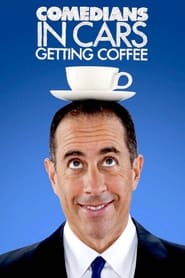 จบแล้ว 84 ตอน★ 7.1
Comedians in Cars Getting Coffee นักแสดงตลกนั่งรถจิบกาแฟ (2012)
 จบแล้ว 286 ตอน★ 7.0
Comedy Central Presents (1998)
 EP3/3★ 7.0
My Next Guest Needs No Introduction with David Letterman เสวนาฮาเฮกับเดวิด เลตเทอร์แมน (2018)
 ★ 7.9
★ 7.9The Eric Andre Show (2012)
 ★ 6.1
★ 6.1The Joel McHale Show with Joel McHale (2018)
 ★ 6.6
★ 6.6The Jim Jefferies Show (2017)
 จบแล้ว 12 ตอน★ 7.8
This Time with Alan Partridge (2019)
 จบแล้ว 10 ตอน★ 8.1
Norm Macdonald Has a Show (2018)
 ★ 7.2
★ 7.2The Problem with Jon Stewart (2021)
 ★ 7.2
★ 7.2Talking Dead (2011)
 ★ 6.4
★ 6.4Billy on the Street (2011)
 ★ 7.8
★ 7.8