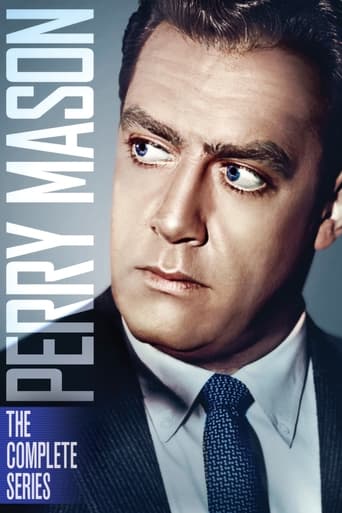
Perry Mason (1957)
ซีรี่ย์ฝรั่งซีรี่ย์ 1957ลึกลับดราม่าอาชญากรรม
- ประเทศ
- สหรัฐอเมริกา
- ออกอากาศครั้งแรก
- 21 กันยายน 2500
- จำนวนตอน
- 271 ตอน (9 ซีซัน)
- ความยาวต่อตอน
- ประมาณ 52 นาที
- สถานะ
- จบแล้ว
- ตอนล่าสุด
- EP30/30 (22 พฤษภาคม 2509)
- ช่อง/แพลตฟอร์มต้นทาง
- CBS
- ผู้สร้าง
- Erle Stanley Gardner
- เรตผู้ชม
- TV-PG
- คะแนน TMDB
- 7.7/10 (140 โหวต)
เรื่องย่อ Perry Mason
Perry Mason เป็นซีรี่ย์ฝรั่ง ปี 1957 มีทั้งหมด 271 ตอน สถานะจบแล้ว
ยังไม่มีเรื่องย่อภาษาไทย แสดงเรื่องย่อต้นฉบับภาษาอังกฤษ
The cases of master criminal defense attorney Perry Mason and his staff who handled the most difficult of cases in the aid of the innocent.
Perry Mason ดูได้ที่ไหน (ถูกลิขสิทธิ์)
ยังไม่พบข้อมูลผู้ให้บริการที่มีลิขสิทธิ์เรื่องนี้ในประเทศไทย ต้นทางออกอากาศทาง CBS เราจะอัปเดตทันทีเมื่อมีแพลตฟอร์มนำเข้ามาฉาย
นักแสดง Perry Mason
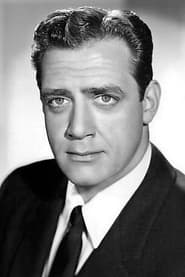 Raymond Burrรับบท Perry Mason
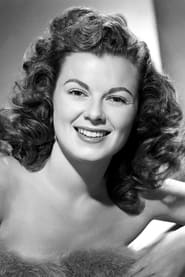 Barbara Haleรับบท Della Street
 William Hopperรับบท Paul Drake
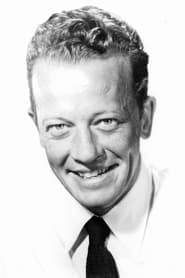 William Talmanรับบท Hamilton Burger
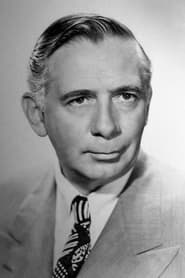 Ray Collinsรับบท Lieutenant Tragg
 Lee Millerรับบท Sgt. Brice
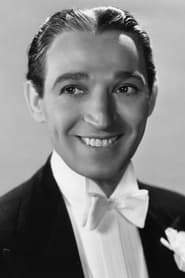 George E. Stoneรับบท Court Clerk
 Dabbs Greerรับบท Dodson
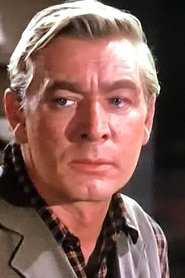 Wesley Lauรับบท Lt. Anderson
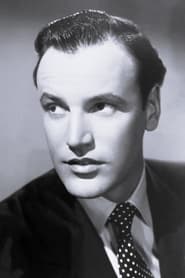 Richard Andersonรับบท Edward Lewis
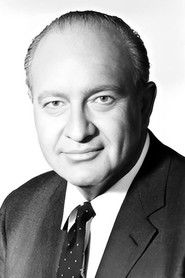 S. John Launerรับบท Judge Ryder
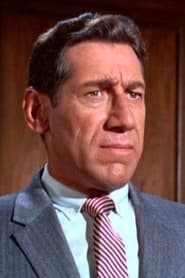 Michael Foxรับบท Coroner
ซีซันและรายชื่อตอน
- Perry Mason Season 139 ตอน · 21 กันยายน 2500
- Perry Mason Season 230 ตอน · 20 กันยายน 2501
- Perry Mason Season 326 ตอน · 2 ตุลาคม 2502
- Perry Mason Season 428 ตอน · 17 กันยายน 2503
- Perry Mason Season 530 ตอน · 1 กันยายน 2504
- Perry Mason Season 628 ตอน · 26 กันยายน 2505
- Perry Mason Season 730 ตอน · 25 กันยายน 2506
- Perry Mason Season 830 ตอน · 23 กันยายน 2507
- Perry Mason Season 930 ตอน · 11 กันยายน 2508
รีวิว Perry Mason จากทีมงาน
เจาะลึก Perry Mason: เนื้อเรื่อง การสร้าง และเสียงวิจารณ์
Perry Mason is an American legal drama series aired on CBS from September 21, 1957, to May 22, 1966. The title character, played by Raymond Burr, is a Los Angeles criminal defense lawyer who originally appeared in detective fiction by Erle Stanley Gardner. Many episodes were based on stories written by Gardner.
Perry Mason was one of Hollywood's first weekly one-hour series filmed for television, and remains one of the longest-running and most successful legal-themed television series. During its first season, it received a Primetime Emmy Award nomination for Outstanding Dramatic Series and it became one of the five most popular shows on television. Burr received two Emmy Awards for Outstanding Lead Actor in a Drama Series, and Barbara Hale received an Emmy Award for Outstanding Supporting Actress in a Drama Series for her portrayal of Mason's confidential secretary Della Street. Perry Mason and Burr were honored as Favorite Series and Favorite Male Performer in the first two TV Guide Award readers' polls. In 1960, the series received the first Silver Gavel Award presented for television drama by the American Bar Association.
Perry Mason has aired in syndication in the United States and internationally ever since its cancellation, and the complete series has been released on Region 1 DVD. A 2014 study found that Netflix users rate Raymond Burr as their favorite actor, with Barbara Hale number seven on the list.
The New Perry Mason, a 1973 revival of the series with a different cast, was poorly received and ran for 15 episodes. In 1985, Burr returned to play Mason in a successful series of Perry Mason television films airing on NBC. A total of 30 films were made; Burr starred in 26 of them before his death in 1993. Another series, also titled Perry Mason, focusing on Perry Mason's origin story began airing in 2020 on HBO, with Matthew Rhys in the title role.
Plot
Perry Mason is a distinguished criminal-defense lawyer practicing in Los Angeles, California, most of whose clients have been wrongly charged with murder. He is ably assisted by his confidential secretary Della Street and by private investigator Paul Drake. The innocent suspect is usually prosecuted by district attorney Hamilton Burger, though the prosecution is handled by a local district attorney when the murder takes place outside Los Angeles County. In the early seasons, the police investigation is usually led by the homicide detective Lt. Arthur Tragg. (Later, other homicide detectives appear with increasing frequency.)
In a typical episode, the first half of the show introduces a client, who often hires Mason on non-murder related business, or becomes acquainted with him in some other way. The prospective murder victim and other important figures in the case are introduced, and then the client is wrongly accused. Once the crime has been committed, while Tragg and Burger work to gather evidence against Mason's innocent client, Mason, Paul Drake and Della Street engage in a parallel investigation in order to exonerate him or her.
In the second half, Mason and Burger spar in the courtroom. This usually takes place during the preliminary hearing because Mason's technique is to clear a client before they are bound over for trial (based on novels). Jury trials are rarely seen, with "The Case of the Terrified Typist" being an exception. As the courtroom proceedings advance, while Burger and Tragg often uncover new evidence or a new witness that would seem to seal the fate of the accused, Mason's team continue their parallel investigation in what seems to be an increasingly hopeless effort. As the investigation or examination progresses, Mason and sometimes Burger uncover the morally ugly or even illegal conduct of some of the witnesses or participants, thus complicating the moral and legal intrigue of the case.
Eventually, some detail is uncovered, a different interpretation of the evidence is found, or a remark is made inside or outside the courtroom which gives Mason the clue he needs to discover the identity of the real murderer. (For example, in "The Case of the Lazy Lover", the prosecution's case relies on a complicated set of footprints left at the crime scene. Mason notices that the prints left by a neighbor's dog were inconsistent with Burger's interpretation, leading Mason to realize that the neighbor's testimony was contrary to the truth.) Armed with this new insight, Mason then usually embarks upon a line of questioning that reveals the surprise perpetrator, often causing them to break down and confess to the crime in the courtroom. In the closing scene or epilogue, Paul and Della, and sometimes Burger and Tragg, ask Mason what gave him the clue he needed; after Mason explains, he or someone else makes a humorous remark.
Cast and characters
Perry Mason – played by Raymond Burr – defense attorney.
Della Street – played by Barbara Hale – Mason's confidential legal secretary.
Paul Drake – played by William Hopper – owner of the Paul Drake Detective Agency, which employs a number of operatives, and is located in the same building as Perry's law practice. Often, Drake and his operatives do the legwork that allows Perry to assemble the clues that will clear his client.
Hamilton Burger – played by William Talman – district attorney. Absent for parts of seasons 3 and 4. (Talman was briefly suspended from the show for violating CBS's morals clause, but was reinstated at the request of executive producer Gail Patrick Jackson and star Raymond Burr, after a letter-writing campaign from viewers.)
LAPD homicide detectives:
Lieutenant Arthur Tragg – played by Ray Collins – a police homicide detective and lead police official on the series. He appeared in all but a handful of episodes in seasons 1–3. Illness forced him to appear in fewer and fewer episodes in later seasons: nineteen episodes in season 4, eleven episodes in season 5, nine episodes in season 6, and three episodes in season 7. Collins continued to be billed in every episode through the end of season 8, though he ceased to appear midway through season 7. His last episode was "The Case of the Capering Camera" (season 7, episode 15; first broadcast January 16, 1964).
Lieutenant Anderson – played by Wesley Lau – police homicide detective and lead police official on the series, known as Andy to his friends. Lau started appearing in the fall of 1961, when Ray Collins began to reduce his participation in the show due to illness, and gradually became more prominent. Some episodes featured Tragg, some Anderson, and some both, with Anderson's appearances generally increasing in proportion to Tragg's appearances being shorter or less often. Lau had previously appeared as another character in "The Case of the Impatient Partner" (season 5, episode 2; first broadcast September 16, 1961). Lt. Anderson was seen in seasons 5–8, beginning with "The Case of the Malicious Mariner" (season 5, episode 4; first broadcast on October 7, 1961) and ending with "The Case of the Mischievous Doll" (season 8, episode 30; first broadcast May 13, 1965).
Lieutenant Steve Drumm – played by Richard Anderson, replacing Wesley Lau – police homicide detective and lead police official on the series, who appeared in the final season. Anderson had appeared previously as other lead characters in "The Case of the Accosted Accountant" (season 7, episode 14; first broadcast on January 9, 1964) and "The Case of the Paper Bullets" (season 8, episode 2; first broadcast October 1, 1964).
Recurring smaller roles
Dr. Hoxie – autopsy surgeon (medical examiner) played by Michael Fox, seen in seasons 1 through 7; Fox also played other small roles in season 9.
Police Sgt. Ben Landro - a homicide lead detective, played by Mort Mills. Sgt. Landro represents the law whenever the crime scene is remote from the city, and out of Lt. Tragg's jurisdiction. Seen infrequently (and never seen in an episode with Tragg, Anderson, or Drumm), Landro appeared in seven episodes during seasons 4, 5, 6, and 8.
Sgt. Brice – a police officer, played by Lee Miller, who often accompanies Tragg, Anderson, or Drumm (but never Landro). Seen throughout the series run. Miller (who was Raymond Burr's on-set stand-in) also played other bit roles in seasons 1 and 2.
Terrance Clay – played by Dan Tobin. Owner of the upscale Clay's Grill, where Perry, Paul, and Della (and sometimes Burger and/or Drumm) frequently gather in the final (ninth) season, usually during the story's epilogue. Perry, Paul, and Della (and sometimes Burger and Tragg) also frequented Clay's Grill in season 1 — but Clay was never seen in these early episodes.
Gertrude "Gertie" Lade – Mason's frequently mentioned but rarely seen receptionist, played by Connie Cezon. Capable and friendly, if slightly ditzy, Gertie was seen mostly in seasons 1 and 2, with one appearance in season 4, and three episodes in season 7 (with Connie Cezon substituting for the temporarily unavailable Barbara Hale).
Jonathan Hale – the rural district attorney, played by Paul Fix in five episodes. Whenever the crime scene is in a rustic county far from Hamilton Burger's jurisdiction, prosecutor Hale shrewdly—but quietly and good-naturedly—spars with defense counsel Mason.
David Gideon – an eager young law student (and initially, a client of Mason's) who occasionally assisted Perry in researching a case. Played by Karl Held in seasons 4 and 5.
Court clerk – Seen in the background during courtroom procedures. He handled exhibits marked for identification, and he called witnesses to the stand and swore them in. During the first two seasons the clerk was played alternately by Jack Harris and Jack Gargan. Midway through season 2 George E. Stone took over the clerk's role and remained with the series through season 6; Stone alternated with actors Charles Stroud, Olan Soule, and Hans Moebus.
Judges – A rotating pool of judges was seen. The judges were not always consistently named, and were usually not given a name at all, only being referred to as "Your Honor." Each actor maintained a consistent personality during his sessions on the bench. Often seen were S. John Launer (33 episodes, 1958–1966), Kenneth MacDonald (32 episodes, 1957–1966), Willis Bouchey (23 episodes, 1960–1966), Morris Ankrum (22 episodes, 1957–1964), John Gallaudet (20 episodes, 1959–1966; his character was identified in later years as Judge Ben Penner), Grandon Rhodes (16 episodes, 1957–1966), Richard Gaines (14 episodes, 1958–1961), Charles Irving (11 episodes, 1961–1965), Nelson Leigh (9 episodes, 1959–1964), and Frank Wilcox (8 episodes, 1957–1960). For three cases the judge was a woman: Lillian Bronson (1958–1960). One notable judge was played by Vince Townsend Jr., who appeared in "The Case of the Skeleton's Closet" (season 6, episode 26; first broadcast on May 2, 1963); Townsend was an African-American who spoke no lines. He was an actual judge in the Los Angeles County Municipal Court and was also a minister in the First African Methodist Episcopal Church of Los Angeles. He was the only black judge to appear in the series.
Background
Erle Stanley Gardner had already allowed his Perry Mason character to be portrayed in other media. A series of Warner Bros. feature films was produced between 1933 and 1937, starring Warren William in four and Ricardo Cortez and Donald Woods in one each. A seventh Warner adaptation, based on Gardner's novel The Case of the Dangerous Dowager, was filmed in 1940 as Granny Get Your Gun, with the Mason character written out of the story entirely.
A radio series followed, which Gardner despised because it emphasized romance over legal matters. The radio series, without the Mason character, would be adapted for television as the long-running crime soap opera The Edge of Night. After the film and radio ventures, Gardner refused to license his popular character Perry Mason for any more adaptations.
His literary agent was advertising executive Thomas Cornwell Jackson, who had married actress Gail Patrick in 1947. She had studied law before she went to Hollywood "for a lark" and appeared in more than 60 feature films including My Man Godfrey (1936), Stage Door (1937), and My Favorite Wife (1940). She stopped acting in 1948, started a family, and began to talk to Gardner about adapting the Perry Mason stories for a television series.
"We kept talking about what kind of a series he'd want and how much creative control he needed," Gail Patrick told journalist James Bawden in 1979. "I just think he came to trust me and I'd kept up my contacts in show business."
Gardner regarded Perry Mason's personal life as irrelevant and wanted the series to concentrate on crime and Mason's fight for the underdog. "You must remember," Patrick said, "Erle was in love with the law and its finer points."
Patrick, her husband, and Gardner formed a production company, Paisano Productions, of which she was president. When she first tried to sell Perry Mason to CBS, the network wanted it to be a live hour-long weekly program. "That would have been impossible—it would have killed the actor playing Perry," Patrick said. "And I Love Lucy had taught the value of filmed reruns." Paisano Productions absorbed the costs for a filmed pilot.
In February 1956, CBS announced its new series, Perry Mason, anticipating it would begin that fall. The network obtained the rights to 272 stories by Gardner, including Perry Mason and 11 other principal characters. The rights were purchased from Paisano Productions, which would film the series in association with CBS and own a 60% interest in the films.
Perry Mason was one of Hollywood's first hour-long weekly series filmed for television. Gail Patrick Jackson was its executive producer. "We were the first bona fide law show and we spent two years preparing Perry for the television bar," Patrick said.
Casting
Gail Patrick Jackson was immersed in auditions throughout 1956. Columnist Hedda Hopper wrote that Cornwell Jackson had postponed a two-month vacation in Hawaii, hoping to get the series ready by September or October. In mid-June, Hopper reported that the Jacksons had left on their annual trip, after stating that Perry Mason would not be ready for TV that fall.
The role of Perry Mason proved the hardest to cast. Richard Carlson, Mike Connors, Richard Egan, and William Holden were considered; Connors and Egan went on to make guest appearances in the series. In early April, Fred MacMurray and CBS were reportedly in the midst of negotiations. Patrick saw hundreds of actors audition in April 1956. "We couldn't afford a big star," Patrick later said. At last, Efrem Zimbalist Jr., already a star at Warner Bros., was signed without a screen test.
Raymond Burr initially read for the role of district attorney Hamilton Burger, with Tod Andrews standing in as Mason. Burr was more interested in the Perry Mason role and told associate producer Sam White, "If you don't like me as Perry Mason, then I'll go along and play the part of the district attorney, Hamilton Burger." Patrick had been impressed with Burr's courtroom performance in the 1951 film A Place in the Sun, and told him he was perfect for the title role in Perry Mason, but at least 60 pounds overweight. Over the next month, Burr went on a crash diet. When he returned, he tested as Perry Mason. Burr's tryout performance as Mason was a triumph, according to White: "He was so great that everybody looked at each other and said, 'What do we do now? This guy is far superior. He'll give this thing a dimension that Zimbalist could never give it.'" By July 1956, word was out that Burr had the role, and an announcement was made at the beginning of August.
William Hopper also auditioned as Mason, but was cast as private detective Paul Drake. Patrick recalled, "When Bill Hopper came in to read for Paul Drake he blurted out, 'You hate my mother.' And that was Hedda Hopper. Well, I disliked what she stood for, but 'hate' is something else—and anyway he was perfect as Drake, and we got him."
Barbara Hale was still prominent in feature films, but had a young family and wished to avoid going away on long periods of location shooting. Patrick said that Hale telephoned about the role of Della Street.
Patrick had an actor in mind for the Los Angeles district attorney. "I'd seen a brilliant little movie, The Hitch-Hiker, and had to have William Talman as Burger—and he never disappointed us," Patrick said. Later asked about how he felt about Burger losing to Mason week after week, Talman said, "Burger doesn't lose. How can a district attorney lose when he fails to convict an innocent person? Unlike a fist or gun fight, in court you can have a winner without having a loser. As a matter of fact, Burger in a good many instances has joined Mason in action against unethical attorneys, lying witnesses, or any one else obstructing justice. Like any real-life district attorney, justice is Burger's main interest."
"Ray Collins came on board as Lt. Arthur Tragg," Patrick said. "He was such a wonderful actor—beautiful voice, trained in radio's Mercury Theatre. We overlooked the fact that on an actual police force, he would probably be long retired." Collins was 68 at the time the series debuted. Gardner had always presented Lt. Tragg in his novels as being about the same age as Mason, and Gardner was apprehensive about casting a much older actor as Tragg. Director Christian Nyby recalled, "When he [Gardner] saw the first couple of pictures, he said, 'You're right. He's perfect for the role.'" Gardner was so impressed by Collins that he actually changed the character in the novels to reflect the Collins interpretation. Lt. Tragg was now being described as "grandfatherly" and "paternal."
Each episode's casting interviews were conducted by Gail Patrick Jackson, producer Ben Brady, and the director. Episodes typically employed 10 featured players in addition to the principal cast and extras. Numerous actors famous for past and future roles in film and television made guest appearances on the show.
"Many were people I'd worked with in movies," said Gail Patrick Jackson. "They were grateful and delivered on time—and powerfully. … Gloria Henry, Vaughn Taylor, Hillary Brooke, John Archer, Morris Ankrum, Don Beddoe, Fay Wray, Olive Blakeney, Paul Fix, Addison Richards. We also had newcomers like Darryl Hickman, Barbara Eden. The trick was to only use them once a year. People like Fay Wray came back several times, but as other characters."
Patrick made it a point to hire her Hollywood acting contemporaries whenever possible. Some were semiretired and financially well-off, but still enjoyed performing. Character actor George E. Stone was struggling financially after a series of medical procedures failed to improve his vision, and for years he appeared on Perry Mason (twice in character roles, then regularly as the court clerk) until his health made it impossible for him to work any longer. Patrick went to considerable lengths to find a part for an actress who had become paralyzed on one side; she played with her good side toward the camera.
"This isn't being the least altruistic," Patrick said. "They are all fine performers and bring to the shows something interesting and vital—even when they only have one line."
Patrick also accommodated Raymond Burr, when he had to miss a month's work in 1962 for a surgical procedure. Four episodes were filmed with guest stars—in succession, Bette Davis, Michael Rennie, Hugh O'Brian, and Walter Pidgeon—who carried most of the action. Burr filmed a few scenes for each episode before reporting for surgery. Burr also missed two episodes in Season Eight; Michael Connors and Barry Sullivan substituted for him.
Perry Mason also drew on the West Coast radio pool. Working steadily in radio since the 1940s, Raymond Burr was a leading player on the West Coast and in 1956 was the star of CBS Radio's Fort Laramie. Noted for his loyalty and consciousness of history, Burr went out of his way to employ his colleagues. Some 180 radio celebrities appeared on Perry Mason during the first season alone.
Writing
The production staff of Perry Mason worked at being technically correct and responsive to an audience that included lawyers and judges. Producer Ben Brady practiced law in New York before entering show business; story editor Gene Wang (pronounced "vahng"; he was of German heritage) graduated from law school in Florida; and executive producer Gail Patrick Jackson studied law for two years before becoming an actress.
Many episodes are based on novels and short stories by lawyer-turned-writer Erle Stanley Gardner. Only two of the 69 Perry Mason novels Gardner published before January 1963 were not adapted for the series. All but three episodes in the first season were adapted from Gardner's stories. In season two, 14 of the 39 episodes came from Gardner originals. With the backlist exhausted, later seasons presented between one and five episodes drawn from Gardner stories, with occasional remakes of earlier adaptations. By the summer of 1958, Patrick was already supervising the work of 31 writers who were developing original scripts based on Gardner's characters.
"Funny thing about writers," Patrick told TV Guide. "A lot of them think they'll improve on Erle. Most of them find out they can't even duplicate him."
Writers submitted a draft script, which was reviewed for continuity, narrative content, and legal error by Patrick and Wang. A revised draft was then forwarded to Gardner, who would respond with a detailed brief indicating particular changes required to conform with the law. Gardner closely supervised the scripts throughout the run of the series, and continued to write new Perry Mason novels.
By 1961, the strictures of the Perry Mason formula led Writer's Digest to declare, "This show has the reputation among writers as being the hardest one in Hollywood to work for."
Pilot
A test film, "The Case of the Moth-Eaten Mink", ultimately aired December 14, 1957, as the 13th episode of the first season. The pilot was filmed October 3–9, 1956, after Raymond Burr completed a film in Havana and made a two-week tour of military hospitals in the West Indies.
"'The Case of the Moth-Eaten Mink' is written and directed very much like a noir B-feature of the period, from its stylishly dramatic opening to its violent climax," wrote film scholar Thomas Leitch. He noted that the pilot film "provides a fascinating laboratory for the formula, since it combines trademark elements that would become long-running features of the series with others that would be swiftly abandoned." The episode was directed by Ted Post, whose camera movement, use of deep space, and film noir stylings were softened or absent in subsequent episodes. Laurence Marks and Ben Starr adapted Erle Stanley Gardner's 1952 novel, retaining all its plot features and characters.
In her TV column in early November 1956, journalist Eve Starr reported, "Word is seeping down from CBS brass that its hour-long Perry Mason pilot film is a whooping success, so much so that the show will be held back until a good time period can be found for it next season."
On November 30, 1956, Gardner wrote Gail Patrick Jackson:"I can't get over the feeling that I had sitting there watching that pilot film. … As I saw the manner in which your ideas, your tact and persistence had gradually changed the approach and resulted in a highly polished, finished product I was tremendously proud of you and of my association with you. I think that you saw possibilities in Raymond Burr which no one else saw. I think that you developed those possibilities and I think you have inspired not only the cast but the producers and directors. I think we are on the trail of a highly successful presentation."
เนื้อหาส่วนนี้มาจากบทความ "Perry Mason (1957 TV series)" ในวิกิพีเดีย (en.wikipedia.org) เผยแพร่ภายใต้สัญญาอนุญาตครีเอทีฟคอมมอนส์ แสดงที่มา-อนุญาตแบบเดียวกัน 4.0 (creativecommons.org/licenses/by-sa/4.0) มีการตัดส่วนอ้างอิงและจัดรูปแบบใหม่
คำถามที่พบบ่อยเกี่ยวกับ Perry Mason
Perry Mason มีกี่ตอน?
Perry Mason มีทั้งหมด 271 ตอน รวม 9 ซีซัน สถานะปัจจุบัน: จบแล้ว
Perry Mason ฉายวันไหน?
Perry Mason เริ่มออกอากาศครั้งแรกวันที่ 21 กันยายน 2500
Perry Mason ดูได้ที่ไหน?
ขณะนี้ยังไม่พบแพลตฟอร์มที่มีลิขสิทธิ์ Perry Mason ในประเทศไทย
หมวดแนะนำ: ซีรี่ย์ netflix แนะนำ · เรื่องถัดไป: Europe in the Middle Ages
ซีรี่ย์ที่คล้ายกับ Perry Mason
 EP10/10★ 6.8
Murder in a Small Town (2024)
 จบแล้ว 98 ตอน★ 7.0
Dragnet (1967)
 จบแล้ว 23 ตอน★ 7.8
Agatha Christie's Marple (2004)
 จบแล้ว 178 ตอน★ 7.0
Barnaby Jones (1973)
 ★ 7.6
★ 7.6The Rockford Files (1974)
 จบแล้ว 22 ตอน★ 7.4
The Inspector Lynley Mysteries (2002)
 ★ 7.0
★ 7.0Annika (2021)
 จบแล้ว 38 ตอน★ 7.0
Coroner (2019)
 EP4/4★ 6.8
Grace (2021)
 จบแล้ว 6 ตอน★ 6.4
Thorne (2010)
 ★ 6.3
★ 6.3Frankie Drake Mysteries (2017)
 จบแล้ว 122 ตอน★ 8.1