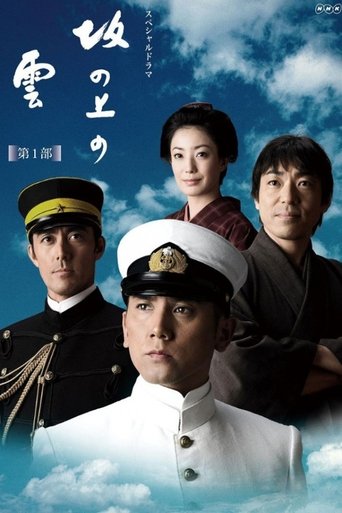
Clouds Over the Hill (2009)
ซีรี่ย์ญี่ปุ่นซีรี่ย์ 2009สงครามการเมืองดราม่า
- ชื่อภาษาอังกฤษ
- Clouds Over the Hill
- ประเทศ
- ญี่ปุ่น
- ออกอากาศครั้งแรก
- 29 พฤศจิกายน 2552
- จำนวนตอน
- 13 ตอน (3 ซีซัน)
- สถานะ
- จบแล้ว
- ตอนล่าสุด
- EP13/4 (25 ธันวาคม 2554)
- ช่อง/แพลตฟอร์มต้นทาง
- NHK BS1
- ผู้สร้าง
- 野沢尚, 司馬遼太郎
- คะแนน TMDB
- 7.7/10 (14 โหวต)
เรื่องย่อ Clouds Over the Hill
Clouds Over the Hill เป็นซีรี่ย์ญี่ปุ่น ปี 2009 มีทั้งหมด 13 ตอน สถานะจบแล้ว
ยังไม่มีเรื่องย่อภาษาไทย แสดงเรื่องย่อต้นฉบับภาษาอังกฤษ
Saka no Ue no Kumo is an NHK 21st Century special drama which was aired over three years starting from November 29, 2009. The series runs 13 episodes at 90 minutes each. The first series, with 5 episodes, was broadcast in 2009, while series two and three, each with 4 episodes, were broadcast in late 2010 and 2011. While most episodes were shot in Japan, one of the episodes in series two was shot in Latvia. The TV series is based on the novel Saka no ue no kumo by Ryōtarō Shiba and adopted by Hisashi Nozawa.
The theme song of the drama series is titled "Stand Alone". It was composed by Joe Hisaishi, written by Kundo Koyama and performed by British soprano singer Sarah Brightman.
Clouds Over the Hill ดูได้ที่ไหน (ถูกลิขสิทธิ์)
ยังไม่พบข้อมูลผู้ให้บริการที่มีลิขสิทธิ์เรื่องนี้ในประเทศไทย ต้นทางออกอากาศทาง NHK BS1 เราจะอัปเดตทันทีเมื่อมีแพลตฟอร์มนำเข้ามาฉาย
นักแสดง Clouds Over the Hill
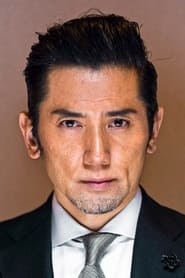 本木雅弘รับบท 秋山真之
 อาเบะ ฮิโรชิรับบท 秋山好古
 菅野美穂รับบท 正岡律
 松たか子รับบท 秋山多美
 Марина Александроваรับบท アリアズナ
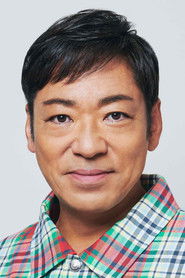 香川照之รับบท 正岡子規
 原田美枝子รับบท 正岡八重
 藤本隆宏รับบท 広瀬武夫
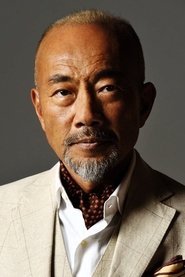 竹中直人รับบท 小村寿太郎
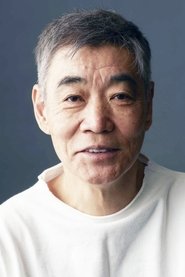 柄本明รับบท 乃木知幸介
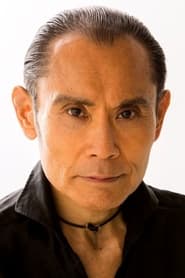 片岡鶴太郎รับบท 八代六郎
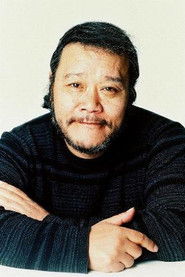 โทชิยูกิ นิชิดะรับบท 高橋是清
ซีซันและรายชื่อตอน
- Clouds Over the Hill Season 15 ตอน · 29 พฤศจิกายน 2552
- Clouds Over the Hill Season 24 ตอน · 5 ธันวาคม 2553
- Clouds Over the Hill Season 34 ตอน · 4 ธันวาคม 2554
รีวิว Clouds Over the Hill จากทีมงาน
เจาะลึก Clouds Over the Hill: เนื้อเรื่อง การสร้าง และเสียงวิจารณ์
Saka no Ue no Kumo (坂の上の雲; lit. 'Clouds Over the Hills') is a Japanese war drama television series which was aired on NHK over three years, from November 29, 2009, to December 2011, as a special taiga drama. The series runs 13 episodes at 90 minutes each. The first season, with 5 episodes, was broadcast in 2009, while seasons two and three, each with 4 episodes, were broadcast in late 2010 and 2011. While most episodes were shot in Japan, one of the episodes in season two was shot in Latvia. The TV series is based on the 1968 novel of the same name by Ryōtarō Shiba and adapted by Hisashi Nozawa.
Executive producer Yoshiko Nishimura acquired the rights to the novel from Shiba's widow Midori Fukuda in 2001, after decades of the author refusing to let anyone adapt his controversial work for the screen. The NHK officially announced their intention to adapt the novel in 2003, though shooting would only begin in 2008. The series is the first taiga drama to be mainly set during the Meiji era, thus its production encountered more difficulties than usual in achieving an accurate depiction of its setting. It is now the most expensive taiga drama ever produced.
The theme song of the drama series is titled "Stand Alone". It was composed by Joe Hisaishi, written by Kundō Koyama, and performed by British soprano singer Sarah Brightman.
Production
Production credits
Based on the novel by – Ryōtarō Shiba
Script – Hisashi Nozawa
Music – Joe Hisaishi
Titling – Ryōtarō Shiba
Historical research – Yasushi Toriumi
Narrator – Ken Watanabe
Production coordinator – Yasuhiro Kan
Casting – Mineyo Satō
Development
During the 1970s, executive producer Yoshiko Nishimura read the 1968 novel Saka no Ue no Kumo by Ryōtarō Shiba when he was a student at the University of Tokyo. Though he dreamt of what the novel would look like on screen, his seniors at the NHK drama department thought that adapting the work was inconceivable; Shiba continuously refused throughout his life to let anyone adapt his controversial work for the screen.
By the 1990s, Nishimura would travel to Hollywood to study filmmaking, gaining inspiration to mount an epic narrative on television that would elevate the status of the medium in Japan, which was considered by people to be inferior to cinema. In 2000, Nishimura visited Shiba's widow Midori Fukuda to give his condolences, and presented to her his argument for a television adaptation of Shiba's novel: that it would encourage young people to read the novel after seeing the story onscreen. After a year of deliberation, Fukuda relented and provided Nishimura with the novel's adaptation rights. The NHK would officially announce their intention to adapt the novel as a taiga drama by 2003.
Writing and filming
Preparations for Saka no Ue no Kumo took three times as long as a regular NHK taiga drama. The series was originally scheduled to begin its broadcast by 2006, but the suicide of writer Hisashi Nozawa in 2004 lead to the postponement of production. The usual taiga drama production would first have one-third of the total number of scripts finished before shooting, with audience reception taken into account as the rest of the series is written; Saka no Ue no Kumo only began shooting in 2008 once all 13 ninety-minute scripts were finished.
The Meiji era had never been depicted as the main setting of a taiga drama before, thus the television crew encountered more difficulties than usual in creating the visuals for the era due to a lack of familiar images. Research into the military background of the time especially highlighted the differences between the Meiji military and the Shōwa military; according to Nishimura, no visual image of the Meiji era's military has ever been made that has actually stuck in the Japanese' imaginations, while the Shōwa era has been the default image in their minds.
In adapting the novel for television, the crew addressed the lack of female characters in the original work by including scenes which depicted what the women were doing and thinking about in Japan during both the First Sino-Japanese War and the Russo-Japanese War. For Nishimura, "those scenes are one of the things worth noticing in a special drama like this one."
The series has since become the most expensive taiga drama ever produced by NHK.
Akiyama family
Masahiro Motoki as Akiyama Saneyuki
Ren Kobayashi as young Saneyuki
Hiroshi Abe as Akiyama Yoshifuru
Shōta Sometani as young Yoshifuru
Shirō Itō as Akiyama Hisataka
Keiko Takeshita as Akiyama Sada
Takako Matsu as Akiyama Tami
Masaoka family
Teruyuki Kagawa as Masaoka Shiki
Takato Sasano as young Shiki
Miho Kanno as Masaoka Ritsu
Riko Yoshida as young Ritsu
Mieko Harada as Masaoka Yae
Ichiro Shinjitsu as Ōhara Kanzan
Yūto Uemura as Katō Tsunetada
Yu Tokui as a police officer Sonoda
Navy officials and their family
Takahiro Fujimoto as Takeo Hirose
Tsurutarō Kataoka as Yashiro Rokurō
Tetsuya Watari as Tōgō Heihachirō
Kōji Ishizaka as Yamamoto Gonbei
Masao Kusakari as Katō Tomosaburō
Hiroshi Tachi as Shimamura Hayao
Masaya Kato as Arima Ryokitsu
Akira Nakao as Hidaka Sōnojō
Kisuke Iida as Takarabe Takeshi
Hidekazu Akai as Kantarō Suzuki
Fubito Yamano as Itō Sukeyuki
Army officials and their family
Koji Matoba as Gaishi Nagaoka
Hideki Takahashi as Kodama Gentarō
Tōru Emori as Yamagata Aritomo
Masakane Yonekura as Ōyama Iwao
Akira Emoto as Nogi Maresuke
Kyōko Maya as Nogi Shizuko
Shinya Tsukamoto as Akashi Motojiro
Jun Kunimura as Kawakami Soroku
Takehiro Murata as Ijichi Kōsuke
Takaaki Enoki as Mori Rintarō
Daijirō Tsutsumi as Iguchi Shōgo
Atsushi Miyauchi as Fujii Shigeta
Kōji Shimizu as Kuroki Tamemoto
Politicians and their family
Go Kato as Itō Hirobumi
Toshiyuki Nishida as Takahashi Korekiyo
Naoto Takenaka as Komura Jutarō
Ren Ōsugi as Mutsu Munemitsu
Shinya Owada as Inoue Kaoru
Takeshi Ōbayashi as Matsukata Masayoshi
Toshiki Ayata as Katsura Tarō
Kanta Ogata as Kaneko Kentarō
Ordinary people
Shirō Sano as Kuga Katsunan
Kenzō as Kojima Ichinen
Yukiyoshi Ozawa as Natsume Sōseki
Kenji Oka as Tsuda Sanzō
Russian Empire
Timofei Fyodorov as Nicholas II
Valery Barinov as Sergei Witte
Artem Grigoriev as Boris Vilkitsky
Marina Aleksandrova as Ariadna Kovalskaya
Gennadi Vengerov as Yevgeni Ivanovich Alekseyev
Sergei Parshin as Aleksey Kuropatkin
Aleksandr Tyutin as Zinovy Rozhestvensky
Other countries
Julian Glover as Alfred Thayer Mahan
Norbert Gort as Jakob Meckel
Tim Wellard as Prince George of Greece and Denmark
Leon Lissek as Jacob Schiff
Ren Dahui as Li Hongzhang
Xue Yong as Yuan Shikai
Hsu Wen-Pin as Ding Ruchang
Blake Crawford as Jones
Others
Onoe Kikunosuke V as Emperor Meiji
Season 3 : Russo-Japanese War
Rating is based on Japanese video research(Kantō region).
Soundtrack
"Saka no Ue no Kumo" Original Soundtrack (December 18, 2009) EMI Music Japan
Books
NHK Special Drama, Historical Handbook, Saka no Ue no Kumo (October 30, 2009) ISBN 978-4-14-910729-5
NHK Special Drama Guide, Saka no Ue no Kumo Part 1 (October 30, 2009) ISBN 978-4-14-407160-7
NHK Special Drama Guide, Saka no Ue no Kumo Part 2 (October 25, 2010) ISBN 978-4-14-407173-7
เนื้อหาส่วนนี้มาจากบทความ "Saka no Ue no Kumo (TV series)" ในวิกิพีเดีย (en.wikipedia.org) เผยแพร่ภายใต้สัญญาอนุญาตครีเอทีฟคอมมอนส์ แสดงที่มา-อนุญาตแบบเดียวกัน 4.0 (creativecommons.org/licenses/by-sa/4.0) มีการตัดส่วนอ้างอิงและจัดรูปแบบใหม่
คำถามที่พบบ่อยเกี่ยวกับ Clouds Over the Hill
Clouds Over the Hill มีกี่ตอน?
Clouds Over the Hill มีทั้งหมด 13 ตอน รวม 3 ซีซัน สถานะปัจจุบัน: จบแล้ว
Clouds Over the Hill ฉายวันไหน?
Clouds Over the Hill เริ่มออกอากาศครั้งแรกวันที่ 29 พฤศจิกายน 2552
Clouds Over the Hill ดูได้ที่ไหน?
ขณะนี้ยังไม่พบแพลตฟอร์มที่มีลิขสิทธิ์ Clouds Over the Hill ในประเทศไทย
หมวดแนะนำ: ซีรี่ย์ไทย · เรื่องถัดไป: Papa ga Mo Ichido Koi wo Shita
ซีรี่ย์ที่คล้ายกับ Clouds Over the Hill
 EP10/10★ 8.4
Shōgun โชกุน (2024)
 จบแล้ว 40 ตอน★ 8.3
The Rose of Versailles กุหลาบแวร์ซายส์ (1979)
 จบแล้ว 5 ตอน★ 7.6
Shōgun (1980)
 EP12/12★ 8.3
Saga of Tanya the Evil บันทึกสงครามของยัยเผด็จการ (2017)
 จบแล้ว 110 ตอน★ 8.6
Legend of the Galactic Heroes (1988)
 จบแล้ว 40 ตอน★ 7.1
TURN: Washington's Spies (2014)
 จบแล้ว 11 ตอน★ 7.3
The Heike Story ตำนานเฮเกะ (2022)
 ★ 7.3
★ 7.3Pearson (2019)
 EP12/12★ 7.7
The Legend of the Galactic Heroes: Die Neue These ตำนานวีรบุรุษกาแล็กซี (2018)
 ★ 7.0
★ 7.0Bibliophile Princess บันทึกรักเจ้าหญิงหนอนหนังสือ (2022)
 EP8/8★ 8.0
The Terminal List เดอะ เทอร์มินอล ลิสต์ - ดับมือสังหาร (2022)
 จบแล้ว 6 ตอน★ 7.5