
Desperate Romantics (2009)
ซีรี่ย์อังกฤษซีรี่ย์ 2009ดราม่า
- ชื่อภาษาอังกฤษ
- Desperate Romantics
- ประเทศ
- สหราชอาณาจักร
- ออกอากาศครั้งแรก
- 21 กรกฎาคม 2552
- จำนวนตอน
- 6 ตอน
- ความยาวต่อตอน
- ประมาณ 60 นาที
- สถานะ
- จบแล้ว
- ตอนล่าสุด
- EP6/6 (25 สิงหาคม 2552)
- ช่อง/แพลตฟอร์มต้นทาง
- BBC Two
- คะแนน TMDB
- 7.4/10 (23 โหวต)
เรื่องย่อ Desperate Romantics
Desperate Romantics เป็นซีรี่ย์อังกฤษ ปี 2009 มีทั้งหมด 6 ตอน สถานะจบแล้ว
ยังไม่มีเรื่องย่อภาษาไทย แสดงเรื่องย่อต้นฉบับภาษาอังกฤษ
Six-part drama series set in and among the alleys, galleries and flesh-houses of 19th-century industrial London, following the Pre-Raphaelite Brotherhood, a vagabond group of English painters, poets and critics.
Desperate Romantics ดูได้ที่ไหน (ถูกลิขสิทธิ์)
ยังไม่พบข้อมูลผู้ให้บริการที่มีลิขสิทธิ์เรื่องนี้ในประเทศไทย ต้นทางออกอากาศทาง BBC Two เราจะอัปเดตทันทีเมื่อมีแพลตฟอร์มนำเข้ามาฉาย
นักแสดง Desperate Romantics
 Aidan Turnerรับบท Dante Gabriel Rossetti
 เรฟ สปอลล์รับบท William Holman Hunt
 ทอม ฮอลแลนเดอร์รับบท John Ruskin
 Samuel Barnettรับบท John Millais
 Sam Craneรับบท Fred Walters
 Zoë Tapperรับบท Effie Ruskin/ Effie Millais
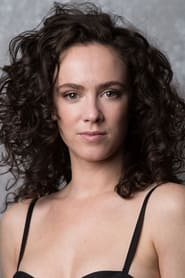 Amy Mansonรับบท Lizzie Siddal
 Jennie Jacquesรับบท Annie Miller
- Josie Farmiloeรับบท Charlotte Siddal
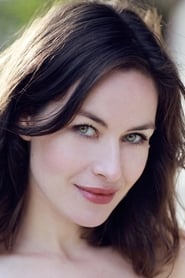 Maimie McCoyรับบท Margaret
 Phil Davisรับบท Mr. Stone
 Mark Heapรับบท Charles Dickens
ซีซันและรายชื่อตอน
- Desperate Romantics Season 16 ตอน · 21 กรกฎาคม 2552
รีวิว Desperate Romantics จากทีมงาน
เจาะลึก Desperate Romantics: เนื้อเรื่อง การสร้าง และเสียงวิจารณ์
Desperate Romantics is a six-part television drama serial about the Pre-Raphaelite Brotherhood, first broadcast on BBC Two between 21 July and 25 August 2009.
The series somewhat fictionalised the lives and events depicted. Though heavily trailed, the series received mixed reviews and dwindling audiences.
Overview
The series was inspired by and takes its title from Franny Moyle's factual book about the Pre-Raphaelite Brotherhood, Desperate Romantics: The Private Lives of the Pre-Raphaelites.
Moyle, a former commissioning editor for the arts at the BBC, approached writer Peter Bowker with the book, believing it could form the basis of an interesting television drama. Although Bowker had a self-confessed "horror of dramatised art biography", he felt that Moyle's book offered something different, viewing the Brotherhood's art largely through the filter of their tangled love lives.
Discussing the series' billing as "Entourage with easels", Moyle said: "I didn't pitch it as 'Entourage with easels' ... I pitched it as a big emotional saga, a bit like The Forsyte Saga. Having said that, I think it was a useful snapshot – a way of getting a handle on the drama." The series had also been billed by the BBC as "marrying the Pre-Raphaelite Brotherhood to the values of Desperate Housewives."
Desperate Romantics was not the first time the lives of the Pre-Raphaelite Brotherhood had been dramatised for television. In 1967 Ken Russell had directed Dante's Inferno, and in 1975 there was The Love School – a six-part serial first broadcast in 1975. Whereas Bowker's drama about the PRB was an adaptation of Franny Moyles' book, The Love School (scripted by John Hale, Ray Lawler, Robin Chapman and John Prebble) was adapted into a novel published by Macmillan in 1975. The new dramatisation was greatly influenced by the earlier series.
Cast
Aidan Turner as Dante Gabriel Rossetti
Rafe Spall as William Holman Hunt
Samuel Barnett as John Everett Millais
Sam Crane as Fred Walters
Zoë Tapper as Effie Gray
Amy Manson as Lizzie Siddal
Jennie Jacques as Annie Miller
Tom Hollander as John Ruskin
Phil Davis as Frank Stone
Mark Heap as Charles Dickens
Rebecca Davies as Fanny Cornforth
Dyfrig Morris as William Morris
Peter Sandys-Clarke as Edward Burne-Jones
Natalie Thomas as Jane Burden
Poppy Lee Friar as Rose La Touche
Samuel West as Lord Rosterley
Works featured
Episode 1:
Christ in the House of His Parents (1849–1850) by John Everett Millais
Ecce Ancilla Domini! (1850) by Dante Gabriel Rossetti
Valentine Rescuing Sylvia from Proteus (1851) by William Holman Hunt
The Hireling Shepherd (1851) by William Holman Hunt
Episode 2:
Ophelia (1851–1852) by John Everett Millais
The Awakening Conscience (1853) by William Holman Hunt
Found (1854–1881) by Dante Gabriel Rossetti
Episode 3:
The Order of Release, 1746 (1854) by John Everett Millais
The Light of the World (1853–1854) by William Holman Hunt
Episode 4:
The Scapegoat (1856) by William Holman Hunt
Dante's Dream at the Time of the Death of Beatrice (1871) by Dante Gabriel Rossetti
Study of a Female Nude (1878?) by Dante Gabriel Rossetti
The Lady of Shalott (1853) by Elizabeth Siddal
Lovers Listening to Music (1854) by Elizabeth Siddal
Autumn Leaves (1856) by John Everett Millais
The Blind Girl (1856) by John Everett Millais
The Ladies' Lament (1856) by Elizabeth Siddal
The Rowing Boat (undated, c. 1850–1860) by Elizabeth Siddal
Bubbles (1886) by John Everett Millais
Episode 5:
Bocca Baciata (1859) by Dante Gabriel Rossetti
The Shadow of Death (1872) by William Holman Hunt
Oxford Union murals (1857–1859) by Dante Gabriel Rossetti, William Morris, Edward Burne-Jones et al.
Episode 6:
Beata Beatrix (1872) by Dante Gabriel Rossetti
Study of Guinevere for Sir Launcelot in the Queen's Chamber (1857) by Dante Gabriel Rossetti
Other notable images include:
Ecce Ancilla Domini (1849–1850) by Dante Gabriel Rossetti
Dante's Vision of Rachel and Leah (1855) by Dante Gabriel Rossetti
The Holy Family (undated) by Elizabeth Siddal
The poem Rossetti writes for Lizzie as she recuperates from her ordeal in Millais' bath tub is "Sudden Light" (c. 1853–1854, published 1863). The final stanza, which Rossetti reads aloud to Lizzie before they first have sex, appears in the 1870 edition of Rossetti's Collected Poems. Also featured are "Newborn Death" and "The Kiss". The verses read at Lizzie's funeral by her sister are from Lizzie's own poem "Dead Love" (c. 1859).
Historical accuracy
Each episode begins with the disclaimer: "In the mid-19th century, a group of young men challenged the art establishment of the day. The Pre-Raphaelite Brotherhood were inspired by the real world about them, yet took imaginative licence in their art. This story, based on their lives and loves, follows in that inventive spirit." In an interview for The Independent, Moyle noted that Bowker's adaptation of her source material required a "chronological sleight of hand" turning "the story that plays out in the book over 12 years into something that feels as if it's taking place over a couple of years – to keep up the pace, to make it feel modern."
Fred Walters is a composite character based on Frederic George Stephens, William Michael Rossetti and Walter Deverell, and functions as both narrator and audience surrogate. It was Deverell who discovered Lizzie, and Stephens, in his capacity as an art critic, who acted as the Brotherhood's publicist.
Dickens' criticism of Christ in the House of His Parents is an extract from his original review, titled "Old Lamps for New Ones", that featured in the 15 June 1850 edition of Household Words.
Lizzie Siddal's father did indeed claim to be descended from aristocracy, but the family was larger than depicted in the series. She had three sisters and a younger brother. Her father in fact died in 1859, before her marriage to Rossetti.
Annie Miller was not working as a prostitute when Hunt first asked her to pose for him, but as a barmaid in Charing Cross Road at the public house frequented by the Brotherhood (though the series is somewhat vague at her introduction as to whether she is a barmaid with other interests, or a prostitute who happens to tend bar). Annie was not the model for The Hireling Shepherd: a farm worker, Emma Watkins, was.
When Effie discovers a collection of erotic drawings by J. M. W. Turner amongst Ruskin's papers he claims that he is "compelled to destroy them" to protect Turner's posthumous reputation. Biographies of both Turner and Ruskin claimed that Ruskin had burned them in 1858, but this was disproved in 2005 when the sketches were discovered in a neglected archive.
Although Lizzie Siddal did catch pneumonia during the painting of Millais' Ophelia, the Brotherhood were not forced to bribe her father to allow her to continue modelling; instead, Siddal's father wrote to Millais asking him to pay a doctor's bill to the sum of £50. According to his son, Millais settled for a lower sum.
Millais painted The Order of Release at the Ruskins' country home in Scotland and not at their townhouse in London.
The reason behind Ruskin's inability – or unwillingness – to consummate his marriage to Effie remains the subject of debate amongst his biographers. In 1854, Effie wrote to her father: "He alleged various reasons, hatred to children, religious motives, a desire to preserve my beauty, and, finally this last year he told me his true reason [...] that he had imagined women were quite different to what he saw I was, and that the reason he did not make me his Wife [sic] was because he was disgusted with my person the first evening." Ruskin's only word on the matter was in a statement to his lawyer during annulment proceedings: "It may be thought strange that I could abstain from a woman who to most people was so attractive. But though her face was beautiful, her person was not formed to excite passion. On the contrary, there were certain circumstances in her person that completely checked it." It has been speculated that Ruskin's unfamiliarity with the realities of the female body was the reason he felt unable to have sex with her, and that it was either the sight of Effie's pubic hair or menstrual blood that informed his disgust. His relationship with Rose la Touche has also led to claims that he was a paedophile, having met her at the age of 10 and stating that he had loved her since their first meeting. This claim is often backed up by letters he sent to illustrator Kate Greenaway – asking her to draw children naked. However, he did not approach Rose as a potential suitor until she was 17.
Key members and associates of the Brotherhood, such as Ford Madox Brown, and Rossetti's brother William and sister Christina, are conspicuous by their absence.
The character of "Lord Rosterley" to whom Annie becomes engaged is based on Thomas Heron Jones, 7th Viscount Ranelagh, with whom she was involved.
Contrary to the series' depiction, Rossetti had already met Burne-Jones and Morris before they became his students. While they were students at the University of Oxford, they recruited Rossetti to contribute to their Oxford and Cambridge Magazine which Morris founded in 1856 to promote their ideas.
Rossetti's church mural is in fact his composition Sir Lancelot's Vision of the Grail for the Oxford Union building, which he worked on in collaboration with Morris and Burne-Jones. Rossetti did paint an altarpiece for Llandaff Cathedral, The Seed of David (1858–1859).
The series portrays Jane Burden as a woman with an Oxfordshire accent working as a waitress in London, meeting Rossetti by chance after having already become Morris' "sweetheart". In fact Jane Burden was first noticed in her home town by Rossetti and Burne-Jones when they were working on the Oxford murals. She was visiting an Oxford theatre with her sister. They asked her to model for them, and she met Morris as a result. Morris and Jane were married in 1859, three years before Lizzie's death.
Lizzie died from a laudanum overdose in 1862, having grown severely depressed after giving birth to a stillborn daughter. Her death was ruled accidental by the coroner, although it has been claimed she did leave a suicide note that Ford Madox Brown suggested Rossetti burn to avoid any scandal. Rossetti did not have the poems he had buried with Lizzie exhumed until 1869, when he and his agent, Charles Augustus Howell, applied to the then Home Secretary for permission. As depicted in the serial, the manuscript was retrieved in the dead of night to avoid a scandal; Rossetti, however, was not present.
Millais shows Rossetti a sketch for Bubbles as a forthcoming work. The painting was based on Millais' grandson William Milbourne James, who was not born until 1881, and was exhibited in 1886 when the grandson was five years old.
Reception
When Desperate Romantics was first shown on BBC Two it attracted 2.61 million viewers. The first episode received mixed reviews; Tom Sutcliffe in The Independent described the series as "an off-day" for writer Peter Bowker, adding: "It was never quite recklessly anachronistic enough to suggest a defence of pre-determination for those moments in the script that seemed more like a spoof of an artistic biopic than a genuine attempt to rise above its limitations." Serena Davies wrote in The Daily Telegraph that the episode: "sadly didn't go far enough in conveying to the viewers how much the Pre-Raphaelites' art contrasted with what had gone before it." Caitlin Moran, reviewing the episode for The Times, described it as "so bone-deep cheesy that it appears to have been written with Primula, on Kraft Cheese Slices, and shot on location in Cheddar."
The Guardian review described the first episode as: "a rollicking gambol through a fictionalised Victorian London with a narrative as contemptuous of historical reverence as its rambunctious subjects were." Andrea Mullaney, writing for The Scotsman, also considered it: "a rollicking romp ... it's rather good fun", but cautioned: "historical purists will have to clench their thighs as it plays fast and loose with accuracy – much like the Pre-Raphaelite Brotherhood themselves, for all their vaunted insistence on painting the truth of nature."
The series has been rebroadcast for instance on BBC4 commencing 14 February 2022
เนื้อหาส่วนนี้มาจากบทความ "Desperate Romantics" ในวิกิพีเดีย (en.wikipedia.org) เผยแพร่ภายใต้สัญญาอนุญาตครีเอทีฟคอมมอนส์ แสดงที่มา-อนุญาตแบบเดียวกัน 4.0 (creativecommons.org/licenses/by-sa/4.0) มีการตัดส่วนอ้างอิงและจัดรูปแบบใหม่
คำถามที่พบบ่อยเกี่ยวกับ Desperate Romantics
Desperate Romantics มีกี่ตอน?
Desperate Romantics มีทั้งหมด 6 ตอน สถานะปัจจุบัน: จบแล้ว
Desperate Romantics ฉายวันไหน?
Desperate Romantics เริ่มออกอากาศครั้งแรกวันที่ 21 กรกฎาคม 2552
Desperate Romantics ดูได้ที่ไหน?
ขณะนี้ยังไม่พบแพลตฟอร์มที่มีลิขสิทธิ์ Desperate Romantics ในประเทศไทย
หมวดแนะนำ: ซีรี่ย์ไทยใหม่ · เรื่องถัดไป: Residue
ซีรี่ย์ที่คล้ายกับ Desperate Romantics
 จบแล้ว 6 ตอน★ 6.5
The Essex Serpent (2022)
 ★ 6.9
★ 6.9Howards End (2017)
 ★ 7.0
★ 7.0The Buccaneers (2023)
 จบแล้ว 24 ตอน★ 7.3
Harlots (2017)
 จบแล้ว 8 ตอน★ 7.7
The White Princess (2017)
 ★ 7.0
★ 7.0The Frankenstein Chronicles ตำนานแฟรงเกนสไตน์ (2015)
 EP6/6★ 7.4
Miss Scarlet (2020)
 EP8/8★ 7.6
House of Guinness เฮาส์ ออฟ กินเนสส์ (2025)
 จบแล้ว 7 ตอน★ 7.4
The Hollow Crown (2012)
 จบแล้ว 5 ตอน★ 6.7
Dancing on the Edge (2013)
 ★ 7.0
★ 7.0The Crimson Petal and the White (2011)
 จบแล้ว 8 ตอน★ 7.5