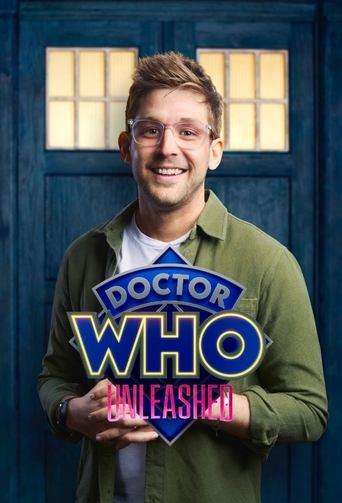
Doctor Who: Unleashed ด็อกเตอร์ฮู: ปล่อย (2024)
- ชื่อไทย
- ด็อกเตอร์ฮู: ปล่อย
- ชื่อภาษาอังกฤษ
- Doctor Who: Unleashed
- ประเทศ
- สหราชอาณาจักร
- ออกอากาศครั้งแรก
- 11 พฤษภาคม 2567
- จำนวนตอน
- 17 ตอน (2 ซีซัน)
- ความยาวต่อตอน
- ประมาณ 30 นาที
- สถานะ
- ยังฉายอยู่
- ตอนล่าสุด
- EP8/8 (31 พฤษภาคม 2568)
- ช่อง/แพลตฟอร์มต้นทาง
- BBC Three
- ผู้สร้าง
- Russell T Davies
- เรตผู้ชม
- TV-PG
เรื่องย่อ Doctor Who: Unleashed ด็อกเตอร์ฮู: ปล่อย
Doctor Who: Unleashed ด็อกเตอร์ฮู: ปล่อย เป็นสารคดี ปี 2024 มีทั้งหมด 17 ตอน สถานะยังฉายอยู่
ตามรูปแบบเดียวกับ ด็อกเตอร์ฮู: ความลับของสเตฟฟาน พาวเวลล์ พาผู้ชมไปชมเบื้องหลังของ ด็อกเตอร์ฮู ทางช่อง บีบีซี แต่ละตอน
Doctor Who: Unleashed ด็อกเตอร์ฮู: ปล่อย ดูได้ที่ไหน (ถูกลิขสิทธิ์)
ยังไม่พบข้อมูลผู้ให้บริการที่มีลิขสิทธิ์เรื่องนี้ในประเทศไทย ต้นทางออกอากาศทาง BBC Three เราจะอัปเดตทันทีเมื่อมีแพลตฟอร์มนำเข้ามาฉาย
นักแสดง Doctor Who: Unleashed ด็อกเตอร์ฮู: ปล่อย
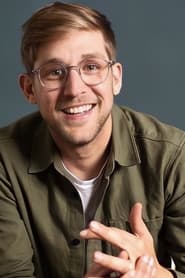 Steffan Powellรับบท Self - Host
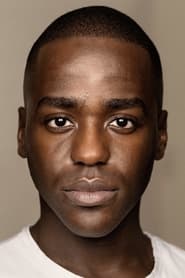 ชูตี กัตวารับบท Self - The Doctor
 Varada Sethuรับบท Self - Belinda Chandra
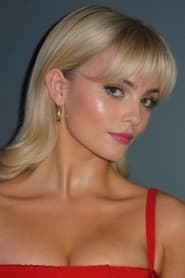 Millie Gibsonรับบท Self - Ruby Sunday
 Anita Dobsonรับบท Self
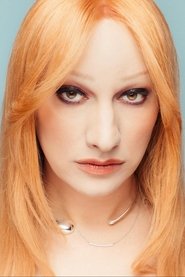 Jinkx Monsoonรับบท Self
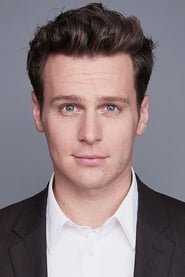 โจนาธาน กรอฟฟ์รับบท Self
 Alan Cummingรับบท Self
 Rose Ayling-Ellisรับบท Self
 โจนาห์ ฮาวเออร์-คิงรับบท Self
 Rylan Clarkรับบท Self
ซีซันและรายชื่อตอน
- Doctor Who: Unleashed ด็อกเตอร์ฮู: ปล่อย Season 19 ตอน · 11 พฤษภาคม 2567
- Doctor Who: Unleashed ด็อกเตอร์ฮู: ปล่อย Season 28 ตอน · 12 เมษายน 2568
รีวิว Doctor Who: Unleashed ด็อกเตอร์ฮู: ปล่อย จากทีมงาน
เจาะลึก Doctor Who: Unleashed ด็อกเตอร์ฮู: ปล่อย: เนื้อเรื่อง การสร้าง และเสียงวิจารณ์
Doctor Who is a British science fiction television series first broadcast by the BBC in 1963. The series, created by Sydney Newman, C. E. Webber and Donald Wilson, follows the adventures of the Doctor, an extraterrestrial being from a humanoid species known as Time Lords. The Doctor travels through space and time using a time travelling spaceship called the TARDIS, which has an exterior that resembles a British police box. The Doctor encounters various civilisations, which they seek to protect by outwitting foes and solving crises. The Doctor usually travels with a companion.
Beginning with William Hartnell, fourteen actors have headlined the series as the Doctor; the most recent being Ncuti Gatwa, who portrayed the Fifteenth Doctor from 2023 to 2025. The transition between actors is woven into the story via the plot device of regeneration. When a Time Lord is fatally injured or weakened by old age, their cells regenerate into a new body; while they retain their memories, their personality changes. The different portrayals function as distinct stages within a single, continuous narrative. Due to time travel, these different incarnations occasionally cross paths.
A British popular culture staple with a global cult following, the show has shaped generations of British television professionals. Fans of the series are sometimes referred to as Whovians. The series has been listed in Guinness World Records as the longest-running science-fiction television series in the world, as well as the "most successful" science-fiction series of all time, based on its overall broadcast ratings, DVD and book sales.
The series originally ran from 1963 to 1989. There was an unsuccessful attempt to revive regular production in 1996 with a backdoor pilot in the form of a television film titled Doctor Who. The series was relaunched in 2005, with production moving to BBC Wales in Cardiff. Since 2016, the show has been produced or co-produced by BBC Studios Productions in Cardiff. Since 2026, the series has been pending an invitation to tender for future episodes. The Doctor Who franchise, or Whoniverse, spans a wide range of media, including television spin-offs, literature, audio dramas, and films. As a global cultural phenomenon, it has become one of the most frequently referenced and parodied series in television history.
Premise
Doctor Who follows the adventures of the title character, a rogue Time Lord who goes by the name "the Doctor". The Doctor fled Gallifrey, the planet of the Time Lords, in a stolen TARDIS ("Time and Relative Dimension(s) in Space"), a time machine that travels by materialising into, and dematerialising out of, the time vortex. The TARDIS has a vast interior but appears smaller on the outside, and is equipped with a "chameleon circuit" intended to make the machine take on the appearance of local objects as a disguise. Because of a malfunction, the Doctor's TARDIS remains fixed as a blue British police box.
Across time and space, the Doctor, using only ingenuity and minimal resources, such as the versatile sonic screwdriver, is drawn into crises in which they oppose dangerous adversaries, seeking to protect civilisations, while also navigating situations that present complex moral decisions. The Doctor rarely travels alone and is often joined by one or more companions on these adventures; these companions are usually humans, owing to the Doctor's fascination with planet Earth, which also leads to frequent collaborations with the international military task force UNIT when Earth is threatened. The Doctor is centuries old and, as a Time Lord, can regenerate when there is mortal damage to their body or when their body is weakened from old age. The Doctor's various incarnations have gained numerous recurring enemies during their travels, including the Daleks, their creator Davros, the Cybermen, and the renegade Time Lord the Master.
History
Doctor Who was originally intended to appeal to a family audience as an educational programme using time travel as a means to explore scientific ideas and famous moments in history. The programme first appeared on the BBC Television Service at 17:16:20 GMT on 23 November 1963; this was eighty seconds later than the scheduled programme time, because of announcements concerning the previous day's assassination of John F. Kennedy. It was to be a regular weekly programme, each episode 25 minutes of transmission length. Discussions and plans for the programme had been in progress for a year. Sydney Newman, the head of drama, was mainly responsible for developing the programme, with the first format document for the series being written by Newman along with the head of the script department (later head of serials) Donald Wilson and staff writer C. E. Webber; in a 1971 interview, Wilson claimed to have named the series, and when this claim was put to Newman, he did not dispute it. Writer Anthony Coburn, story editor David Whitaker and initial producer Verity Lambert also heavily contributed to the development of the series.
On 31 July 1963, Whitaker commissioned Terry Nation to write a story under the title The Mutants. As originally written, the Daleks and Thals were the victims of an alien neutron bomb attack, but Nation later dropped the aliens and made the Daleks the aggressors. When the script was presented to Wilson, it was immediately rejected as the programme was not permitted to contain any "bug-eyed monsters". According to Lambert, "We didn't have a lot of choice—we only had the Dalek serial to go ... We had a bit of a crisis of confidence because Donald [Wilson] was so adamant that we shouldn't make it. Had we had anything else ready we would have made that." Nation's script became the second Doctor Who serial – The Daleks (also known as The Mutants). The serial introduced the eponymous aliens that would become the series' most popular monsters, dubbed "Dalekmania", and was responsible for the BBC's first merchandising boom.
The BBC drama department produced the programme for 26 seasons, broadcast on BBC One. Due to his increasingly poor health, William Hartnell, the first actor to play the Doctor, was succeeded by Patrick Troughton in 1966. In 1970, Jon Pertwee replaced Troughton and the series began production in colour. In 1974, Tom Baker was cast as the Doctor. His eccentric personality became hugely popular, with viewing figures for the series returning to a level not seen since the height of "Dalekmania" a decade earlier. After seven years in the role, Baker was replaced by Peter Davison in 1981, and Colin Baker replaced Davison in 1984. In 1985, the channel's controller Michael Grade cancelled the upcoming twenty-third season, forcing the series into an eighteen-month hiatus. In 1986, the series was recommissioned on the condition that Baker left the role of the Doctor, which was recast to Sylvester McCoy in 1987. Falling viewing numbers, a decline in the public perception of the series and a less-prominent transmission slot saw production ended in 1989 by Peter Cregeen, the BBC's new head of series. Although it was effectively cancelled, the BBC repeatedly affirmed over several years that the series would return.
While in-house production concluded, the BBC explored an independent production company to relaunch the series. Philip Segal, a British expatriate who worked for Columbia Pictures' television arm in the United States, had approached the BBC as early as July 1989, while the 26th season was still in production. Segal's negotiations eventually led to a Doctor Who television film as a pilot for an American series, broadcast on the Fox Network in 1996, as an international co-production between Fox, Universal Pictures, the BBC and BBC Worldwide. Starring Paul McGann as the Doctor, the film was successful in the UK (with more than 9 million viewers), but was less so in the United States and did not lead to a series.
Licensed media such as novels and audio plays provided new stories, but as a television programme, Doctor Who remained dormant. In September 2003, BBC Television announced the in-house production of a new series, after several years of attempts by BBC Worldwide to find backing for a feature film version. The 2005 revival of Doctor Who is a direct plot continuation of the original 1963–1989 series and the 1996 television film Doctor Who. The executive producers of the new incarnation of the series were Queer as Folk writer Russell T Davies and BBC Cymru Wales head of drama Julie Gardner. From 2005, the series switched from a multi-camera to a single-camera setup.
Starring Christopher Eccleston as the Doctor, Doctor Who returned with the episode "Rose" on BBC One on 26 March 2005, after a 16-year hiatus of in-house production. Eccleston left after one series and was replaced by David Tennant. Davies left the production team in 2009. Steven Moffat, a writer under Davies, was announced as his successor the year before; Matt Smith was announced as the new Doctor in January 2009. Smith decided to leave the role of the Doctor in 2013, the 50th anniversary year. He was replaced by Peter Capaldi.
In January 2016, Moffat announced that he would step down after the 2017 finale, to be replaced by Chris Chibnall in 2018. A 2017 Christmas special with Capaldi's Doctor, "Twice Upon a Time", was made before the handover to Chibnall; it was not a part of Moffat's initial plans in 2016. Jodie Whittaker, the first female Doctor, appeared in three series, the last of which was shortened due to the COVID-19 pandemic.
Both Whittaker and Chibnall announced that they would depart the series after a series of specials in 2022. Davies returned as showrunner from the 60th anniversary specials in 2023. Bad Wolf co-produced the series in partnership with BBC Studios Productions; from 2022 to 2025, Disney supported global distribution of the show as part of a 26-episode agreement that included both Doctor Who and the spin-off miniseries The War Between the Land and the Sea (2025). Bad Wolf's involvement saw Gardner return to the series alongside Davies and Jane Tranter, who recommissioned the series in 2005.
David Tennant returned to the role for the 60th anniversary specials, and Ncuti Gatwa played the Doctor for two series between 2023 and 2025. A Christmas special, to be written by Davies but without Disney's involvement, was announced in 2025, but was cancelled by June 2026 before a script was written, with Davies announcing his departure at the same time. The BBC committed to the future of Doctor Who, announcing plans to put the show out to competitive tender later in 2026. Media commentators anticipated that the programme would return in 2028 at the earliest, due to the timescales associated with the tender process.
Public consciousness
It has been claimed that the transmission of the first episode was delayed by ten minutes due to extended news coverage of the assassination of US President John F. Kennedy the previous day; in fact, it went out after a delay of eighty seconds. The BBC believed that coverage of the assassination, as well as a series of power blackouts across the country, had caused many viewers to miss this introduction to a new series, and it was broadcast again on 30 November 1963, just before episode two.
The programme soon became a national institution in the United Kingdom, with a large following among the general viewing audience. The show received controversy over the suitability of the series for children. Morality campaigner Mary Whitehouse repeatedly complained to the BBC over what she saw as the programme's violent, frightening and gory content. According to Radio Times, the series "never had a more implacable foe than Mary Whitehouse".
A BBC audience research survey conducted in 1972 found that, by their own definition of violence ("any act[s] which may cause physical and/or psychological injury, hurt or death to persons, animals or property, whether intentional or accidental"), Doctor Who was the most violent of the drama programmes the corporation produced at the time. The same report found that 3% of the surveyed audience believed the series was "very unsuitable" for family viewing. Responding to the findings of the survey in The Times newspaper, journalist Philip Howard maintained that, "to compare the violence of Dr Who, sired by a horse-laugh out of a nightmare, with the more realistic violence of other television series, where actors who look like human beings bleed paint that looks like blood, is like comparing Monopoly with the property market in London: both are fantasies, but one is meant to be taken seriously."
During Jon Pertwee's second season as the Doctor, in the serial Terror of the Autons (1971), images of murderous plastic dolls, daffodils killing unsuspecting victims, and blank-featured policemen marked the apex of the series' ability to frighten children. Other notable moments in that decade include a disembodied brain falling to the floor in The Brain of Morbius and the Doctor apparently being drowned by a villain in The Deadly Assassin (both 1976). Mary Whitehouse's complaint about the latter incident prompted a change in BBC policy towards the series, with much tighter controls imposed on the production team, and the series' next producer, Graham Williams, was under a directive to take out "anything graphic in the depiction of violence". John Nathan-Turner produced the series during the 1980s and said in the documentary More Than Thirty Years in the TARDIS that he looked forward to Whitehouse's comments because the ratings of the series would increase soon after she had made them. Nathan-Turner also got into trouble with BBC executives over the violence he allowed to be depicted for season 22 of the series in 1985, which was publicly criticised by controller Michael Grade and given as one of his reasons for suspending the series for 18 months.
The phrase "hiding behind the sofa" (or "watching from behind the sofa") entered British pop culture, signifying the stereotypical behaviour of children who wanted to avoid seeing frightening parts of a television program while remaining in the room to watch the remainder of it. The phrase retains this association with Doctor Who. The Economist presented "hiding behind the sofa whenever the Daleks appear" as a British cultural institution on a par with Bovril and tea-time. Paul Parsons, author of The Science of Doctor Who, explains the appeal of hiding behind the sofa as the activation of the fear response in the amygdala in conjunction with reassurances of safety from the brain's frontal lobe. A 2011 online vote at Digital Spy deemed the series the "scariest TV show of all time". io9 placed this childhood juxtaposition of fear and thrill "at the center of many people's relationship with the series".
The original series has been retrospectively poked fun at by commentators for its low budget and resulting technical limitations, commonly citing "wobbly sets" and "monsters made with bubble wrap". Some, however, have noted that the limited funding was not to the detriment of the show's appeal. io9 wrote children did not see the flaws "of the dodgy monsters, of the silly effects, of the campy perils." The Daily Telegraph commented that "It's a worthwhile reminder that the series never relied on whizz-bang effects. Classic Who was all about great writing, riveting acting [...]". Engadget echoed this by saying these aspects "can make you believe an alien parasite consuming a person inside out is real, and not just green bubble wrap." Director Peter Hoar said of the original series: "I could tell they didn't have money, but I was able to compartmentalise and enjoy the ride knowing that the sets wobbled."
The image of the TARDIS has become firmly linked to the series in the public's consciousness; BBC scriptwriter Anthony Coburn, who lived in the resort of Herne Bay, Kent, was one of the people who conceived the idea of a police box as a time machine. In 1996, the BBC applied for a trademark to use the TARDIS' blue police box design in merchandising associated with Doctor Who. In 1998, the Metropolitan Police Authority filed an objection to the trademark claim; but in 2002, the Patent Office ruled in favour of the BBC.
The 21st-century revival of the programme became the centrepiece of BBC One's Saturday schedule and "defined the channel". Many renowned actors have made guest-starring appearances in various stories including Kylie Minogue, and Sir Ian McKellen. The revival of Doctor Who had consistently received high ratings by 2009, both in number of viewers and as measured by the Appreciation Index. In 2007, Caitlin Moran, television reviewer for The Times, wrote that Doctor Who is "quintessential to being British". According to Steven Moffat, the American film director Steven Spielberg has commented that "the world would be a poorer place without Doctor Who".
On 4 August 2013, a live programme titled Doctor Who Live: The Next Doctor was broadcast on BBC One, during which the actor who was going to play the Twelfth Doctor was revealed. The live show was watched by an average of 6.27 million in the UK, and was also simulcast in the United States, Canada and Australia.
Episodes
Doctor Who originally ran for 26 seasons on BBC One, from 23 November 1963 until 6 December 1989. During the original run, each weekly episode formed part of a story (or "serial"), usually, but not always, of four to seven parts in the 1960s and early 1970s, four to six parts in the mid-to-late 1970s, and two to four parts in the 1980s. Occasionally, serials were loosely connected by a story line, such as season 8 focusing on the Doctor battling a rogue Time Lord called the Master, season 16's quest for the Key to Time, season 18's journey through E-Space and the theme of entropy, and season 20's Black Guardian trilogy.
The programme was intended to be educational and for family viewing on the early Saturday evening schedule. It initially alternated stories set in the past, which taught younger audience members about history, and with those in the future or outer space, focusing on science. This was also reflected in the Doctor's original companions, one of whom was a science teacher and another a history teacher.
However, science fiction stories came to dominate the programme, and the history-oriented episodes, which were not popular with the production team, were dropped after The Highlanders (1967). While the show continued to use historical settings, they were generally used as a backdrop for science fiction tales, with one exception: Black Orchid (1982), set in 1920s England. Beginning with the 2023 Christmas special "The Church on Ruby Road" and the 2024 season, the show started gearing more towards fantasy elements, while still keeping a harder science fiction format in episodes like "Boom".
The early stories were serialised in nature, with the narrative of one story flowing into the next and each episode having its own title, although produced as distinct stories with their own production codes. Following The Gunfighters (1966), however, each serial was given its own title, and the individual parts were assigned episode numbers.
Of the programme's many writers, Robert Holmes was the most prolific, while Douglas Adams became the best known outside Doctor Who itself, due to the popularity of his Hitchhiker's Guide to the Galaxy works.
The serial format changed for the 2005 revival, with what was now called a series usually consisting of 45-minute, self-contained episodes (50–60 minutes during series 11–13) and an extended 60-minute episode broadcast on either Christmas Day or New Year's Day; on a single occasion (during a year with no regular series with weekly episodes), the two-parter "The End of Time" took up the slot of both a Christmas and a 75-minute New Year's Day episode. The episodes in each series are often linked with a loose story arc resolved in the series finale. As of 2025, the only exception to this has been the serialised storyline of series 13, also known as its subtitle Flux. As in the first three years of the "classic" era, each episode (except for "The End of Time" Parts One and Two and "Spyfall" Parts One and Two) has its own title, whether stand-alone or part of a larger story. Occasionally, regular-series episodes will exceed the 45-minute run time; for example, the episodes "Journey's End" (2008) and "The Eleventh Hour" (2010) were longer than an hour.
892 Doctor Who instalments have been televised since 1963, ranging between 25-minute episodes (the most common format for the original series), 45/50-minute episodes (for Resurrection of the Daleks in the 1984 series, a single season in 1985, and the most common format for the revival era since 2005), two feature-length productions (1983's "The Five Doctors" and the 1996 television film), 15 Christmas specials (most of approximately 60 minutes' duration, one of 72 minutes), four New Year's specials ranging from 60 to 75 minutes, and eight additional specials ranging from 48 to 90 minutes in 2009, 2013, 2022, and 2023. Six mini-episodes, running from four to eight minutes each, were also produced for the 1993, 2005, 2007, 2012, and 2023 Children in Need charity appeals, while further mini-episodes were produced in 2008, 2010, 2013, and 2024 for Doctor Who–themed editions of The Proms. The 1993 two-part story, entitled Dimensions in Time, was made in collaboration with the cast of the BBC soap opera EastEnders and was filmed partly on the EastEnders set. A two-part mini-episode was also produced for the 2011 edition of Comic Relief. Starting with the 2009 special "Planet of the Dead", the series was filmed in 1080i for HDTV and broadcast simultaneously on BBC One and BBC HD. The 2021 festive special "Revolution of the Daleks" was available on BBC iPlayer in 4K.
To celebrate the 50th anniversary of the show, a special 3D episode, "The Day of the Doctor", was broadcast in 2013. In March 2013, it was announced that Tennant and Piper would be returning and that the episode would have a limited cinematic release worldwide.
In June 2017, it was announced that due to the terms of a deal between BBC Worldwide and SMG Pictures in China, the company had first right of refusal on the purchase for the Chinese market of future series of the programme until and including Series 15.
เนื้อหาส่วนนี้มาจากบทความ "Doctor Who: Unleashed" ในวิกิพีเดีย (en.wikipedia.org) เผยแพร่ภายใต้สัญญาอนุญาตครีเอทีฟคอมมอนส์ แสดงที่มา-อนุญาตแบบเดียวกัน 4.0 (creativecommons.org/licenses/by-sa/4.0) มีการตัดส่วนอ้างอิงและจัดรูปแบบใหม่
คำถามที่พบบ่อยเกี่ยวกับ Doctor Who: Unleashed ด็อกเตอร์ฮู: ปล่อย
Doctor Who: Unleashed ด็อกเตอร์ฮู: ปล่อย มีกี่ตอน?
Doctor Who: Unleashed ด็อกเตอร์ฮู: ปล่อย มีทั้งหมด 17 ตอน รวม 2 ซีซัน สถานะปัจจุบัน: ยังฉายอยู่
Doctor Who: Unleashed ด็อกเตอร์ฮู: ปล่อย ฉายวันไหน?
Doctor Who: Unleashed ด็อกเตอร์ฮู: ปล่อย เริ่มออกอากาศครั้งแรกวันที่ 11 พฤษภาคม 2567
Doctor Who: Unleashed ด็อกเตอร์ฮู: ปล่อย ดูได้ที่ไหน?
ขณะนี้ยังไม่พบแพลตฟอร์มที่มีลิขสิทธิ์ Doctor Who: Unleashed ด็อกเตอร์ฮู: ปล่อย ในประเทศไทย
หมวดแนะนำ: ซีรี่ย์ฝรั่งแนะนำ · เรื่องถัดไป: The Treasure of the Imperial Palace
ซีรี่ย์ที่คล้ายกับ Doctor Who: Unleashed ด็อกเตอร์ฮู: ปล่อย
 จบแล้ว 11 ตอน★ 7.4
Disney Gallery / Star Wars: The Mandalorian ดิสนีย์ แกลลอรี่ / สตาร์ วอร์ส: เดอะ แมนดาลอเรี่ยน (2020)
 ★ 7.2
★ 7.2Marvel Studios Assembled มาร์เวลสตูดิโอส์: แอสเซมเบิลด์ (2021)
 จบแล้ว 6 ตอน★ 6.6
The Movies (2019)
 EP5/5★ 8.0
WWE: Unreal (2025)
 จบแล้ว 4 ตอน★ 8.4
Ed Sheeran: The Sum of It All (2023)
 จบแล้ว 530 ตอน★ 8.0
Top Gear (1978)
 จบแล้ว 3 ตอน★ 5.9
Fit for TV: The Reality of the Biggest Loser Fit for TV: เจาะเรียลลิตี้แข่งลดน้ำหนัก (2025)
 ★ 7.5
★ 7.5MegaStructures (2004)
 จบแล้ว 3 ตอน★ 7.4
Superpowered: The DC Story (2023)
 จบแล้ว 10 ตอน★ 8.1
Legacy: The True Story of the LA Lakers (2022)
 จบแล้ว 6 ตอน★ 7.4
Watch the Sound with Mark Ronson (2021)
 จบแล้ว 2 ตอน★ 7.8