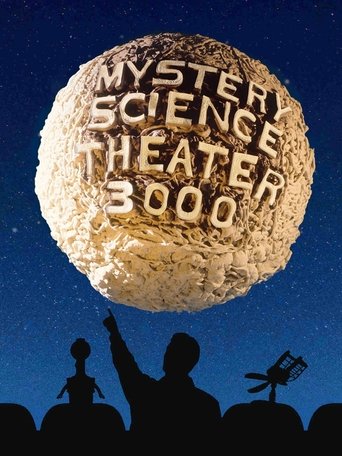
Mystery Science Theater 3000 (1989)
ซีรี่ย์ฝรั่งซีรี่ย์ 1989ตลกไซไฟแฟนตาซี
- ประเทศ
- สหรัฐอเมริกา
- ออกอากาศครั้งแรก
- 25 พฤศจิกายน 2532
- จำนวนตอน
- 176 ตอน (10 ซีซัน)
- ความยาวต่อตอน
- ประมาณ 92 นาที
- สถานะ
- จบแล้ว
- ตอนล่าสุด
- EP13/13 (12 กันยายน 2542)
- ช่อง/แพลตฟอร์มต้นทาง
- Comedy Central, Syfy
- ผู้สร้าง
- Joel Hodgson
- เรตผู้ชม
- TV-PG
- คะแนน TMDB
- 7.7/10 (232 โหวต)
เรื่องย่อ Mystery Science Theater 3000
Mystery Science Theater 3000 เป็นซีรี่ย์ฝรั่ง ปี 1989 มีทั้งหมด 176 ตอน สถานะจบแล้ว
ยังไม่มีเรื่องย่อภาษาไทย แสดงเรื่องย่อต้นฉบับภาษาอังกฤษ
A stranded spaceship pilot captured by mad scientists survives a blitz of cheesy B movies by riffing on them with his funny robot pals.
Mystery Science Theater 3000 ดูได้ที่ไหน (ถูกลิขสิทธิ์)
ดูฟรีมีโฆษณา
 Plex
Plex
เปิดแอปหรือเว็บไซต์ของผู้ให้บริการแล้วค้นหาชื่อเรื่องนี้ได้เลย ข้อมูลผู้ให้บริการในประเทศไทยจาก JustWatch อาจเปลี่ยนแปลงตามสัญญาลิขสิทธิ์ของแต่ละแพลตฟอร์ม
นักแสดง Mystery Science Theater 3000
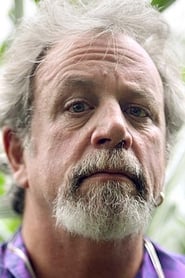 Kevin Murphyรับบท Tom Servo (voice) / Professor Bobo
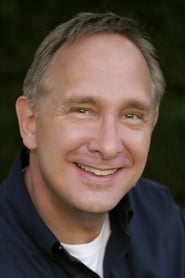 Trace Beaulieuรับบท Crow T. Robot (voice) / Dr. Clayton Forrester
 Mary Jo Pehlรับบท Wrong Number Dialing Lady
 Michael J. Nelsonรับบท Mike Nelson
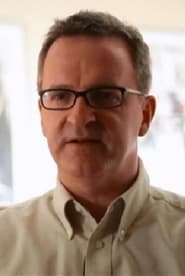 Jim Mallonรับบท Imperialistic Alien
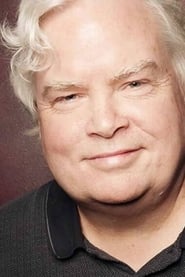 Frank Conniffรับบท TV's Frank
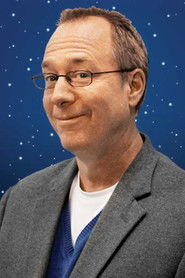 Joel Hodgsonรับบท Joel Robinson
- Patrick Brantsegรับบท Rooster
 Bill Corbettรับบท Krankor
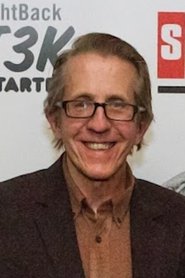 Paul Chaplinรับบท Bratty Kid (voice)
 Bridget Jones Nelsonรับบท Amazon Mom
 J. Elvis Weinsteinรับบท Tom Servo (archive audio)
ซีซันและรายชื่อตอน
- Mystery Science Theater 3000 Season 113 ตอน · 25 พฤศจิกายน 2532
- Mystery Science Theater 3000 Season 213 ตอน · 22 กันยายน 2533
- Mystery Science Theater 3000 Season 324 ตอน · 1 มิถุนายน 2534
- Mystery Science Theater 3000 Season 424 ตอน · 6 มิถุนายน 2535
- Mystery Science Theater 3000 Season 524 ตอน · 17 กรกฎาคม 2536
- Mystery Science Theater 3000 Season 624 ตอน · 16 กรกฎาคม 2537
- Mystery Science Theater 3000 Season 76 ตอน · 3 กุมภาพันธ์ 2539
- Mystery Science Theater 3000 Season 822 ตอน · 1 กุมภาพันธ์ 2540
- Mystery Science Theater 3000 Season 913 ตอน · 14 มีนาคม 2541
- Mystery Science Theater 3000 Season 1013 ตอน · 11 เมษายน 2542
รีวิว Mystery Science Theater 3000 จากทีมงาน
เจาะลึก Mystery Science Theater 3000: เนื้อเรื่อง การสร้าง และเสียงวิจารณ์
Mystery Science Theater 3000 (abbreviated as MST3K) is an American science fiction comedy television series created by Joel Hodgson. The show premiered on KTMA-TV (now WUCW) in Saint Paul, Minnesota, on November 24, 1988. It then moved to nationwide broadcast, first on The Comedy Channel for two seasons, then Comedy Central for five seasons until its cancellation in 1996. Thereafter, it was picked up by The Sci-Fi Channel and aired for three more seasons until another cancellation in August 1999. A 60-episode syndication package titled The Mystery Science Theater Hour was produced in 1993 and broadcast on Comedy Central and syndicated to TV stations in 1995.
In 2015, Hodgson led a crowdfunded revival of the series with 14 episodes in its eleventh season, first released on Netflix on April 14, 2017, with another six-episode season following on November 22, 2018. A second successful crowdfunding effort in 2021 produced 13 additional episodes shown on the Gizmoplex, an online platform that Hodgson developed which launched in March 2022. As of 2026, 231 episodes and a feature film have been produced, as well as four live tours. Four new episodes, dubbed MST3K: The RiffTrax Experiments, and starring the show's Sci-Fi Channel-era cast, were released in late 2026.
The show initially starred Hodgson as Joel Robinson, a janitor trapped by two mad scientists ("The Mads") on the Earth-orbiting Satellite of Love and forced to watch a series of B movies to monitor his reaction to them. To keep his sanity, Joel crafts sentient robot companions, including Tom Servo, Crow T. Robot, Cambot and Gypsy, to keep him company and help him humorously comment on each movie as it plays, a process known as riffing. Each two-hour episode would feature a single movie (often edited for time constraints), sometimes preceded by various old shorts and educational films, with Joel, Tom, and Crow watching in silhouette from a row of theater seats at the bottom of the screen. These "theater segments" were framed with interstitial sketches called "host segments". The show's cast changed over its duration; most notably, the character of Joel was replaced by Mike Nelson (played by Michael J. Nelson) halfway through the show's fifth season. Other cast members, most of whom were also writers for the show, include Trace Beaulieu, Josh Weinstein, Jim Mallon, Kevin Murphy, Frank Conniff, Mary Jo Pehl, Bill Corbett, Paul Chaplin, and Bridget Jones Nelson. The 2017 revival features a primarily new cast, including Jonah Ray who plays the new human test subject Jonah Heston, along with Felicia Day and Patton Oswalt as "The Mads" and Baron Vaughn, Hampton Yount, and Rebecca Hanson voicing Tom Servo, Crow T. Robot, and Gypsy, respectively. Season 13 brought back this cast while integrating Emily Connor, played by Emily Marsh, and others from the live tours in this era.
Initially MST3K did not garner high viewership numbers, but the show's popularity spread through online word-of-mouth by its fans known as "MSTies" or "Mysties" (who would remind others to "Keep circulating the tapes"), frequent repeats, syndication, and home media offerings produced by Rhino Entertainment. Currently, this popularity continues through Shout! Studios, who along with Hodgson (until 2026), now own the rights to the show and supported the revived series. MST3K was listed as one of Time magazine's "100 Best TV Shows of All-TIME" in 2007, and TV Guide has noted MST3K as one of the top cult television shows. The show won a Peabody Award in 1993, was also nominated for two Emmy Awards in 1994 and 1995, and for the CableACE Award from 1992 to 1997. The show was considered highly influential, contributing towards the practice of social television, and former cast members launched projects similarly on riffing on films, including The Film Crew, RiffTrax, and Cinematic Titanic. MST3K also brought to light several older movies that had fallen into obscurity or had received little or no public attention when originally released. Many of these films were subsequently identified as among the worst movies ever made, most notably Manos: The Hands of Fate.
Premise
While the cast of MST3K changed throughout its history, the basic premise of the show remains consistent: a human test subject—first Joel Robinson (Joel Hodgson), then Mike Nelson (Michael J. Nelson), and later Jonah Heston (Jonah Ray) and Emily Connor (Emily Marsh)—has been imprisoned aboard the spacecraft Satellite of Love by mad scientists (collectively called "The Mads") and is forced to watch a series of bad movies in order to find one that will drive the test subject insane.
In an attempt to keep his sanity, Joel built sentient robots ("the bots") from parts aboard the Satellite of Love, and they subsequently remained aboard with Joel's successors as test subjects. The Bots include Tom Servo, Crow T. Robot, GPC (formerly Gypsy) who is in charge of satellite operations, and Cambot, the silent recorder of the experiments. Crow and Servo join the human test subject in watching the film in the satellite's theater. To keep from going mad, the trio frequently comment and wisecrack during the movie, a process known as "riffing". At regular intervals throughout the movie, the hosts leave the theater and return to the bridge of the satellite to perform sketches (commonly called "host segments") that often satirize the film being watched.
Format
The general format of an MST3K episode has remained the same throughout the series' run. Episodes are approximately 90 minutes in running time (excluding commercial breaks) and begin with a short introductory segment in which the human host and the 'bots interact with the Mads before being sent the movie. During Joel Hodgson and Jonah Ray's tenures as hosts (and for a brief period at the start of the Mike Nelson era), the hosts and the Mads engage in an "invention exchange" in which they each show off their latest inventions. A buzzer and flashing lights ("Movie Sign") then signal the characters to enter the theater.
In the theater, the human host and robots Tom and Crow sit in a row of theater seats, shown in silhouette along the bottom of the screen, an approach Hodgson called "Shadowrama". The three then riff on the film (which is sometimes accompanied by one or more shorts) as it plays for both them and the audience. Occasionally, the silhouette format is used as a source of humor, or as a means of creating unobtrusive censor bars for scenes containing nudity. The show transitions into and out of the theater via a "door sequence", a series of six doors that open or close as the camera (presumably Cambot) passes through them.
At regular intervals throughout the episode, the characters leave the theater and perform sketches, usually inspired by the events of the film or short being shown, frequently making use of original songs and prop comedy. Some sketches bring in new or recurring characters or other devices; the host would consult an external camera, "Rocket Number Nine", to show events happening outside the Satellite, and the "Hexfield Viewscreen" would be used to communicate with other characters from the ship's bridge. At the end of each sketch, "Movie Sign" (a reference to the concept of wormsign from Frank Herbert's classic sci-fi novel Dune) is triggered again, and the characters must re-enter the theater.
During Hodgson's period on the show, the final sketch aboard the Satellite often included reading of fan mail from the "MST3K Info Club". Fan mail readings decreased during Mike Nelson's tenure as host and were dropped entirely once the show moved onto the Sci-Fi Channel. The final sketch of an episode typically ends with the Mads, with the lead Mad asking their lackey to "push the button" to end the transmission and transitioning to the credit sequence. After the credits, a humorous short clip from the featured film (or the accompanying short on occasion) is replayed as a "stinger" to end the episode (starting in Season 2 with a scene of the blind man from Rocket Attack U.S.A..)
In November 1993, a limited selection of episodes were repackaged into an hour-long show titled Mystery Science Theater Hour, meant to be better suited for off-network syndication. In these, the original episode was split into two parts, each about 45 minutes long, excluding commercials. New skits opening and ending each episode included Mike Nelson portraying television host Jack Perkins.
Concept
Hodgson is credited for devising the show's concept. Prior to the show, Hodgson was an up-and-coming comedian from Minneapolis having moved to Los Angeles and made appearances on Late Night with David Letterman and Saturday Night Live. He had been invited by Brandon Tartikoff to be on an NBC sitcom co-starring Michael J. Fox, but Hodgson felt the material was not funny and declined (the proposed sitcom went unrealized). He further became dissatisfied with the Hollywood attitudes when they tried to double their offer, acquiring what he called a "healthy disrespect" for the industry. He moved back to Minneapolis-St. Paul, taking a job in a T-shirt printing factory that allowed him to conceive of new comedy ideas while he was bored. One such idea provided the basis of MST3K, a show featuring humorous commentary on movies that would allow him to showcase his own prop comedy-style humor. Hodgson referred to these jokes as "riffs", based on both the idea of musical riffs and the idea of comedy riffs, a term he attributes to The Simpsons' writer Dana Gould. In terms of movie selection, Hodgson had recalled that his college roommate had a copy of The Golden Turkey Awards, and he had previously wondered why no one had made any program about these "adorable, weird movies" listed within it.
Hodgson said that part of the idea for MST3K came from the illustration for the song "I've Seen That Movie Too" (drawn by Mike Ross) in the liner notes from Elton John's Goodbye Yellow Brick Road album, showing silhouettes of a couple sitting in a theater watching Gone with the Wind. Hodgson also likened the show's setting to the idea of a pirate radio station broadcasting from space. Hodgson credits Silent Running, a 1972 science-fiction film directed by Douglas Trumbull, as being perhaps the biggest direct influence on the show's concept. The film is set in the future and centers on a human, Freeman Lowell (Bruce Dern), who is the last crew member of a spaceship containing Earth's last surviving forests. His remaining companions consist only of three robot drones. MST3K and the Joel Robinson character occasionally reflected Lowell's hippie-like nature. Hodgson wanted the feel of the show to appear homemade, and cited the example of a crude mountain prop used during the Saturday Night Live sketch "Night on Freak Mountain" that received a humorous reaction from the studio audience as the type of aesthetic he wanted for the show. Hodgson had made dozens of such robots from random parts before as art that he sold to friends and others, and knew he could incorporate that into the show.
Both old movies and music inspired several of the show's character names as developed by Hodgson. The show's name came from the promotional phrase "Mystery Scientist" used by magician Harlan Tarbell and a play on the name of Sun Ra's band, the Myth Science Arkestra. The "3000" was added to spoof the common practice of adding "2000" to show and product names in light of then-upcoming 21st century, and Hodgson thought it would set his show apart to make it "3000". Dr. Forrester was named after the main character of The War of the Worlds. The Satellite of Love was named after the song of the same name by Lou Reed. Crow T. Robot was inspired by the song "Crow" from Jim Carroll's Catholic Boy, while Rocket Number 9's name was inspired by the original name of Sun Ra's album Interstellar Low Ways.
The theater shots, the primary component of an episode, are taped in "Shadowrama". The "seats" were a black-painted foam core board sitting behind the seat (towards the camera) for the host, and stages for the Crow and Tom puppets. The human host wore black clothing while the robot puppets were painted black; the screen they watched was a white luma key screen so as to create the appearance of silhouettes. The actors would follow the movie and the script through television monitors located in front of them, as to create the overall theater illusion.
The "door sequence" was created to transition from host segments to the theater segments, which Hodgson took inspiration from the Mickey Mouse Club, noting that the commonality to the title credits of Get Smart was coincidental. In devising this sequence, this also led to Beaulieu creating the dogbone-like shape of the Satellite of Love with additional inspiration taken from the bone-to-ship transition in the film 2001: A Space Odyssey. Hodgson had wanted to use a "motivated camera" for taping, a concept related to motivated lighting; in this mode, all the shots would appear to have been taken from an actual camera that was part of the scene to make the scene appear more realistic. This led to the creation of Cambot as a robot that the host would speak to during host segments or recording them while in the theater, and Rocket Number Nine to show footage outside of the Satellite of Love.
The show's theme song, the "Love Theme from Mystery Science Theater 3000", was written by Hodgson and Weinstein, which helped to cement some of the broader narrative elements of the show, such as the Mads and Joel being part of an experiment. The song was composed by Charlie Erickson with help from Hodgson in the style of Devo, The Replacements, and The Rivieras (particularly their cover of the song "California Sun") and sung by Hodgson. Initial shows used foam letters to make the show's title, but they later created the spinning-moon logo out of a 2-foot (0.6m) diameter fiberglass ball, covered with foam insulation and the lettering cut from additional foam pieces. Hodgson felt they needed a logo with the rotating effect as opposed to a flat 2D image, and though they had envisioned a more detailed prop, with the letters being the tops of buildings on this moon, they had no time or budget for a project of that complexity and went with what they had. Musical numbers would also be used as part of the host segments, which Hodgson said came out naturally from the riffing process; they would find themselves at times singing along with the movie instead of just riffing at it, and took that to extend songs into the host segments.
KTMA era (1988–1989)
Hodgson approached Jim Mallon, at the time the production manager of KTMA, a low-budget local Minneapolis-area independent television station, with his idea of a show based on riffing on movies, using robots that were created out of common objects. Mallon agreed to help produce a pilot episode, and Hodgson hired local area comedians J. Elvis Weinstein (initially going by Josh Weinstein but later changed to J. Elvis as to distinguish himself from Josh Weinstein, a well-known writer for The Simpsons) and Trace Beaulieu to develop the pilot show. By September 1988, Hodgson, Mallon, Weinstein, and Beaulieu shot a 30-minute pilot episode, using segments from the 1968 science-fiction film The Green Slime. The robots and the set were built by Hodgson in an all-nighter. Joel watched the movie by himself, and was aided during the host segments by his robots, Crow (Beaulieu), Beeper, and Gypsy (Weinstein). Hodgson used the narrative that his character named "Joel Hodgson" (not yet using his character name of Robinson) had built the Satellite of Love and launched himself into space. Camera work was by Kevin Murphy, who was employed by KTMA. Murphy also created the first doorway sequence and theater seat design. These initial episodes were recorded at the long since-defunct Paragon Cable studios and customer service center in Hopkins, Minnesota. On review, Hodgson found that of the robots, Beeper's design was not working well, and tried a quick modification by replacing its head with a toy gumball machine top, creating the basis of Tom Servo.
Mallon met with KTMA station manager Donald O'Conner the next month and managed to get signed up for thirteen episodes. Show production was generally done on a 24-hour cycle, starting with Mallon offering a few films from KTMA's library for the writers to select from. Riffing in these episodes was ad-libbed during taping using notes made during preliminary viewings of the selected film. Episodes from this era are noted for their low number of riffs—in some instances 15 minutes of the movie could be shown before the cast made any comments. The show had some slight alterations from the pilot—the set was lit differently, the robots (now Crow, Servo and Gypsy) joined Joel in the theater, and a new doorway countdown sequence between the host and theater segments was shot. The puppeteers worked personalities into their robots: Crow (Beaulieu) was considered a robotic Groucho Marx, Tom Servo (Weinstein) as a "smarmy AM radio DJ", and Gypsy (Mallon) modeled after Mallon's mother who had a "heart of gold" but would become disoriented when confronted with a difficult task. The development of the show's theme song would lead to establishing elements for the show's ongoing premise, with Hodgson now portraying himself as the character Joel Robinson.
Mystery Science Theater 3000 premiered on KTMA at 6:00 p.m. on Thanksgiving Day, November 24, 1988, with its first episode, Invaders from the Deep, followed by a second episode, Revenge of the Mysterons from Mars at 8:00 p.m. The choice of running the premiere on Thanksgiving was by happenstance, as the station felt the show was ready to go at that point, according to Hodgson. Initially, the show's response was unknown, until Mallon set up a phone line for viewers to call in. Response was so great that the initial run of 13 episodes was extended to 21, with the show running to May 1989. Hodgson and Mallon negotiated to secure the rights for the show for themselves, creating Best Brains, Inc., agreeing to split ownership of the idea equally. During this time a fan club was set up and the show held its first live show at Scott Hansen's Comedy Gallery in Minneapolis, to a crowd of over 600.
Despite the show's success, the station's overall declining fortunes forced it to file for bankruptcy reorganization in July 1989. At the same time, HBO was looking to build a stable of shows for their upcoming Comedy Channel cable network. HBO approached Best Brains and requested a sample of their material. Hodgson and Mallon provided a seven-minute demo reel, which led to the network greenlighting MST3K as one of the first two shows picked up by the new network. According to Art Bell, one of the creators of the Comedy Channel, MST3K's arrival helped the network to fill space that they had originally planned to use short clips of films and television shows that they could not license in time for launch.
Comedy Channel (1989–1991) and Comedy Central (1991–1996) eras
The Comedy Channel offered Best Brains $35,000 per episode but allowed Best Brains to retain the show's rights. Best Brains was also able to keep production local to Minnesota instead of the network's desire to film in New York City or Los Angeles, as it would have cost four times more per episode, according to Hodgson. Best Brains established an office and warehouse space in Eden Prairie for filming. With an expanded but still limited budget, they were able to hire more writers, including Mike Nelson, Mary Jo Pehl, and Frank Conniff, and build more expansive sets and robot puppets. They retained the characters of Dr. Forrester (Beaulieu) and Dr. Erhardt (Weinstein) from the KTMA era and crafted the larger narrative of each episode being an "experiment" they test on Joel. The show began its national run shortly after The Comedy Channel went on the air in November 1989.
MST3K was considered The Comedy Channel's signature program, generating positive press about the show despite the limited availability of the cable channel nationwide. After the second season, The Comedy Channel and rival comedy cable network HA! merged to become CTV: The Comedy Network (later changed to Comedy Central). During this period, MST3K became the newly merged cable channel's signature series, expanding from 13 to 24 episodes a year. To take advantage of the show's status, Comedy Central ran "Turkey Day", a 30-hour marathon of MST3K episodes during Thanksgiving 1991. The name of the event was not only inspired by the traditional turkey meal served on Thanksgiving, but also by use of "Turkey" from The Golden Turkey Awards to represent bad movies. This tradition would be continued through the rest of the Comedy Central era. Though the show did not draw large audience numbers compared to other programming on Comedy Central, such as reruns of Saturday Night Live, the dedicated fans and attention kept the show on the network.
Mystery Science Theater 3000: The Movie was produced during the later half of the Comedy Central era and had a very limited theatrical release in 1996 through Universal Pictures and Gramercy Pictures. It featured Mike and the bots subjected to the film This Island Earth by Dr. Forrester. Though well received by critics and fans, the film was a financial disappointment due to its limited distribution.
เนื้อหาส่วนนี้มาจากบทความ "Mystery Science Theater 3000" ในวิกิพีเดีย (en.wikipedia.org) เผยแพร่ภายใต้สัญญาอนุญาตครีเอทีฟคอมมอนส์ แสดงที่มา-อนุญาตแบบเดียวกัน 4.0 (creativecommons.org/licenses/by-sa/4.0) มีการตัดส่วนอ้างอิงและจัดรูปแบบใหม่
คำถามที่พบบ่อยเกี่ยวกับ Mystery Science Theater 3000
Mystery Science Theater 3000 มีกี่ตอน?
Mystery Science Theater 3000 มีทั้งหมด 176 ตอน รวม 10 ซีซัน สถานะปัจจุบัน: จบแล้ว
Mystery Science Theater 3000 ฉายวันไหน?
Mystery Science Theater 3000 เริ่มออกอากาศครั้งแรกวันที่ 25 พฤศจิกายน 2532
Mystery Science Theater 3000 ดูได้ที่ไหน?
ในประเทศไทยรับชม Mystery Science Theater 3000 แบบถูกลิขสิทธิ์ได้ที่ Plex
หมวดแนะนำ: ซีรี่ย์ออนไลน์ · เรื่องถัดไป: America's Court with Judge Ross
ซีรี่ย์ที่คล้ายกับ Mystery Science Theater 3000
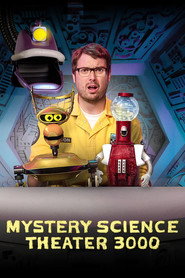 ★ 7.6
★ 7.6Mystery Science Theater 3000 (2017)
 จบแล้ว 164 ตอน★ 8.4
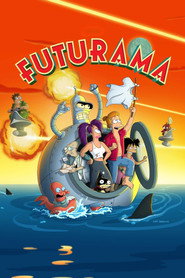
Futurama ฟิวเจอร์ราม่า: ป่วนฮาโลกอนาคต (1999)
 จบแล้ว 95 ตอน★ 7.1
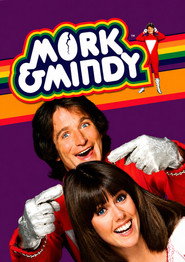
Mork & Mindy (1978)
 EP10/10★ 9.0
Among Us (2026)
 ★ 8.4
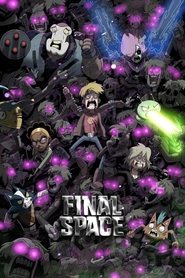
★ 8.4Final Space ไฟนอล สเปซ (2018)
 จบแล้ว 73 ตอน★ 8.1
Red Dwarf (1988)
 ★ 6.7
★ 6.7Other Space (2015)
 ★ 7.6
★ 7.6Bravest Warriors (2012)
 ★ 8.5
★ 8.5Invader ZIM (2001)
 จบแล้ว 8 ตอน★ 6.8
Quark (1977)
 จบแล้ว 80 ตอน★ 8.2
Ben 10: Omniverse เบ็นเท็น: ออมนิเวอร์ส (2012)
 จบแล้ว 83 ตอน★ 7.3