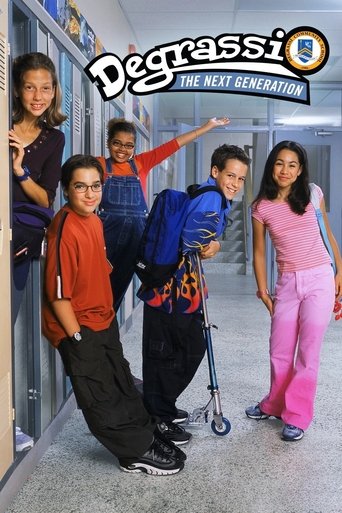
Degrassi (2001)
ซีรี่ย์ฝรั่งซีรี่ย์ 2001ดราม่าละครชุด
- ประเทศ
- แคนาดา
- ออกอากาศครั้งแรก
- 14 ตุลาคม 2544
- จำนวนตอน
- 373 ตอน (14 ซีซัน)
- ความยาวต่อตอน
- ประมาณ 22 นาที
- สถานะ
- จบแล้ว
- ตอนล่าสุด
- EP24/24 (31 กรกฎาคม 2558)
- ช่อง/แพลตฟอร์มต้นทาง
- Much , CTV, MTV Canada
- ผู้สร้าง
- Yan Moore, Linda Schuyler
- เรตผู้ชม
- TV-14
- คะแนน TMDB
- 7.6/10 (115 โหวต)
เรื่องย่อ Degrassi
Degrassi เป็นซีรี่ย์ฝรั่ง ปี 2001 มีทั้งหมด 373 ตอน สถานะจบแล้ว
ยังไม่มีเรื่องย่อภาษาไทย แสดงเรื่องย่อต้นฉบับภาษาอังกฤษ
The life of a group of adolescents going through the trials and tribulations of teendom at Degrassi Community School.
Degrassi ดูได้ที่ไหน (ถูกลิขสิทธิ์)
ยังไม่พบข้อมูลผู้ให้บริการที่มีลิขสิทธิ์เรื่องนี้ในประเทศไทย ต้นทางออกอากาศทาง Much , CTV, MTV Canada เราจะอัปเดตทันทีเมื่อมีแพลตฟอร์มนำเข้ามาฉาย
นักแสดง Degrassi
 Stefan Brogrenรับบท Archie Simpson
 Aislinn Paulรับบท Clare Edwards
 A.J. Saudinรับบท Connor DeLaurier
 Melinda Shankarรับบท Alli Bhandari
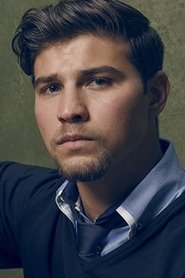 Luke Bilykรับบท Drew Torres
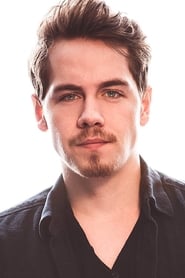 Munro Chambersรับบท Eli Goldsworthy
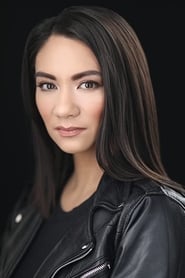 Cory Leeรับบท Ms. Oh
 Jahmil Frenchรับบท Dave Turner
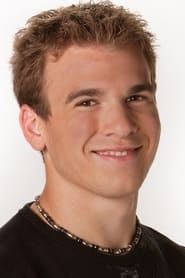 Shane Kippelรับบท Spinner Mason
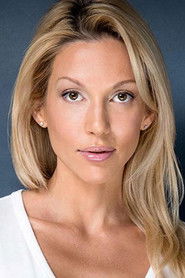 Miriam McDonaldรับบท Emma Nelson
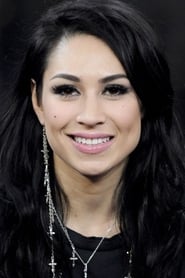 Cassie Steeleรับบท Manny Santos
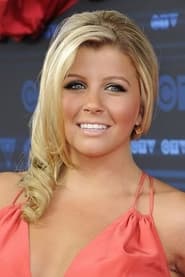 Jessica Tylerรับบท Jenna Middleton
ซีซันและรายชื่อตอน
- Degrassi Season 115 ตอน · 14 ตุลาคม 2544
- Degrassi Season 222 ตอน · 29 กันยายน 2545
- Degrassi Season 322 ตอน · 16 กันยายน 2546
- Degrassi Season 422 ตอน · 6 กันยายน 2547
- Degrassi Season 519 ตอน · 18 กันยายน 2548
- Degrassi Season 619 ตอน · 27 พฤศจิกายน 2549
- Degrassi Season 724 ตอน · 13 มกราคม 2551
- Degrassi Season 818 ตอน · 4 ตุลาคม 2551
- Degrassi Season 919 ตอน · 3 ตุลาคม 2552
- Degrassi Season 1044 ตอน · 18 กรกฎาคม 2553
- Degrassi Season 1145 ตอน · 17 กรกฎาคม 2554
- Degrassi Season 1240 ตอน · 15 กรกฎาคม 2555
- Degrassi Season 1340 ตอน · 11 กรกฎาคม 2556
- Degrassi Season 1424 ตอน · 28 ตุลาคม 2557
รีวิว Degrassi จากทีมงาน
เจาะลึก Degrassi: เนื้อเรื่อง การสร้าง และเสียงวิจารณ์
Degrassi: The Next Generation (renamed to Degrassi for seasons 10 to 14) is a Canadian teen drama television series created by Yan Moore and Linda Schuyler. It is the fourth series in the Degrassi franchise and a revival of Degrassi Junior High and Degrassi High. It premiered on CTV on October 14, 2001, and concluded on August 2, 2015, on MTV Canada.
The series centers around a new ensemble cast of students at the fictional Degrassi Community School who face challenges such as sex, teen pregnancy, bullying, date rape, drug abuse, body image, homosexuality, domestic violence, gang violence, self-injury, suicide, abortion, mental disorders, and others. Various characters from the previous two series also returned as adults in recurring or guest roles.
The series was created by Linda Schuyler and Yan Moore, who was previously the head writer of Degrassi Junior High and Degrassi High. This was the first series to feature no involvement from Kit Hood, who was a co-creator and director of all previous Degrassi series. It was produced by Epitome Pictures (now a subsidiary of WildBrain) in association with Bell Media.
The series premiered to mixed reviews, with some critics expressing doubts about whether the show would achieve the same impact as its predecessors. However, it would ultimately garner both critical and commercial success similar to its forerunners. It received favourable reviews from critics of Entertainment Weekly, The New York Times, and AfterElton.
In its initial years, the show was frequently the most watched domestic drama series in Canada. In the United States, it became the highest-rated show on Noggin's teen block The N. By 2004, the series had averaged nearly a million viewers in Canada and half a million viewers in the United States. In Canada, the series received awards from the Geminis, Writers Guild of Canada, and the Directors Guild of Canada. Internationally, it also won several Teen Choice Awards, Young Artist Awards, and Prix Jeunesse. The episode "My Body Is a Cage", in which a character is outed as transgender, won a Peabody Award in 2011.
During its later seasons, the show's format underwent several changes following Viacom's involvement. In the tenth season, the airing schedule transitioned to a telenovela format during the summer months before returning to its standard schedule for the fall and spring. The series was also moved to MuchMusic in Canada.
The thirteenth season reverted to a weekly schedule and, part way through, it had moved to MTV Canada, where it aired until its final episode on August 2, 2015, after fourteen seasons. The show was followed by Degrassi: Next Class, which followed the remaining juniors from the show's later seasons as well as introducing newer ones, in 2016.
Concept
The Degrassi universe was created in 1979 by Playing With Time, a production company owned by former schoolteacher Linda Schuyler and her partner Kit Hood. The franchise began with The Kids of Degrassi Street, which was spawned out of three half-hour short films, and came to prominence with the critical and commercial successes of Degrassi Junior High, which debuted in 1987, and Degrassi High, which premiered in 1989. The two series followed an ensemble cast of students attending the titular schools as they confronted various issues. It became an international sensation, with the shows experiencing upwards of a million viewers on average in Canada, and received numerous accolades. The telemovie School's Out, which concluded the franchise, aired in 1992.
Schuyler and original Degrassi series head writer Yan Moore began developing a new television drama in 1999, following a reunion of the original Degrassi cast on the CBC series Jonovision. As the months progressed, they began to think about what had happened to the original characters to develop a school-reunion theme. However, they decided that a series would not work effectively if based around adults instead of children. Moore realized that the character Emma Nelson, born to character Christine "Spike" Nelson at the end of Degrassi Junior High's second season, would soon be entering junior high school, and development for the series took a new direction by focusing on Emma and her school experiences. Schuyler's husband Stephen Stohn suggested Degrassi: The Next Generation as the name for the new sequel series, which borrowed from Star Trek: The Next Generation.
Pitching
Schuyler pitched the new series to a number of television networks, with CTV and CBC (the franchise's former network) vying as the top contenders. CTV won through, offering $10 million for a fifteen-episode season. The project was greenlit in May 2000, with the originally planned reunion episode serving as the pilot to the new series. CTV announced the new series at its annual press conference in June 2001, and said the pilot would air in the fall. Soon after, Degrassi crew members attended a conference in New York to find an American partner for the show.
In her memoir, Linda Schuyler explained how the conference went. An American channel called Noggin "had a double mandate: preschool programming in the morning and adolescent programming in the afternoon." Noggin was looking for educational teen shows for the adolescent schedule, and its employees mentioned the original Degrassi as "exactly the kind of show we are looking for." To their surprise, Degrassi distributor Ken Faier was at the conference and responded, "Do I have the show for you: it's called Degrassi." Noggin quickly signed on as the show's American distributor.
In October 2001, the first episode aired on CTV in Canada, and the magazine Kidscreen confirmed that the show was "set to air in Q1 2002 on Noggin in the U.S." In a press release titled "Noggin Tackles Tween Issues with Degrassi: The Next Generation," Noggin announced that the series would premiere on April 1, 2002, as part of its new teen block called The N (standing for Noggin).
Executive producers, script-writers and directors
Produced by Epitome Pictures Inc, in association with CTVglobemedia, Degrassi: The Next Generation received funding from the Canadian Television Fund, BCE, the Shaw Rocket Fund, Mountain Cable Program and the Royal Bank of Canada, the Bell Broadcast and New Media Fund, and the Cogeco Program Development Fund.
Linda Schuyler and Stephen Stohn served as executive producers throughout its run. Other Epitome Pictures employees and series crew members were also credited as executive producers, including Sara Snow, Brendon Yorke, James Hurst, Aaron Martin, and Sarah Glinski.
Story editors included Sarah Glinski and Matt Huether, Shelley Scarrow, James Hurst, Aaron Martin, and Sean Reycraft. Frequent directors included Phil Earnshaw, Stefan Scaini and Bruce McDonald. When production of season three began, a user on the official Degrassi: The Next Generation website with the alias "ExecProducer" began a forum thread titled "Shooting Season 3", revealing production details, guest actors, scheduling information and DVD release details. He referred to himself as "Stephen Stohn" in one post, although it was not until the release of Degrassi: Generations – The Official 411 in 2005, that Stohn confirmed he was the poster and it was not an imposter.
Episode format
The episodes are written following the same formula with two or three storylines (Plot A, Plot B and Plot C). The main storyline, A, opened and closed the episode, and was usually driven by a single character. Plot B was usually more comedic in tone and sometimes slightly intertwined with the other stories, often moving story arcs forward. Plot C was usually used sporadically in a season-long arc, but would eventually settle as comedic relief. The problems presented in the episode were not always resolved by the end of the episode, and were carried over to the next, or created a mini-arc over several episodes. The majority of the episodes were named after songs from the 1980s, and since the tenth season, the episodes were named after songs from the 1990s to the present, which represented the entering of a new decade and a completely different cast from the earlier seasons. For the first nine seasons, Degrassi: The Next Generation had been produced as a weekly half-hour teen comedy-drama series, with each season consisting of between fifteen and twenty-four episodes.
Due to falling viewing figures between seasons six and nine, the series developed a daily soap opera format for the summer run of the tenth season, and increased the number of episodes to forty-four. The tenth season also dropped the tagline "The Next Generation", with only one original cast member remaining, and due to the young audience unfamiliar with the past generation, referring to the series as "Degrassi". Season 13 reverted to airing episodes weekly, but still produced more episodes than prior to the soap opera format, airing a block in the summer of 2013 to the summer of 2014.
Opening sequence
The opening sequence followed a two- to three-minute cold open. During the first five seasons these credits showed the characters on the school premises and followed a mini storyline. Seasons six and seven featured titles with the actors breaking the fourth wall and facing the camera, over a montage of character videos from past seasons, saturated with blue colour and gold outlines. The montages behind the characters depicting a major event in that character's storyline. For the eighth season, the show abandoned the style of titles used for the previous two seasons and returned to the original form of showing the characters at school while participating in school-related activities. Season thirteen dropped the opening credits, replacing it with an eleven-second montage. This continued into season fourteen. Instead of listing every ensemble actor, after the montage, season thirteen and fourteen episodes credit only the regular actors appearing in that episode.
The theme music, "Whatever It Takes", was composed by Jim McGrath, with lyrics written by Jody Colero and Stephen Stohn. The song include lines such as, "Whatever it takes, I know I can make it through/Be the best, the best I can be", to convey what Colero calls, "a sense of joy and optimism." Lisa Dalbello performed the lyrics with a children's choir over a 1980s pop music style tune during the first three seasons. Dave Ogilvie and Anthony Valcic of Canadian industrial-pop group Jakalope reworked and performed the song with a heavier sound to reflect the growing maturity of the characters in season four. For seasons six and seven, the theme—still performed by Jakalope—was remixed and stripped of vocals. A fourth version of the theme song, with lyrics sung by Jeen O'Brien, was introduced for the eighth season, and a fifth version of the theme, performed by the in-show band "Stüdz" was used for the ninth and tenth seasons. For seasons eleven and twelve, a sixth version of the theme song was used, performed by Alexz Johnson. Seasons thirteen and fourteen featured a truncated version of the Alexz Johnson theme.
Music
Jim McGrath created the musical score for each episode using an instrumental version of the theme music. He also worked with actors such as Jake Epstein, Melissa McIntyre and Jamie Johnston, when writing music for their characters Craig Manning, Ashley Kerwin, and Peter Stone to perform in the bands Downtown Sasquatch, Paige Michalchuk and the Sexkittens (PMS), Hell Hath No Fury, and Stüdz. In addition to being scored, Degrassi featured a mix of original emo, alternative rock and pop music. Popular songs were used sparingly in the series, mainly because of budget constraints. Usually, music supervisor Jody Colero selected songs from little-known, unsigned Canadian artists. When these songs were included, they originated from a diegetic source. Examples of this could be seen in the first-season episode "Jagged Little Pill", when well-known songs were played during Ashley's house party, at the wedding reception in the fifth-season episode "Weddings, Parties, Anything", and during the party scene in the seventh-season episode "Everything She Wants".
Filming locations
The Degrassi universe was set on De Grassi Street in Toronto, Ontario. The three previous series were filmed on and near the street. However, The Next Generation was filmed at Epitome Pictures' four soundstages and backlot located at the company's 100,000-square-foot (9,300 m2) production studios in Toronto. The facade of Degrassi Community School was the exterior of Studio C, and used the same colours and glass pattern as Centennial College, which was used to depict the school in Degrassi High. The area in front of this facade featured a "hoarding area" where students gathered, and a street and a bus stop across the road. The studio's backlot was used for exterior shots of the characters' houses, where each unit was dressed differently for each house, and The Dot Grill. The building for The Dot was the only one on the backlot that was large enough to allow filming inside, while scenes that took place inside the school and house interiors were filmed on one of four sound stages.
Studio A contained sets for the school's hallways, washrooms, cafeteria and classrooms. The hallways were stenciled with phrases such as "the perfect human being is all human", which were found at the Etobicoke School for the Arts, one of the many schools that set designers used during their original research. The washroom set had graffiti on the walls to look authentic, and the urinals are installed and removed as needed. The set used for the cafeteria was designed to be "purposefully bland to take the edge off the rest of the school looking so beautiful." It was also used as the studio's cafeteria where the cast and crew eat.
In addition to being used as the exterior of the school, Studio C held sets for the school's entrance foyer, the gymnasium, the media lab and a hallway with lockers. As the series progressed and the budget increased, a stairway and balcony were installed in the foyer in an attempt to get characters off the floor and not all appear in the same geometric plane. For the first few seasons, the gym floor was made of real wooden floorboards; due to warping, it was replaced by concrete painted to look like wood.
Studio B contained the sets for the characters' houses and The Core newspaper office which was introduced in season six. The fourth studio, Studio D, housed all of the production offices, dressing rooms, and make-up and hair departments. The pool hall and university campus club sets were built in Studio D for the seventh season.
York University's Keele Campus in Toronto served as the location for various sites at Smithdale University.
Main
For the new generation of students, producers auditioned over six hundred school-aged children in an attempt to provide characters to which the teenaged target-audience could relate. The decision to cast age-similar actors was purposeful to contrast the series from other shows of the same period such as Buffy the Vampire Slayer and Dawson's Creek, which had cast actors in their twenties as teenagers.
Eleven children were given star billing in the first season. Sarah Barrable-Tishauer portrayed the lonely high-achiever Liberty Van Zandt. Daniel Clark played bad-boy Sean Cameron. Lauren Collins was cast as Paige Michalchuk, the school's head cheerleader and queen bee. Ryan Cooley portrayed class clown James Tiberius "J.T." Yorke, with Jake Goldsbie cast as J.T.'s best friend, Toby Isaacs, a computer geek. Aubrey Graham portrayed basketball star Jimmy Brooks, who came from a wealthy family. Shane Kippel played school bully Gavin "Spinner" Mason. Miriam McDonald was cast as Emma Nelson, an environmental rights activist, with Cassie Steele cast in the role of Emma's best friend, high school cheerleader Manuela "Manny" Santos. Melissa McIntyre portrayed Ashley Kerwin, the perfect girl who attracted the popular boys, and who the other girls are jealous of. Christina Schmidt portrayed the overweight and insecure Terri McGreggor.
Providing ties to the previous series in the Degrassi universe, Stefan Brogren was approached to play his old character Archie "Snake" Simpson, now working at the school as the media immersion teacher. Dan Woods reprised his role as English teacher Mr. Raditch, who was promoted to school principal, and Pat Mastroianni returned to his role as Joey Jeremiah. Amanda Stepto also returned to the franchise to play her character Christine "Spike" Nelson as a recurring role.
In the pilot episode, former Degrassi Junior High and Degrassi High actors Danah Jean Brown (Trish Skye), Darrin Brown (Dwayne Myers), Michael Carry (Simon Dexter), Irene Courakos (Alexa Pappadopoulos), Chrissa Erodotou (Diana Economopoulos), Anais Granofsky (Lucy Fernandez), Rebecca Haines (Kathleen Mead), Sarah Holmes (Alison Hunter), Neil Hope (Derek "Wheels" Wheeler), Kyra Levy (Maya Goldberg), Cathy Keenan (Liz O'Rourke), Stacie Mistysyn (Caitlin Ryan), and Siluck Saysanasy (Yick Yu) reprised their roles for the class reunion storyline.
In season two, Mastroianni returned to the Degrassi franchise in a starring role as Joey Jeremiah, a car salesman and single father of two children. Joey's stepson, musician Craig Manning, played by Jake Epstein, was a new student at Degrassi Community School. Three other new characters were introduced in season two in recurring roles. Stacey Farber played Ellie Nash, a goth whose home life was in turmoil, and Adamo Ruggiero portrayed Marco Del Rossi, who was struggling to accept the reality that he is gay. Melissa Di Marco was cast as science and gym teacher Daphne Hatzilakos. Mistysyn also returned to her former Degrassi role as Joey's ex-high school sweetheart, Caitlyn Ryan, who in the years following graduation had become a world-renowned journalist.
In season three, Farber, Ruggiero and Mistysyn were given regular roles, as were Andrea Lewis (Hazel Aden) and Stepto, who had held recurring roles since the first season. Mike Lobel (Jay Hogart), Deanna Casaluce (Alex Nuñez), Ephraim Ellis (Rick Murray) and John Bregar (Dylan Michalchuk) were introduced in recurring roles as new students. Towards the end of the season, Schmidt's character, Terri McGreggor, was written out of the show when her possessive boyfriend Rick pushed her to the ground and knocked her head against a rock, causing her to fall into a coma.
Over the course of the ten seasons of Degrassi: The Next Generation, there have been several departures from the series. Season six depicted the first death of one of the show's main characters when J.T. Yorke was stabbed and killed. Clark's character Sean Cameron has been written out of the show twice. He left the series during the fourth season in the wake of the death of Rick Murray, and returned for the sixth season, but departed the series again at the end of the season. At the end of season five several main characters graduated from Degrassi Community School, and either left the series or went on to university. Six new characters were introduced in season seven in a storyline where nearby rival high school Lakehurst merged with Degrassi following a fire.
Season eight saw many changes when many of the existing cast members, including Collins, Farber, Graham, Stepto, Ruggiero, and DiMarco either moved to recurring status or left the series entirely. The exodus of several major cast members was reportedly an executive decision that left the actors and producers on bad terms, with Graham stating in an interview with Vibe that "[the producers] did us foul." Thirteen actors were added to the main cast to replace them. By season nine, Brogren, McDonald, Steele and Kippel were the only actors from season one who remained in the series as storylines began to focus on a new generation of children attending the school. This was done to avoid moving the show to a primarily college setting, as the first generation cast aged or "graduated" out of Degrassi Community School into college.
As of season 10, none of the characters from the earlier seasons remained, with the exception of Brogren, whose character was promoted to the principal of Degrassi Community School.
Guest roles
Besides Brogren, Mistysyn, Stepto, and Mastroianni having starring roles, other actors from Degrassi Junior High and Degrassi High had returned to guest star in their old roles throughout Degrassi: The Next Generation's run. As well as the pilot episode featuring the return of many Degrassi alumni, Granofsky made a second guest appearance during the second season in the episode "White Wedding" when her character attended the wedding of Spike and Snake. Neil Hope, who portrayed Wheels in the original series, returned for a brief cameo in a third-season episode centered around Snake's battle with leukemia. In a fifth-season episode, Keenan guest starred when her character returned to console Spike after her marriage with Snake broke down.
Movie director Kevin Smith and actor Jason Mewes guest starred as themselves in the final three episodes of the fourth season. The plot for these episodes involved the pair working on Jay and Silent Bob Go Canadian, Eh!, a fictional feature film in the View Askewniverse, using Degrassi Community School as a filming location. Singer Alanis Morissette, who had worked with Smith, also guest stars in "Going Down the Road Part One" as herself, acted as the school principal in Smith's film. Smith and Mewes also return to Degrassi: The Next Generation as themselves for two episodes in season five. The storyline in the episodes was of the premiere of Jay and Silent Bob Go Canadian, Eh! Smith and Mewes guest starred a third time for four episodes in season eight when many of the characters travelled to Hollywood, Los Angeles. In the episodes, Mewes was the writer-director and protagonist of Mewesical High, which starred a number of Degrassi Community School students. Smith appeared in the episodes to support Mewes as he makes his directorial debut.
Other guest actors who appeared in Degrassi: The Next Generation included Jayne Eastwood as Sean Cameron's mother, Billy Ray Cyrus as Duke, a limousine driver who got arrested, which resulted Jimmy, Hazel, Paige, and Spinner being left stranded in the street. Season seven featured appearances from Shirley Douglas as a university professor, Free The Children founder Craig Kielburger, and English pop singer Natasha Bedingfield as themselves. Jonathan Torrens guest starred as Emma's father, Shane, in the two-part season three premiere. The character had been played by Bill Parrott in the original series, but he decided not to return the former role. In season 10, ballroom dancer Jean-Marc Généreux appeared as a teacher during the episode "My Body Is a Cage". After the series had moved to MuchMusic cameos became more frequent; Keke Palmer, Ben Mulroney, Chaz Bono, Hedley, and Fefe Dobson also made appearances in the show.
เนื้อหาส่วนนี้มาจากบทความ "Degrassi: The Next Generation" ในวิกิพีเดีย (en.wikipedia.org) เผยแพร่ภายใต้สัญญาอนุญาตครีเอทีฟคอมมอนส์ แสดงที่มา-อนุญาตแบบเดียวกัน 4.0 (creativecommons.org/licenses/by-sa/4.0) มีการตัดส่วนอ้างอิงและจัดรูปแบบใหม่
คำถามที่พบบ่อยเกี่ยวกับ Degrassi
Degrassi มีกี่ตอน?
Degrassi มีทั้งหมด 373 ตอน รวม 14 ซีซัน สถานะปัจจุบัน: จบแล้ว
Degrassi ฉายวันไหน?
Degrassi เริ่มออกอากาศครั้งแรกวันที่ 14 ตุลาคม 2544
Degrassi ดูได้ที่ไหน?
ขณะนี้ยังไม่พบแพลตฟอร์มที่มีลิขสิทธิ์ Degrassi ในประเทศไทย
หมวดแนะนำ: ดูซีรี่ย์ · เรื่องถัดไป: The Fall and Rise of Reggie Dinkins
ซีรี่ย์ที่คล้ายกับ Degrassi
 ★ 6.9
★ 6.9Degrassi: Next Class (2016)
 ★ 7.3
★ 7.3Nurses (2020)
 จบแล้ว 128 ตอน★ 7.3
Dawson's Creek ก๊วนวุ่นลุ้นรัก (1998)
 จบแล้ว 62 ตอน★ 7.7
Nancy Drew (2019)
 EP8/8★ 6.7
SkyMed (2022)
 ★ 7.3
★ 7.3Beverly Hills, 90210 (1990)
 จบแล้ว 34 ตอน★ 7.4
Burden of Truth (2018)
 EP12/12★ 6.2
Casualty (1986)
 ★ 7.7
★ 7.7The O.C. ดิ โอซี (2003)
 ★ 8.4
★ 8.4The Resident หมอใหม่ไฟแรงแซงข้ามรุ่น (2018)
 EP257/257★ 7.0
The Young and the Restless (1973)
 จบแล้ว 103 ตอน★ 7.5