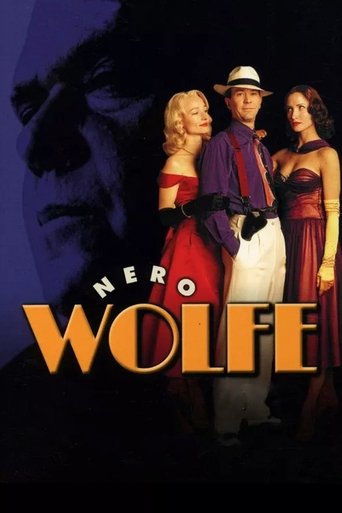
A Nero Wolfe Mystery (2001)
ซีรี่ย์ฝรั่งซีรี่ย์ 2001ดราม่าตลกอาชญากรรมลึกลับ
- ชื่อภาษาอังกฤษ
- A Nero Wolfe Mystery
- ประเทศ
- สหรัฐอเมริกา
- ออกอากาศครั้งแรก
- 22 เมษายน 2544
- จำนวนตอน
- 27 ตอน (2 ซีซัน)
- ความยาวต่อตอน
- ประมาณ 60 นาที
- สถานะ
- จบแล้ว
- ตอนล่าสุด
- EP16/16 (18 สิงหาคม 2545)
- ช่อง/แพลตฟอร์มต้นทาง
- A&E
- เรตผู้ชม
- TV-PG
- คะแนน TMDB
- 8.0/10 (28 โหวต)
เรื่องย่อ A Nero Wolfe Mystery
A Nero Wolfe Mystery เป็นซีรี่ย์ฝรั่ง ปี 2001 มีทั้งหมด 27 ตอน สถานะจบแล้ว
ยังไม่มีเรื่องย่อภาษาไทย แสดงเรื่องย่อต้นฉบับภาษาอังกฤษ
Genius detective Nero Wolfe and his right-hand man, Archie Goodwin, solve seemingly impossible crimes.
A Nero Wolfe Mystery ดูได้ที่ไหน (ถูกลิขสิทธิ์)
ยังไม่พบข้อมูลผู้ให้บริการที่มีลิขสิทธิ์เรื่องนี้ในประเทศไทย ต้นทางออกอากาศทาง A&E เราจะอัปเดตทันทีเมื่อมีแพลตฟอร์มนำเข้ามาฉาย
นักแสดง A Nero Wolfe Mystery
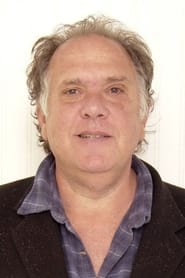 Maury Chaykinรับบท Nero Wolfe
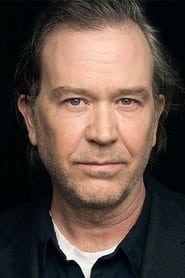 Timothy Huttonรับบท Archie Goodwin
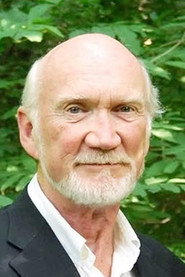 Colin Foxรับบท Fritz Brenner
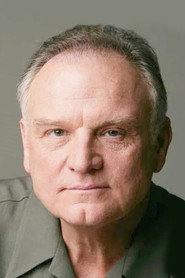 Bill Smitrovichรับบท Inspector Cramer
 R.D. Reidรับบท Sergeant Purley Stebbins
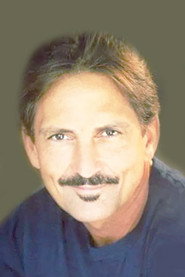 Conrad Dunnรับบท Saul Panzer
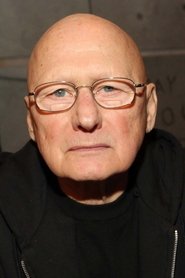 James Tolkanรับบท FBI Agent Richard Wragg
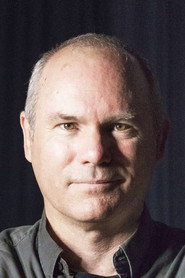 Robert Bockstaelรับบท David Leeson
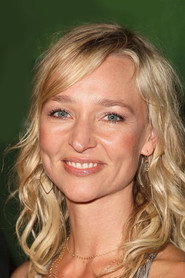 Kari Matchettรับบท Jane Geer
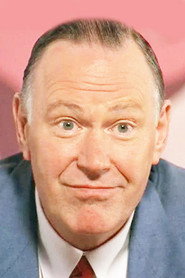 David Schurmannรับบท Alfred Kiernan
 Nicky Guadagniรับบท Viola Duday
 Steve Cumynรับบท Director #3
ซีซันและรายชื่อตอน
- A Nero Wolfe Mystery Season 111 ตอน · 22 เมษายน 2544
- A Nero Wolfe Mystery Season 216 ตอน · 14 เมษายน 2545
รีวิว A Nero Wolfe Mystery จากทีมงาน
เจาะลึก A Nero Wolfe Mystery: เนื้อเรื่อง การสร้าง และเสียงวิจารณ์
Nero Wolfe is a television series adapted from Rex Stout's series of detective stories that aired for two seasons (2001–2002) on A&E. Set in New York City sometime in the 1940s–1950s, the stylized period drama stars Maury Chaykin as Nero Wolfe and Timothy Hutton as Archie Goodwin. A distinguishing feature of the series is its use of a repertory cast to play non-recurring roles. Nero Wolfe was one of the Top 10 Basic Cable Dramas for 2002.
The series won praise for its high production values and jazzy score by Michael Small, and for preserving the language and spirit of the original stories. Most of the teleplays were written by consulting producer Sharon Elizabeth Doyle and the team of William Rabkin and Lee Goldberg, whose "Prisoner's Base" was nominated for an Edgar Award by the Mystery Writers of America.
A total of 20 episodes were produced over the two-season run. Eight of Stout's novels were adapted into two-hour broadcasts, while 12 of his short stories were filmed as one-hour episodes. The title card of each adaptation was styled A Nero Wolfe Mystery.
Nero Wolfe was produced for A&E by Jaffe/Braunstein Films, one of the first production companies to use high-definition video for television. Although the second season was shot in HD, none of the several home video releases of the series has been issued in HD, and only one of the 20 episodes ("The Silent Speaker") has been issued in 16:9 widescreen format.
Plot
Archie Goodwin introduces Nero Wolfe as "a man who thinks he's the world's greatest detective. Truth being, he is." Grandly obese and famously eccentric, Wolfe is a genius who lives in—and rarely leaves—a large and comfortably furnished brownstone he owns on West 35th Street in Manhattan. Wolfe maintains an inflexible schedule of reading, tending his 10,000 orchids in the rooftop plant rooms, and dining on the fine cuisine of his master chef, Fritz Brenner. To support his opulent lifestyle and meet the payroll of his live-in staff, Wolfe charges high fees for solving crimes that are beyond the abilities of the police, most often the cigar-chewing Inspector Cramer of Manhattan Homicide. Wolfe sometimes calls upon freelance detectives Saul Panzer, Fred Durkin and Orrie Cather; but he depends upon his assistant Archie Goodwin, the street-smart legman whose wisecracking, irreverent voice narrates the stories.
The wardrobe, cars, furnishings and music place Nero Wolfe primarily in the 1940s–1950s. It is technically a whodunit series, but like the original Rex Stout stories Nero Wolfe is less concerned with plot than with the interplay between its characters.
"I think that's something that's appreciated by Nero Wolfe fans," said Maury Chaykin, who stars as Nero Wolfe. "If you become focused on the crime, I think you're kind of in the wrong place. It's more the enjoyment of the characters and their eccentricities, and the reality of those characters."
The Golden Spiders: A Nero Wolfe Mystery
The series was preceded by the original film The Golden Spiders: A Nero Wolfe Mystery, a Jaffe/Braunstein Films production that aired on A&E March 5, 2000. Veteran screenwriter Paul Monash adapted Rex Stout's 1953 novel, and Bill Duke directed. A&E initially planned that The Golden Spiders would be the first in a series of two-hour mystery movies featuring Nero Wolfe. The high ratings (3.2 million households) and critical praise garnered by The Golden Spiders prompted A&E to consider a one-hour drama series.
"We were so pleased with the reception of the movie that we said, 'Maybe there's a one-hour show (here),'" said Allen Sabinson, A&E's senior vice president for programming, in June 2000. "I don't believe we were thinking, or Maury Chaykin and Timothy Hutton were thinking, there's a series here. These are not people who do series. What happened was they had such a good time, I think they fell in love with their characters."
Principal
Maury Chaykin is the armchair detective Nero Wolfe, a reclusive genius with little patience for people who come between him and his devotion to food, books and orchids. Timothy Hutton is Wolfe's irreverent assistant Archie Goodwin, whose voice narrates the stories. In addition to starring in the series, Hutton directed four episodes and served as an executive producer.
Other members of the principal cast are Colin Fox as Fritz Brenner, Wolfe's master chef; Conrad Dunn (Saul Panzer), Fulvio Cecere (Fred Durkin) and Trent McMullen (Orrie Cather) as the 'teers, three freelance detectives who frequently assist Wolfe; Bill Smitrovich as Inspector Cramer, head of Manhattan's Homicide Bureau; and R.D. Reid as Sergeant Purley Stebbins. Saul Rubinek, who portrayed Saul Panzer in The Golden Spiders, took the role of reporter Lon Cohen in the series. Lon was played by Gerry Quigley in The Golden Spiders.
Repertory
A distinguishing feature of the series is its use of a repertory cast — Boyd Banks, Nicky Guadagni, Kari Matchett, Debra Monk, George Plimpton, Ron Rifkin, Marian Seldes, Francie Swift, James Tolkan and many other accomplished Canadian and American actors — to play non-recurring roles.
"Just as the series beautifully captures a time when cars with fins, fedoras worn at right angles and women's hats with feathers were all the rage, the existence of such a company also evokes another era," wrote syndicated journalist Jacqueline Cutler, who quotes Timothy Hutton as saying, "I don't think it's been done for a very long time."
"If a stylized, period series based solely on books wasn't enough to separate Nero Wolfe from other TV shows," reported Scarlet Street magazine, "[executive producer Michael] Jaffe decided to employ a returning repertory cast in the guest roles for each episode. He felt that it was necessary to find actors who understood and fit in with the show's unique approach. 'Every other show agonizes about casting,' Jaffe says. 'We don't. We have 20, 30 people in our repertory company and we get great actors to play bit roles.'"
Kari Matchett played a recurring role (Archie Goodwin's sometime girlfriend Lily Rowan) and a non-recurring role (nightclub singer Julie Jaquette) in the same episode, "Death of a Doxy." Nicky Guadagni played two non-recurring characters (a secretary and Mrs. Cramer) in the same episode, "The Silent Speaker."
Production
Nero Wolfe is a production of A&E Television Networks and Jaffe/Braunstein Films, Ltd., in association with Pearson Television International. The series was shot in Toronto, with select Manhattan exteriors filmed for the series premiere, "The Doorbell Rang," and seen in subsequent episodes including "Prisoner's Base."
Conception and development
Independent producer Michael Jaffe's efforts to secure the rights to the Nero Wolfe stories date back to his earliest days in the business. In the mid-1970s he established a friendship with the Stout estate and was working with his father, Henry Jaffe, a successful attorney turned producer, when the Nero Wolfe rights came on the market. Warner Bros. wanted to adapt the Zeck trilogy for a feature film and approached Henry Jaffe, who traveled to New York to negotiate with the agent for Rex Stout's estate but lost out to Paramount Television.
"We finally got this opportunity," said Michael Jaffe. "I had chased the rights numerous times. One of the reasons that I never actually tried to make it as a series was that I didn't believe a network would ever let us make it the right way. Then A&E came along, and Allen Sabinson. I've known him for years and years. He swore he'd let me make it the right way."
The source material for the two seasons of Nero Wolfe was written between 1939 (Over My Dead Body) and 1966 (Death of a Doxy), with most stories written in the 1950s. Jaffe said he chose to stick with the era for the adaptations "because I thought there was so much style that people could identify with and that we could play off. Ultimately, the most important thing is that the audience remain removed from the show by three or four decades. You can't do what Paramount did and update it and make the language modern. The whole thing doesn't make sense, because the tonal idiom doesn't play in the modern world. You have to separate it; you have to create that proscenium arch; you have to create poetic distance—otherwise there's no art in it."
When the series was announced in June 2000, Variety reported that A&E had been licensed to own Nero Wolfe in the U.S. and Canada for an undisclosed fee. Jaffe/Braunstein Films, which retained ownership of the series in the rest of the world, licensed distribution outside the U.S. to Pearson International Television (now FremantleMedia, Ltd.). Producer Michael Jaffe told Variety that the Nero Wolfe episodes would cost $1 million each; sources said the full production cost would be covered by A&E's and Pearson's licensing fees.
Adapting the stories
"It was a screenwriting assignment unlike any other that my writing partner, William Rabkin, and I had ever been involved with," wrote screenwriter Lee Goldberg, who adapted four Stout stories for the series. "Because Nero Wolfe, starring Maury Chaykin as Wolfe and Timothy Hutton as Archie, was unlike any other series on television. It was, as far as I know, the first TV series without a single original script — each and every episode was based on a Rex Stout novel, novella, or short story. ... The mandate from executive producers Michael Jaffe and Timothy Hutton (who also directed episodes) was to 'do the books,' even if that meant violating some of the hard-and-fast rules of screenwriting."
The filmmakers have remained as scrupulously faithful to the original stories as possible, even to the point of retaining the different time settings — this season's episodes have jumped from the 1940s to the 1960s and back without a care. ... What a stunner it is to find them translated so effectively to television.
"It's amazing how many writers got it wrong," said head writer Sharon Elizabeth Doyle.
I mean very good writers, too. Either you get it or you don't. It's so important to have the relationships right, and the tone of the relationships right, to get that it's about the language and not the story. The characters in these books aren't modern human beings. You have to believe in the characters and respect the formality of the way they are characterized.
Consulting producer for Nero Wolfe, Doyle was the show's only full-time writer — overseeing the work of freelance screenwriters and writing 11 of the teleplays herself. She devoted most of her attention to the dialogue:
What Stout writes actually sounds good when you say it out loud, but the stuff that makes you laugh out loud and fall on the floor in the books doesn't work most of the time when you transpose it directly into actors' mouths. Frequently I end up moving words — tenderly and respectfully — but retaining as much of the language as possible. I feel a great belief in Rex Stout. I see the script process as writing his second draft.
Relationship to literary source
In the preface to the second edition of his book At Wolfe's Door: The Nero Wolfe Novels of Rex Stout, J. Kenneth Van Dover assessed the fidelity of the show to its literary source:
A quarter century after his death, the Nero Wolfe books remain in print ... and, as a result of a very popular A&E television series which premiered in 2000, their continuing presence seems assured. ... The success of the series is significant especially because the scripts remained remarkably faithful to the novels. The programs are set in the period, and much of the dialogue is lifted directly from the novel. Effective novelistic dialogue is not usually effective screen dialogue, as Raymond Chandler discovered when he worked on the script for the 1944 film of James M. Cain's Double Indemnity. The A&E series was able to adopt verbatim both the sharp exchanges between Wolfe and Archie, and as well Archie's narration in voiceover. Credit certainly goes to the skills of the repertory actors who played the roles, and especially to Maury Chaykin and Timothy Hutton; but it was Stout who supplied the language and the characters who speak it. And it was Stout who created in words the real pleasures of the novels: the voices and ideas, the rooms and the routines. Producer Michael Jaffe realized this, and with great care recreated those pleasures on film.
Production of Nero Wolfe coincided with Rex Stout's becoming a top-selling author some 30 years after his death. BookFinder.com, a web-search service that reports the most-sought out-of-print titles, reported in March 2003 that the top four most-wanted mysteries were Nero Wolfe novels: Where There's a Will (1940), The Rubber Band (1936), The Red Box (1937) and The League of Frightened Men (1935). The Red Box was the most-searched mystery title in August 2003, and the novel remained as number two on the list in 2004. In 2006, Too Many Women (1947) was fifth on BookFinder.com's list of most-sought out-of-print thrillers, whodunits, classics and modern mystery titles. In 2007, The Black Mountain was in the number five position.
Most of the stories adapted for Nero Wolfe became available through Bantam's Rex Stout Library, a series of paperbacks that featured new introductions and memorabilia. Some of these, including The Doorbell Rang and Prisoner's Base, are emblazoned with the words, "as seen on TV." The Audio Partners Publishing Corporation promoted its bestselling line of Rex Stout audiobooks, unabridged on CD and audiocassette, "as seen on A&E TV."
Production design
On the eve of the premiere of Nero Wolfe, The Hollywood Reporter credited "the incredible attention to detail paid by production designer Lindsey Hermer-Bell and set decorator Odetta Stoddard, who not only re-create the world Stout so carefully described but also impart an overall feeling of stylishness and taste."
Before building the sets Hermer-Bell read all of Rex Stout's Nero Wolfe stories and the companion volumes by William S. Baring-Gould and Ken Darby, and she created a complete floor plan to match the detailed descriptions of the brownstone found in the Nero Wolfe corpus.
"There are people who know all the books, and they know all these specifics, and if you screw up, you know, they get really upset ... so everything is as per written", Hermer-Bell said.
When A&E cancelled Nero Wolfe in 2002, executive producer Michael Jaffe estimated the value of the sets at $800,000.
Cinematography
Derek Rogers was the director of photography for the first season of Nero Wolfe. John Berrie was director of photography for the second season, which was shot in high-definition video.
"Jaffe/Braunstein was one of the first to experiment with HD for television," reported the industry publication HiDef Magazine:
Their landmark series 100 Centre Street ... was one of the first hour dramas to use HDCam as the capture medium. ... Jaffe/Braunstein was also producing the A&E series Nero Wolfe with Timothy Hutton in 35mm film. After the success with HD, Michael [Jaffe] decided that he'd like to try it on the single camera hour drama. At first Hutton was a little nervous about it, but after Jaffe brought experienced DP John Berrie to the program, Hutton was convinced. The entire second season was shot in HD ...
Costume design
Nero Wolfe features costume design by Christopher Hargadon. Many costumes were found at vintage shops or in Hargadon's personal collection; some clothes were taken apart and reconstructed with new fabrics to capture the color required. For Wolfe, Hargadon said, "I tried to find fabrics that were thick, to sort of even enhance his size more, things that would be structured to hold a big shape." Hargadon estimated that he and his team created at least 1,000 costumes for each season.
Title design
Illustrator Aurore Giscard d'Estaing designed title sequences unique to each episode. The main title for the series is an illustration of Queensboro Bridge.
Music
Michael Small wrote the series theme — "Boss Boogie", first heard in the titles for "The Doorbell Rang" — and composed the original music heard in Nero Wolfe. Music producer Richard Martinez was scoring editor for Michael Small's compositions. Kevin Banks was music editor and also handled the production music. Martinez and Banks were nominated for a Golden Reel Award (Best Sound Editing in Television Long Form — Music) for the second-season premiere, "Death of a Doxy".
Cancellation
When A&E announced the cancellation of Nero Wolfe in August 2002, the network took the unusual step of posting an "Important Message" on its website: "We at A&E remain extremely proud of Nero Wolfe. It is a high quality, beautifully produced and entertaining show, unlike anything else currently on the television landscape. Although it performed moderately well amongst tough competition for two seasons, it simply did not do well enough for us to be able to go on making it, given the current television climate."
"I do know A&E's decision not to continue didn't have anything to do with ratings; it was their highest-rated series," Timothy Hutton told columnist Marilyn Beck in November 2002. Beck reported that Hutton would be happy to make one or two Nero Wolfe TV movies a year.
Maury Chaykin reflected on the cancellation of Nero Wolfe in a 2008 interview. "I'm a bit jaded and cynical about which shows succeed on television. I worked on a fantastic show once called Nero Wolfe, but at the time A&E was transforming from the premier intellectual cable network in America to one that airs Dog the Bounty Hunter on repeat, so it was never promoted and eventually went off the air."
Episodes
The weekly series was preceded by the television film, The Golden Spiders: A Nero Wolfe Mystery, first broadcast March 5, 2000.
United States and Canada
Distributed by the A&E Television Networks in the United States and Canada, Nero Wolfe first aired on the A&E Network April 22, 2001. The second season premiered April 14, 2002. The series ran Sundays at 8 p.m. ET and was rebroadcast at midnight. The last original broadcast was Sunday, August 18, 2002. Nero Wolfe continued to air regularly in repeat through 2002 and sporadically in early 2003 before leaving the A&E schedule altogether.
From March 2004 to May 2006, Nero Wolfe appeared Saturdays at 8 p.m. ET on another of the A&E Networks, The Biography Channel.
International
FremantleMedia, Ltd., distributes the show outside the U.S. and Canada. The series has been broadcast on public and commercial networks, cable television and satellite systems throughout the world, and was presented throughout Europe and Africa on the Hallmark Channel.
Australia, Australian Broadcasting Corporation
Australia, Movie Plus
Estonia, Kanal 2, as Nero Wolfe
Finland, Yle, as Nero Wolfe
France, Paris Première, as Les Enquêtes de Nero Wolfe
Israel, Hot
Italy, Mediaset (Rete 4), as Nero Wolfe
Japan, Movie Plus
Japan, WOWOW
Lithuania, Lietuvos Televizija, as Detektyvas Niras Vulfas
Mexico, Televisa, as Un Misterio de Nero Wolfe
Poland, Polsat
Portugal, Rádio e Televisão de Portugal, as Um Mistério de Nero Wolfe
Romania, Naţional TV
Turkey, Digiturk
UK, BBC Two, as The Nero Wolfe Mysteries
UK, Sky Movies
Ratings
I do know A&E's decision not to continue didn't have anything to do with ratings; it was their highest-rated series.
In its debut season on A&E, A Nero Wolfe Mystery averaged a 1.9 rating. The first three weeks (April 14–28, 2002) of the second season of Nero Wolfe averaged a solid 1.9 rating in cable homes. Nero Wolfe had averaged a 1.7 rating for the month of May 2002, while viewing levels for the A&E Network overall were 1.1. In mid-June 2002 Multichannel News wrote, "Nero Wolfe, in its second cycle of episodes, is drawing solid ratings in the 1.5 to 2.0 Nielsen Media Research range". The A&E Network as a whole ended 2002 with a 1.0 rating.
A Nero Wolfe Mystery was one of the Top 10 Basic Cable Dramas for 2002.
Awards
2002, Nominee, Edgar AwardBest Television EpisodeLee Goldberg and William Rabkin, "Prisoner's Base"Mystery Writers of America
2002, Nominee, DGC Craft AwardOutstanding Achievement in DirectionHolly Dale, "Christmas Party"Directors Guild of Canada
2002, Nominee, DGC Craft AwardOutstanding Achievement in Picture EditingStephen Lawrence, "The Doorbell Rang"Directors Guild of Canada
2003, Nominee, Golden Reel AwardBest Sound Editing in Television Long Form — MusicKevin Banks and Richard Martinez, "Death of a Doxy"Motion Picture Sound Editors
2003, Nominee, ACTRA Toronto AwardMaury Chaykin, Outstanding Performance – MaleKari Matchett, Outstanding Performance – FemaleAlliance of Canadian Cinema, Television and Radio Artists
เนื้อหาส่วนนี้มาจากบทความ "Nero Wolfe (2001 TV series)" ในวิกิพีเดีย (en.wikipedia.org) เผยแพร่ภายใต้สัญญาอนุญาตครีเอทีฟคอมมอนส์ แสดงที่มา-อนุญาตแบบเดียวกัน 4.0 (creativecommons.org/licenses/by-sa/4.0) มีการตัดส่วนอ้างอิงและจัดรูปแบบใหม่
คำถามที่พบบ่อยเกี่ยวกับ A Nero Wolfe Mystery
A Nero Wolfe Mystery มีกี่ตอน?
A Nero Wolfe Mystery มีทั้งหมด 27 ตอน รวม 2 ซีซัน สถานะปัจจุบัน: จบแล้ว
A Nero Wolfe Mystery ฉายวันไหน?
A Nero Wolfe Mystery เริ่มออกอากาศครั้งแรกวันที่ 22 เมษายน 2544
A Nero Wolfe Mystery ดูได้ที่ไหน?
ขณะนี้ยังไม่พบแพลตฟอร์มที่มีลิขสิทธิ์ A Nero Wolfe Mystery ในประเทศไทย
หมวดแนะนำ: ซีรี่ย์ใหม่ 2026 · เรื่องถัดไป: Vanshaj
ซีรี่ย์ที่คล้ายกับ A Nero Wolfe Mystery
 EP10/10★ 7.2
Wild Cards (2024)
 จบแล้ว 178 ตอน★ 7.0
Barnaby Jones (1973)
 จบแล้ว 16 ตอน★ 6.5
Jack Irish (2016)
 จบแล้ว 146 ตอน★ 7.6
Hill Street Blues (1981)
 จบแล้ว 83 ตอน★ 6.5
Baretta (1975)
 EP10/10★ 6.8
Murder in a Small Town (2024)
 จบแล้ว 25 ตอน★ 7.9
Inspector George Gently (2008)
 จบแล้ว 6 ตอน★ 7.5
Steal สตีล: ลับ ลวง ปล้น (2026)
 EP10/10★ 7.1
Shakespeare & Hathaway - Private Investigators (2018)
 จบแล้ว 12 ตอน★ 7.5
Murder in Suburbia (2004)
 จบแล้ว 23 ตอน★ 7.8
Agatha Christie's Marple (2004)
 EP8/8★ 7.2