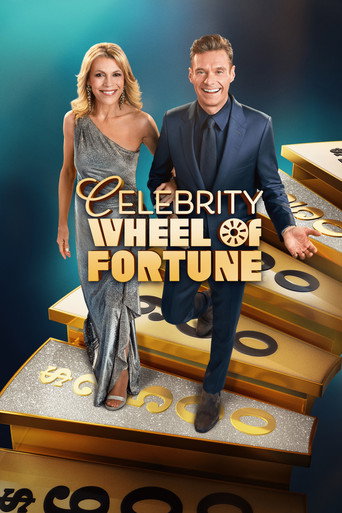
Celebrity Wheel of Fortune (2021)
- ชื่อภาษาอังกฤษ
- Celebrity Wheel of Fortune
- ประเทศ
- สหรัฐอเมริกา
- ออกอากาศครั้งแรก
- 7 มกราคม 2564
- จำนวนตอน
- 69 ตอน (7 ซีซัน)
- ความยาวต่อตอน
- ประมาณ 45 นาที
- สถานะ
- ยังฉายอยู่
- ตอนล่าสุด
- EP2/5 (9 ตุลาคม 2569)
- ตอนถัดไป
- 16 ตุลาคม 2569
- ช่อง/แพลตฟอร์มต้นทาง
- ABC
- เรตผู้ชม
- TV-PG
- คะแนน TMDB
- 7.1/10 (13 โหวต)
เรื่องย่อ Celebrity Wheel of Fortune
Celebrity Wheel of Fortune เป็นซีรี่ย์ฝรั่ง ปี 2021 มีทั้งหมด 69 ตอน สถานะยังฉายอยู่
ยังไม่มีเรื่องย่อภาษาไทย แสดงเรื่องย่อต้นฉบับภาษาอังกฤษ
Hosted by Pat Sajak and Vanna White, celebrity contestants spin the wheel and solve word puzzles for a chance to win up to one million dollars for charity.
Celebrity Wheel of Fortune ดูได้ที่ไหน (ถูกลิขสิทธิ์)
ยังไม่พบข้อมูลผู้ให้บริการที่มีลิขสิทธิ์เรื่องนี้ในประเทศไทย ต้นทางออกอากาศทาง ABC เราจะอัปเดตทันทีเมื่อมีแพลตฟอร์มนำเข้ามาฉาย
นักแสดง Celebrity Wheel of Fortune
 Vanna Whiteรับบท Self - Co-Host
 Pat Sajakรับบท Self - Host
 Ryan Seacrestรับบท Self - Host
 Constance Zimmerรับบท Self - Contestant
 Maria Menounosรับบท Self - Contestant
 อีเว็ตต์ นิโคล บราวน์รับบท Self - Contestant
 Rob Riggleรับบท Self - Contestant
 Joe Tessitoreรับบท Self - Contestant
 Jeannie Maiรับบท Self - Contestant
 Drew Careyรับบท Self - Contestant
 Teri Hatcherรับบท Self - Contestant
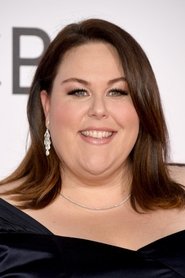 Chrissy Metzรับบท Self - Contestant
ซีซันและรายชื่อตอน
- Celebrity Wheel of Fortune Season 18 ตอน · 5 มกราคม 2564
- Celebrity Wheel of Fortune Season 213 ตอน · 25 กันยายน 2564
- Celebrity Wheel of Fortune Season 314 ตอน · 24 กันยายน 2565
- Celebrity Wheel of Fortune Season 410 ตอน · 26 กันยายน 2566
- Celebrity Wheel of Fortune Season 59 ตอน · 29 เมษายน 2568
- Celebrity Wheel of Fortune Season 610 ตอน · 25 กันยายน 2568
- Celebrity Wheel of Fortune Season 75 ตอน · 2 ตุลาคม 2569
รีวิว Celebrity Wheel of Fortune จากทีมงาน
เจาะลึก Celebrity Wheel of Fortune: เนื้อเรื่อง การสร้าง และเสียงวิจารณ์
Wheel of Fortune (often known simply as Wheel) is an American television game show created by Merv Griffin. The show has aired continuously since January 6, 1975. Contestants solve word puzzles, similar to those in hangman, to win cash and prizes determined by spinning a giant carnival wheel. The current version of the series, which airs in nightly syndication, premiered on September 19, 1983. Since September 9, 2024, the show has been hosted by Ryan Seacrest and Vanna White.
The original version of Wheel was a network daytime series that ran on NBC from January 6, 1975, to June 30, 1989, and subsequently aired on CBS from July 17, 1989, to January 11, 1991; it returned to NBC on January 14, 1991, and was cancelled that year, ending on September 20, 1991. The network daytime and syndicated nighttime versions aired concurrently from 1983 until the former's conclusion. Chuck Woolery and Susan Stafford were the original hosts of the daytime network version. Woolery left in 1981, and was replaced by Pat Sajak. Sajak left the network version in January 1989 to host his own late-night talk show. Succeeding Sajak on the daytime version was Rolf Benirschke, who was in turn replaced by Bob Goen when the network show moved to CBS. Stafford left in 1982 and was replaced by Vanna White, who remained on the network show for the rest of its run. Sajak and White hosted the nighttime Wheel together from its premiere until June 2024, when Sajak retired and was replaced by Seacrest. Charlie O'Donnell, Jack Clark, and M.G. Kelly all served as announcers prior to Jim Thornton taking over in 2011; Thornton was fired from the show in September 2026.
Currently in its 44th season, Wheel of Fortune ranks as the longest-running syndicated game show in the United States, with 8,000 episodes taped and aired as of June 7, 2024. In addition, Wheel of Fortune is the second longest-running game show in the United States, behind The Price is Right, which has aired continuously since September 1972 and is now in its 55th season. TV Guide named Wheel of Fortune the "top-rated syndicated series" in a 2008 article, and in 2013, the magazine ranked it at number two in its list of the 60 greatest game shows ever. The program has also come to gain a worldwide following with 60 international adaptations. Two spin-off versions have existed as well: a children's version called Wheel 2000, which aired simultaneously on CBS and Game Show Network in 1997 and 1998; and Celebrity Wheel of Fortune, which began airing on ABC in 2021 and features a modified version of the format.
Main game
Wheel of Fortune is based on hangman. In each round, players compete to be the first to guess the answer to a word puzzle. At the start of each round, the host reveals the category. Most puzzles are common figures of speech. In general, puzzles must be read exactly when solved, except for crossword puzzles (which were added to the show in 2016) where the host gives a clue linking the words and contestants may give the words in any order, so long as all words are given without repeating or adding any. The titular Wheel of Fortune is a roulette-style wheel with 24 wedges. Most are labeled with dollar amounts ranging from $500 to $900, with a top value in each round: $2,500 in round 1, $3,500 in rounds 2 and 3, and $5,000 for round 4 and any subsequent rounds. The wheel also features two Bankrupt wedges and one Lose a Turn wedge. Landing on either forfeits the contestant's turn, with the Bankrupt wedge also eliminating any cash or prizes the contestant has accumulated within the round.
Most matches consist of three contestants, although some variants feature three teams of two people each. Contestants in control spin the wheel to determine a dollar value, then guess a consonant. Landing on a dollar amount and calling a correct consonant results in the co-host revealing every instance of that letter, and awards the value of the spin multiplied by the number of times the letter appears in the puzzle. After a correct consonant, a contestant may choose to spin again, buy a vowel for a flat rate of $250 (until no more remain in the puzzle), or attempt to solve the puzzle. Control passes to the next contestant clockwise if the contestant lands on Lose a Turn or Bankrupt, calls a letter not in the puzzle, calls a letter already called in that round, attempts unsuccessfully to solve the puzzle, or takes too much time to call a letter or decide on their next action.
Toss-ups
Each game also features a series of "toss-up" puzzles, in which one random letter is revealed at a time; the first contestant to ring in with the right answer wins cash. Prior to 2019, the show featured three toss-ups (the third of which was worth $3,000) and, from 2019 to 2026, the show featured five toss-ups; the first, worth $1,000, determined the order of the pre-game interviews conducted by the host. The second, worth $2,000, determined who spun first in round one. The third through fifth, collectively the "triple toss-up", took place prior to the fourth round. Three puzzles, each with the same category and a common theme, are played consecutively. Solving any awards $2,000, for a total of $6,000, while solving the third also earns the right to start the fourth round. Beginning in 2021, an additional $4,000 is awarded for a total of $10,000 if the same contestant solves all three. Contestants may ring in only once for each puzzle, and no cash is awarded if all three fail to solve, or if the last letter in the puzzle is revealed; if this occurs, then the contestant closest to the host controls the next portion of the game. In addition to the toss-ups, each game has a minimum of four rounds, with more played if time permits. Rounds 2 and 3 are started respectively by the next two contestants clockwise from the contestant who began round 1.
Fortune Frenzy
Starting with the show's 44th season in 2026, the $1,000 and $2,000 toss-ups are replaced by a single, faster-paced "Fortune Frenzy" round, in which contestants have 30 seconds to solve as many toss-ups as possible in a single category, each worth $1,000; the last person to solve one starts Round 1. If the contestant buzzes in and gives an incorrect solution on a puzzle, or if no one buzzes in before the last letter is revealed, a new one is immediately played. The contestant interviews occur once Round 1 has been completed. On Celebrity Wheel of Fortune, interviews occurred before Round 1 in Game 1 and either the start of or before Round 1 in Game 2.
Rounds 1–3
In the first three rounds, the wheel also contains a Wild Card over a selected wedge. If this is claimed by calling a correct letter, the contestant may use it after a correct consonant to call a second consonant for the same value as the present spin, or take it to the bonus round. There is also a special wedge which offers a pre-determined prize, typically a trip or credit to a company. Both also offer $500 per correct letter. The first three rounds also contain a special wedge known as the "Million Dollar Wedge", which, if won and taken to the bonus round, offers an opportunity to play for $1,000,000. A contestant must solve the puzzle in order to keep any cash, prizes, or extras accumulated during that round except for the Wild Card. Bankrupt does not affect score from previous rounds or prizes from previous rounds, but it takes away the Wild Card and/or the Million Dollar Wedge if either was claimed in a previous round. Contestants who solve a round for less than $1,000 in cash and prizes ($2,000 on weeks with two-contestant teams) have their scores increased to that amount.
Round 2 features two "Mystery Wedges". Calling a correct letter on one offers the chance to accept its face value of $1,000 per consonant, or forfeit that to flip over the wedge and see whether its reverse side contains a $10,000 cash prize or Bankrupt. Once one is flipped over, the other becomes a standard $1,000 space and cannot be flipped. Round 3 is a Prize Puzzle, which offers a prize (usually a trip) to the contestant who solves. Since 2013, this round also has an "Express" wedge. A contestant who lands on this space and calls a correct consonant receives $1,000 per appearance. The contestant can then either "pass" and continue the round normally, or "play" and keep calling consonants for $1,000 each (without spinning) and buying vowels for $250. If the contestant calls an incorrect letter, runs out of time during the Express, or solves the puzzle incorrectly, it is treated as a Bankrupt.
Final round
The final round of every game is always played at least in part as a "speed-up". At this point, the contestant who is in control of the wheel spins one last time (known as the "final spin"). Prior to Season 39, the host performed the final spin. When the final spin lands on a dollar amount, that amount has $1,000 added to create the value of a consonant for the rest of the game, and vowels are free. If the final spin lands on anything that is not a dollar amount, another one is performed until one lands on a dollar amount. The contestant in control calls a letter. If the letter appears in the puzzle, the co-host reveals all instances of it and moves to one end of the board, after which the contestant has three seconds to solve the puzzles. Multiple guesses are allowed, and the contestant must recite the entire correct solution before the buzzer sounds in order to win the round. If the chosen letter is not in the puzzle or if the three-second time limit expires, control passes to the next contestant and gameplay continues in this fashion until the puzzle is solved. Contestants may also attempt to solve the puzzle immediately in lieu of guessing a letter. After the speed-up round, the contestant with the highest total winnings wins the game and advances to the bonus round. Contestants who did not solve any puzzles are awarded a consolation prize of $1,000 (or $2,000 on weeks with two-contestant teams).
If a tie for first place occurs after the speed-up, a tiebreaker puzzle is played. Prior to the introduction of the toss-up puzzles, the tiebreaker featured one more puzzle played as a speed-up with another spin from the host to determine the value of each letter. The show currently plays one final toss-up to break ties, with the winner receiving an additional $1,000.
Bonus round
Since 2017, the winning contestant chooses one of three puzzle categories before the round begins (prior to 2017, the category and puzzle were predetermined). After doing so, the contestant spins a smaller wheel with 24 envelopes to determine the prize. The puzzle is revealed, as is every instance of the letters R, S, T, L, N, and E. The contestant provides three more consonants and one more vowel, plus a fourth consonant if the contestant has retained the Wild Card. After any instances of those letters are revealed, the contestant has ten seconds to solve the puzzle; as in the speed-up round, multiple guesses are allowed, so long as the answer is started before the time expires. Whether or not the contestant solves the puzzle, the host opens the envelope at the end of the round to reveal the prize at stake. Since the show's 40th season, bonus prizes range from $40,000 to $100,000 in cash, and some weeks also feature vehicles.
If the contestant has the Million Dollar Wedge, the $100,000 envelope is replaced with a $1,000,000 envelope. On the syndicated version, contestants who win the $1,000,000 may receive it in installments over 20 years, or in a lump sum of that amount's present value.
$1,000,000 top prize winners
As of October 2025, four contestants have won the $1,000,000 prize on the syndicated version: Michelle Loewenstein, Autumn Erhard, Sarah Manchester, and Christina Derevjanik. The latter also achieved the show's biggest overall winnings record of $1,035,155 in October 2025. In addition to these, Melissa Joan Hart won the top prize on Celebrity Wheel of Fortune on October 17, 2021.
Previous rules
Originally, after winning a round, contestants used their winnings to purchase prizes in showcases that were presented onstage, referred to as a "shopping round". At any time during a shopping round, a contestant could choose to put winnings either on a gift certificate or "on account" for use in a later shopping round. Money put "on account" was lost if the contestant hit Bankrupt or failed to solve another puzzle. The shopping element was eliminated from the syndicated version on the episode that aired October 5, 1987, both to speed up gameplay and to ameliorate the taxes paid by contestants. However, the network version continued to use shopping until the end of its first NBC run on June 30, 1989.
Before the introduction of toss-up puzzles in 2000, the contestant at the red arrow always started the first round, with the next contestant clockwise starting each subsequent round. In addition, ties for first place were broken by another speed-up round. If a tie for first place occurred on the daytime version, all three players returned to continue the game on the next episode, and it counted as a single appearance. The wheel formerly featured a Free Spin wedge, which automatically awarded a token that the contestant could turn in after a lost turn to keep control of the wheel. It was replaced in 1989 with a single Free Spin token placed over a selected cash wedge. Free Spin was retired in 2009. From 2009 to 2021, it was replaced by Free Play, a wedge that allowed a contestant to call any consonant or a free vowel, with no penalty if the letter was not in the puzzle or had already been called in the round.
Between September 16, 1996 and 2013, the show featured a progressive Jackpot wedge, which had been in several different rounds in its history. The jackpot began at $5,000 and had the value of every spin within the round added to it. To claim the jackpot, a contestant had to land on the wedge, call a correct letter, and solve the puzzle all in the same turn. In later years, it also offered $500 per correct letter and $500 to the jackpot, regardless of whether or not it was won in that turn.
The network version allowed champions to appear for up to five days originally, which was later reduced to three. The syndicated version, which originally retired contestants after one episode, adopted the three-day champion rule in 1989. In 1996, this was changed to have the top three winners from the week's first four shows return to compete in the "Friday Finals". When the jackpot wedge was introduced, it began at $10,000 instead of $5,000 on Fridays. The rules allowing returning champions were eliminated permanently beginning with the syndicated episode aired September 21, 1998, and contestants appear on only a single episode, reverting to the pre-1989 rules. The Friday Finals are occasionally used for special themed weeks, such as in nighttime season 40, using teams consisting of contestants and WWE Superstars as part of WrestleMania 39.
Before December 1981, the show did not feature a bonus round. However, two experimental bonus rounds were attempted before then. In 1978, some episodes featured a round known as the "Star Bonus", where a star-shaped token was placed on the wheel. Contestants who picked up the token played an additional round at the end of the game to win one of four prizes, whose value determined the difficulty of the puzzle. The contestant provided four consonants and a vowel, and was given fifteen seconds to attempt solving. In one week of episodes airing in March 1980, contestants who won the main game were given 30 seconds to attempt solving a puzzle for a chance to win a luxury automobile, in a week called "Super Wheel Bonus Week". When the current bonus round was introduced in 1981, no letters were provided automatically. Contestants chose five consonants and a vowel, and then had fifteen seconds to attempt solving the puzzle after their letters were revealed. Also, bonus prizes were selected by the contestant at the start of the round. The current time limit and rules for letter selection were introduced on October 3, 1988. In the nighttime version, from season 7 to season 19 (September 4, 1989 to October 19, 2001), bonus prizes were selected by the contestant choosing from one of five envelopes labeled W, H, E, E, and L. One prize was always $25,000 in cash, and the rest were changed weekly, though one prize was usually a car. Any prize that was won was taken out of rotation for the rest of the week. From 1998 to 2001, the $25,000 remained in-place for each episode during the entire week, regardless if it was won. In 2001, three car envelopes and two $25,000 envelopes were available the entire week of shows. The five-envelope format was replaced by the current bonus wheel on October 22, 2001. From season 19 to 27, the minimum cash value was $25,000. From season 28 to 31, the minimum cash value was $30,000. From season 32 to 39, the minimum was $1,000 multiplied by the season number.
Conception and development
Merv Griffin conceived Wheel of Fortune using inspiration from hangman, which he would play with his sister on family road trips. After he discussed the idea with Merv Griffin Enterprises' staff, they thought that the idea would work as a game show if it had a "hook". He decided to add a roulette-style wheel because he was always "drawn to" such wheels when he saw them in casinos. He and Merv Griffin Enterprises' then-president Murray Schwartz consulted an executive of Caesars Palace to find out how to build such a wheel.
When Griffin pitched the idea for the show to Lin Bolen, then the head of NBC's daytime programming division, she approved, but wanted the show to have more glamour to attract the female audience. She suggested that Griffin incorporate a shopping element into the gameplay, and so, in 1973, he created a pilot episode titled Shopper's Bazaar, with Chuck Woolery as host and Mike Lawrence as announcer. The pilot started with the three contestants being introduced individually, with Lawrence describing the prizes that they chose to play for. The main game was played to four rounds, with the values on the wheel wedges increasing after the second round. Unlike the show it evolved into, Shopper's Bazaar had a vertically mounted wheel, which was spun automatically rather than by the contestants. This wheel lacked the Bankrupt wedge and featured a wedge where a contestant could call a vowel for free, as well as a "Your Own Clue" wedge that allowed contestants to pick up a rotary telephone and hear a private clue about the puzzle. At the end of the game, the highest-scoring contestant played a bonus round called the "Shopper's Special" where all the vowels in the puzzle were already there, and the contestant had 30 seconds to call out consonants in the puzzle.
Edd Byrnes, an actor from 77 Sunset Strip, served as host for the second and third pilots, both titled Wheel of Fortune. These pilots were directed by Marty Pasetta, who gave the show an aesthetic that more closely resembled the look and feel that the actual show ended up having, a wheel that was now spun by the contestants themselves, and a lighted mechanical puzzle board with letters that were now manually turnable. Showcase prizes on these pilots were located behind the puzzle board, and during shopping segments a list of prizes and their price values scrolled on the right of the screen. By the time production began in December 1974, Woolery was selected to host, the choice being made by Griffin after he reportedly heard Byrnes reciting "A-E-I-O-U" to himself in an effort to remember the vowels. In his autobiography, Byrnes acknowledged being intoxicated during the pilot's taping. Susan Stafford turned the letters on Byrnes' pilot episodes, a role that she also held when the show was picked up as a series.
เนื้อหาส่วนนี้มาจากบทความ "Celebrity Wheel of Fortune" ในวิกิพีเดีย (en.wikipedia.org) เผยแพร่ภายใต้สัญญาอนุญาตครีเอทีฟคอมมอนส์ แสดงที่มา-อนุญาตแบบเดียวกัน 4.0 (creativecommons.org/licenses/by-sa/4.0) มีการตัดส่วนอ้างอิงและจัดรูปแบบใหม่
คำถามที่พบบ่อยเกี่ยวกับ Celebrity Wheel of Fortune
Celebrity Wheel of Fortune มีกี่ตอน?
Celebrity Wheel of Fortune มีทั้งหมด 69 ตอน รวม 7 ซีซัน สถานะปัจจุบัน: ยังฉายอยู่
Celebrity Wheel of Fortune ฉายวันไหน?
Celebrity Wheel of Fortune เริ่มออกอากาศครั้งแรกวันที่ 7 มกราคม 2564 ตอนถัดไปออกอากาศวันที่ 16 ตุลาคม 2569
Celebrity Wheel of Fortune ดูได้ที่ไหน?
ขณะนี้ยังไม่พบแพลตฟอร์มที่มีลิขสิทธิ์ Celebrity Wheel of Fortune ในประเทศไทย
หมวดแนะนำ: ซีรีย์เกาหลีน่าดู · เรื่องถัดไป: Z Rock
ซีรี่ย์ที่คล้ายกับ Celebrity Wheel of Fortune
 EP20/30★ 7.5
Family Feud (1999)
 จบแล้ว 234 ตอน★ 6.5
Deal or No Deal (2005)
 EP16/16★ 7.9
QI (2003)
 EP2/6★ 7.4
8 Out of 10 Cats Does Countdown (2013)
 EP9/9★ 6.5
Squid Game: The Challenge สควิดเกม เดอะ ชาเลนจ์ (2023)
 ★ 7.7
★ 7.7Celebrity Family Feud (2015)
 ★ 6.2
★ 6.2Dancing with the Stars (2005)
 จบแล้ว 239 ตอน★ 7.2
8 Out of 10 Cats (2005)
 จบแล้ว 158 ตอน★ 7.1
Benson (1979)
 ★ 7.9
★ 7.9Whose Line Is It Anyway? (1998)
 จบแล้ว 136 ตอน★ 7.7
Whose Line Is It Anyway? (1988)
 จบแล้ว 96 ตอน★ 6.9