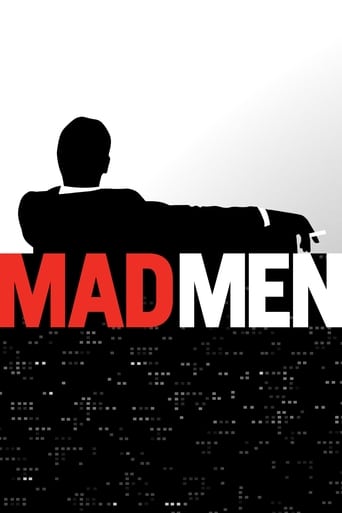
Mad Men (2007)
ซีรี่ย์ฝรั่งซีรี่ย์ 2007ดราม่า
- ชื่อภาษาอังกฤษ
- Mad Men
- ประเทศ
- สหรัฐอเมริกา
- ออกอากาศครั้งแรก
- 19 กรกฎาคม 2550
- จำนวนตอน
- 92 ตอน (7 ซีซัน)
- ความยาวต่อตอน
- ประมาณ 58 นาที
- สถานะ
- จบแล้ว
- ตอนล่าสุด
- EP14/14 (17 พฤษภาคม 2558)
- ช่อง/แพลตฟอร์มต้นทาง
- AMC
- ผู้สร้าง
- Matthew Weiner
- เรตผู้ชม
- TV-14
- คะแนน TMDB
- 8.1/10 (1,616 โหวต)
เรื่องย่อ Mad Men
Mad Men เป็นซีรี่ย์ฝรั่ง ปี 2007 มีทั้งหมด 92 ตอน สถานะจบแล้ว
ในปี 1960 และผู้บริหารบริษัทอย่าง ดอน เดรบเปอร์เป็นผู้กุมอำนาจในบริษัทโฆษณาสเตอร์ลิง คูปเปอร์ แอดเวอร์ไทซิง ของนิวยอร์กท่ามกลางเหตุการณ์ล่อใจ
Mad Men ดูได้ที่ไหน (ถูกลิขสิทธิ์)
ยังไม่พบข้อมูลผู้ให้บริการที่มีลิขสิทธิ์เรื่องนี้ในประเทศไทย ต้นทางออกอากาศทาง AMC เราจะอัปเดตทันทีเมื่อมีแพลตฟอร์มนำเข้ามาฉาย
นักแสดง Mad Men
 จอน แฮมม์รับบท Don Draper
 Elisabeth Mossรับบท Peggy Olson
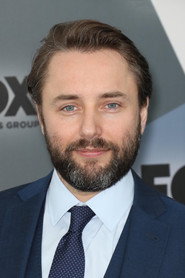 Vincent Kartheiserรับบท Pete Campbell
 January Jonesรับบท Betty Draper
 คริสตินา เฮนดริคส์รับบท Joan Holloway
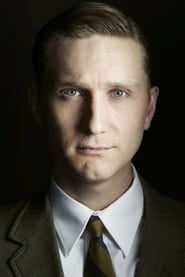 Aaron Statonรับบท Ken Cosgrove
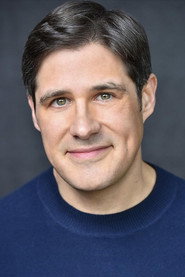 Rich Sommerรับบท Harry Crane
 Kiernan Shipkaรับบท Sally Draper
 จอห์น สแลตเทอรีรับบท Roger Sterling
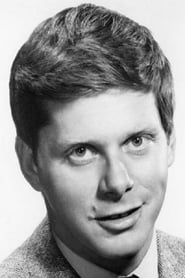 Robert Morseรับบท Bertram Cooper
 Christopher Stanleyรับบท Henry Francis
 Jessica Paréรับบท Megan Draper
ซีซันและรายชื่อตอน
- Mad Men Season 113 ตอน · 19 กรกฎาคม 2550
- Mad Men Season 213 ตอน · 27 กรกฎาคม 2551
- Mad Men Season 313 ตอน · 16 สิงหาคม 2552
- Mad Men Season 413 ตอน · 25 กรกฎาคม 2553
- Mad Men Season 513 ตอน · 25 มีนาคม 2555
- Mad Men Season 613 ตอน · 7 เมษายน 2556
- Mad Men Season 714 ตอน · 13 เมษายน 2557
รีวิว Mad Men จากทีมงาน
เจาะลึก Mad Men: เนื้อเรื่อง การสร้าง และเสียงวิจารณ์
Mad Men is an American period drama television series created by Matthew Weiner for AMC. It ran from July 19, 2007 until May 17, 2015, with seven seasons and 92 episodes. The series title is allegedly borrowed from the phrase advertisers working on Madison Avenue used to refer to themselves, although the only documented use of the phrase may derive from the late-1950s work of James Kelly, an advertising executive and writer.
Set between March 1960 and November 1970, Mad Men follows Don Draper (Jon Hamm), a senior executive and creative director at Sterling Cooper, a Manhattan-based advertising agency. Other primary characters include Peggy Olson (Elisabeth Moss), Don's secretary; Pete Campbell (Vincent Kartheiser), a mid-level executive at Sterling Cooper; Joan Holloway (Christina Hendricks), the agency's office manager; Roger Sterling (John Slattery), the agency's name partner; Betty Draper (January Jones), Don's wife; and in later seasons, Sally Draper (Kiernan Shipka), Don's oldest child. As the series progresses, it depicts the changing moods and social mores of the United States throughout the 1960s and early 1970s.
Weiner first developed Mad Men in 2000 but it was greenlit by AMC several years later, acting as the network's first original series. Principal photography for Mad Men primarily took place in New York City and Los Angeles during its run and the writers conducted large amounts of research to accurately depict its time period. The series is considered the breakthrough roles for Hamm, Slattery, and Jones and helped revive the career of Hendricks.
Mad Men received widespread acclaim for its writing, acting, directing, historical authenticity and visual style. It won several awards, including 16 Emmys and 5 Golden Globes. Mad Men is the first basic cable series to receive the Emmy Award for Outstanding Drama Series, winning it each year of its first four seasons (2008–2011). It is widely regarded as a key series in the Golden Age of Television in the early 21st century and as one of the greatest television series of all time.
Premise
The series covers the advertising industry centered on Madison Avenue in New York City in the 1960s, primarily following the professional and personal life of protagonist Don Draper, a creative director and partner at a Manhattan firm. The plotlines also follow the personal and professional lives of Draper's family and co-workers as they relate to him and each other. Overshadowing the series is Draper's double life both as to his true identity, and his unfaithfulness to his family, while he tries to maintain a brilliant and charismatic outward appearance.
Conception
In 2000, while working as a staff writer for Becker, Matthew Weiner wrote the first draft as a spec script for the pilot of what would later be called Mad Men. Television showrunner David Chase recruited Weiner to work as a writer on his HBO series The Sopranos after reading the pilot script in 2002. "It was lively, and it had something new to say," Chase said. "Here was someone [Weiner] who had written a story about advertising in the 1960s, and was looking at recent American history through that prism."
Weiner and his representatives at Industry Entertainment and ICM tried to sell the pilot script to HBO, which expressed an interest, but insisted that David Chase be executive producer. Chase declined, despite his enthusiasm for Weiner's writing and the pilot script. HBO CEO Richard Plepler later became a fan of the show and congratulated AMC on their success with it. In 2017 he named passing on Mad Men as his biggest regret from his time at HBO, calling it "inexcusable" and attributing the decision to "hubris."
Weiner then moved on to Showtime, which also passed. Lacking a suitable network buyer, they tabled sales efforts until years later, when a talent manager on Weiner's team, Ira Liss, pitched the series to AMC Vice President of Development Christina Wayne. "The network was looking for distinction in launching its first original series," according to AMC Networks president Ed Carroll, "and we took a bet that quality would win out over formulaic mass appeal."
Influences
Weiner cited Alfred Hitchcock as a major influence on the series' visual style, especially the film North by Northwest. He was also influenced by director Wong Kar-wai in the music, mise en scène, and editorial style. Weiner noted in an interview that M*A*S*H and Happy Days, two television shows produced in the 1970s about the 1950s, provided a "touchstone for culture" and a way to "remind people that they have a misconception about the past, any past." He also said, "Mad Men would have been some sort of crisp, soapy version of The West Wing if not for The Sopranos." Peggy's "psychic scar for the entire show, after giving away that baby," Weiner said, is "the kind of thing that would have never occurred to me before I was on The Sopranos."
Pre-production
Tim Hunter, the director of a half-dozen episodes from the show's first two seasons, called Mad Men a "very well-run show." He said:
They have a lot of production meetings during pre-production. The day the script comes in we all meet for a first page turn, and Matt starts telling us how he envisions it. Then there's a "tone" meeting a few days later where Matt tells us how he envisions it. And then there's a final full crew production meeting where Matt again tells us how he envisions it ...
Filming and production design
The pilot episode began filming on April 20, 2006, and was shot at Silvercup Studios in New York City and various locations around the city; subsequent episodes were filmed at Los Angeles Center Studios. It was available in high definition for showing on AMC HD and on video-on-demand services available from various cable affiliates.
The writers, including Weiner, amassed volumes of research on Mad Men's time period, so as to make most aspects of it—including detailed set design, costume design, and props—historically accurate, producing an authentic visual style that garnered critical praise. On the scenes featuring smoking, Weiner said: "Doing this show without smoking would've been a joke. It would've been sanitary and it would've been phony." Each episode had a budget between US$2–2.5 million; the pilot episode's budget was over $3 million.
Weiner collaborated with cinematographer Phil Abraham and production designers Robert Shaw (who worked on the pilot only) and Dan Bishop to develop a visual style "influenced more by cinema than television." Alan Taylor, a veteran director of The Sopranos, directed the pilot and also helped establish the series's visual tone. To cast an "air of mystery" around Don Draper, Taylor tended to shoot from behind him, or frame him partially obscured. Many scenes set at Sterling Cooper were shot lower-than-eyeline to incorporate the ceilings into the composition of frame, reflecting the photography, graphic design and architecture of the period. Taylor felt that neither steadicam nor handheld camera work would be appropriate to the "visual grammar of that time, and that aesthetic didn't mesh with [their] classic approach"; accordingly, the sets were designed to be practical for dolly work.
Finances
According to a 2011 Miller Tabak + Company estimate published in Barron's, Lions Gate Entertainment received an estimated $2.71 million from AMC for each episode, a little less than the $2.84 million each episode cost to produce.
In March 2011, after negotiations between the network and the series's creator, AMC picked up Mad Men for a fifth season, which premiered on March 25, 2012. Weiner reportedly signed a $30 million contract which would keep him at the helm of the show for three more seasons. A couple of weeks later, a Marie Claire interview with January Jones was published, noting the limits to that financial success when it comes to the actors: "We don't get paid very much on the show and that's well-documented. On the other hand, when you do television, you have a steady paycheck each week, so that's nice."
Miller Tabak analyst David Joyce wrote that sales from home video and iTunes could amount to $100 million during the show's expected seven-year run, with international syndication sales bringing in an additional estimated $700,000 per episode. That does not include the $71 to $100 million estimated to come from a Netflix streaming video deal announced in April 2011.
Episode credit and title sequences
The opening title sequence features credits superimposed over a graphic animation of a businessman falling, surrounded by skyscrapers with reflections of period advertising posters and billboards, accompanied by a short edit of the instrumental "A Beautiful Mine" by RJD2. The businessman appears as a black-and-white silhouette. The titles, created by production house Imaginary Forces, pay homage to graphic designer Saul Bass's skyscraper-filled opening titles for Alfred Hitchcock's North by Northwest (1959) and falling man movie poster for Vertigo (1958); Weiner has listed Hitchcock as a major influence on the visual style of the series. In a 2010 issue of TV Guide, the show's opening title sequence ranked No. 9 on a list of TV's top 10 credits sequences, as selected by readers.
David Carbonara composed the original score for the series. Mad Men – Original Score Vol. 1 was released on January 13, 2009. At the end of almost every episode, the show either fades to black or smash cuts to black as period music, or a theme by series composer David Carbonara, plays during the ending credits; at least one episode ends with silence or ambient sounds. A few episodes have ended with more recent popular music, or with a diegetic song dissolving into the credits music.
In a rare instance of their licensing a Beatles recording for a television program, Apple Corps authorized the use of the song "Tomorrow Never Knows" for the Season 5 episode "Lady Lazarus". Lionsgate paid roughly $250,000 for the use of the song in the episode.
Crew
In addition to creating the series, Matthew Weiner was the showrunner, head writer, and an executive producer; he contributed to each episode through writing or co-writing the scripts, casting various roles, and approving costume and set designs. He was notorious for being selective about all aspects of the series, and maintained a high level of secrecy about production details. Tom Palmer served as a co-executive producer and writer on the first season. Scott Hornbacher (who later became an executive producer), Todd London, Lisa Albert, Andre Jacquemetton, and Maria Jacquemetton were producers on the first season. Palmer, Albert, Andre Jacquemetton, and Maria Jacquemetton were also writers on the first season. Bridget Bedard, Chris Provenzano, and writer's assistant Robin Veith completed the first-season writing team.
Lisa Albert, Andre Jacquemetton and Maria Jacquemetton returned as supervising producers for the second season. Veith also returned and was promoted to staff writer. Hornbacher replaced Palmer as co-executive producer for the second season. Consulting producers David Isaacs, Marti Noxon, Rick Cleveland, and Jane Anderson joined the crew for the second season. Weiner, Albert, Andre Jacquemetton, Maria Jacquemetton, Veith, Noxon, Cleveland, and Anderson were all writers for the second season. New writer's assistant Kater Gordon was the season's other writer. Isaacs, Cleveland, and Anderson left the crew at the end of the second season.
Albert remained a supervising producer for the third season but Andre Jacquemetton and Maria Jacquemetton became consulting producers. Hornbacher was promoted again, this time to executive producer. Veith returned as a story editor and Gordon became a staff writer. Noxon remained a consulting producer and was joined by new consulting producer Frank Pierson. Dahvi Waller joined the crew as a co-producer. Weiner, Albert, Andre Jacquemetton, Maria Jacquemetton, Veith, Noxon, and Waller were all writers for the third season. New writer's assistant Erin Levy, executive story editor Cathryn Humphris, script co-ordinator Brett Johnson and freelance writer Andrew Colville completed the third season writing staff.
Alan Taylor, Phil Abraham, Jennifer Getzinger, Lesli Linka Glatter, Tim Hunter, Andrew Bernstein, and Michael Uppendahl were regular directors for the series. Matthew Weiner directed each of the season finales. Cast members John Slattery, Jared Harris and Jon Hamm also directed episodes.
As of the third season, seven of the nine writers for the show were women, in contrast to Writers Guild of America 2006 statistics that showed male writers outnumbered female writers by 2 to 1. As Maria Jacquemetton noted:
We have a predominately [sic] female writing staff—women from their early 20s to their 50s—and plenty of female department heads and directors. [Show creator] Matt Weiner and [executive producer] Scott Hornbacher hire people they believe in, based on their talent and their experience. "Can you capture this world? Can you bring great storytelling?"
Cast and characters
Jon Hamm as Don Draper, the series' protagonist, the creative director and junior partner of Sterling Cooper Advertising Agency and eventually a partner of Sterling Cooper & Partners. He is a hard-drinking, chain-smoking executive with a shadowy past who has achieved success in advertising. He is married to Betty Draper, with whom he has three children: Sally, Bobby, and Gene. He keeps a lot of things hidden from Betty, including his extensive history of adultery. It is revealed early in the series that Draper's real name is Richard "Dick" Whitman. During the Korean War, Whitman assumed the identity of his CO, Lieutenant Don Draper, who was killed during an ambush.
Elisabeth Moss as Peggy Olson, who rises from being Don's secretary to being a copywriter with her own office.
Vincent Kartheiser as Pete Campbell, a young, ambitious account executive from an old New York family with connections and a privileged background. He is married to Trudy (Alison Brie) with whom he eventually has a daughter, Tammy.
January Jones as Betty Draper, Don's wife and mother of their three children. Raised in the Philadelphia suburb of Elkins Park, Pennsylvania and a graduate of Bryn Mawr College, she met Don when she was a model in Manhattan and married him soon thereafter. Over the show's first two seasons, she gradually becomes aware of Don's womanizing.
Christina Hendricks as Joan Holloway, office manager and head of the secretarial pool at Sterling Cooper. Throughout the series, she has a long-standing affair with Roger Sterling. She eventually rises to the level of partner at Sterling Cooper Draper Pryce and the following SC&P.
Bryan Batt as Sal Romano (seasons 1–3), the Italian American art director of Sterling Cooper. He is a closeted homosexual reluctant to act upon his homosexuality. He is married to Kitty, who seems unaware of his sexual orientation, yet begins to realize that something is amiss in their relationship.
Michael Gladis as Paul Kinsey (seasons 1–3; guest season 5), a bearded, pipe-smoking creative copywriter and Princeton University alumnus who prides himself on his politically liberal views.
Aaron Staton as Ken Cosgrove, a young account executive originally from Vermont. Outside the office, he is an aspiring author who has a short story published in The Atlantic, a source of envy by his co-workers. His wife is Cynthia.
Rich Sommer as Harry Crane, a bespectacled media buyer and head of Sterling Cooper's television department, which is created at Harry's initiative. Unlike his mostly Ivy League fellows, Harry went to the University of Wisconsin.
Maggie Siff as Rachel Menken (season 1; guest seasons 2 and 7), the Jewish head of a department store who comes to Sterling Cooper to revamp her business's image. She is initially cool towards Don Draper, who bristles at her assertive, independent image, but they warm to each other and eventually begin an affair.
John Slattery as Roger Sterling (recurring season 1, main seasons 2–7), one of the two senior partners of Sterling Cooper and mentor to Don Draper. His father founded the firm with Bertram Cooper. Roger is first married to Mona (Talia Balsam) before he divorces her in favor of Don's former secretary, 20-year-old Jane. A World War II Navy veteran, he is a notorious womanizer until two heart attacks change his perspective, although they do not affect his excessive drinking and smoking. His primary function is managing the Lucky Strike account, which is responsible for over half of SCDP's billings.
Robert Morse as Bert Cooper (recurring seasons 1–2, main seasons 3–7), the somewhat eccentric senior partner at Sterling Cooper. He leaves the day-to-day running of the firm to Roger and Don but is keenly aware of its operations. He is a Republican and is fascinated by Japanese culture, requiring everybody, including clients, to remove their shoes before walking into his office, which is decorated with Japanese art. He is also a fan of the writings of Ayn Rand.
Jared Harris as Lane Pryce (recurring season 3, main seasons 4–5), the English financial officer installed by Sterling Cooper's new British parent company. His role is that of a strict taskmaster who brings spending under control, in particular by cutting out frivolous expenses. He eventually becomes a founding partner in the new agency, Sterling Cooper Draper Pryce.
Kiernan Shipka as Sally Draper (recurring seasons 1–3, main seasons 4–7), the eldest child of Don and Betty; her relationship with her mother is often strained. She develops a friendship with Glen, a boy who lives down the street from her.
Jessica Paré as Megan Calvet (recurring season 4, main seasons 5–7), initially a receptionist at SCDP, who eventually takes over as Don's secretary and is later a junior copy writer. She begins a relationship with Don and they are married by season 5. Later that season, she leaves the firm to pursue her dream of acting. Originally from Montreal, French is her first language.
Christopher Stanley as Henry Francis (recurring seasons 3–4, main seasons 5–7), a political adviser with close connections to New York Governor Nelson Rockefeller and the Republican Party. It is later revealed that he serves as the Director of Public Relations and Research in the Governor's Office. He develops a romantic relationship with Betty and they later marry.
Jay R. Ferguson as Stan Rizzo (recurring season 4, main seasons 5–7), the art director at Sterling Cooper Draper Pryce. Before coming to the company, he worked for Lyndon B. Johnson's 1964 Presidential campaign. He and Peggy are often at odds with each other due to his abrasive attitude, although they later develop a strong working relationship.
Kevin Rahm as Ted Chaough (recurring seasons 4–5, main seasons 6–7), a self-proclaimed rival of Don Draper in the advertising world and partner of his agency, Cutler Gleason and Chaough (CGC).
Ben Feldman as Michael Ginsberg (recurring season 5, main seasons 6–7), a part-time copywriter by Sterling Cooper Draper Pryce who quickly becomes an essential part of the creative team. Idiosyncratic and socially awkward, he tends to speak his mind, which can be both a help and hindrance to him.
Mason Vale Cotton as Bobby Draper (recurring seasons 1–5; main seasons 6–7), the middle child of Don and Betty, played by Maxwell Huckabee in season 1, Aaron Hart in seasons 1–2, and Jared Gilmore in seasons 3–4.
Themes and motifs
Mad Men depicts parts of American society of the 1960s, including cigarette smoking, drinking, sexism, feminism, adultery, homophobia, and racism. Themes of alienation, social mobility and ruthlessness set the tone of the show. MSNBC noted that the series "mostly remains disconnected from the outside world, so the politics and cultural trends of the time are illustrated through people and their lives, not broad, sweeping arguments".
According to Weiner, he chose the 1960s because:[E]very time I would try and find something interesting that I wanted to do, it happened in 1960. It will blow your mind if you look at the year on the almanac. And it's not just the election [of JFK]. The pill came out in March 1960, that's really what I wanted it to be around.... That's the largest change in the entire world. Seriously, it's just astounding. Especially if you look at the movies from the 50s. Once it was acceptable to talk about this idea that teenagers were having sex, which they have been doing, obviously, since time immemorial, there were all these movies like Blue Denim and Peyton Place.... [T]he central tension in every movie that does not take place on the battlefield is about a girl getting pregnant. So all of a sudden that entire issue [of pregnancy] has been removed from society. That was what I was interested in in 1960.
Identity and memory
Television commentators have noted the series's study of identity. This theme is explored most candidly through Don Draper's identity fraud during and after the Korean War, in which he takes on the name of an officer, whom he had accidentally killed, to desert the army and enter a more prestigious and successful lifestyle. Tim Goodman considers identity to be the show's leitmotiv, calling Don Draper "a man who's been living a lie for a long time. He's built to be a loner. And over the course of three seasons we've watched him carry this existential angst through a fairy-tale life of his own creation." As noted by Gawker:Not only is the agency of Sterling Cooper Draper Pryce in the business of spinning them—or at least warping the truth—to sell product, but the main character, Don Draper, is built on a lie. Just like one of his campaigns, his whole identity is a sweet fabrication, a kind of candy floss spun out of opportunity, innuendo, and straight-up falsehood.The New Republic writer Ruth Franklin said that "The show's method is to take us behind the scenes of the branding of American icons—Lucky Strike cigarettes, Hilton hotels, Life cereal—to show us not how the products themselves were created, but how their 'very sexy...very magical' images were dreamed up." She went on to say that, "In this way, we are all Don Drapers, obsessed with selling an image rather than tending to what lies underneath. Draper's fatal flaw is his lack of psychological awareness: He is at once perfectly tuned into the desires of America and entirely out of touch with his own character." One reviewer said that "Identity is a key theme in Mad Men, and nobody is ever quite who they appear to be. Each one is filled with thwarted ambitions and frustrated dreams, none more so than Don Draper himself, whose closet, it's gradually revealed over Seasons 1 and 2, is filled with proverbial skeletons."
เนื้อหาส่วนนี้มาจากบทความ "Mad Men" ในวิกิพีเดีย (en.wikipedia.org) เผยแพร่ภายใต้สัญญาอนุญาตครีเอทีฟคอมมอนส์ แสดงที่มา-อนุญาตแบบเดียวกัน 4.0 (creativecommons.org/licenses/by-sa/4.0) มีการตัดส่วนอ้างอิงและจัดรูปแบบใหม่
คำถามที่พบบ่อยเกี่ยวกับ Mad Men
Mad Men มีกี่ตอน?
Mad Men มีทั้งหมด 92 ตอน รวม 7 ซีซัน สถานะปัจจุบัน: จบแล้ว
Mad Men ฉายวันไหน?
Mad Men เริ่มออกอากาศครั้งแรกวันที่ 19 กรกฎาคม 2550
Mad Men ดูได้ที่ไหน?
ขณะนี้ยังไม่พบแพลตฟอร์มที่มีลิขสิทธิ์ Mad Men ในประเทศไทย
หมวดแนะนำ: ซีรีย์น่าดู · เรื่องถัดไป: Elena's Ghost
ซีรี่ย์ที่คล้ายกับ Mad Men
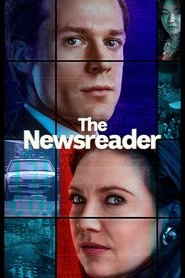 จบแล้ว 18 ตอน★ 7.4
The Newsreader ห้องข่าวเดือด (2021)
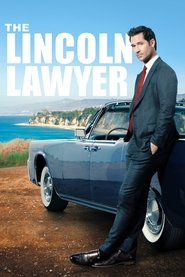 EP10/10★ 7.7
The Lincoln Lawyer แผนพิพากษา (2022)
 จบแล้ว 30 ตอน★ 8.2
Wu-Tang: An American Saga (2019)
 จบแล้ว 26 ตอน★ 7.0
Life on Top (2009)
 จบแล้ว 28 ตอน★ 7.4
X Company (2015)
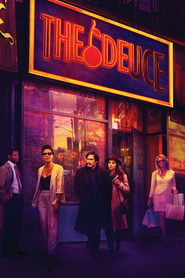 จบแล้ว 25 ตอน★ 7.6
The Deuce เดอะ ดูซ (2017)
 ★ 8.4
★ 8.4Fellow Travelers (2023)
 จบแล้ว 9 ตอน★ 7.4
Mrs. America (2020)
 ★ 6.1
★ 6.1Fatal Attraction (2023)
 EP16/16★ 7.0
Matlock แมตล็อก (2024)
 EP8/8★ 8.4
Beauty in Black บิวตี้ อิน แบล็ก (2024)
 ★ 7.1
★ 7.1